By ERIC BUH Mi | CEO
STITCHING FUTURE: EMPOWERING 150 VULNERABLE WOMEN
PROJECT 64196 REPORT
1. Introduction
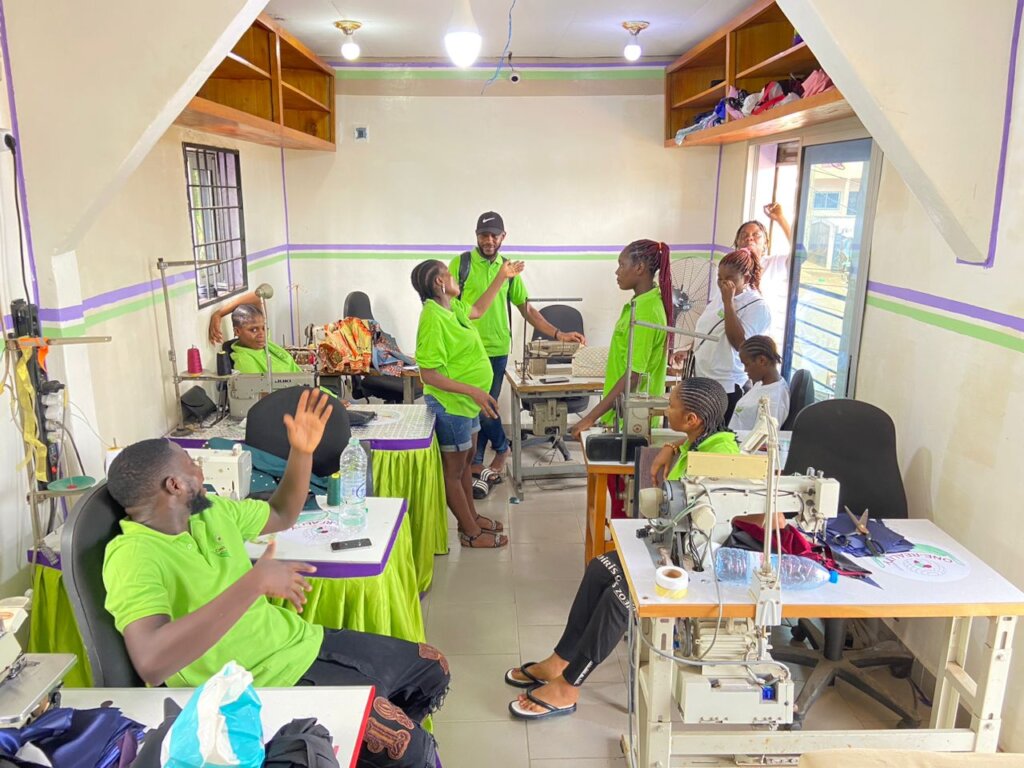
The Stitching Future project was initiated with the primary goal of empowering 150 vulnerable women through skills training in dressmaking and entrepreneurship development. The project focused on providing vocational training in tailoring, fashion design, and business management to enhance their socio-economic independence of Orphans, teen mothers, IDPS and anyone with passion to learn a skill in DressMaking. The project has
2. Objectives
Train 150 teen mothers to acquire dress-making skills in pattern designs and sewing
Provide financial literacy training to ensure sustainability.
Foster entrepreneurship by facilitating access to resources and markets.
Enhance self-reliance and poverty reduction
3. Project ImplementationA. Training Program
Tailoring & Fashion Design: Conducted through structured workshops, covering pattern making, designing, clothes cutting, sewing, embroidery, and quality control.
Business & Financial Literacy: Educated participants on budgeting, pricing, savings, and investment strategies.
Soft Skills Development: Focused on communication, self-confidence, and networking.
B. Beneficiary Selection
A transparent selection process identified vulnerable women, including widows, single mothers, and survivors of domestic violence. The selection criteria included economic need, willingness to learn, and a commitment to entrepreneurship.We visit their homes , follow up their needs and wants.
C. Equipment & Materials
12 sewing machines were provided.
Essential tailoring materials such as fabric, measuring taps, threads, scissors, and measuring tools were distributed
4. Outcomes & Achievements
Skill Acquisition: 150 women successfully completed the training.
Business Start-ups: 70% of participants launched their own tailoring businesses or secured employment.
Increased Financial Stability: 80% reported improved income levels.
Community Impact: The project strengthened local economic growth and promoted self-sufficiency.
5. Challenges & Lessons Learned
We need a bigger workshop that can accommodate more than 100 beneficiaries.
We have problems to sustain monthly rents and expenses for trainers.
Challenges to raise Seed Capital and handling challenges faced by teen mothers.They lack playing space for their children . we need to have a bigger space to accommodate the kids during trainings.
Limited Resources: Demand exceeded available resources; future projects require increased funding, workspace, more equipment and trainers.
Market Access: Continuous support is needed to connect women with broader markets.
Sustainability: A need for ongoing mentorship and business support.
. Social Stigma and Cultural Barriers
2. Childcare: The Biggest Practical Hurdle
3. Logistical and Financial Constraints
4. Educational Gaps and Learning Pacing
5. Economic Sustainability and Market Access
6. Psychological and Emotional Well-being
Possible Solutions and Mitigation Strategies
1. To Address Social Stigma & Logistics:
2. To Address Educational Gaps & Pacing:
3. To Ensure Economic Sustainability:
4. To Support Holistic Well-being:
5. To Overcome Infrastructural Issues:
6. Recommendations & Next Steps
Establish a cooperative society for participants to market their products collectively.
Seek additional funding to expand the project and reach more beneficiaries.
Develop an e-commerce platform to enhance sales and visibility.
Introduce advanced training modules in fashion branding and digital marketing.
Integrate On-Site Childcare (Top Priority)
2. Adopt a "Manual-First," Resilient Training Model
3. Implement a Holistic, Phased Curriculum
We are re-Structuring the program into clear, progressive phases:
o Basic stitching, machine operation, and simple projects (e.g., bags, aprons).
o Integrated group sessions on self-esteem, customer relations and financial literacy (e.g., saving small amounts).
o Action: Partner with a local NGO or social worker to provide psychosocial support.
o Taking measurements, cutting patterns, sewing garments.
o Action: Use a modular learning approach where students progress at their own pace.
o Action: Teach practical business skills: calculating cost prices, profit margins, marketing via WhatsApp and Facebook, and customer service.
o Goal: Each graduate develops a simple business plan for their micro-enterprise.
4. Provide a Pathway to Economic Sustainability
o A manual sewing machine (on a loan-to-own basis).
o Essential tools (scissors, measuring tape, threads, needles).
o Initial fabric bundles.
o How it works: The program provides high-quality fabric, graduates produce items (e.g., dresses, shirts), and the program sells them through established market linkages (e.g., tourist shops, online). Graduates are paid a fair wage for their labour, building their capital and reputation.
6. Measure Impact Correctly
Move beyond just counting graduates. Track:
7. Conclusion
The Stitching Future project is empowered 150 women by equipping them with essential skills for economic independence. While challenges are being encountered, the overall impact has been significant, paving the way for a sustainable future for many vulnerable women. The project highlights the importance of continued investment in skills development and entrepreneurship for women’s empowermentt
WhatsApp:+237681492695 Tel:+32466229315
Project reports on GlobalGiving are posted directly to globalgiving.org by Project Leaders as they are completed, generally every 3-4 months. To protect the integrity of these documents, GlobalGiving does not alter them; therefore you may find some language or formatting issues.
If you donate to this project or have donated to this project, you can receive an email when this project posts a report. You can also subscribe for reports without donating.