By AFV | Project Leader
CONTEXT AND AFV'S INTERVENTION IN KE SACH DISTRICT, SOC TRANG PROVINCE
Thoi An Hoi, Ke Thanh and An My communes are home to numerous poor/near-poor households and ethnic minorities in Ke Sach district, Soc Trang province, Vietnam. As of November 2020, Thoi An Hoi commune has 732 poor households and 547 near-poor households. These numbers are respectively 549 and 421 households for Ke Thanh commune, and 970 and 601 for An My commune. These 3 communes have been facing numerous difficulties in terms of securing the livelihood of its inhabitants. Among all these challenges, soil salinization has proven to be the most detrimental over the last 3 years.
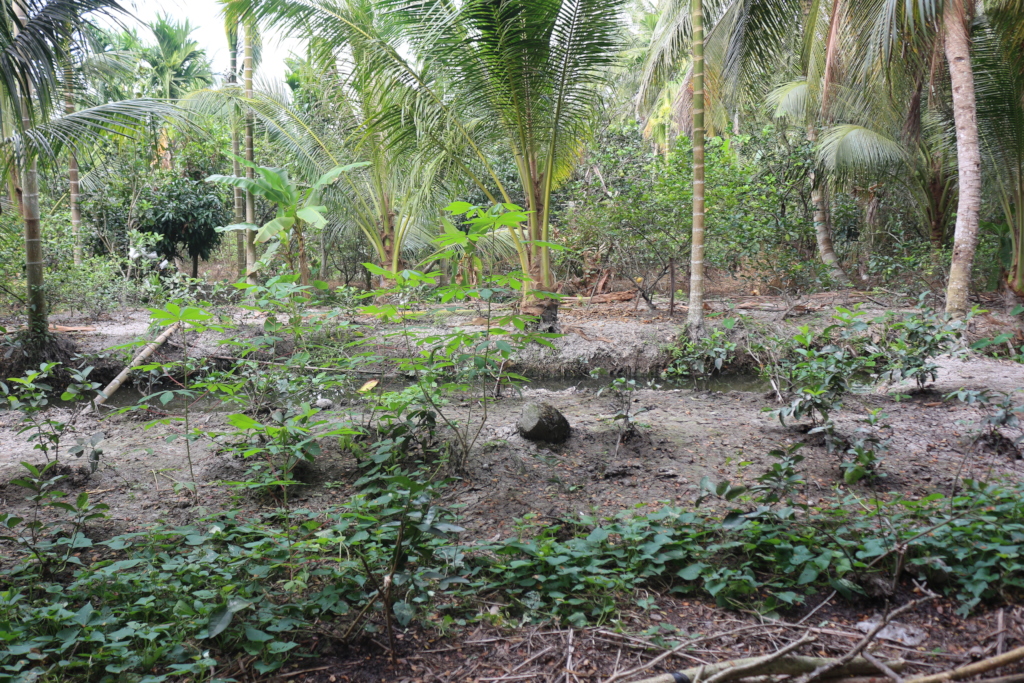
Soil salinization is the accumulation of soluble salts of sodium, magnesium and calcium in soil to the extent that soil fertility is severely reduced. The people in these communes earn a living mostly by growing fruit trees and rice crops, which are both very weather-dependent and unstable. The salinization of the soil therefore has been heavily affecting their agricultural works, as their trees and crops were not provided with enough water, and the area of cultivable lands decreased drastically.
This leads to multiple bad harvests and thus a huge drop in the quantity as well as quality of the local people’s farming products. To make matter worse, close to 90% of households in the rural parts of the communes do not even have access to potable water for their daily needs. In 2019, the area of agricultural land across Soc Trang province was reduced by 5,508 ha, and 9,352 households out of 30,252 in the entire area (31% of the province total’s population) do not have access to potable water.
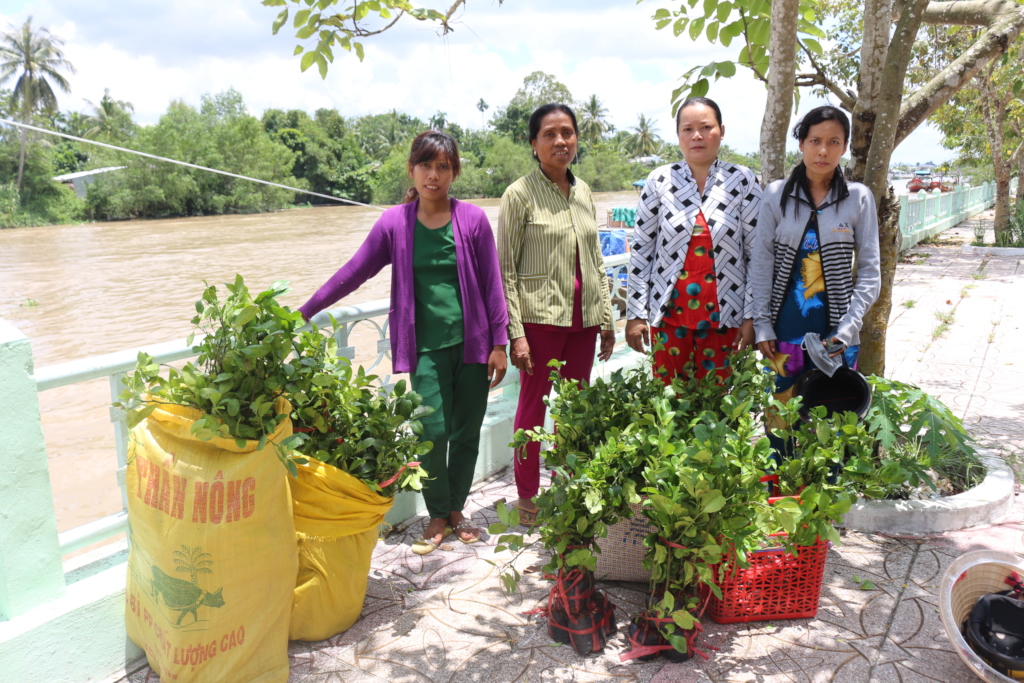
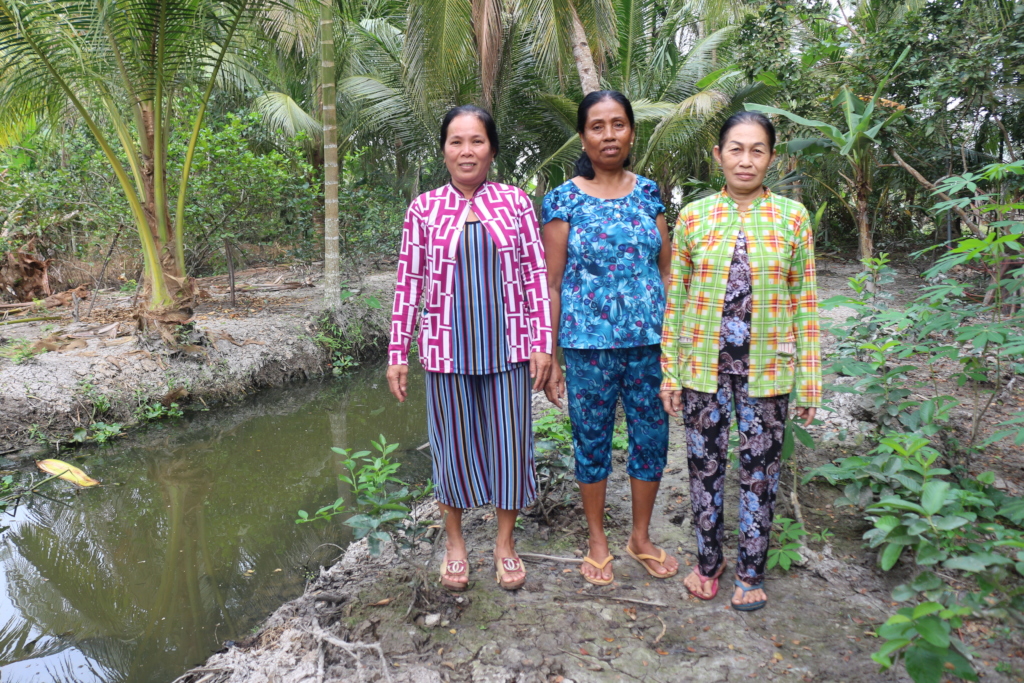
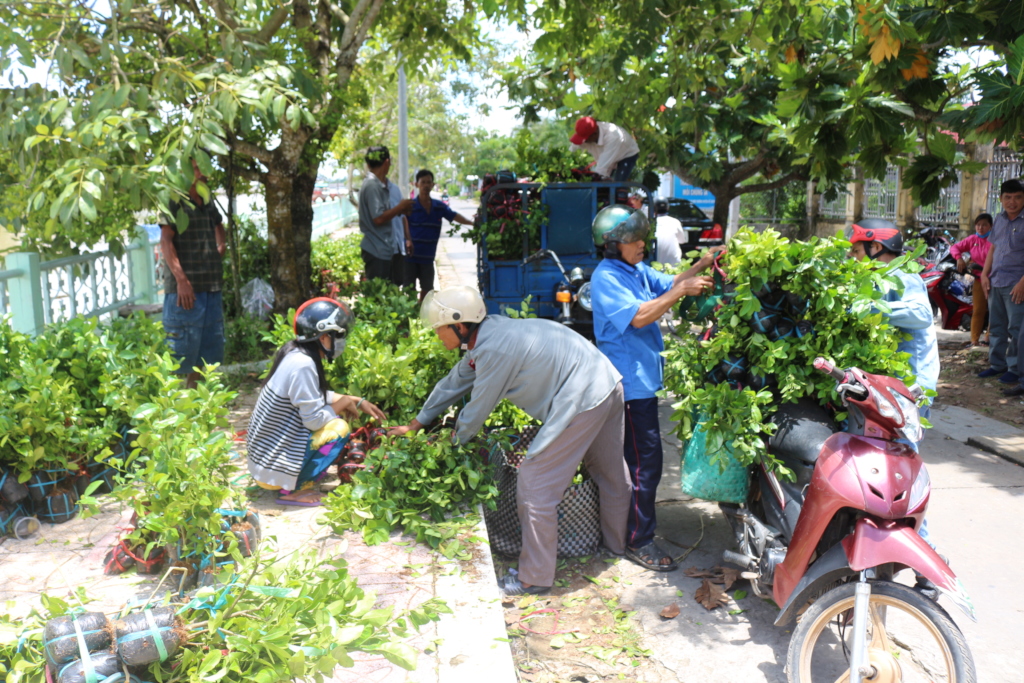
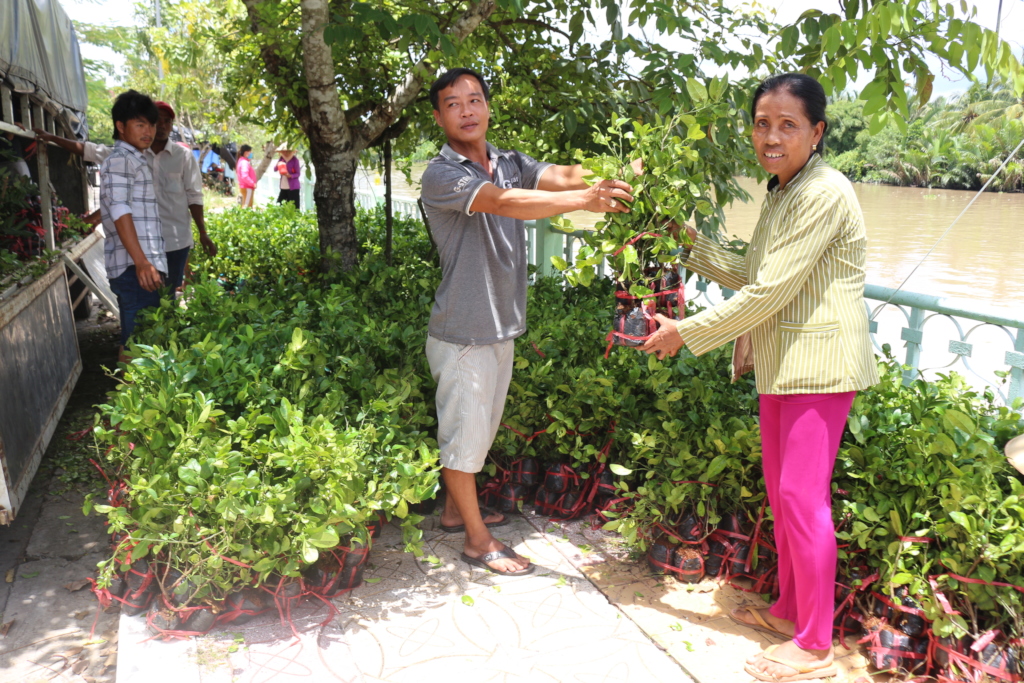
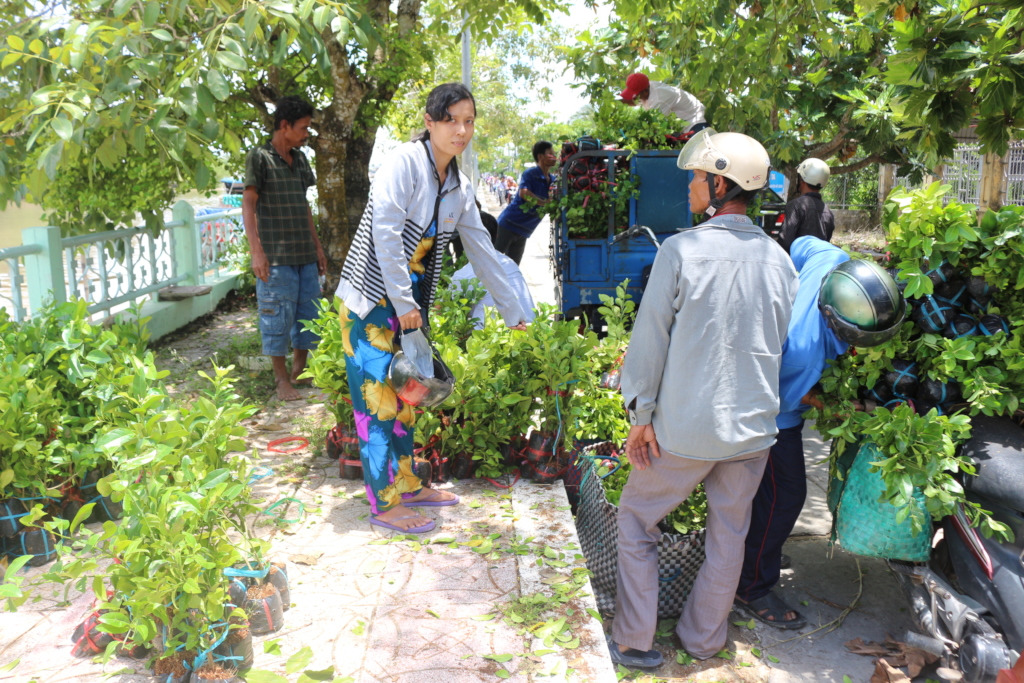
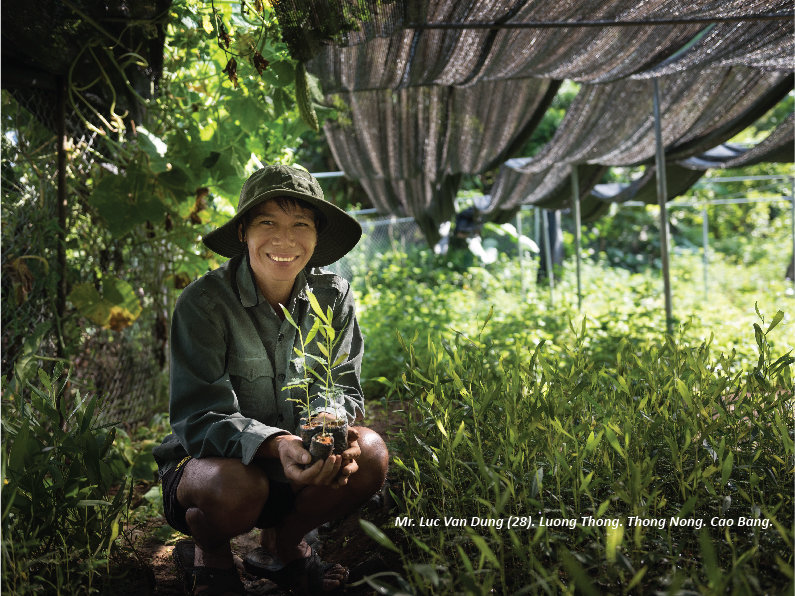
Acknowledging the urgency of the situation in Ke Sach district, Soc Trang province, on September 9th 2020, AFV has supported 27 most disadvantaged households in Thoi An Hoi, Ke Thanh and An My commune with 2,700 Persian lime seedlings. After in-depth consultation with agricultural experts and local communities, the Persian lime was selected since this particular tree can withstand the negative effects of soil salinization, such as dry and infertile soil. Furthermore, they are quick-maturing plants that require a short cultivation time to harvest and considerably easy to grow, making it an economically efficient solution, especially for families with limited land resources.
Thanks to the kind support of donors from the “Sponsor a Tree – CO2 Compensation and Climate Change”fundraising initiative, AFV has provided these 27 households with an alternative and sustainable livelihood. It is expected that the Persian lime trees shall bear fruits after 1 year of cultivation, producing 10 – 15 kilograms of fruits per tree annually, providing these households with a stable and durable additional source of income at 20 – 45 million VND per year. The lives of roughly 120 people are expected to benefit from this intervention, whether directly or indirectly.
The Persian lime farming is a pilot scalable livelihood model, expected to soon be applied to other households in the Ke Sach district. After the project, AFV and local partners will continue to cooperate with experts to assist these families with appropriate cultivation techniques and supervise the production process in order to offer timely interventions and support, while at the same time promoting the products to potential buyers for higher selling price. The Sponsor A Tree project will help secure the livelihood of disadvantaged communities with little agricultural land and lessen the need to migrate for improved income.
I. CASE STUDY 1: Mrs. Xien, Thoi An Hoi commune, Ke Sach district
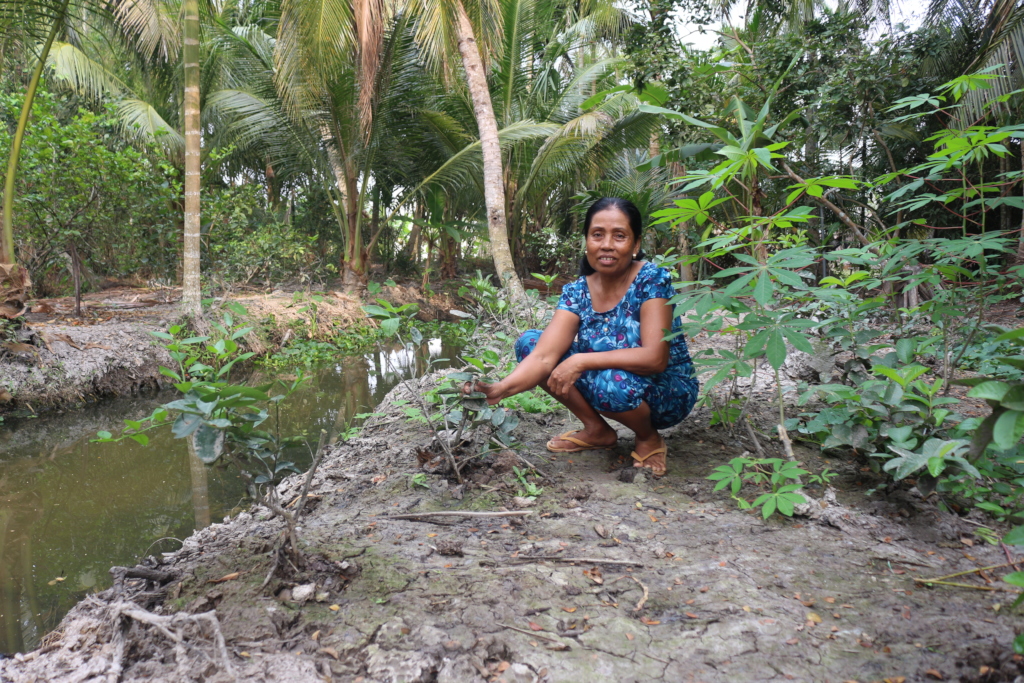
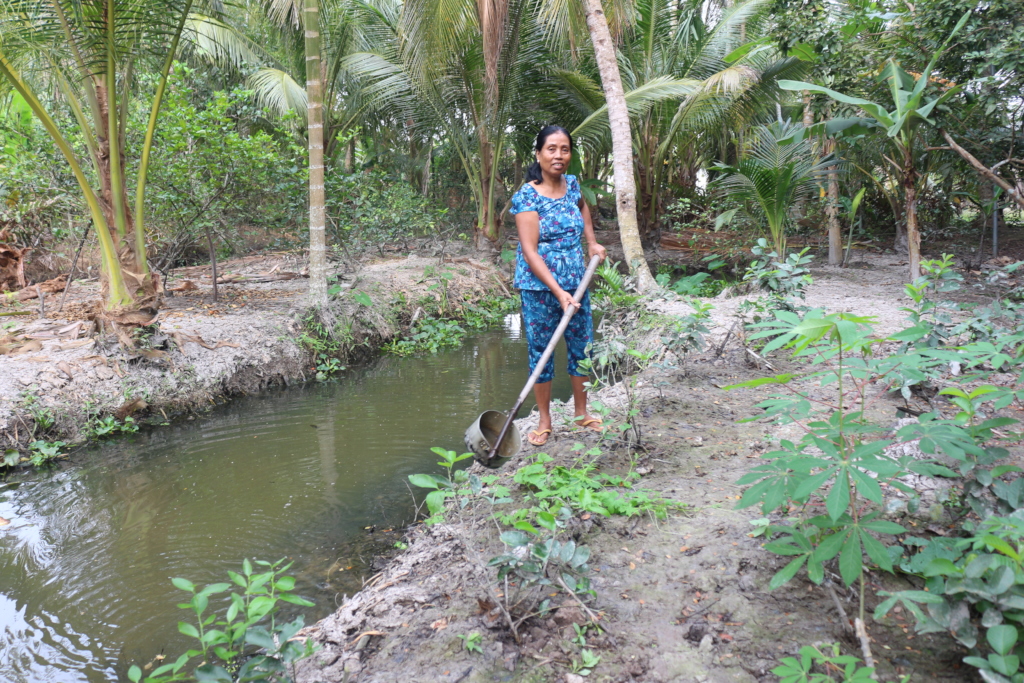
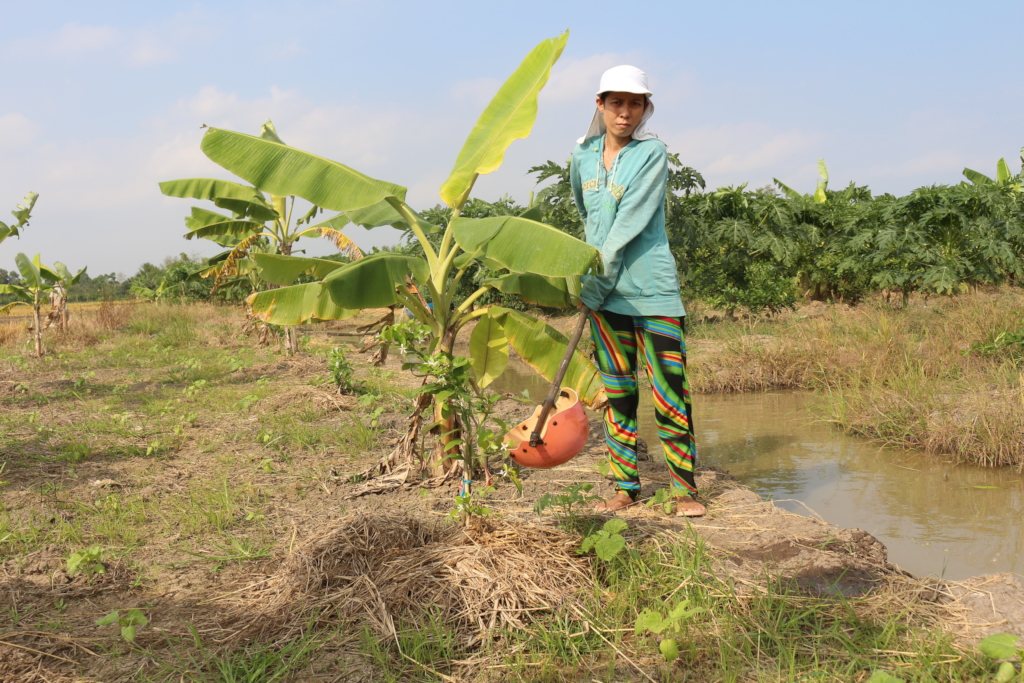
Mrs. Xien, 57 years old, is a Khmer farmer living with her husband and 2 grandchildren in Thoi An Hoi commune, Ke Sach district, Soc Trang province. Her 3 sons work far away from home in another province while she and her husband grow rice crop for a living. Her husband’s sickness unfortunately prevents him from working on the field. Combining with the money their sons send home periodically, they earn around VND 5,000,000 per month. The family is classified as a poor household.
“It has been tough for us.” said Mrs.Xien, “We are barely getting by as it is, and now we also have to deal with soil salinization sabotaging our one and only source of income.”
Every year, Mrs. Xien and her family struggle constantly with natural disasters and climate change impacts, which severely affected their livelihood. Soil salinization in particular has been increasingly difficult to deal with since it occurs early in the year and often stays for an extended period of time, leading to multiple bad harvests in a row.
“Damaged crops, floods, landslide. There seems to be no end to our problems.” Mrs. Xien sighed.
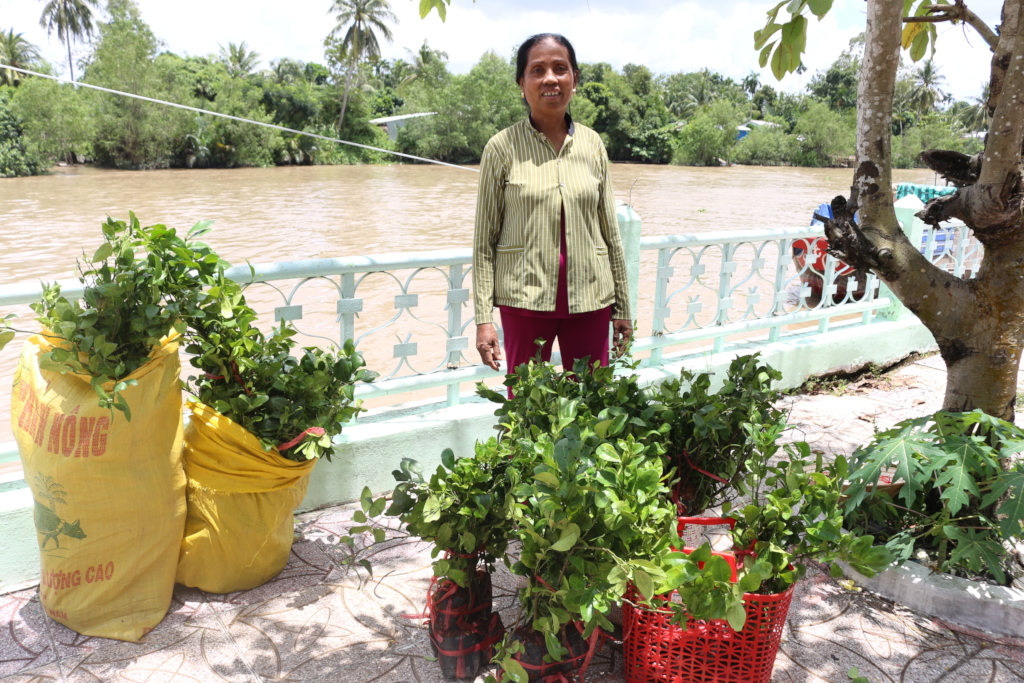
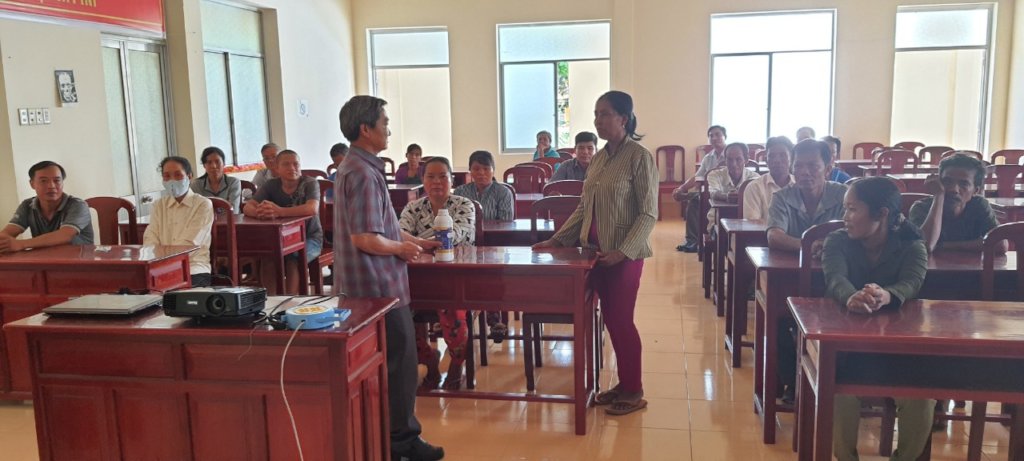
Recognizing Mrs. Xien’s difficulties, AFV has decided to support her family with 50 Persian lime seedlings to plant on their 500m2 of cultivation land. Additionally, she was invited to participate in a training course with the experts from the local Agriculture Promotion Department on how to grow and care for this specie of lime. These trees in return will hopefully become a stable and durable source of income for her family thanks to their resilience to soil salinization.
II. CASE STUDY 2: Mrs. Tim, An My commune, Ke Sach district
“My husband and I has been divorced for a few years now.” Mrs. Tim, 36 years old, shared with us, “My son ever since then only has me to rely on. But things have been very difficult for us lately.”
Mrs. Tim is living with her 10-year-old son in An My commune. Their only source of income is their 2 plots of communal land, utilized to grow fruit trees and vegetables such as chilies and corn. She often has to take on multiple side jobs in hope of earning enough money for the both of them. They are one of the poorest households in the entire commune.
“My chilles and corns are all ruined because the soil is too dry.” Mrs. Tim said, “It wouldn’t grow no matter what I do. The money I made from my other part-time jobs isn’t much of a help either.”
Because of the unstable nature of her work, Mrs. Tim and her son are extremely vulnerable to natural disasters and climate change. The problem of soil salinization in recent years only add to their continuous hardships, as their fruits and vegetables are severely damaged and became unproductive due to infertile soil.
In September 2020, AFV has assisted Mrs. Tim and her son with an alternative livelihood by offering them 200 Persian lime seedlings to plant on their 200m2 of cultivation land.
“It’s wonderful!” exclaimed Mrs. Tim, “Not only were we offered a direct solution to the problem at hand, other farmers and I were also thoroughly instructed by experts on the cultivation process of these seedlings. By learning how to grow and care for them, we can ensure the sustainability of our own income. I would like to thank our kind-hearted donors, as well as AFV for making all of this possible.”
THANK YOU
On behalf of all vulnerable communities affected by soil salinization and climate change impacts in Soc Trang province, we at AFV would like to extend our most sincere gratitude to you, our wonderful donors. None of this could have been achieved without your generous contributions and unwavering supports. You have truly made a difference to the lives of our people across Vietnam. Thank you!

Links:
Project reports on GlobalGiving are posted directly to globalgiving.org by Project Leaders as they are completed, generally every 3-4 months. To protect the integrity of these documents, GlobalGiving does not alter them; therefore you may find some language or formatting issues.
If you donate to this project or have donated to this project, you can receive an email when this project posts a report. You can also subscribe for reports without donating.