By Erin Holdgate | Donor Relations and Communications Coordinator
Thank you for helping ShelterBox provide emergency tented shelter and supplies to families that have lost their homes and possessions following natural disasters and conflict around the world, and allowing them to rebuild their lives with dignity and in safety.
ShelterBox continues to respond to natural disasters and conflict across the globe. Your support has helped ShelterBox deliver boxes and other emergency supplies to families affected by the tornado in Oklahoma, conflict in Myanmar, cyclone in Madagascar, flooding in Uganda, earthquakes in Pakistan and the Solomon Islands, flooding in Australia, and the Syrian crisis in Iraq, Jordan, Lebanon and Syria.
Oklahoma
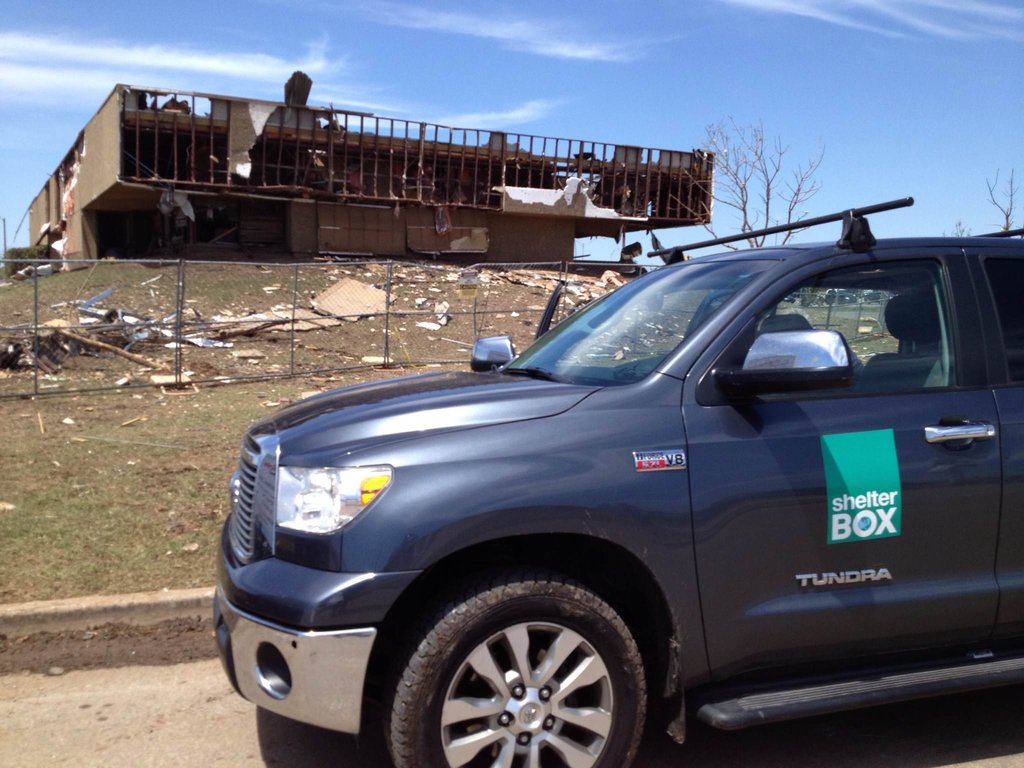
On May 19, a devastating two-mile wide tornado tore through Moore, Okla., with winds up to 200mph destroying neighborhoods, killing dozens, injuring hundreds and displacing thousands. Members of the highly-trained ShelterBox Response Team (SRT), Wayne Robinson, of Roswell, Ga., and Jeff Deatherage, of Leawood, Ks., were immediately deployed to the Oklahoma suburb where they began assessing the need for emergency shelter and other lifesaving supplies for the vulnerable families.
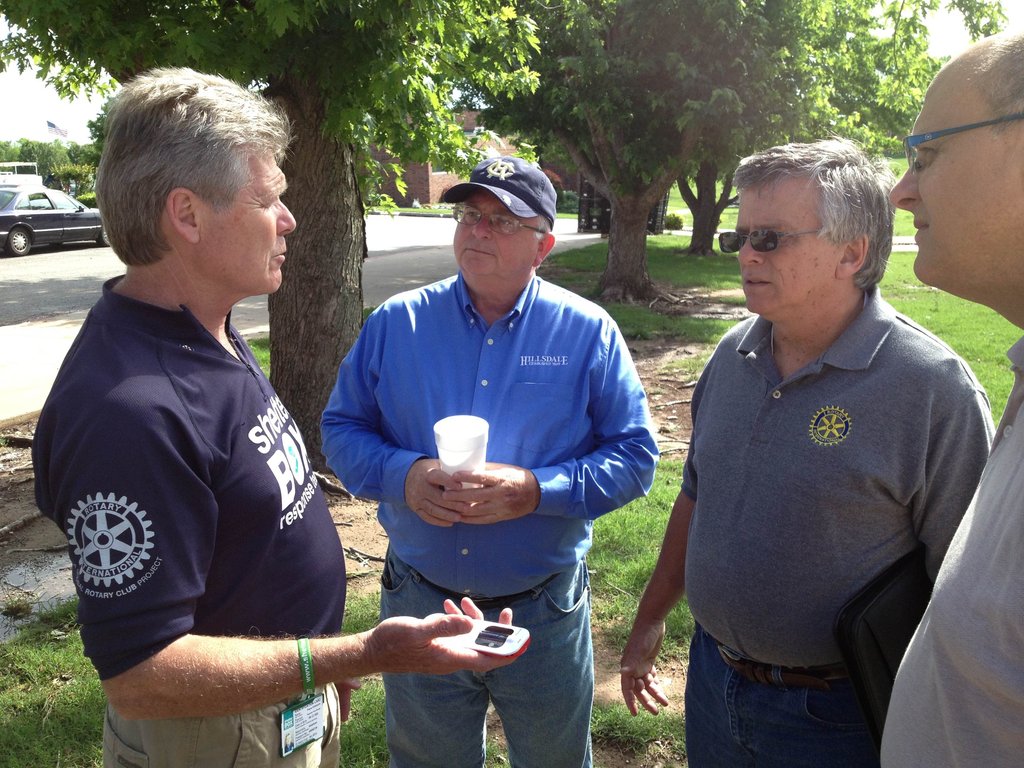
The team worked with local volunteers and emergency mobile phone company, SpareOne, to provide a means of communication to the most vulnerable families.
“The SpareOne phones distributed will allow survivors to have quick access to emergency services and keep in touch with their loved ones at a very difficult time in their lives,” said Emily Sperling, ShelterBox USA president.
Uganda
Having endured conflict, mudslides, a cyclone and severe storms that had swept through the country last year, several regions of Uganda suffered the flooding and damage from torrential rains this spring.
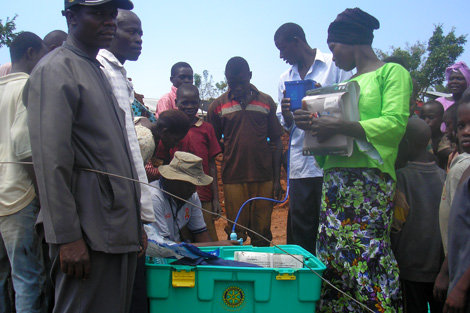
In May, continuous heavy rain fall in the western Kasese region caused what the country’s authorities are calling the “worst flooding since 1976.” Homes were washed away, hospitals inundated and roads made impassable. The SRT was on the ground immediately, and began working to identify emergency shelter and other non-food item needs among families and communities. ShelterBox partnered with local partners to distribute ShelterBoxes that had been prepositioned in the country's most disaster-prone regions on previous deployments.
In March, torrential rains swept houses away, displacing thousands in the country's southeastern Mbale district, a region that had been hit by three disasters over the past twelve months. A response team collaborated with the Rotary Club of Mbale and local aid agency, Volunteer to Support Children, to distribute boxes to the families that had been left with nothing.
Pakistan
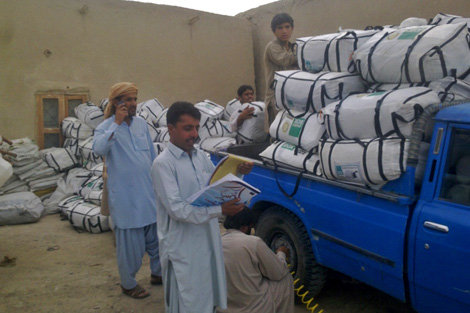
A 7.8-magnitude earthquake destroyed local houses and shops in Mashkail, an isolated area in south-western Parkistan. Although national relief efforts were underway, the isolation caused significant delay in the delivery. Prepositioned ShelterBoxes in Islamabad held by the National Rural Support Programme (NRSP), and ShelterBox’s implementing partner The Balochistan Rural Support Programme (BRSP), enabled emergency aid to be delivered quickly to the affected families.
Myanmar
Commonly referred to as the Burmese Civil War, conflict and fighting between the Kachin Independence Army and the Myanmar Army restarted in June 2011 after a 17-year-old ceasefire broke down and continued throughout last year. A ShelterBox Response Team (SRT) travelled to Myanmar to meet with local and international agencies to find the most suitable way to support the thousands of families displaced by the conflict. the to discuss plans with local government and international organizations to find a suitable way to support the thousands of families displaced by the Kachin conflict in the north of the country.
ShelterBox and the Agency for Technical Cooperation and Development (ACTED), agreed to work together to deliver aid to the vulnerable families. A cargo of ShelterBoxes was routed to Myanmar by sea, where ACTED carried out the distribution to families within the Kachin State.
Madagascar
Tropical Cyclone Haruna made landfall over the southwest coast of Madagascar in late February. The Category 2 storm brought heavy rains that caused a tsunami-type flood with millions of tons of sand and soil that destroyed thousands of homes and nearly 20,000 acres of agricultural land. Tens of thousands of people had lost their homes and belongings in the storm.
Madagascar's desolate landscape and limited road access make it a challenging environment for humanitarian organizations to operate in, as it can be restrictive in transporting aid to those in need in the most hard-to-reach areas. Having previous experience responding in the country, an SRT was able to respond immediately, delivering boxes that had been prepositioned in the country’s capital, Antananarivo, to families in desperate need of emergency shelter and additional lifesaving supplies.
Australia
Tropical Cyclone Oswald caused the banks of the Burnett River to burst in Queensland, after high winds and torrential rain lasted for days. The city of Bundaberg was one of the hardest hit by 31-foot flood that swept through the northern part of the city, inundating houses with water and mud.
Although the destruction was widespread, the government and local habitants reached out to the many families made homeless by the disaster, and sheltered them in undamaged homes in the area.
ShelterBox has recently distributed ShelterBoxes to families displaced by the recent bush fires in Tasmania, that followed the recent devastating floods that caused millions of dollars worth of damage.
Lebanon/Syria
Two years of ongoing conflict and political unrest has caused millions of Syrian families to flee. Since last fall, ShelterBox has been providing humanitarian aid to refugee families living in Iraq, Lebanon, Jordan, and Turkey, and continue to work with implementing partners to pipeline ShelterBox aid to internally displaced families within Syria's borders.
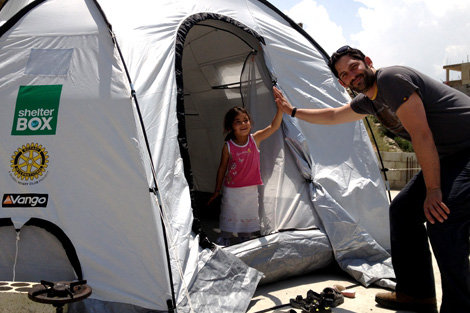
ShelterBox was the first international disaster relief agency to provide tents to Syrian refugees living in Lebanon, and has since distributed nearly 1,000 boxes to families in isolated regions.
Having been working closely with the Lebanese government to identify the need for humanitarian aid since August 2012, ShelterBox was the first agency to respond to the Minister of Social Affair's request for international assistance in January 2013. Because there were no refugee camps in Lebanon, it became obvious that the influx of Syrian families would overwhelm and nearly exhaust the small country's resources.
According to the United Nations Refugee Agency (UNHCR), 6.8 million people have been forced from their homes in the war-torn country. Many now remain within the borders, homeless, and without any possessions. After 18 months of studying new routes, the ShelterBox Operations Team believes they have found a new route that will deliver vital equipment across the Syrian borders, directly to the families in need.
Due to its dangerous environment, delivering aid and other survival materials has been extremely difficult for most humanitarian organizations. However, ShelterBox teamed up with Hand for Syria (HIHS), one of the charities present in Syria, to deliver essential aid to Syrians desperately in need.
Today, SRTs continue to deliver emergency shelter and supplies to those who need it most in Lebanon and Jordan.
ShelterBox’s vision is to help 50,000 families who lose everything in a disaster every year.
Links:
Project reports on GlobalGiving are posted directly to globalgiving.org by Project Leaders as they are completed, generally every 3-4 months. To protect the integrity of these documents, GlobalGiving does not alter them; therefore you may find some language or formatting issues.
If you donate to this project or have donated to this project, you can receive an email when this project posts a report. You can also subscribe for reports without donating.