Project Report
| Mar 13, 2017
Somali Girls access education.
By Mohamed Abdille | Programs Officer
Garissa county is largely inhabited by people of Ethnic Somali, educating a girl is like touching a live electric wire, there is a somali saying which goes by "Gabar ama Gunti rageed ama God hakagajirto" literally meaning a girl should either be married or in the grave. It's this saying i think that encouraged most Somali parents not to educate the girl child unlike boys.
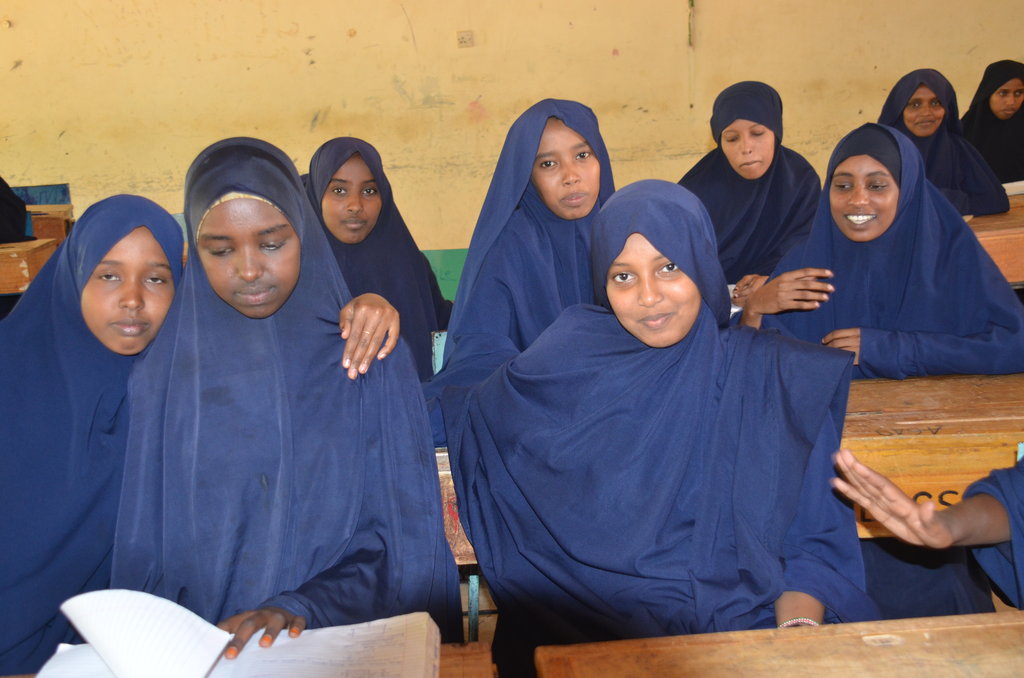
Boys are encouraged to enroll in learning institutions, because parents believe, boys outdo girls in education and that girls were best at helping their mothers to do house chores. Many girls are at home doing domestic work and their brothers are busy studying, I spoke to one of them and she said she badly needs Education. ZamZam 19, said she don't feel comfortable staying at home cooking, washing utensils and what have you. Her brothers are in all high school shaping out their future. "Education is the only tool to eradicate poverty and ignorance," Said ZamZam.
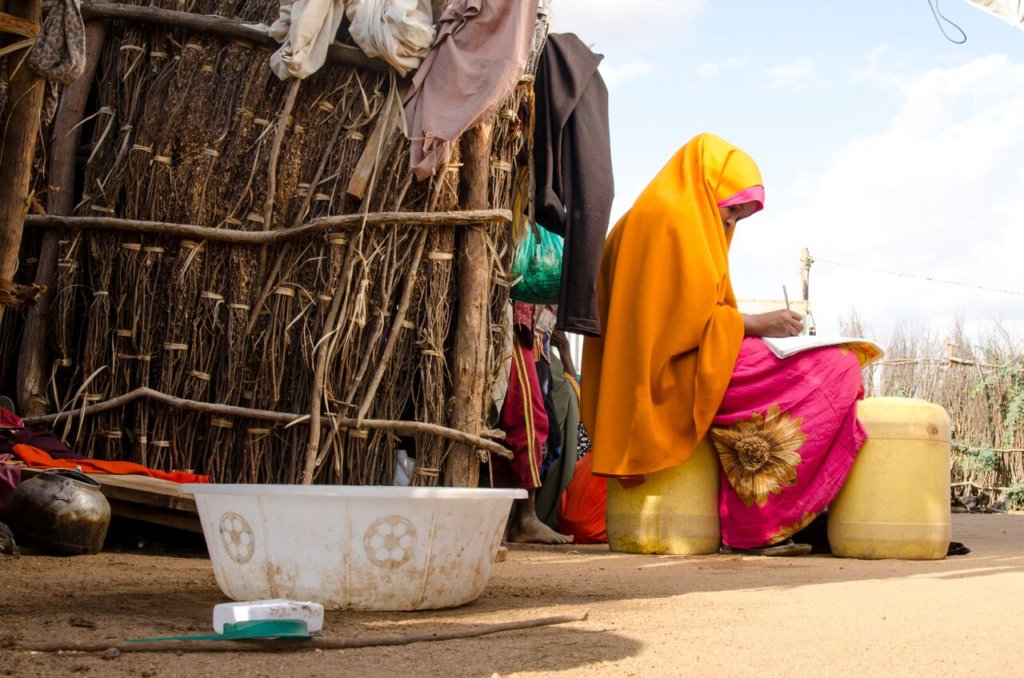
Girls are among the first to be impacted by climate change specially in the scope of education. In instances of extreme weather events, school going girls are often removed from school to help contribute to the household income or take over domestic responsibilities. This is normally contributed by the fact that, their parents or guardians are unable to cater for their upkeeps considering the economical status of their families. Many at times these girls do not return to school to complete their education. For example girls have to travel further to fetch water or firewood during drought periods. In consideration of the aforementioned problems, PGI intervened through GlobalGiving programme by offering scholarship, sanitary towels, uniforms and stationery to the neediest students. The perennial drought, normally experienced in Garissa County force families to migrate the village in search of water and pasture thus leading to increased drop out cases. In recent years, pastoralist communities have immensely lost their livestock due to depleted pasture. In this regard many parents are left with no choice than to remove their girls from schools. The organization interventions have been highly beneficial in containing the Global giving beneficiaries in schools.
Thanks to GlobalGiving. The ongoing send Somali girls programme has adversely impacted many girls with a high increase of the beneficiaries currently receiving assistance from the project, we managed to retain many girls in school in the entire county despite the severe drought. This funds received eased parents the burden of paying fees, purchasing uniform, sanitary pads and stationeries thus retaining girls in school more so those affected by the drought.
![Share on Twitter]()
![Share on Facebook]()
Dec 13, 2016
50 girls provided with School uniforms.
By Mohamed Abdille | Programs Officer
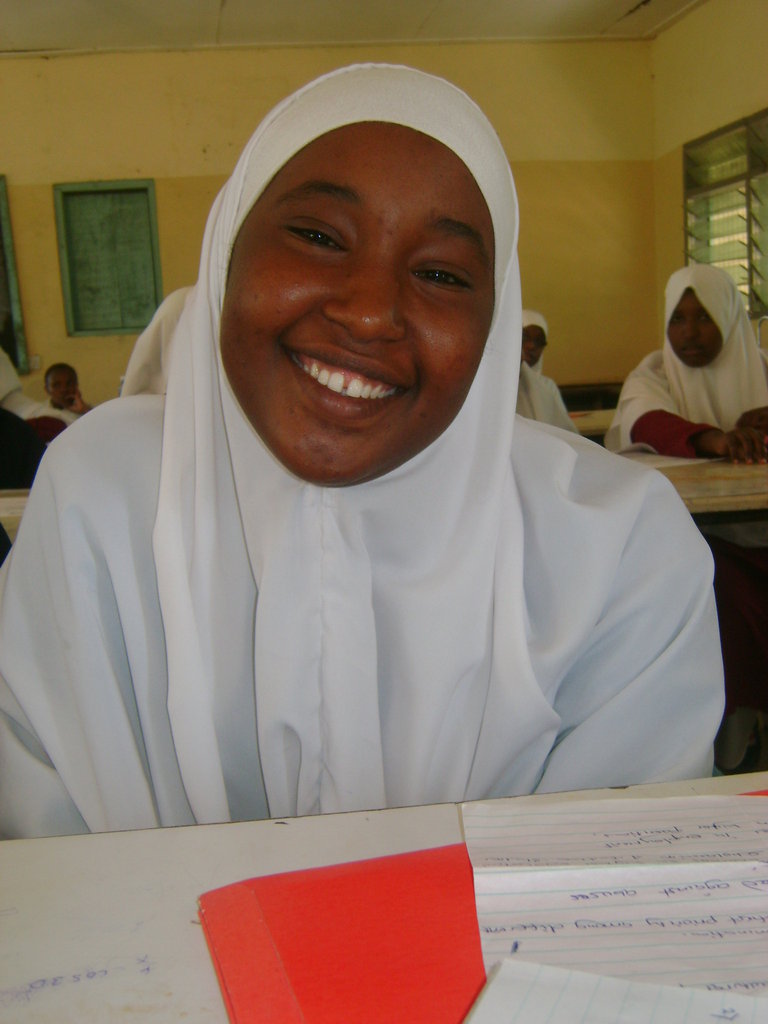
![One of the girls beneficiary of the school uniform]()
One of the girls beneficiary of the school uniform
As the year 2016 ends, We are pleased to report that the project send somali girls to schools has achieved tremendous support from the community, girls and schools. PGI is gratitude as we count the many direct and indirect beneficiaries of our project. We celebrate the girls who completed their end of year exams and performed well while others are exited to join secondary after completion of the primary school. The beneficiary girls have performed well in the end of year exams and girls graduating to the next class with no girl who drop out of school or absenteeism since PGI under the funds received from GlobalGiving manage to support girls with sanitary supply for a whole year. This supported the girls have enough supply and reduce girls missing classes and girls hygene has imprved for they have the knowldged and how to use sanitary towel.
The send somali girls to school aims to bridge educational gaps for vulnerable secondary school girls in Garissa County that are most marginalized and vulnerable girls. The project has boosted the girls enrollment in secondary schools and reduce child marriages, girl child labour, and enhanced their performance in learning by retaining them in schools without the interference of being chased from school due to lack of school fees, uniform, books and sanitary towels.
This quarter PGI managed to procure school uniforms for 50 girls in the project to enhance their performance in learning by retaining them in schools without the interference of being chased from school due to lack of school uniforms. The community, schools and parents of the girls appreciated the role PGI plays in supporting girls who are less fortune and most of the time drop out of school due to lack of basic needs. Most of the girls supported with school uniforms families earns less than 1$ a day and cant provided schools uniforms for their daughters.One of the girls parents said, “she was ashamed every morning when her daughter leaves for school in tattered school uniforms and her daughter determination to continue with school has answered her prayers she has been asking God for someone to come and rescue her daughter situation” She thanked PGI and the school for covering her shame of not being able to give her daughter school uniform.
Its due to this project and many other projects that support girls that has earned PGI a prestige global award for girls. The With and For girls award was given to PGI this November and Global Giving project contributed to the success of PGI girls programs.
Thank you so much for your generous support of PGI, through your generosity families and girls are getting the care they need to access education. Please accept our gratitude.
Links:
![Share on Twitter]()
![Share on Facebook]()
Sep 13, 2016
Distribution of Sanitary Towels to girls schools.
By Mohamed Abdille | Field Officer
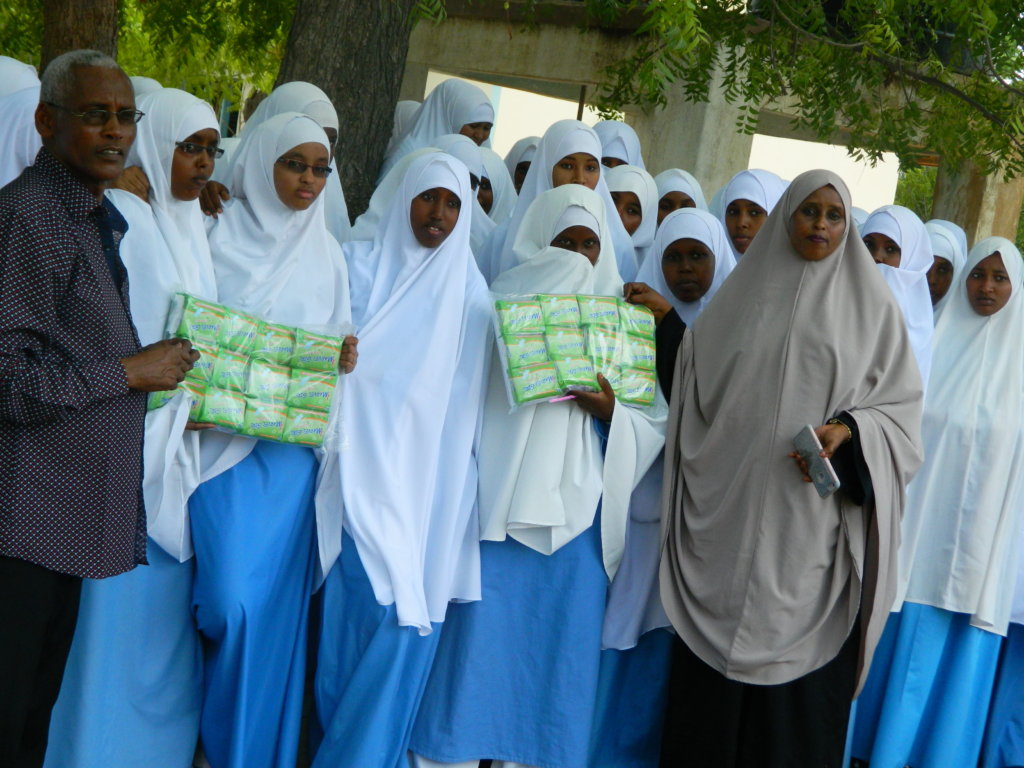
![Distribution of sanitary]()
Distribution of sanitary
Education is a basic human right that should be exercised fully in our nation but for many girls in Garissa, attending school is not an option. A girls’ education is an essential starting point in establishing equality everywhere. Despite the Kenya constitution guaranteeing equality before the law and non-discrimination on the basis of sex in the country. There are schools, but most girls do not attend, often because of religious reason or cultural pressure.
Many countries have been successful in reducing school fees since the installment of the UN Millennium Goals, and attendance has skyrocketed. However, the expense of the school uniform is still preventing too many girls from the benefits of an education. Uniforms remain an unaffordable luxury, though, for many families in Garissa County. The cost could be very expensive. Although their educational purpose is essential, the value of a uniform naturally ranks lower in the household budget than, say, the next meal. So, if uniforms are so detrimental to the access of education, then why are they still in place? Many parents support them because they encourage good behavior in the classroom and qualify students for reduced fees on public transportation.
It is a wide spread but acknowledged problem that menstruation and lack of sanitary products is a barrier to girls’ schooling. It is established that many girls in Garissa County stay at home because of menstruation. Regular absences can lead to gender imbalances with male student attending more classes than the female student and rising higher in the class rankings. Gender disparity and routine absence often lead to female students falling behind or dropping out of school entirely shrouded in mystery, menstruation for young girls in Garissa county end up being a stumbling block for their education. Many girls reach the state of puberty having no idea of what is happening to them when they begun menstruating. They are ignorant about sexual reproductive health because their parent does not talk to them about puberty and menstruation. “Before learning that menstruation is a natural thing that every girl goes through it, I used to be absent from school for all days of my period,” Said Samo, 15, Iftin Girls Secondary School.
After receiving funds this quarter we managed to procure full school uniform and sanitary pads for 100 girls. The lack of uniform and sanitary pads greatly inhibits education and encourages dropout rates since it forms the foundation for learning. The impact of these projects on girl child education is extra ordinary. Many girls who could not afford uniform and sanitary pads benefited from the project this term. At the turn of send 200 girls to school PGI will ensure that by vision 2030 there would be as many girls as boys in school.
![Share on Twitter]()
![Share on Facebook]()