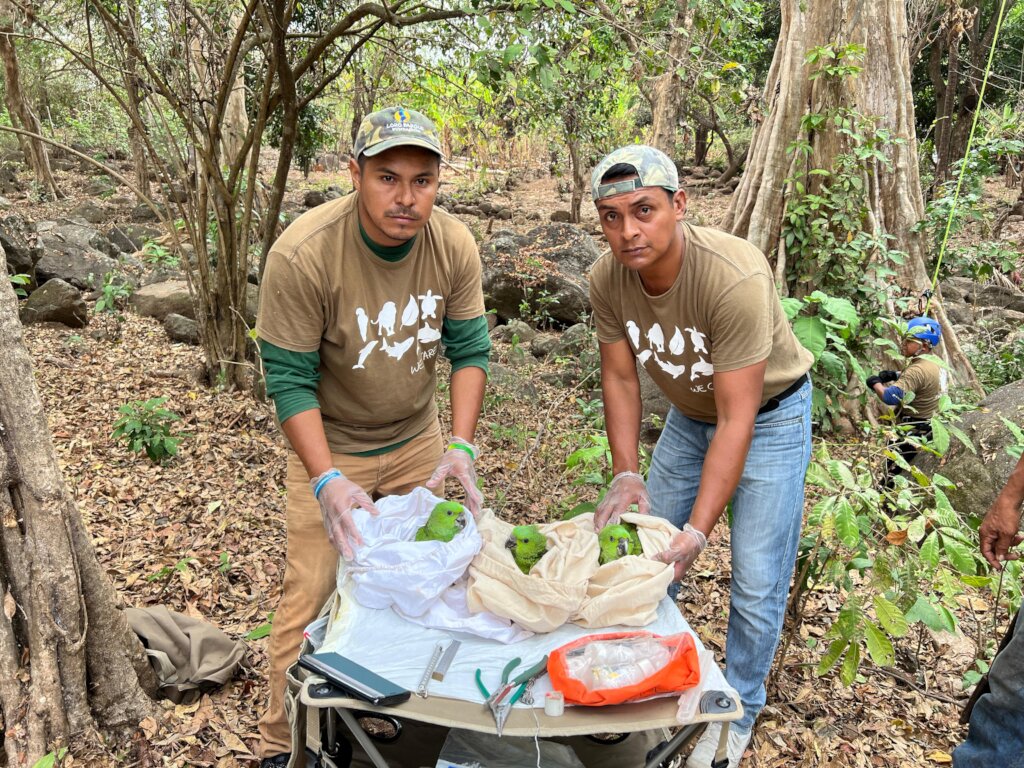
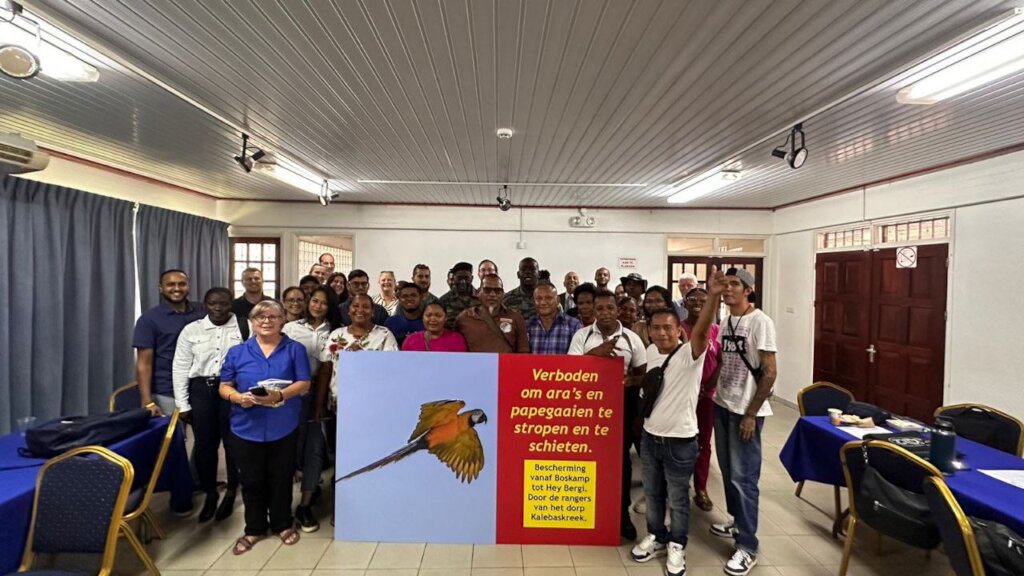
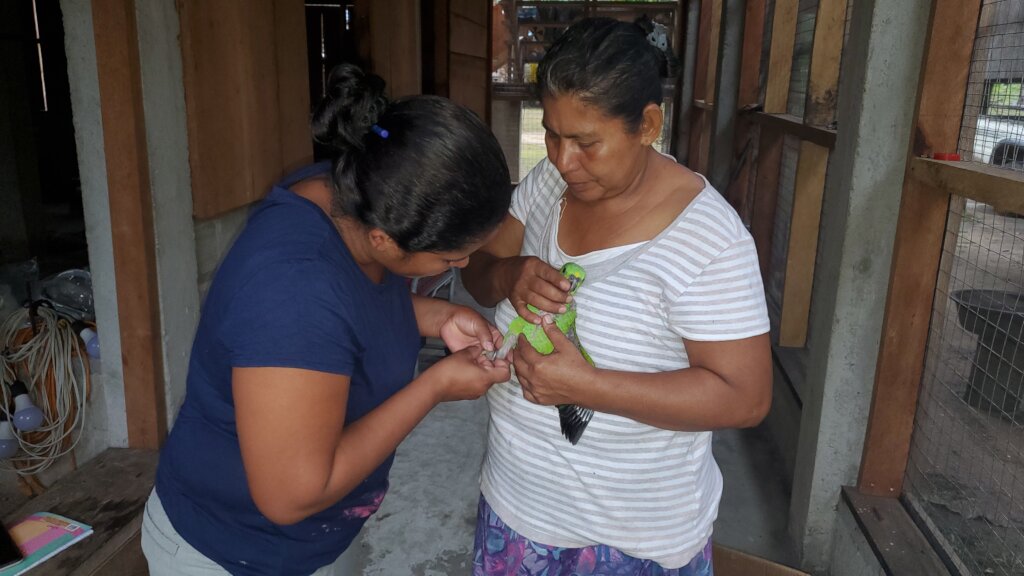
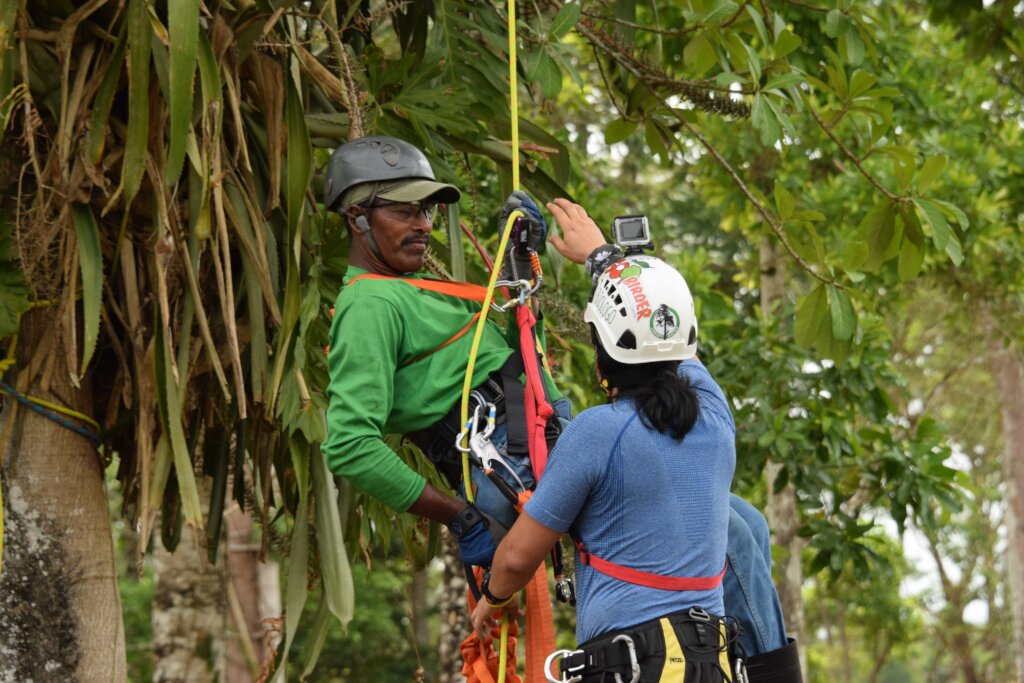
OEC collaborates with local villagers and NGOs in 7 countries in the Americas. We study people and parrots in places of need to learn what they require and tailor our activities according to the wishes of the local, marginalized and/or Indigenous people. OEC helps them develop conservation plans and capacity, teaches them social, emotional and organizational intelligence and prosocial concepts and connects them with partners such as government agencies, universities, global NGOs and scientists.
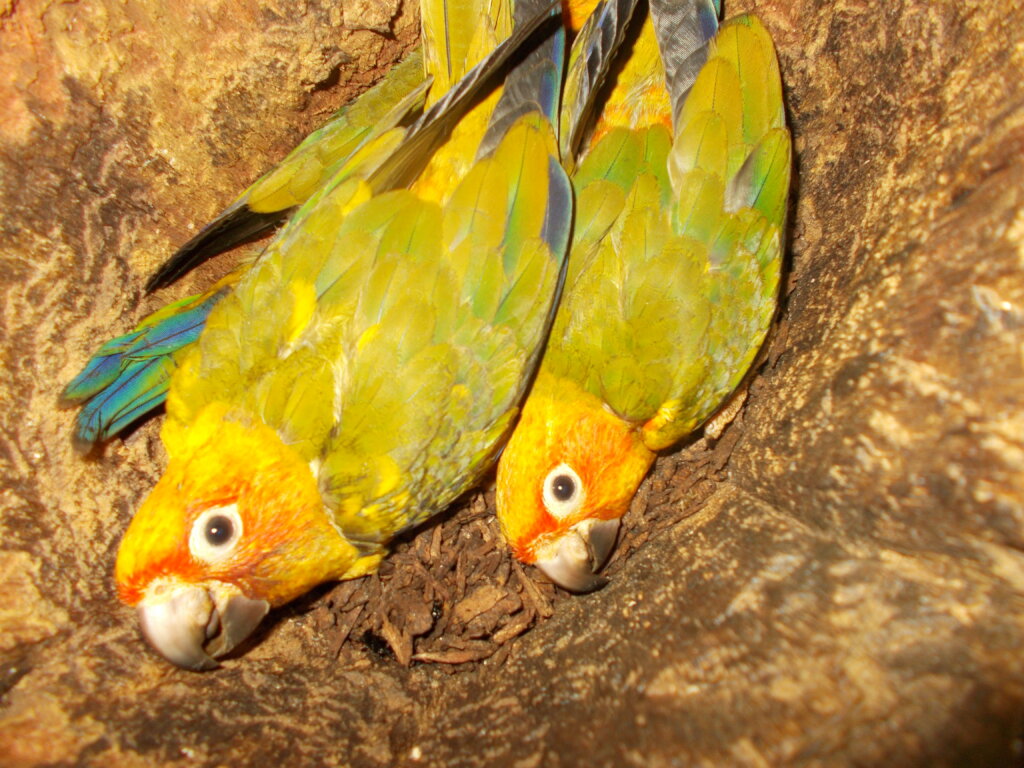
Parrots are the most endangered group of birds on the planet, with 33% rated with a conservation status of vulnerable to critically endangered and over 50% of studied populations decreasing. The situation is serious and urgent. OEC's expertise is working locally with marginalized communities, especially Indigenous villages in the Americas, so they gain and strengthen their capacity to conserve local biodiversity, change their attitudes towards their parrots and expand their economic options.
We don't seek to change people's behavior as much as make it possible for them to change each other's behavior. This orients them towards the meaning of wildlife to their culture and gives them a purpose beyond earning income. These are long-term, sustainable changes. Our partners learn to conduct sustainable parrot conservation as we support them with training, funds, guidance and solidarity. They learn their values can preserve biodiversity and they become able to manage their own projects.
OEC's field projects' short-term impacts are to improve parrot and human welfare and protect forest biodiversity. Project participants also raise awareness of the status of parrots worldwide and the need to protect them. Achieving these short-term goals serves as foundations for longer-term impacts, including reversing the decline of parrots, restoring depleted populations and improving human welfare and biodiversity health in the places where parrots live.



Support this important cause by creating a personalized fundraising page.
Start a Fundraiser