![]()
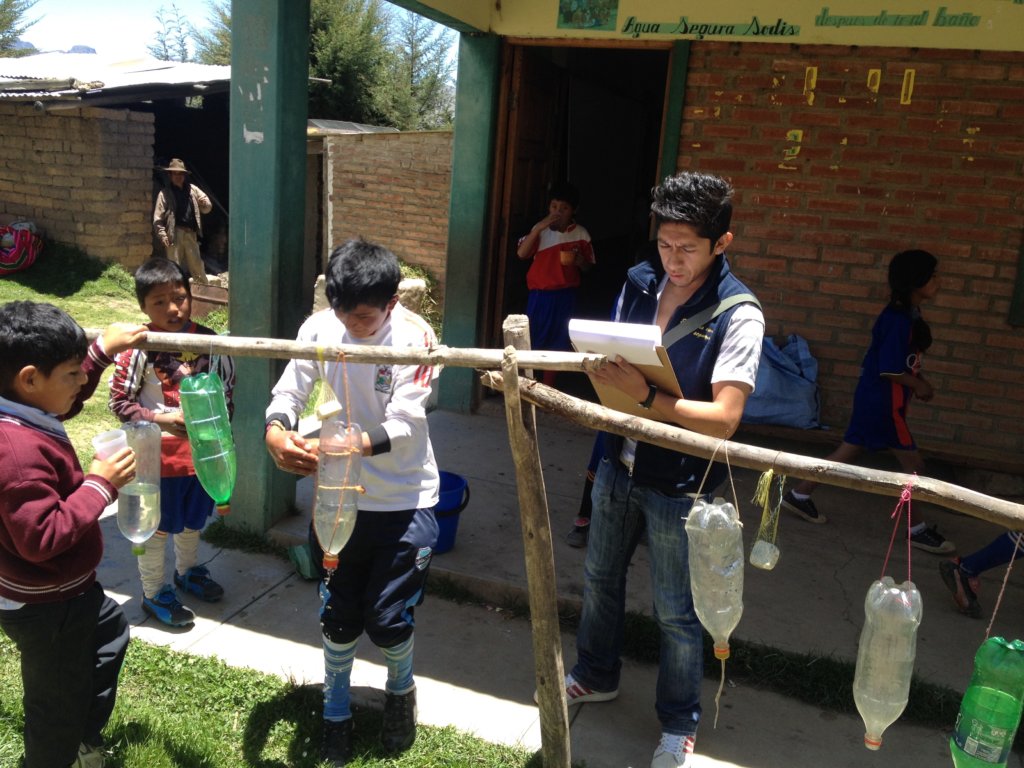
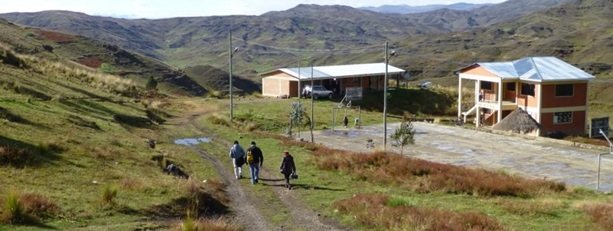
Throughout each months of December, the Fundación SODIS proceeded to an evaluation of the WASH project (Water, Sanitation and Hygiene, HASS in Spanish) in the Educational Units (E.U.) of Tiquipaya. The outcomes of this evaluation will here be reported.
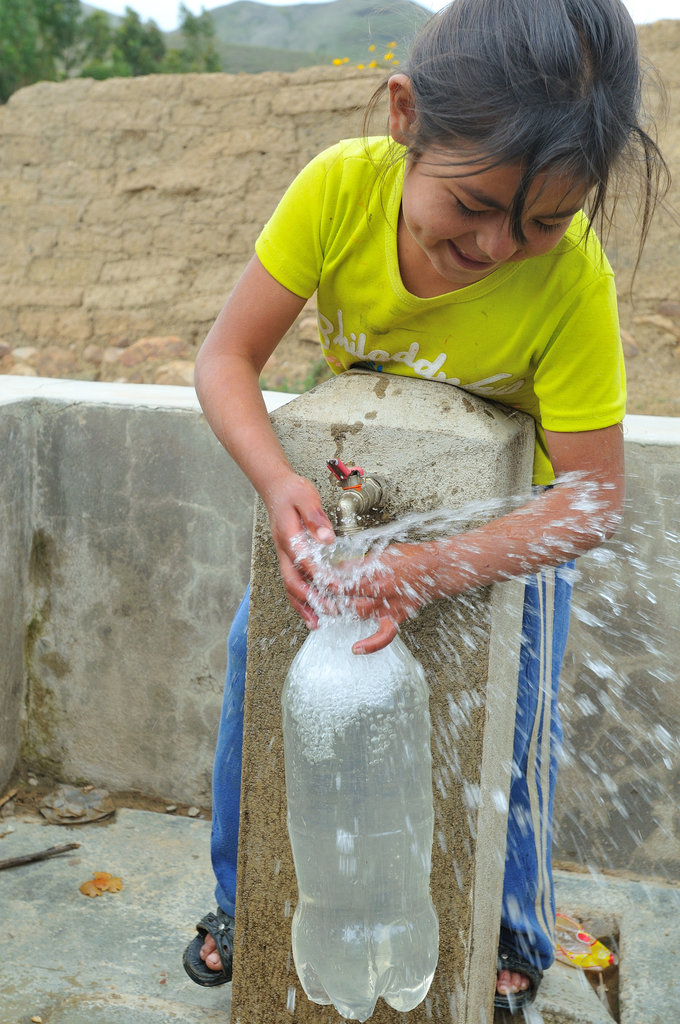
In order for the Educational Units to practice WASH throughout the entire scholar year, it is necessary that they have the appropriate infrastructures for the supply of drinkable water, personal hygiene and sanitation.
Overall, it has been observed that the E.U. of Tiquipaya have proven that they can use and maintain the infrastructures necessary for the practice of WASH, which were introduced during the project.
Water quality
Water quality analysis performed while visiting the E.U. in the diagnostic phase of the project, showed fecal contaminations in the principal source of drinking water in almost three quarters of the schools (26 out of 36).
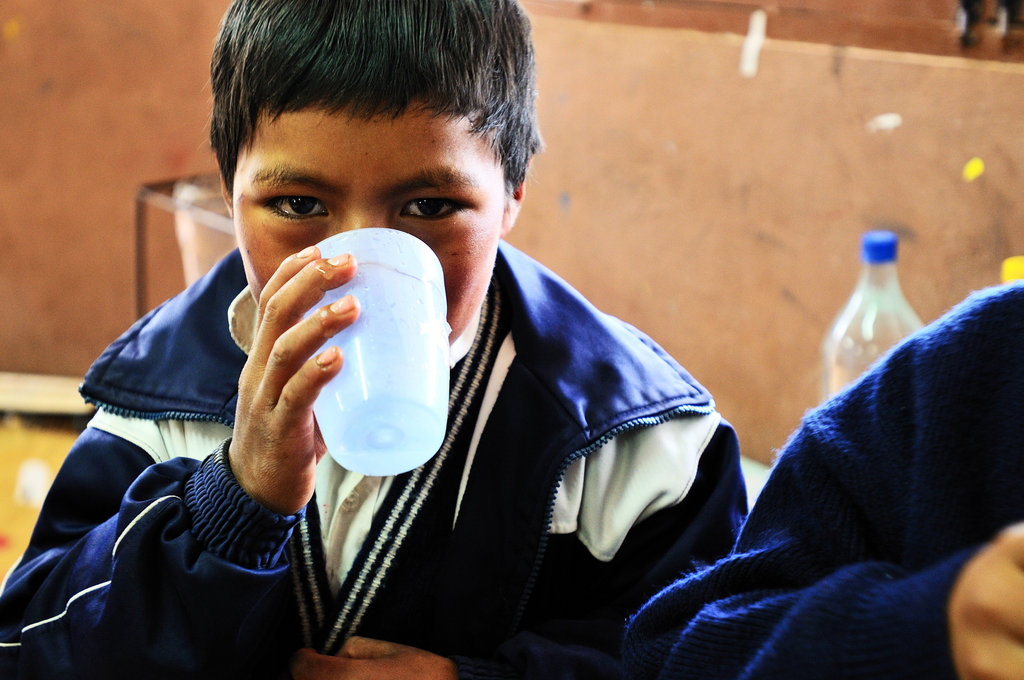
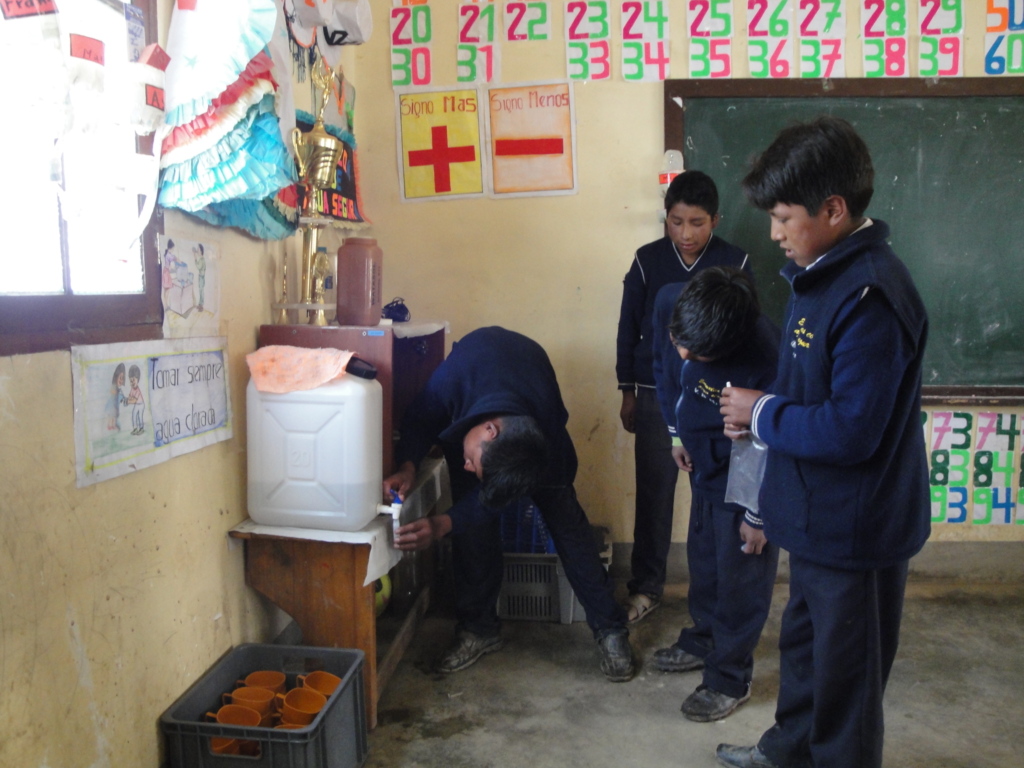
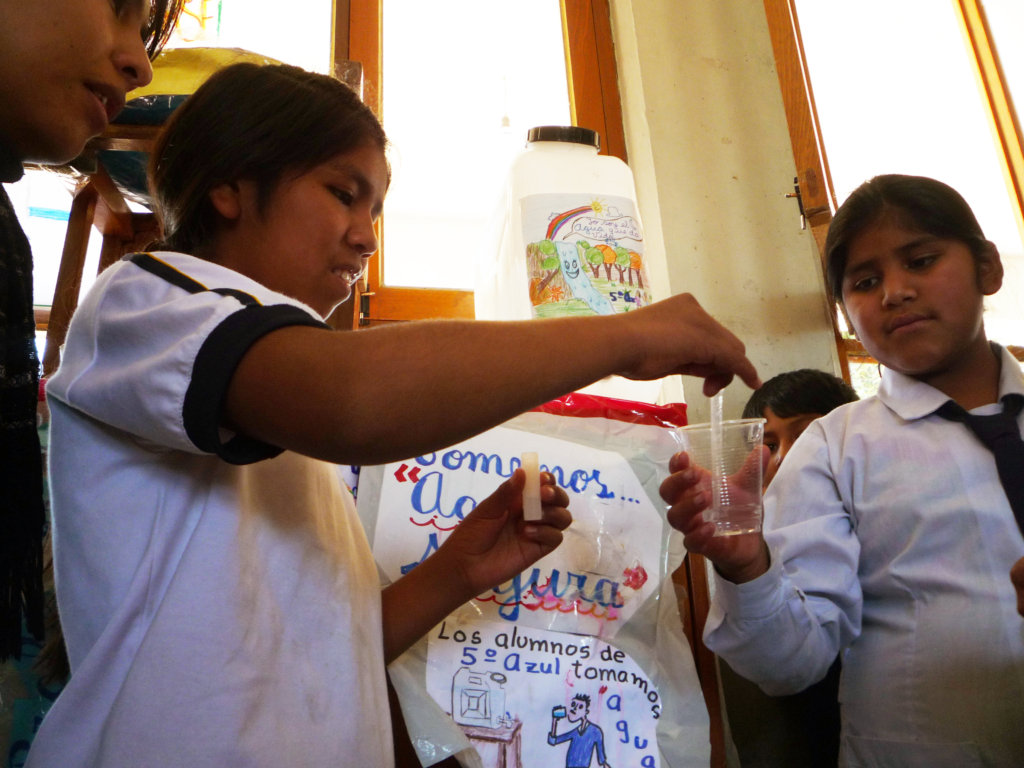
These results demonstrated the urgent necessity of treating water at all time. A strategy was thus developed with on one side two methods of water treatment:
- Sun-rays based disinfection, SODIS (Solar Disinfection) Method,
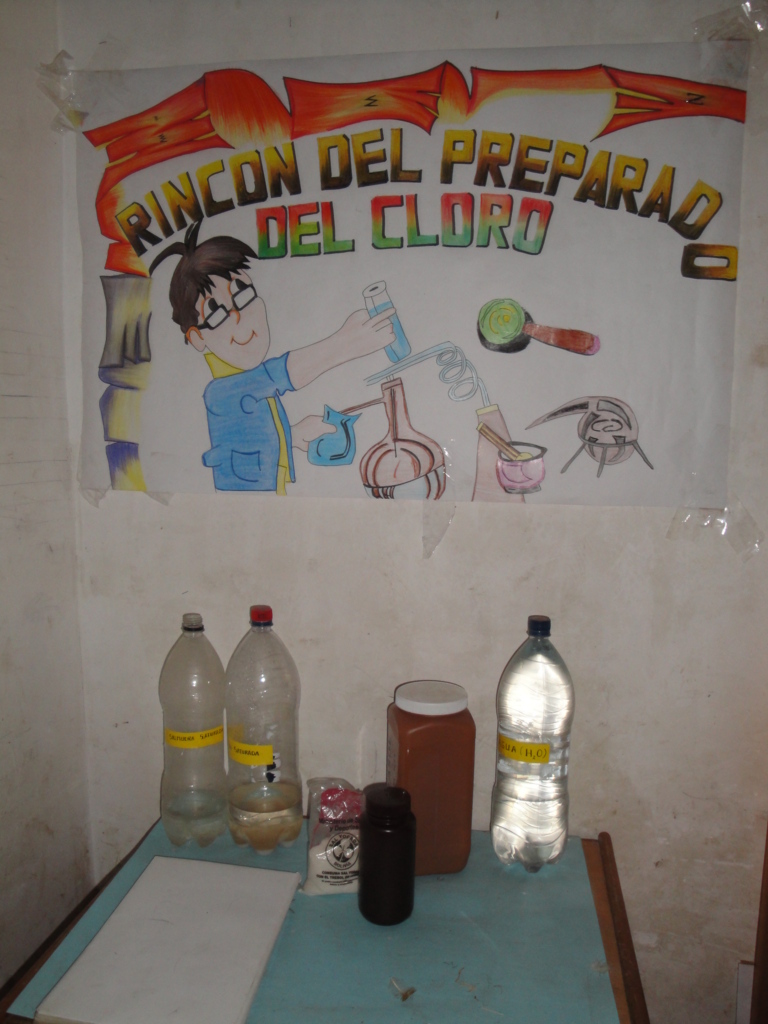
- Chlorine-based disinfection (Mini Wata)
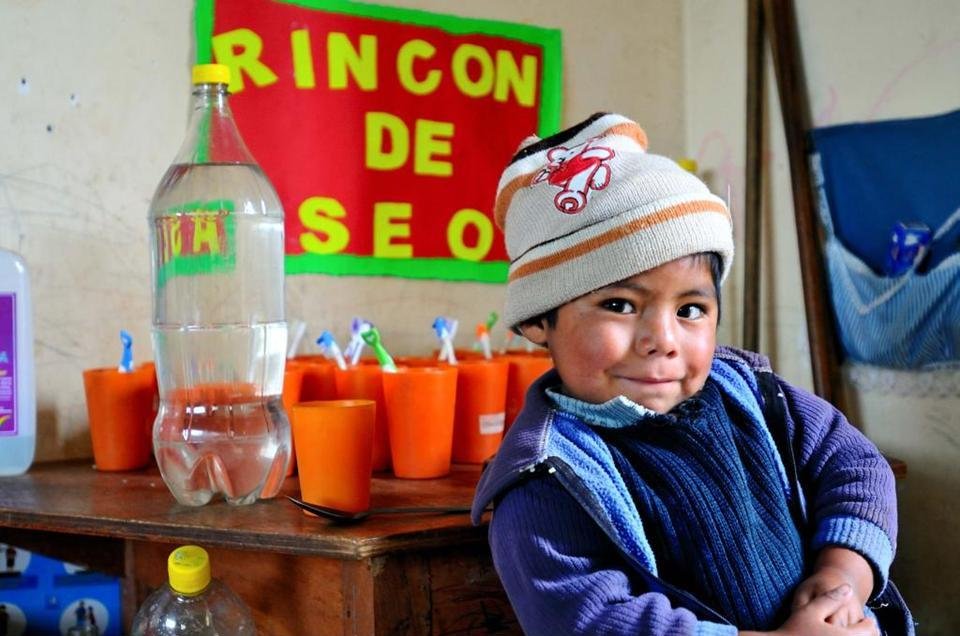
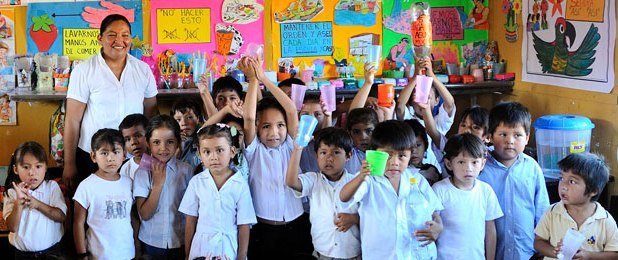
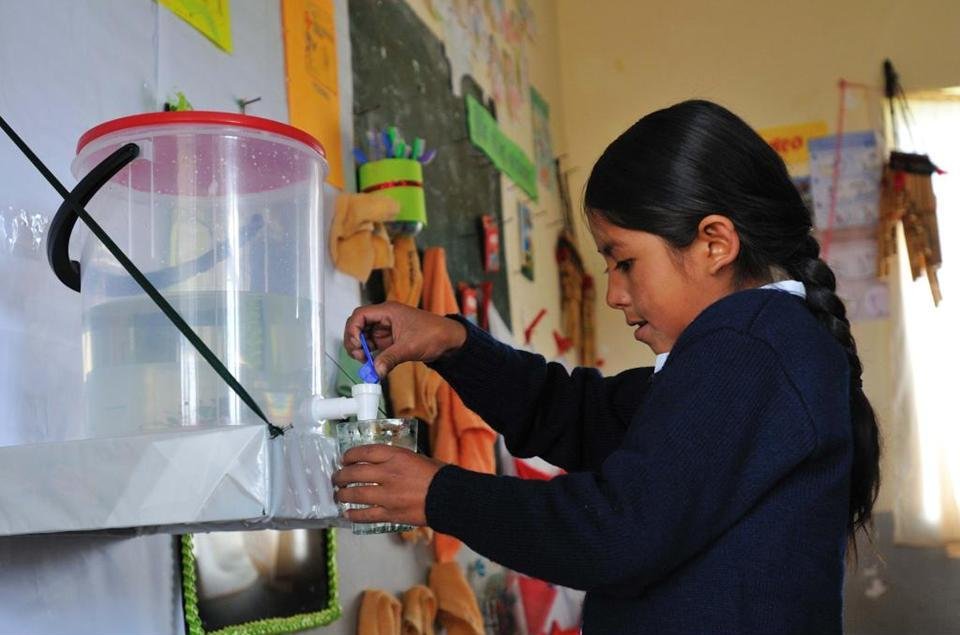
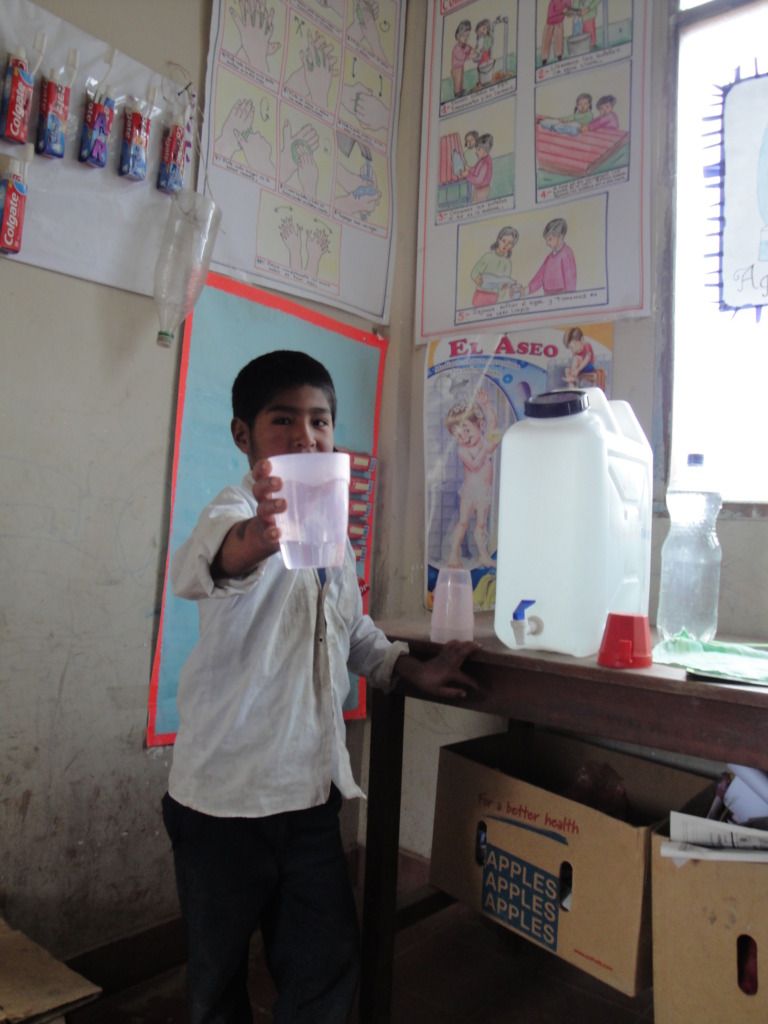
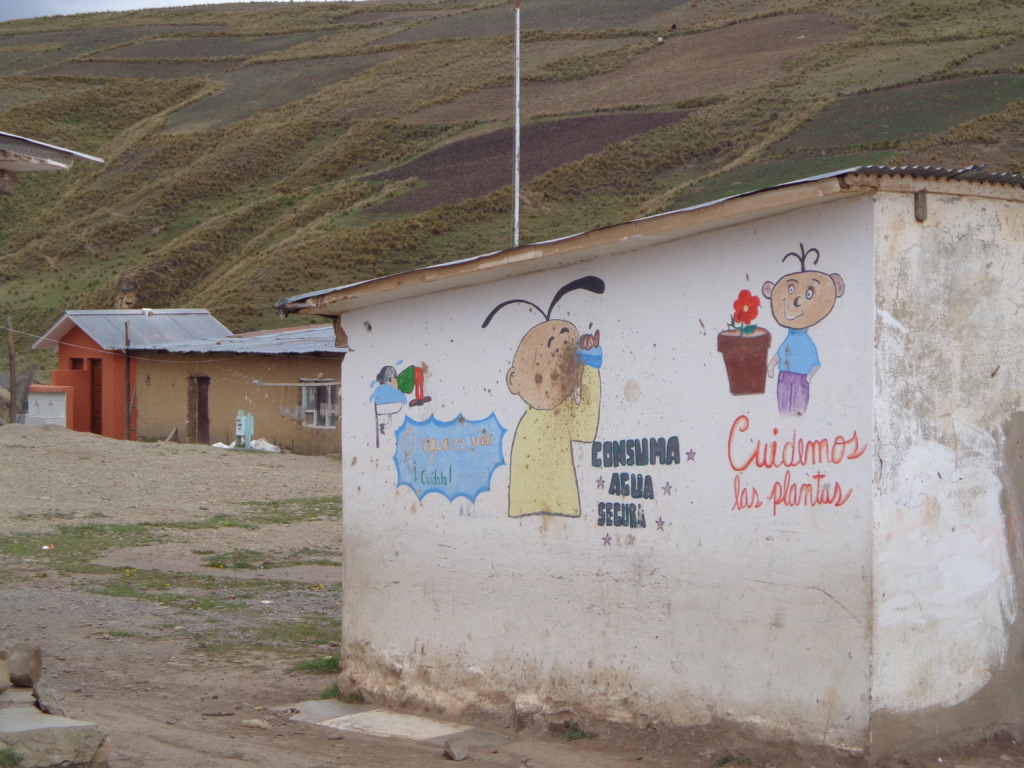
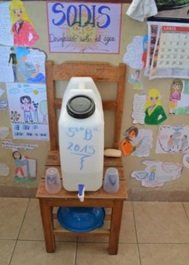
and on the other side the creation of a "Safe Water Corner" in all class rooms. This strategy was a complete success.
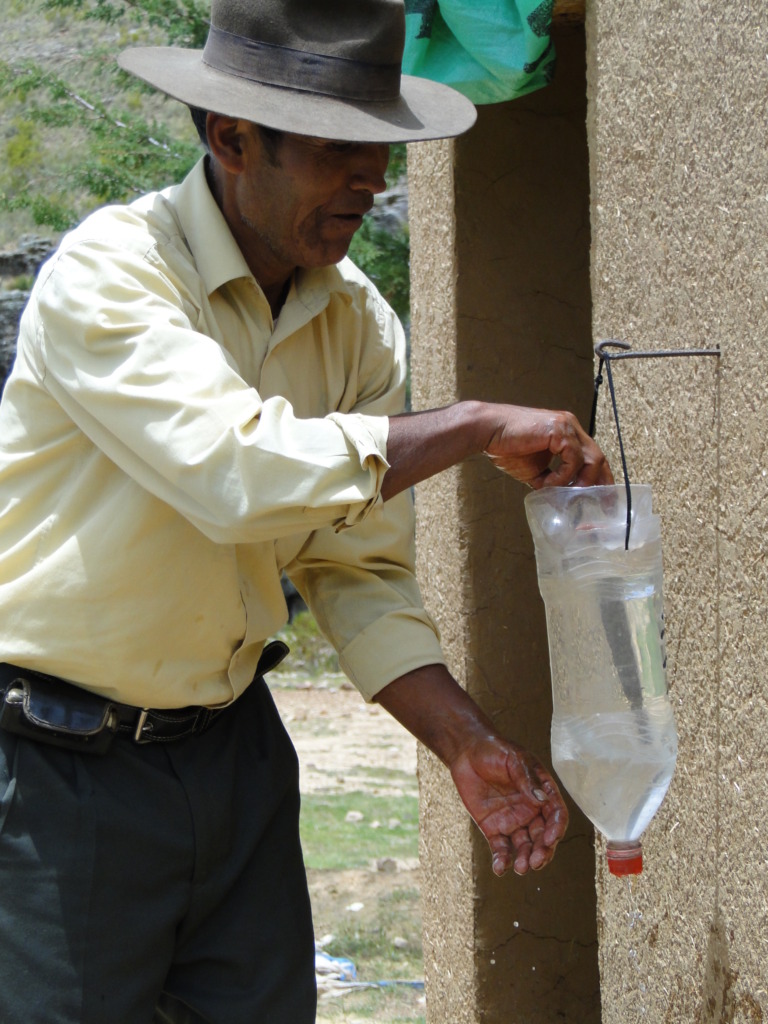
The Fundación SODIS observed in December that a large majority of the infrastructures used in the treatment and storage of water were in a good condition and found in strategically placed areas of the Educational Units. SODIS method, for example, was mostly applied on the SODIS platforms which were installed during the project.
Those E.U. having to treat bigger volumes of water with the SODIS method, built extra platform with calamine, otherwise, they used their roof and outer walls. With the exception of two cases, the Mini-Wata showed good functioning in the Educational Units.
Sanitation
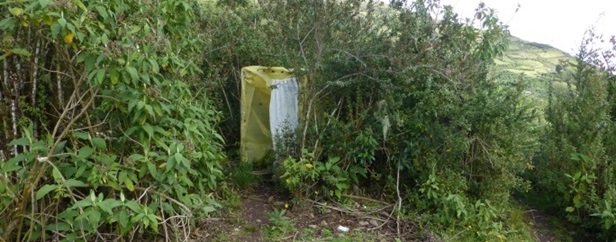
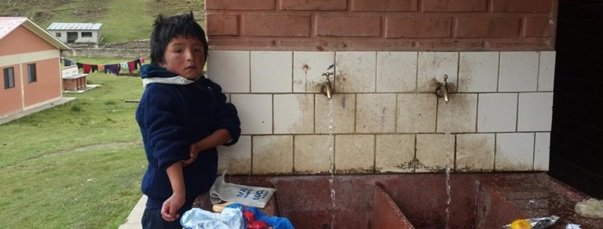
Almost half of the Educational Units (17/36) have, as required by the OMS standards, at least one bathroom for every 25 female students and one bathroom for every 50 male students. In 25 of the E.U. all bathrooms were functioning while in 4 E.U. one was damaged and in 7 E.U. two or more had undergone degradations.
WASH management
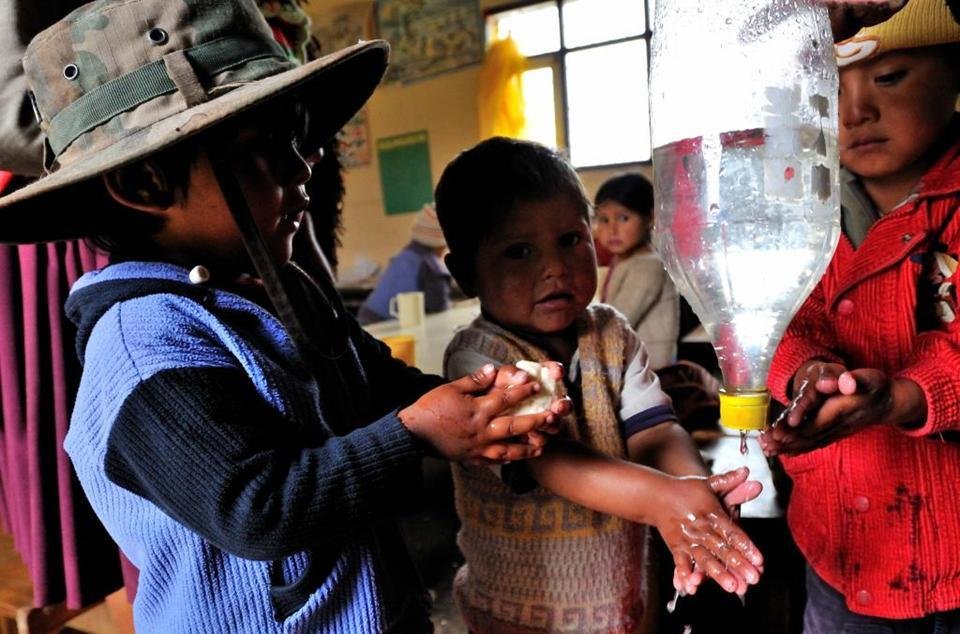
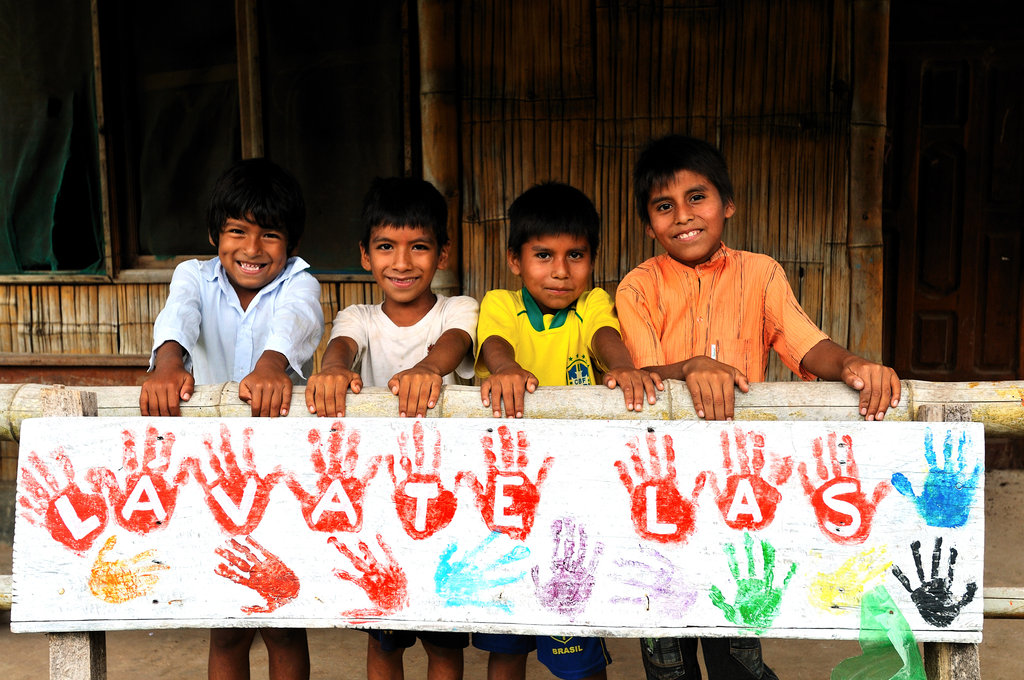
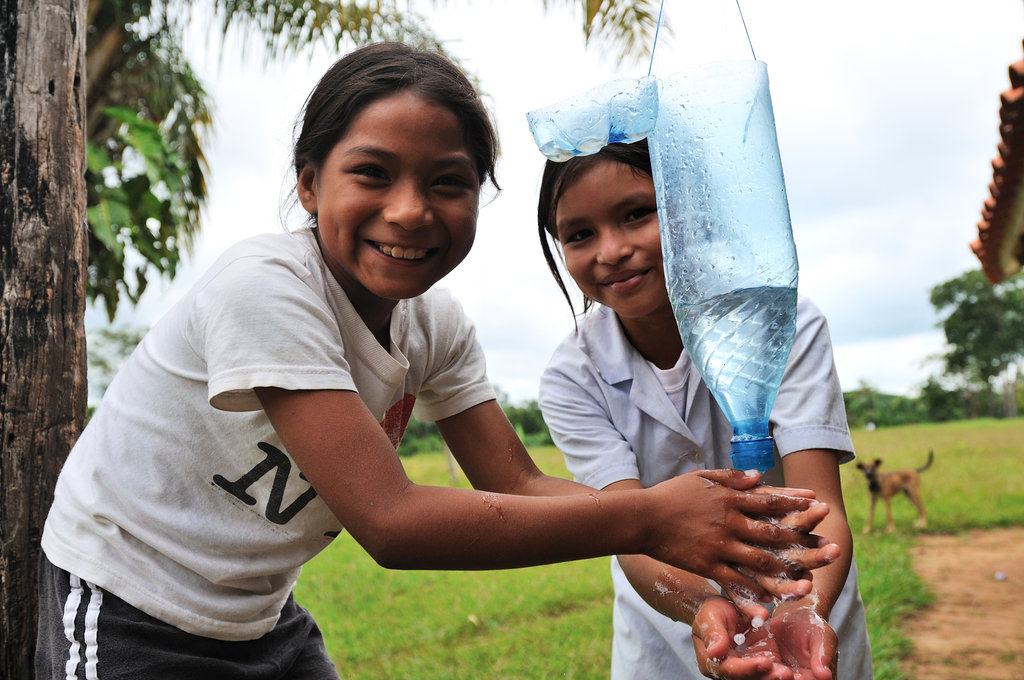
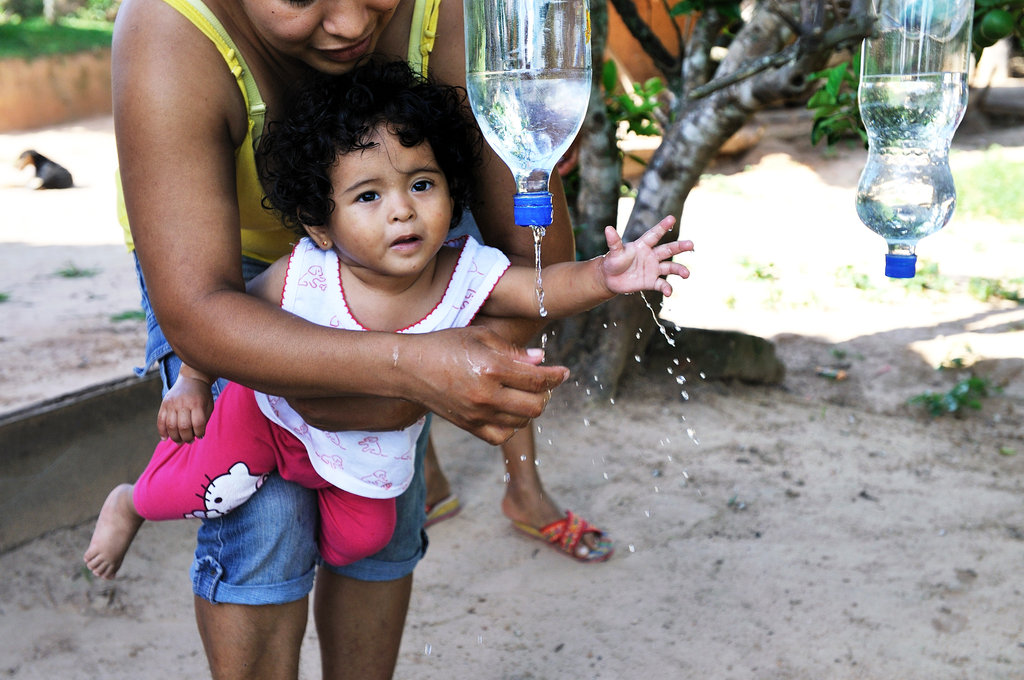
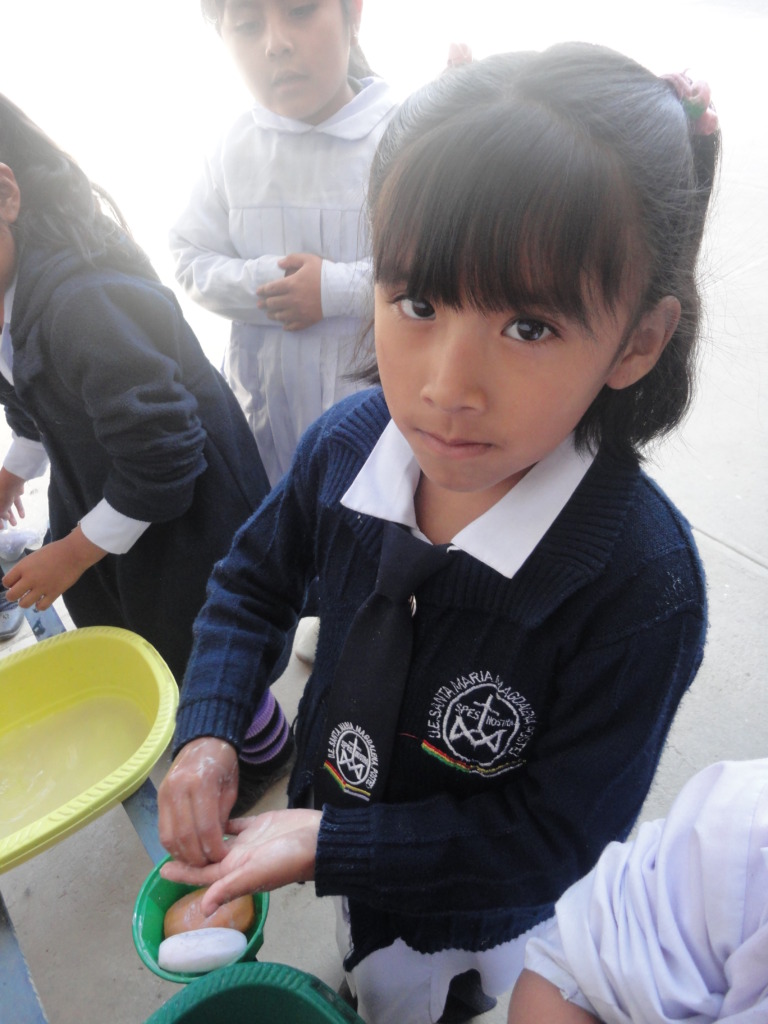
WASH management involves the organization of WASH practices, the maintenance of WASH infrastructures, the formation of the teachers and students to WASH practice, monitoring of WASH practices and activities WASH with the parents and the community.
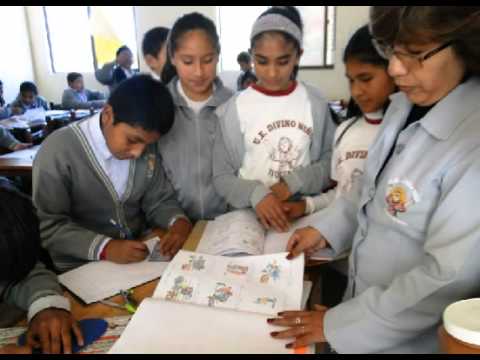
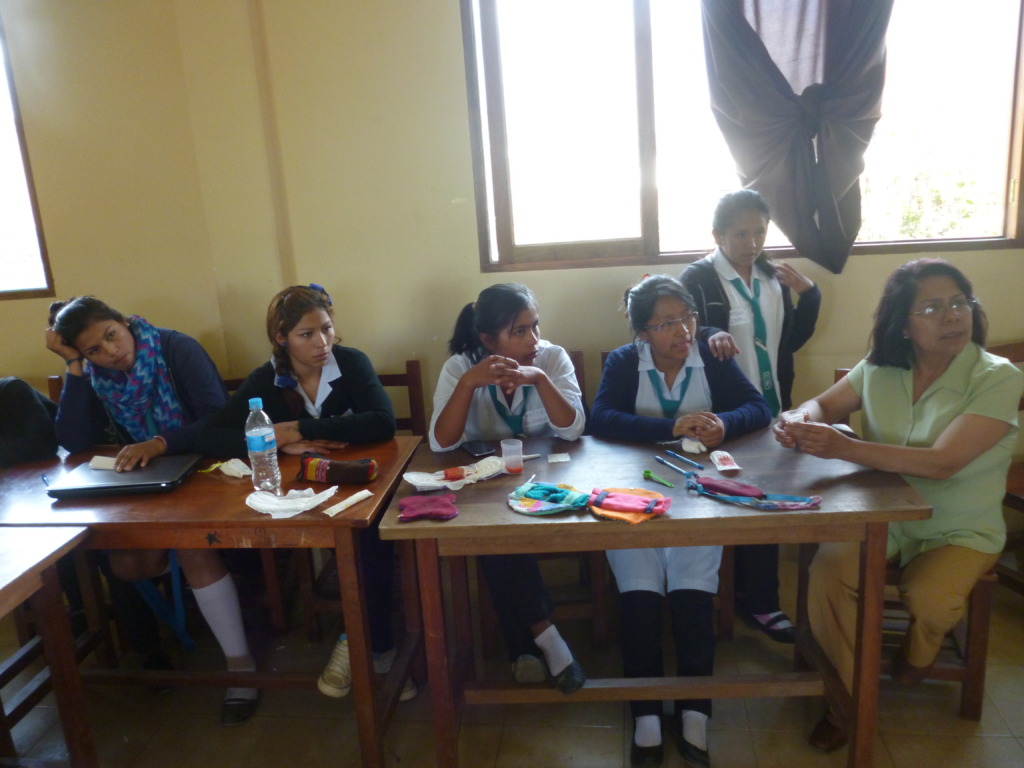
In Tiquipaya, a "Safe Water" committee was formed in each Educational Units to organize WASH practices, their monitoring and the formation of the people involved. The committee is made of 1 to 2 teaches and 5 to 20 student. In some of the E.U. a member of the direction or administration was also part of the committee. When the Fundación SODIS visited the E.U., over 80% of the committees were still in place, assuming the responsibility for most WASH activities. However, none of the committees organized them all, only a fraction of these activities. Most of the committees focused on the application of the WASH practices, for example, preparing the concentrated chlorine for water purification. Moreover, the training to the WASH was mainly accomplished by the teachers and not by the committees. Almost 60% of the Educational Units (21/37) said they used the text book "Escuelas con Agua Segura" (Schools with Safe Water) for the formation to WASH.
The Safe Water committees are key elements to a successful WASH management. It is possible that these committees may come to disappear if they do not receive help. The use of WASH textbooks and of forms was unsatisfactory. Shorter and clearer documents are required.
It is why in 2016 we will focused in the lower results to be able to reach even more the E.U. and the students themselves.
We thank you in advance for your support. And feel free to reach us if you have some questions and comments!
With warm greetings from the whole project team.
![]()
![]()
![]()
![]()
![Share on Twitter]()
![Share on Facebook]()