By Carol Hiltner | President, Altai Mir University
One day, while I was visiting our Altai partner Svetlana Katynova, she took me into the forest a stone's throw from her house. She showed me a small marker in a clearing and explained that this place -- Ulalinsky Camp on the bank of the Ulala River -- is an ancient archeological site. It contains evidence of human occupation and use in the form of stone tools very similar to those used by the African Olduvai culture.
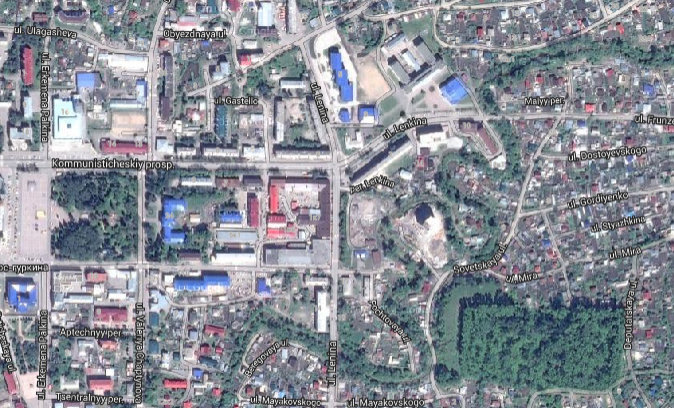
Discovered by Okladnikov in the 1960s, the site has been dated to the Lower Paleolithic era (approx 690,000-1.5 million years old). The site is included in the list of cultural and historical sites of the Russian Federation, but has never been fully excavated -- nor protected. For decades, Svetlana has been lobbying various governmental bodies in the Altai Republic to protect this site. On the attached map of Gorno-Altaisk, it is the forest patch on the lower right. The Ulala River is the green squiggle and the center of Gorno-Altaisk is on the left. Ulalinsky Camp is about a mile from the city center.
Archeological work in Altai Republic has always been a source of contention between the indigenous Altai people and the Russian mainstream, especially since the discovery, excavation, and removal of two perfectly preserved 2,500-year-old mummies from permafrost on the Ukok Plateau in 1993. Altai people consider their lands to be sacred, and that disturbance of their archeological sites called "kurgans" disrupts the stability of the Earth. Research has shown that these sites are indeed electromagnetically active. Only after long and strident protests did the Altai people finally succeed in having the "Ukok Princess" mummy returned to Altai just last year. But she is not yet re-interred, as they have demanded, but a moratorium is in place preventing further excavation of kurgans.
This month, Gorno-Altaisk Mayor Victor Oblogin met with the Institute of Archaeology and Ethnography of the Siberian Branch of the Russian Academy of Sciences, to begin planning of the Ulalinskaya Camp Museum Complex.In the past twenty years, the study of archeology has shifted globally to be more respectful of the heritage rights of local peoples. Ulalinsky Camp predates the kurgans by hundreds of thousands of years however, and Altai National Museum is being consulted regarding this site, so hopefully excavations will be carried out in a culturally sensitive way that is agreeable to the indigenous Altai peoples.
100% of your support of Altai Mir University goes toward Svetlana's efforts to protect cultural heritages like this. Thank you for your continuing donations.
Project reports on GlobalGiving are posted directly to globalgiving.org by Project Leaders as they are completed, generally every 3-4 months. To protect the integrity of these documents, GlobalGiving does not alter them; therefore you may find some language or formatting issues.
If you donate to this project or have donated to this project, you can receive an email when this project posts a report. You can also subscribe for reports without donating.