By Robert Rutherford | Resource Development Officer
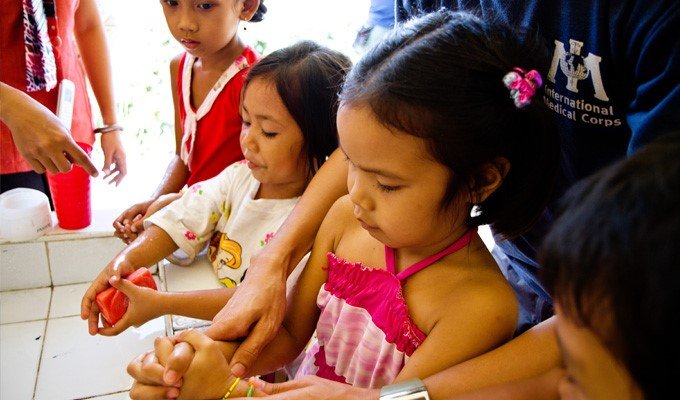
In schools damaged by Typhoon Haiyan in the Philippines, installing new hand washing stations and water systems is just the first step towards recovery. Ensuring students know how to properly and regularly use these new facilities is also a critical step to restoring long-term health. Utilizing local engineers to design and oversee construction, International Medical Corps installed new water, sanitation and hygiene (WASH) facilities and repaired damaged facilities at 141 schools in only eight months. In addition, our local WASH staff - which include nurses, Hygiene Promotion Officers (HPOs), and a team that supports the Department of Education’s school-based management system - train parents and teachers on hygiene messaging and ask that a Hygiene Champion be elected from the student body at each school. These students lead their peers in adopting and practicing good hygiene and utilizing the restored facilities.
At MacArthur National High School (MNHS) that Hygiene Champion is 15-year-old Kate. Soft spoken but sharp and confident, Kate was elected Supreme Student Government President of MNHS in 2013. She was just a few months into her senior year when Haiyan (known locally as Yolanda) devastated her home town. Large stretches of the school’s tin roof were ripped away and the towering courtyard trees were uprooted, tearing up their concrete bases. Books, papers, chairs and desks were drenched - walls and chalkboards remain stained by the torrential rains.
"All was washed out, all facilities were devastated," Kate remembers. "And we bore in our minds 'we cannot graduate.’” Kate’s extraordinary determination pushed her forward despite the destruction and damaged morale surrounding her. “But I am strong. I must be. I uphold the name of the high school,” says Kate. “As president, I had to make plans to go back to before Yolanda.”
International Medical Corps’ HPOs train the Hygiene Champions on basic hygiene education, covering topics like food preparation and disposal, recycling and garbage disposal, proper tooth brushing and hand washing, and hygiene while using latrines, or comfort rooms as they are called in the Philippines. Students receive hygiene kits and participate in WASH clubs organized in their schools.
Before MNHS received its new hand washing station, complete with a dozen faucets and slick new tiles, many students frequently fell ill and had poor school attendance as a result. Now, Kate says, student absences due to illness have dropped thanks to the new hand washing station and hygiene promotion activities, which have helped prevent the spread of infectious diseases between students.
“Before, we had no hand washing station and we could not ensure sanitation for ourselves,” she recalls. “We are so glad that our school was chosen.”
Project reports on GlobalGiving are posted directly to globalgiving.org by Project Leaders as they are completed, generally every 3-4 months. To protect the integrity of these documents, GlobalGiving does not alter them; therefore you may find some language or formatting issues.
If you donate to this project or have donated to this project, you can receive an email when this project posts a report. You can also subscribe for reports without donating.