![Community heroes spread the word]()
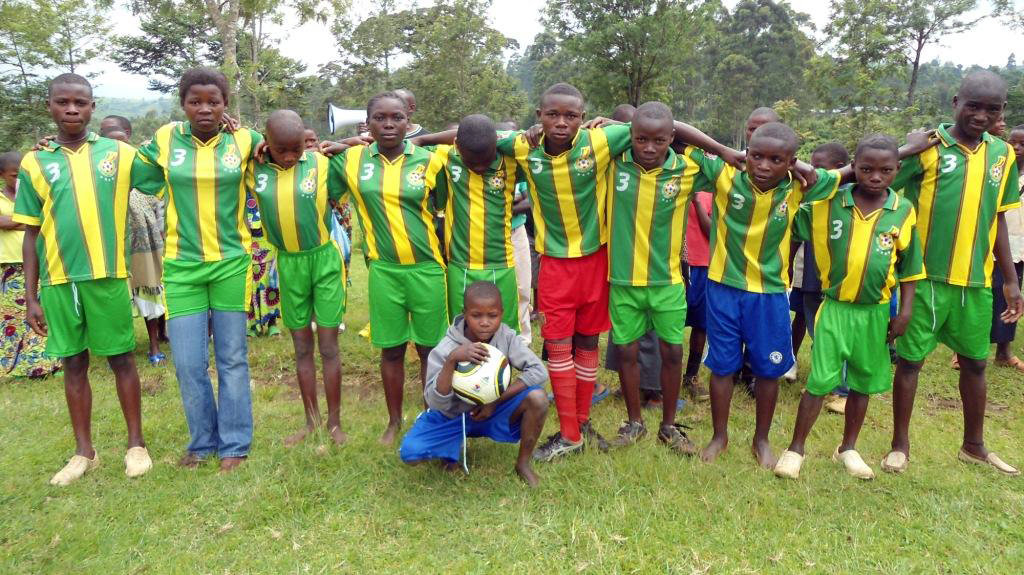
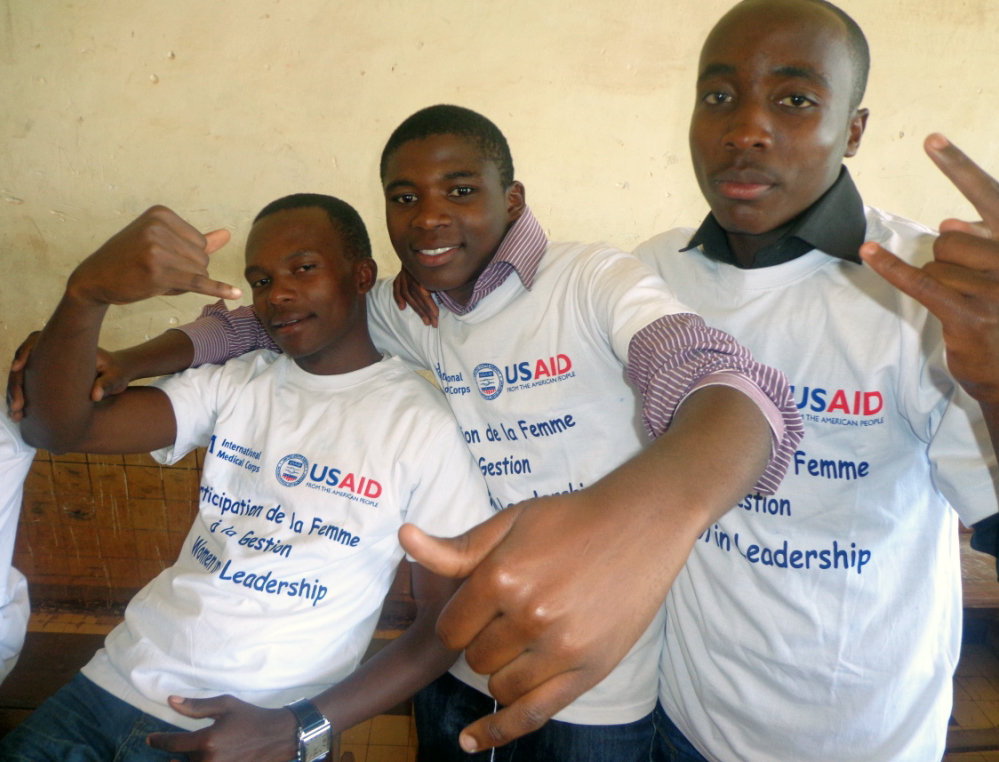
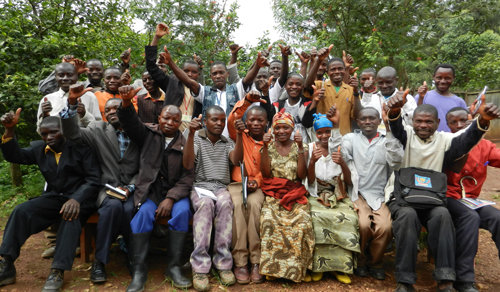
Community heroes spread the word
There are no court houses in Kalonge health district, a region home to more than 130,000 people, high in the hills above Lake Kivu, eastern Democratic Republic of Congo (DRC). Those seeking justice in Kalonge face a journey of at least 30 miles along poorly maintained roads that turn to muddy rivers during the rainy season. This is one of the reasons why so few women and men affected by sexual or gender-based violence (SGBV) in Kalonge have ever seen the perpetrators of violence punished by the Congolese legal system. Other barriers to securing justice that survivors of SGBV face include a lack of knowledge within the community that legal options are available for survivors; cultural norms that discourage speaking publically about sexual violence or causing trouble in the community; and a lack of sensitivity among legal officials—including police, lawyers and judges—to the unique support SGBV survivors need.
Nonetheless, SGBV survivors’ access to justice in Kalonge and other regions of eastern DRC are rapidly increasing thanks to a the efforts of International Medical Corps. The project aims to raise awareness about DRC’s 2006 sexual violence law and legal consequences related to women’s rights and SGBV within the community; train legal officials in sensitive handling of SGBV cases; and, where appropriate, help survivors explore their options and support those who wish to pursue justice for crimes committed against them. International Medical Corps and the American Bar Association have also supported the development of mobile gender courts by the Congolese justice system, with local judges and lawyers.
Dr. Picasso Mozusa Mukome, Chief of Kalonge Health Zone at an International Medical Corps- constructed hospital, is all too familiar with the suffering that high rates of SGBV cause in this region. He notes, “Because of this legal project, young men are afraid of justice if they attack women.”
Access to justice in Kalonge has taken another step forward with the opening of a Community Resource Centre (CRC) in the village of Cifunzi. The CRC provides a central base for members of the community looking for information or legal services relating to SGBV. The site was chosen after extensive consultation within the local community to identify where it would be most accessible and the CRC has been endorsed by the local Muami, or village chief. Providing a space for trainings as well as a home for SGBV and legal advisors, the CRC is already becoming a hub for the whole community, particularly those in need of legal advice.
Richard Hoffman, International Medical Corps Chief of Party in Eastern DRC, explains the significance of the project:
“The number of lawyers in this region is very small; understanding of the 2006 law [on sexual and gender violence] is patchy at best and those lawyers and judges that we do have are not trained to be sensitive to needs of SGBV survivors. For there to be a permanent presence of skilled and appropriately trained professionals based in these remote communities is a huge development.”
Since the project began in 2011, eleven cases have been presented to mobile courts in Kalonge, with seven perpetrators convicted. A further 25 cases have been presented in Bunyakiri. Given the complexity of these cases and the barriers that exist to securing justice, this represents a significant achievement for communities in South Kivu.
![Share on Twitter]()
![Share on Facebook]()