By Jenna Bailey | Associate Program Officer
Protecting Whales with Satellite Data
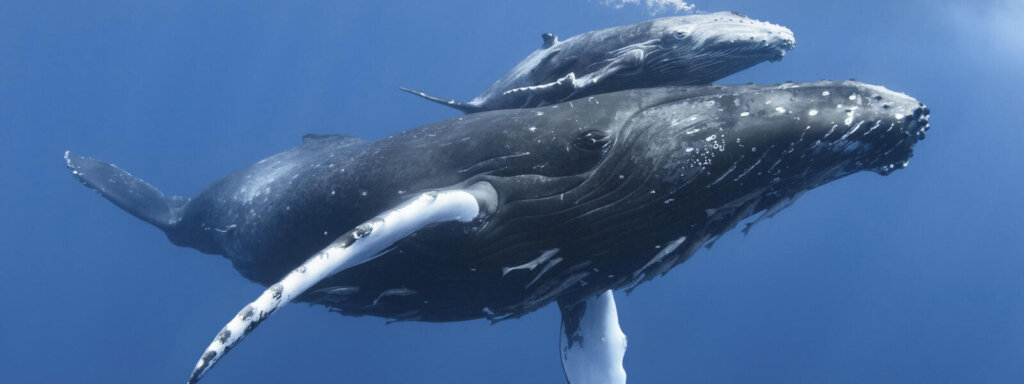
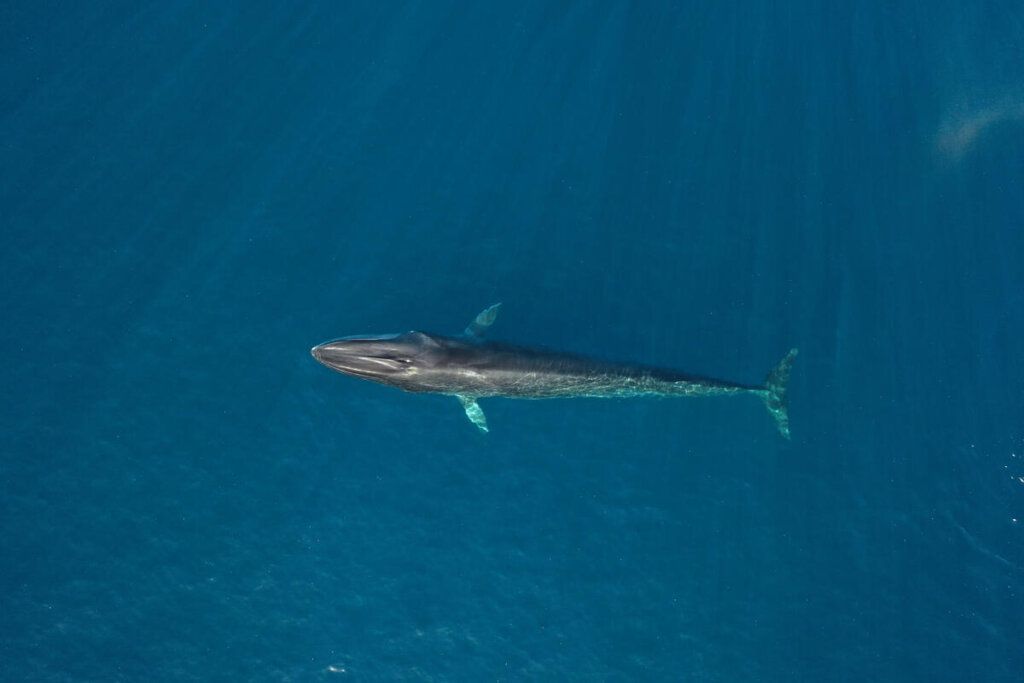
Did you know that whales, especially the great whales, help support the overall health of the marine environment by capturing carbon from the atmosphere? Each great whale sequesters 33 tons of CO2 on average. When whales die, they sink to the bottom of the ocean and lock that carbon away for hundreds of years – a literal carbon sink.
Unfortunately, after decades of industrialized whaling, the threat of warming waters, and the impacts of global trade, it is estimated that overall whale populations are now less than one fourth what they once were. Many of the world’s busiest shipping and ferry lanes overlap directly with areas where whales feed, give birth, nurse their young, or travel between feeding and breeding grounds. This has led to the classification of six out of 13 great whale species as either endangered or vulnerable.
WWF’s Protecting Whales and Dolphins Initiative
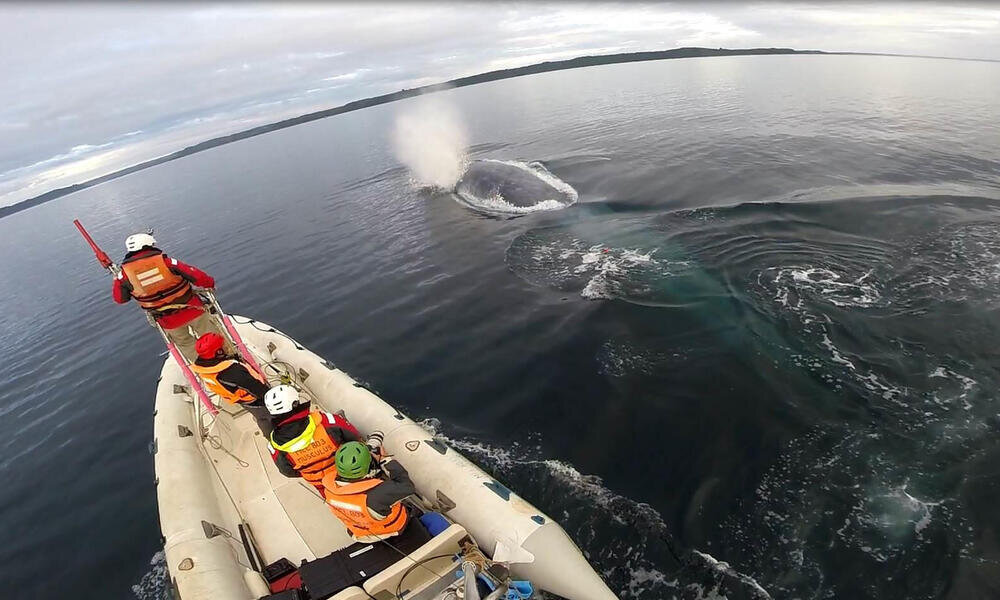
Over the past 30 years, WWF’s Protecting Whales and Dolphins Initiative has collected satellite data from more than 1,000 tagged whales by 50 research groups, including Oregon State University, the University of California Santa Cruz, and the University of Southampton. WWF is using this satellite data to map the “superhighways” through which these marine mammals migrate and document the different threats that whales encounter along the way. With this research, WWF is working to galvanize both international and national action to identify and protect vulnerable habitats, regulation fishing and shipping practices, and prevent plastics and other waste from winding up in the ocean.
Here are a few examples of the threats facing whales along various migration routes or “superhighways” and what WWF is doing to help.
Pacific Ocean:
In the Pacific Ocean, while Humpback whales are travelling between Hawaii and southeast Alaska, they must contend with the Great Pacific Garbage Patch. This garbage patch is a mass of discarded fishing gear and nets, plastic, and other debris that have been brought together by ocean currents. This marine litter entangles and kills an estimated 300,000 whales, dolphins, and porpoises each year. WWF is a member of the Global Ghost Gear Initiative which is working to address this global tsunami of marine litter.
Bering Strait:
More than a million marine mammals pass through the Bering Strait each year. Increasingly their journeys are being impacted by warming waters, oil spills, ship strikes, and noise pollution. Governments, WWF, and other organizations in the US and Russia are working to help better regulate fishing and shipping activities by keeping vessels out of critical habitats, developing marine protected areas, and promoting new navigation technologies.
Mediterranean Sea:
In the Mediterranean Sea, underwater noise pollution from naval sonar exercises, seismic testing, and oil and gas explosion are endangering fin, sperm, and beaked whales by disrupting communication and causing disorientation, hearing loss, and even death. Governments are working to enact more stringent legislation to safeguard acoustically sensitive marine species.
Southern Ocean:
Around the Antarctic Peninsula, krill is a main food source for blue, fin, southern right, and humpback whales. Unfortunately, ocean warming, acidification, and declining sea ice are transforming marine ecosystems and shifting krill southward, negatively impacting migrating whales. WWF is working to improve krill fisheries management and supporting research to understand whale foraging hotspots and how they can be protected against climate change.
How you can help!
WWF is working to not only conserve these marvelous creatures, but also preserve their habitats which are shared by many other species, from the tiniest zooplankton to turtles and sharks. By supporting our projects, and sharing them with your family, friends, and colleagues, you can help support WWF in protecting whales and in turn delivering benefits to our marine ecosystems, our planet, and ourselves. Together, we can protect endangered whale populations and precious marine ecosystems around the globe!
Links:
Project reports on GlobalGiving are posted directly to globalgiving.org by Project Leaders as they are completed, generally every 3-4 months. To protect the integrity of these documents, GlobalGiving does not alter them; therefore you may find some language or formatting issues.
If you donate to this project or have donated to this project, you can receive an email when this project posts a report. You can also subscribe for reports without donating.



Support this important cause by creating a personalized fundraising page.
Start a Fundraiser