By Danny Renton | CEO
The rain is slamming against the window, it’s another Scottish summer, but it’s been a year of cracking success for Seawilding’s marine habitat restoration projects, so rather than dampened spirits, they’re sky high! Now, please read on, hopefully in the comfort of a deckchair, with a parasol shading the sun…
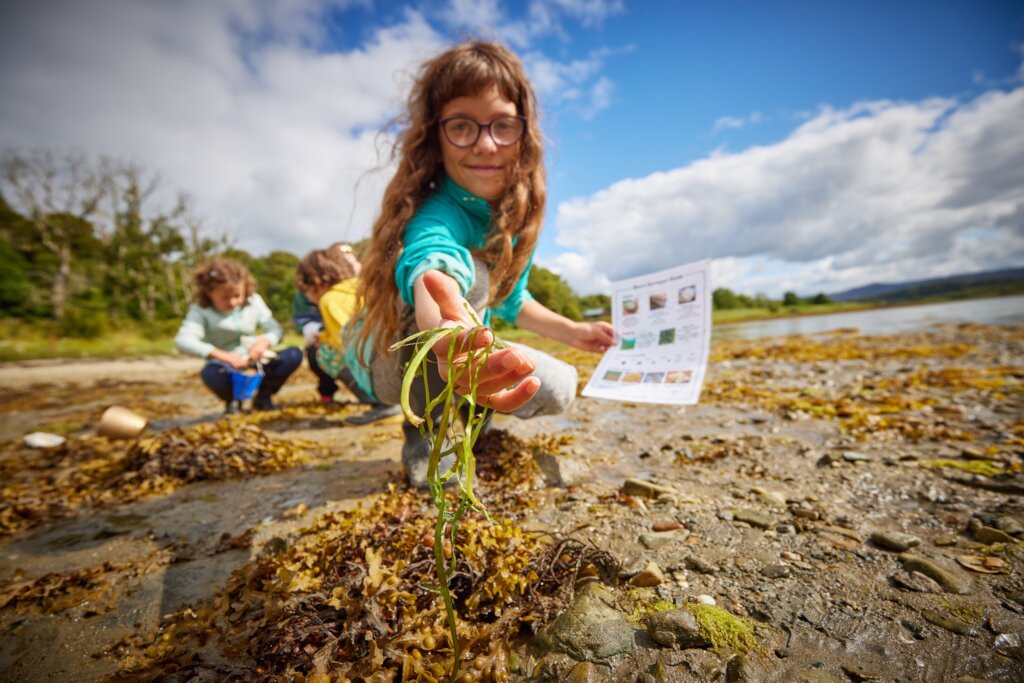
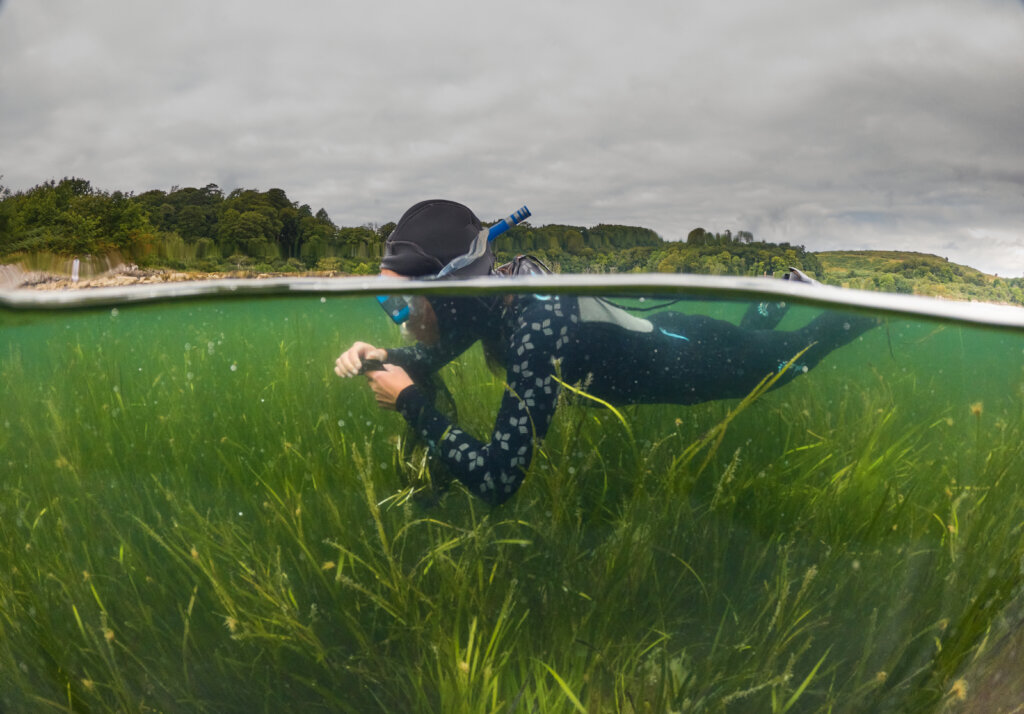
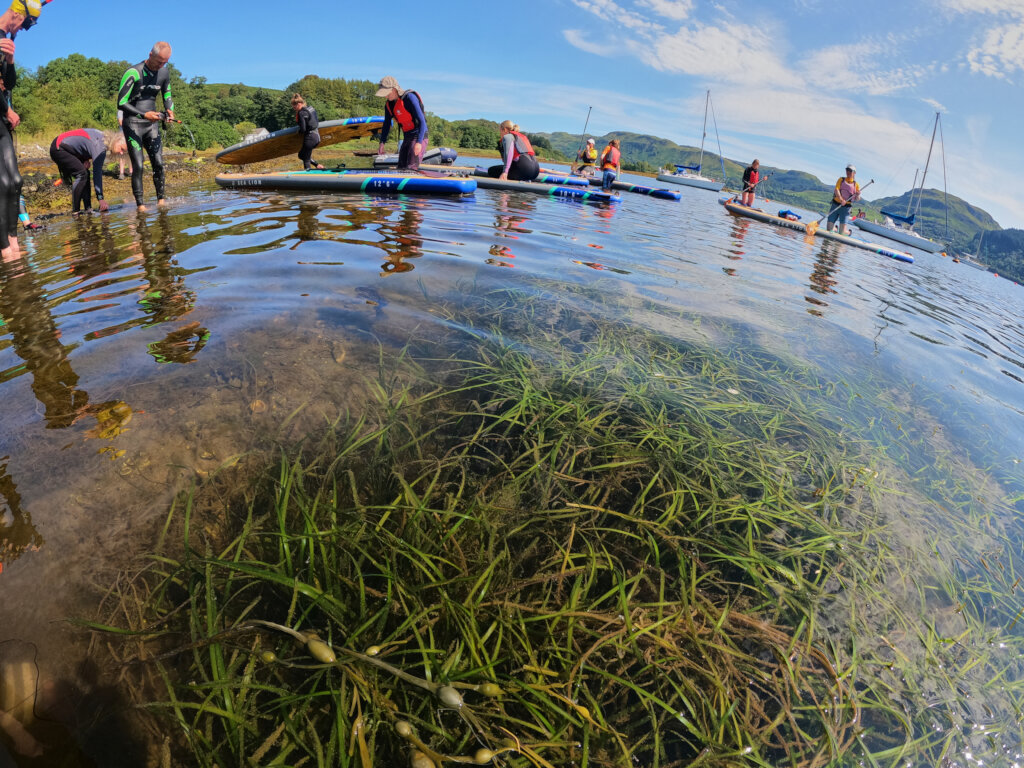
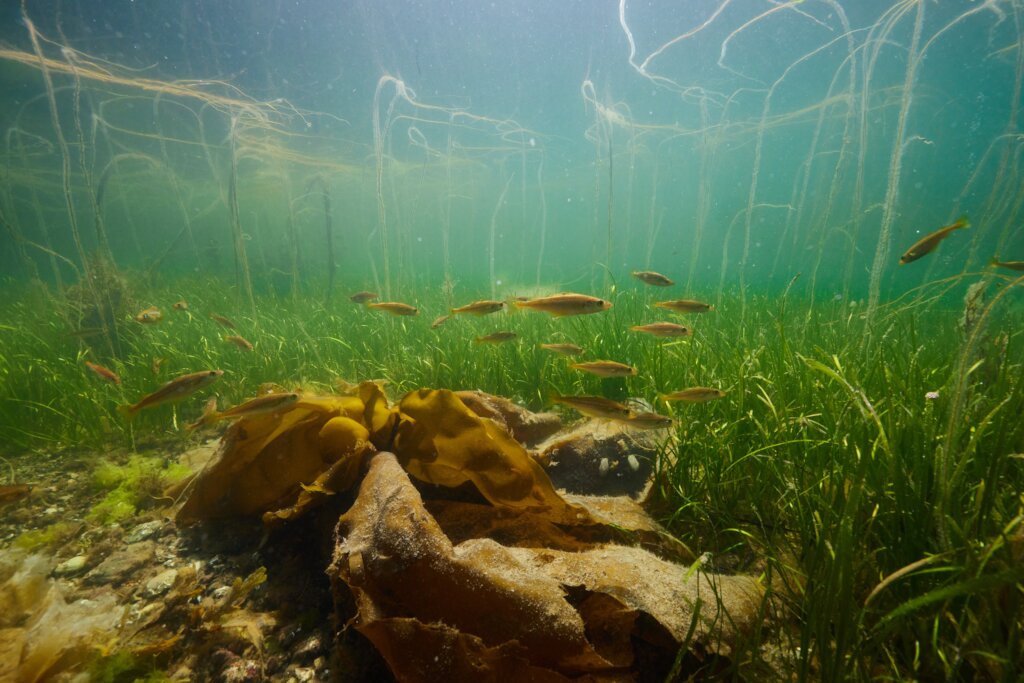
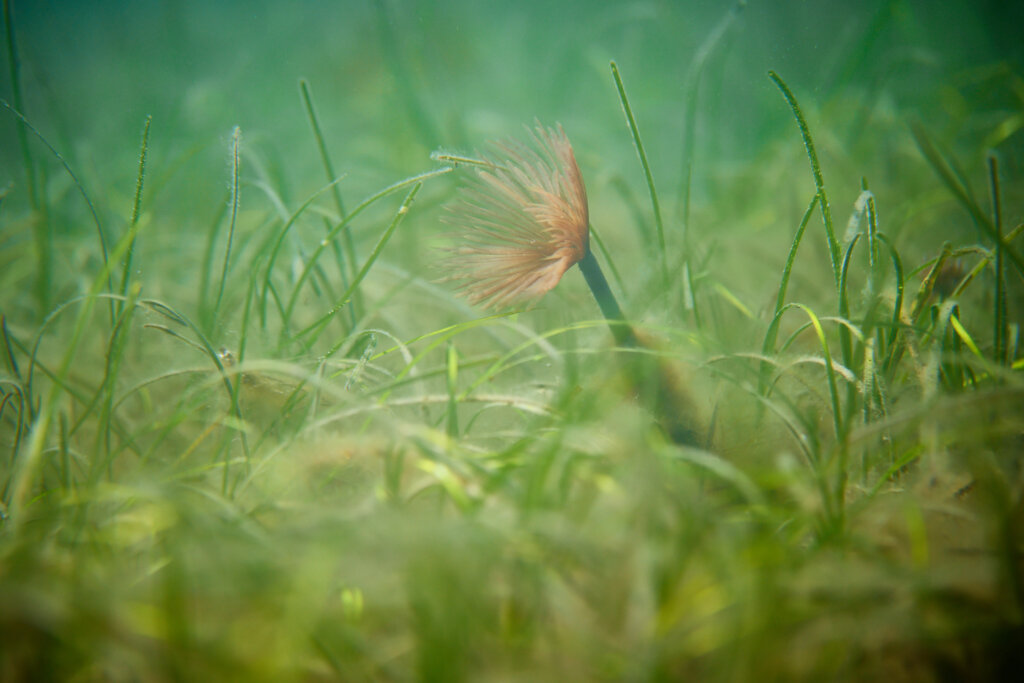
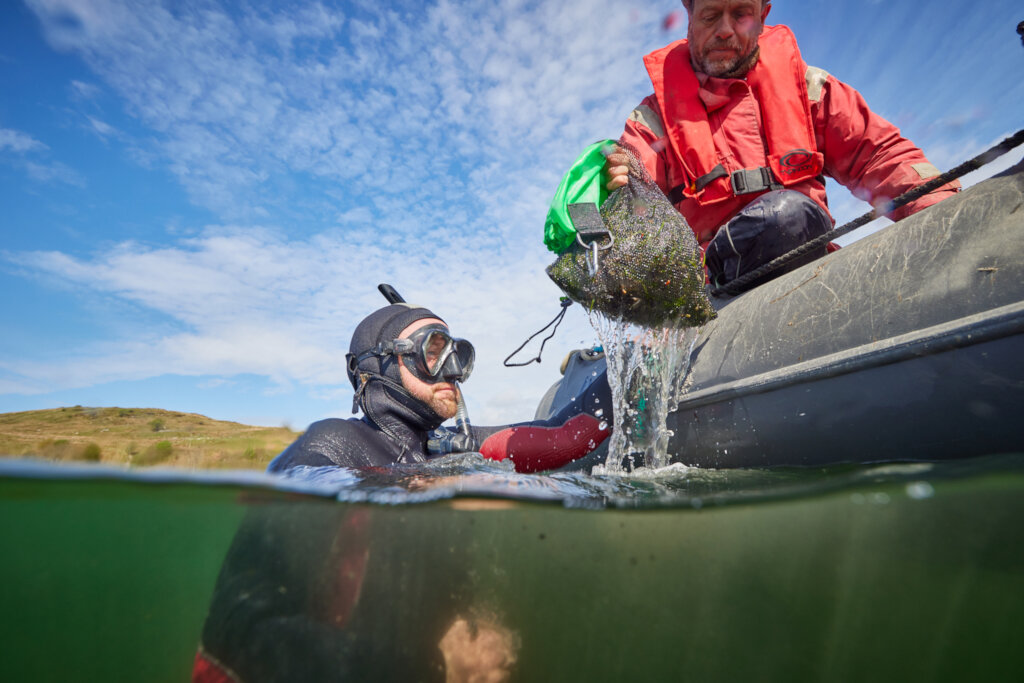
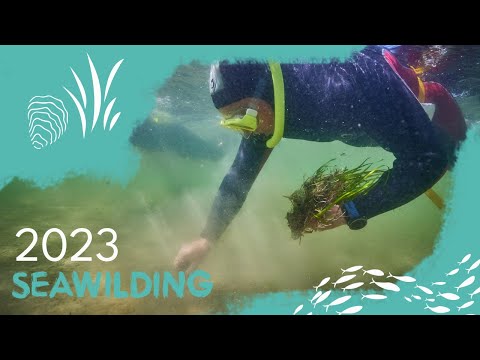
After a shaky start to our seagrass-shoot transplanting trials back in 2023, we are very pleased to report that last year’s transplanted shoots survived the winter storms and have continued to flourish and expand this spring and summer!
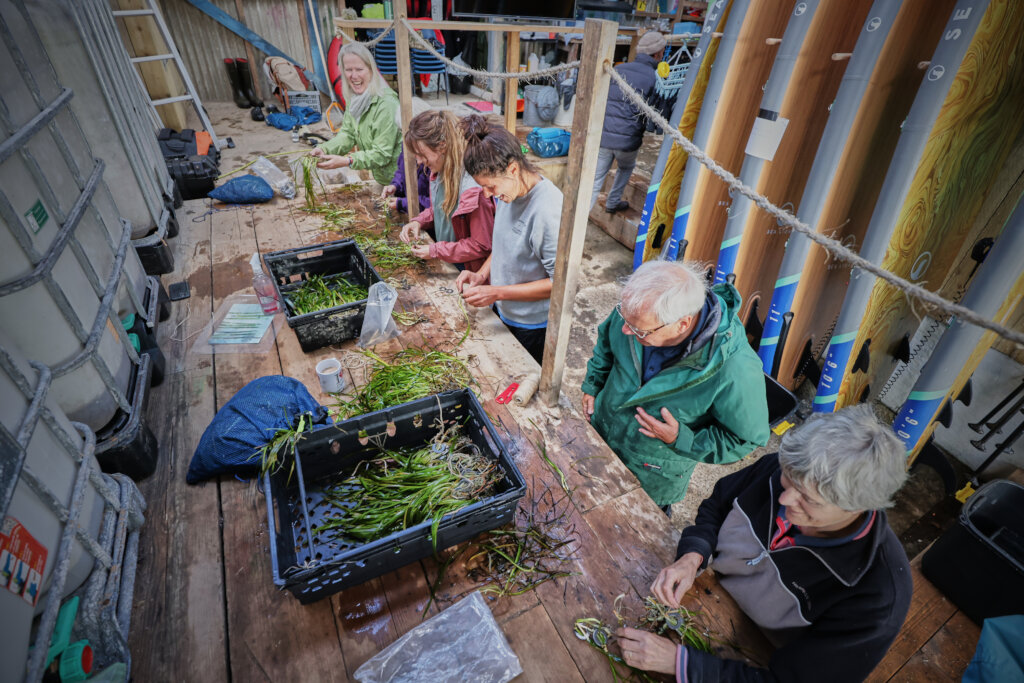
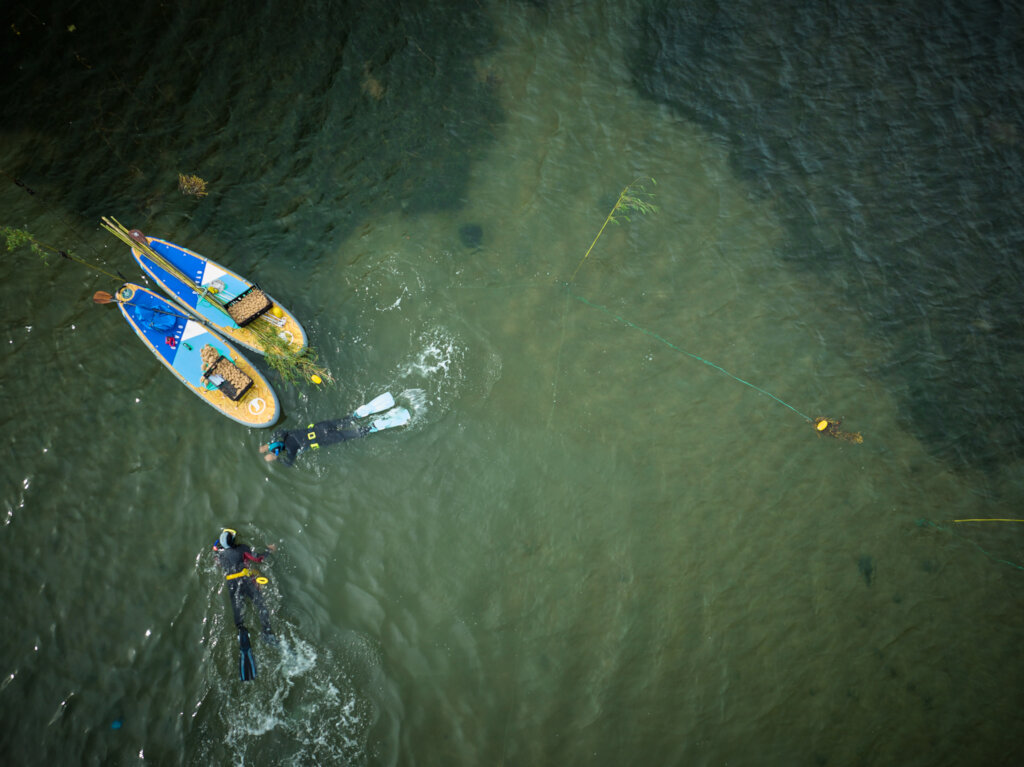
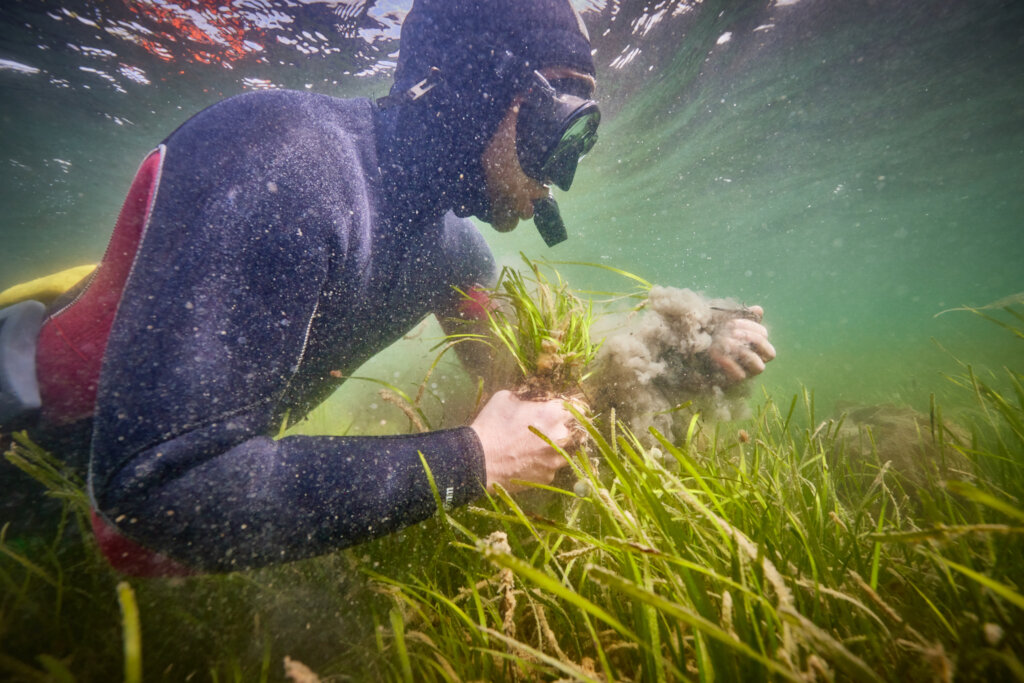
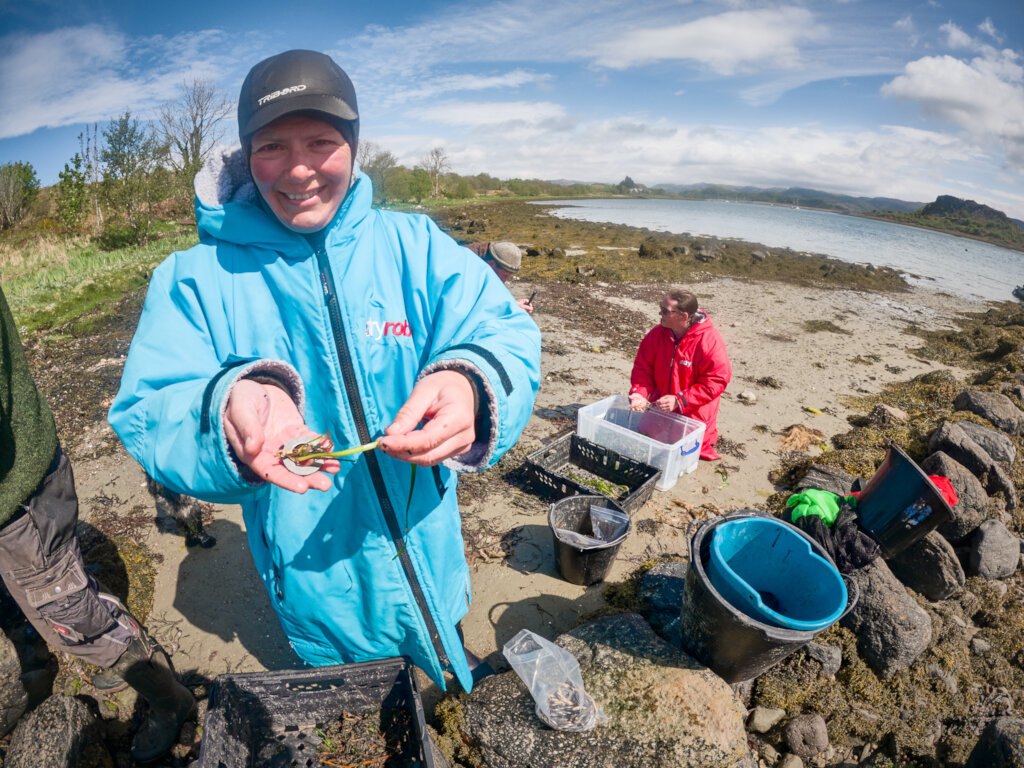
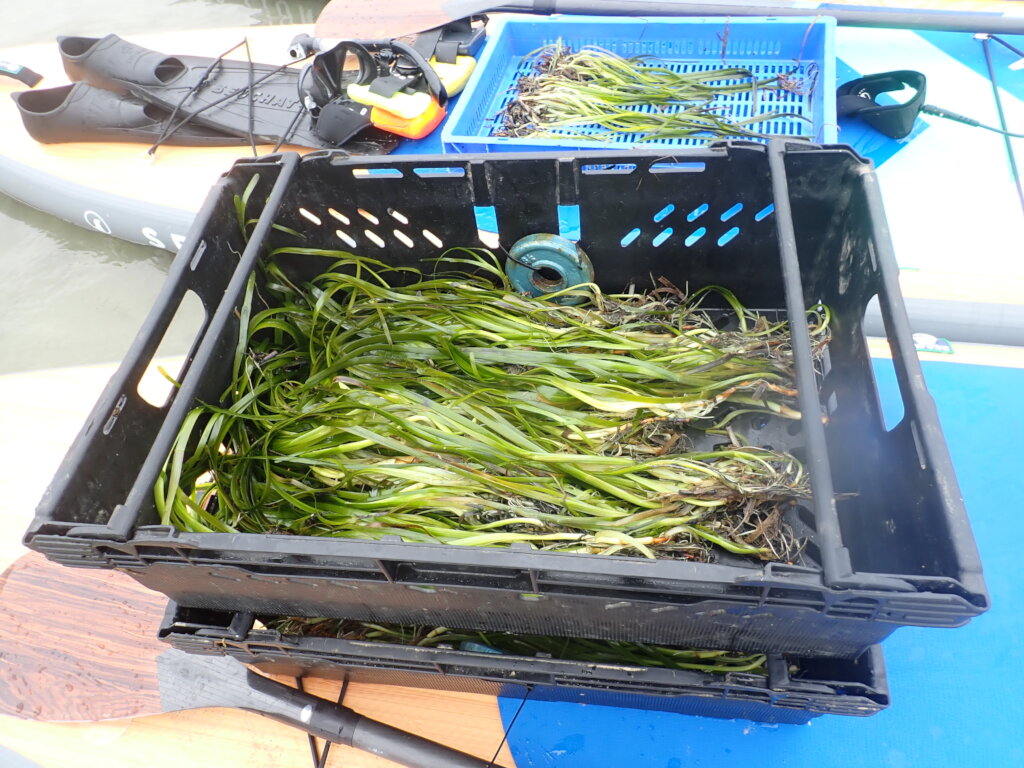
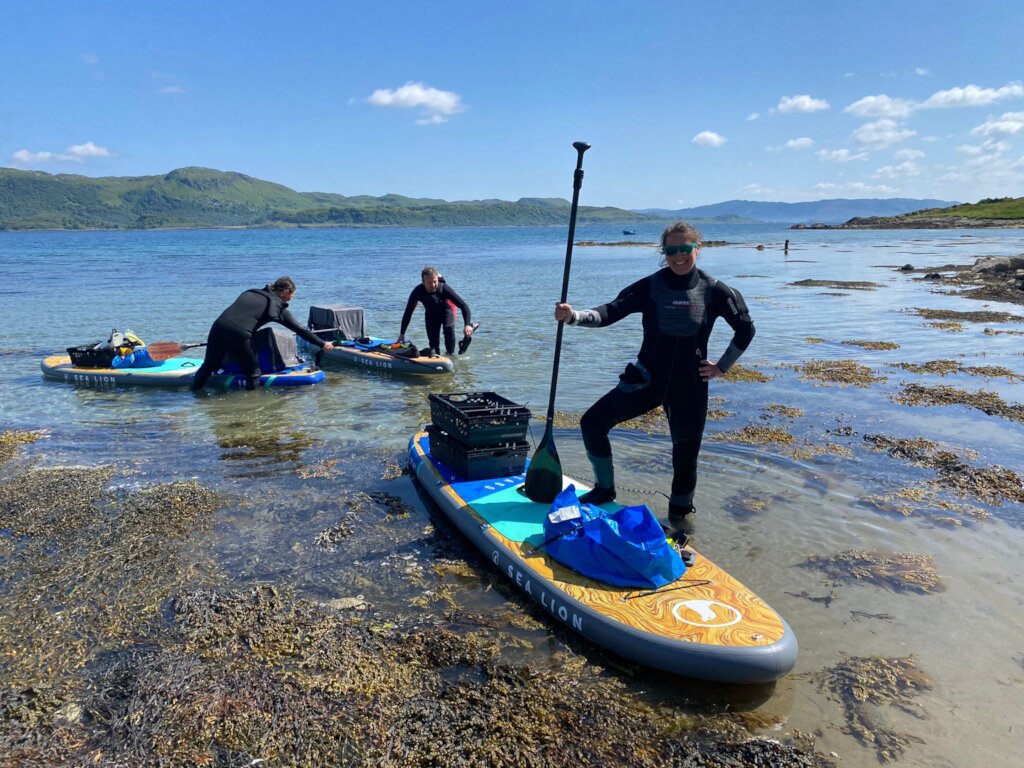
In response we have increased our efforts using this method in 2025 and with the help of over 47 incredibly hard-working volunteers, from the UK, Europe and beyond we have transplanted a total of 20,000 shoots over a 5 week period, potentially creating 2600m2 of new seagrass meadow. This is a 300% increase on our efforts last year, and shows we’re scaling-up.
Transplanting includes trials aimed at increasing the efficiency of processing and planting to achieve greater coverage, investigating the potential for seagrass restoration in new areas both within and beyond Loch Craignish, and monitoring the impacts of harvesting on the donor meadow and recovery times:
In last year’s trials, bundles of 10 shoots were planted at a density of 2 per square meter. This year the planting density has been reduced to 1 bundle per square meter with half of the bundles containing 5 shoots. If successful, this new method will increase our restoration capacity four-fold.
We began transplanting earlier this year - planting 2000 shoots at the end of March, six weeks earlier than we’ve attempted before, to see if the planting season can be extended. This gives us more time to carry out seagrass restoration each year, and provide flexibility in our work schedules to continue with oyster restoration work throughout the summer months.
Thus far, our transplanting trials have been adjacent to existing seagrass meadows. This year we’ve planted test patches in areas where eDNA sampling of sediments suggest seagrass was once present but is no more: an area within Loch Craignish that has been “capped” with sand quarried from land (see Van Oord below), and Loch Beag - a sea loch adjacent to Loch Craignish. If these trials are successful it will open up new large areas on our doorstep with restoration potential.
This year we’ve begun trials to determine donor meadow recovery time in response to different harvesting intensities of 25% extraction and 50% extraction. The recovery data will help us learn how many shoots can be harvested each year without having a negative impact on the donor meadow.
Whilst we’ve had limited success with seagrass seeds in the past, this year we’ve planted 100,000 seeds in a series of trials in an attempt to improve seedling survival rates. These include sowing in high densities (up to 2500 per m2), sowing among last year’s established transplanted rhizomes, and in new areas of seabed. In addition, we’ve partnered with a marine construction company, Van Oord, who’ve “sand-capped” 1000 m2 of seabed in the Craignish lagoon in an effort to counteract anoxic (oxygen-depleted) seabed conditions. This anoxic mud contains high levels of sulphides which is toxic to seagrass. The project has planted 100,000 seeds into the sand which we hope will improve growing conditions. We’ll be monitoring seedling survival and growth rates over the coming months.
SCIENCE
The collaboration with Van Oord highlights a growing aspect of our restoration work in Loch Craignish; the potential for it to act as a platform for wider ecological and restoration-themed research by other organisations. This year so far, we’ve had visits from multiple universities, conservation organisations, and start-up businesses, looking to test ideas, or ask questions around the ongoing restoration work. In April, we saw the installation of sound-recording hydrophones on the seagrass meadow, a project lead by a team from the University of Southampton and SAMS. In their own words:
"We have been curating a long-term passive acoustic data set from the seagrass meadow in Loch Craignish. Shallow seagrass meadows are relatively understudied from a bioacoustics perspective, but everything from fish to crustaceans to the photosynthesis of the seagrass itself contributes to the underwater soundscape. The chance to study the soundscape in a seagrass meadow with many other research projects going on simultaneously presents an exciting opportunity to establish the utility of acoustics for studying ecosystem health in these critical habitats."
Initial results are looking promising, with clear and measurable patterns showing up in the underwater soundscape, including dolphin whistles in the seagrass bed in May this year.
In June, we’ve had visits from teams from Plymouth and Aberdeen Universities both looking to develop methods to monitor the importance of seagrass habitats as juvenile fish nurseries. One research project deploys week-long timelapse cameras around the seagrass meadow and onto the restoration areas to capture fish and other fauna moving through the meadow, while the other uses an automated water sampler which collects samples for environmental DNA analysis and characterises fish communities in and around the meadow.
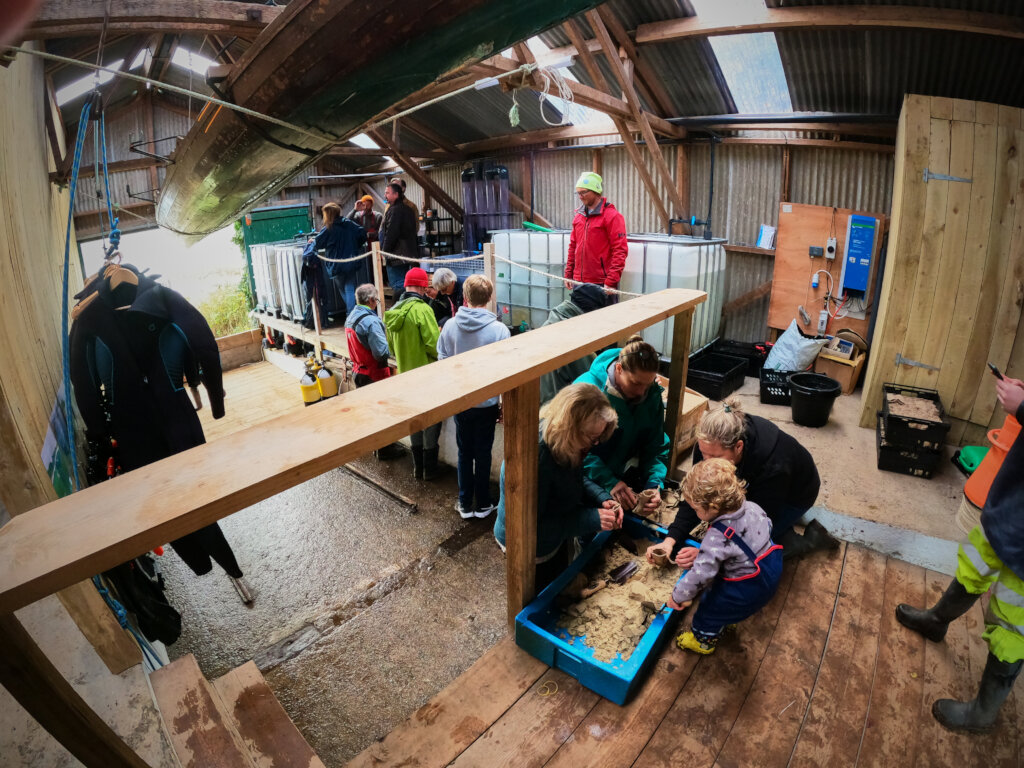
Alongside the ecological work, we’ve been turning our attention to the social and economic dimensions of restoration, a core part of Seawilding’s mission. We’ve been gathering data on the economic impacts of the project locally, capturing some of the value brought in by volunteers and collaborators to the local area. These are reminders that restoration doesn’t just deliver ecological benefits, but brings real social and economic value to coastal communities. This year, we have welcomed 350 volunteers, school groups, donors, PhD students, partners and more across our restoration projects in Loch Craignish and Loch Broom, resulting in 94 overnight stays (Loch Craignish) and numerous visits to local businesses.
As ever, communities and collaboration remain at the heart of our approach, whether it’s the local community, or the global restoration community.
Project Seagrass joined us for a few days in May, and we’re proud to be collaborating with them in launching the SeagrassRestorer portal, a new platform to connect restoration practitioners, share knowledge, and map restoration efforts across the globe: https://seagrassrestorer.org/
RHS CHELSEA FLOWER SHOW
Last year, Falkirk-based MUSA Landscape Architecture approached us wanting to collaborate on a Seawilding garden to showcase seagrass, the ocean’s only flowering plant at the Chelsea Flower Show in May 2025. Initially we were sceptical as we’re a small team wanting to focus on core activities, but on reflection, we thought why not? It would give us a golden opportunity to shine a spotlight on seagrass, the importance of marine habitat restoration and the work of Seawilding.
The RHS Chelsea Flower show has been running since 1913 and is world renowned, attracting around 170,000 visitors from across the globe. Over 650 members of the media attended the show in 2024 and it featured in 13 hours of BBC coverage. During May, print and online coverage reached a combined circulation of around 6.5 billion. It seemed too good an opportunity to miss!
At the front of the garden, a saltwater pool, planted with seagrass, emerged from rocky outcrops. The seagrass came from two sources: a meadow of national importance on the west coast of Scotland that is currently threatened by marine coastal construction and cultivated seagrass grown by The Ocean Conservation Trust at laboratories in the National Marine Aquarium in Plymouth. The garden will be relocated to a community space behind the Craignish Primary School.
Attending the RHS Chelsea Flower Show was an incredible experience for the Seawilding team and we were overwhelmed by the interest and enthusiasm of visitors. We gave out 10,000 leaflets, met many celebrities and potential donors and won a GOLD medal and Best in All About Plants Garden category.
INTERNS
We’ve been delighted to host three interns this year, Freya, Mya and Jack. All three have been giving us invaluable help with our seagrass harvest and native oyster deployment. We hope they’ve learned as much from us as we have from them. Another three interns will arrive in July to help with our annual surveying of seagrass meadows and native oysters.
ADVOCACY
We continue our advocacy work for better management of UK fisheries and seabed, by responding to government consultations, attending workshops, and conferences, and by being an active member of the Our Seas coalition, which campaigns for a return of restrictions to bottom-dragged fishing gear around Scotland’s coasts. We urge you to watch David Attenborough’s new film Ocean, which advocates for these practises to be made illegal in shallow, coastal waters and to sign the petition: https://www.ourseas.scot/
In the meantime, thank you to our donors, well-wishers, supporters and many volunteers. No Seawilding would be possible without you!
Project reports on GlobalGiving are posted directly to globalgiving.org by Project Leaders as they are completed, generally every 3-4 months. To protect the integrity of these documents, GlobalGiving does not alter them; therefore you may find some language or formatting issues.
If you donate to this project or have donated to this project, you can receive an email when this project posts a report. You can also subscribe for reports without donating.



Support this important cause by creating a personalized fundraising page.
Start a Fundraiser