By Tiziana Tedoldi | General Manager
It's been a busy summer at Loch Craignish, and we're wrapping-up our seasonal marine habitat restoration activities, crunching the survey data, readying our native oyster nursery for a new intake, battening down the hatches for the winter and putting our minds to how the project will expand and evolve in 2025. This autumn update follows our summer newsletter; do contact us if you'd like to know more.
Seagrass, identifying optimum restoration sites:
As reported in our summer newsletter, our previous seagrass restoration efforts which saw seed and seagrass plants (rhizomes) being planted in the lagoonal area of Loch Craignish have experienced high failure rates. These poor results have been mirrored by other restoration projects around the UK.
Working with the Scottish Association for Marine Sciences (SAMS) we’ve been researching the causes of this by measuring the oxygen content of seabed sediments in the restoration areas. This invaluable science has revealed that the muddy lagoonal restoration sites in Loch Craignish are anoxic with high levels of sulfides which can be toxic to seagrass. The results of this science has determined a change in direction for our restoration efforts in 2024 in terms of:
Seagrass harvest:
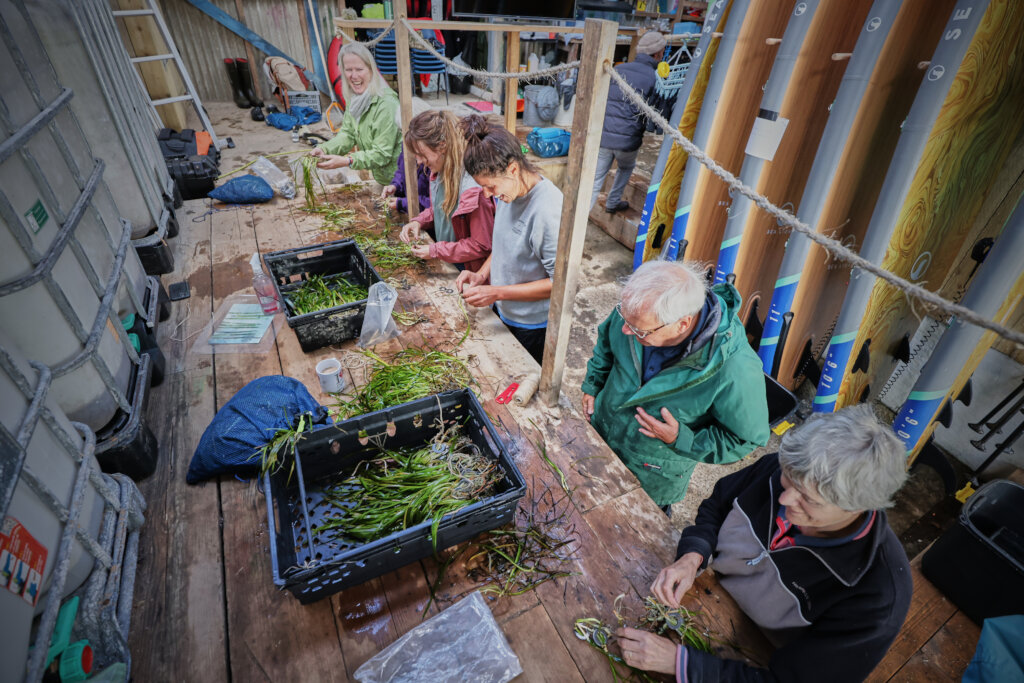
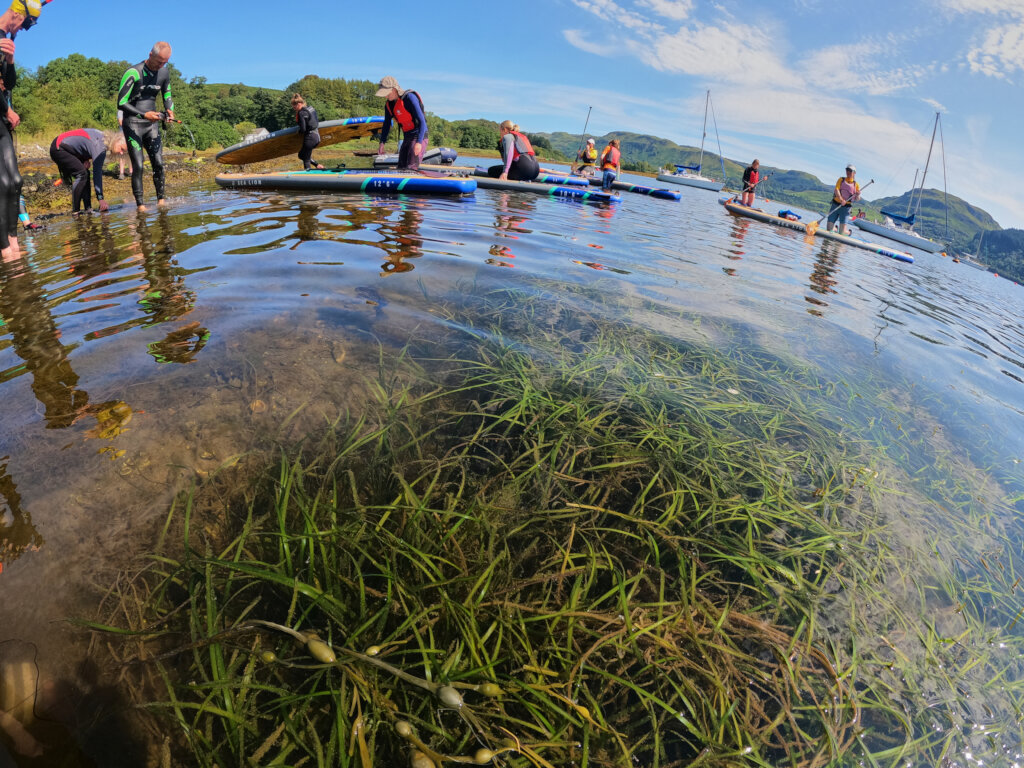
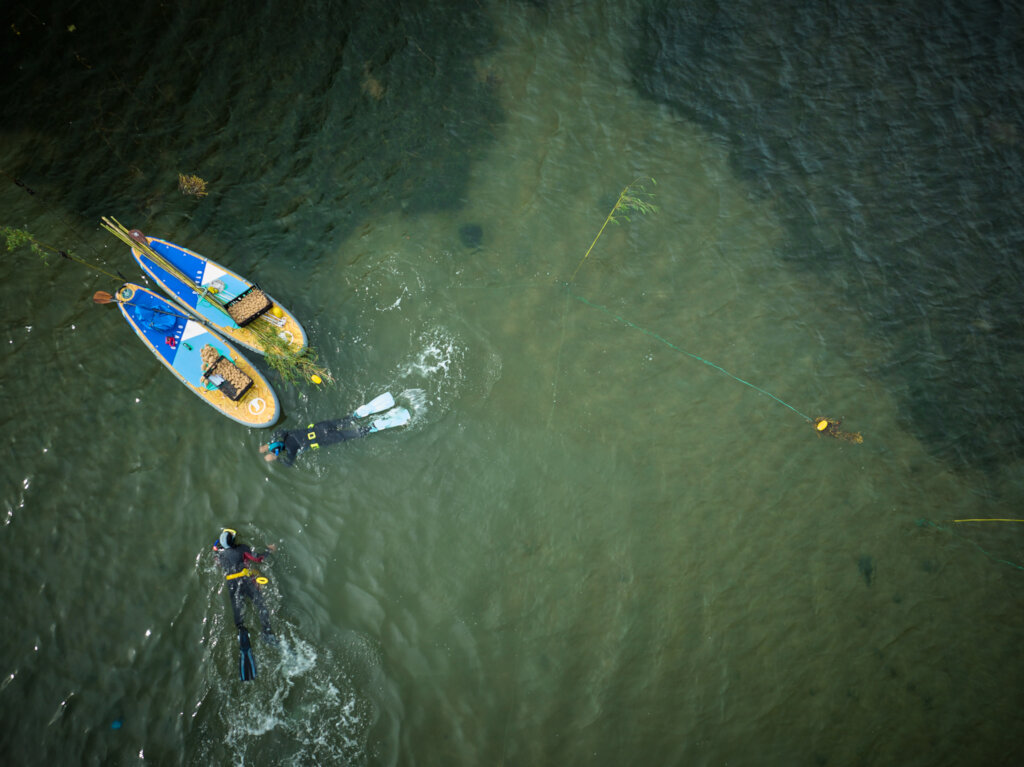
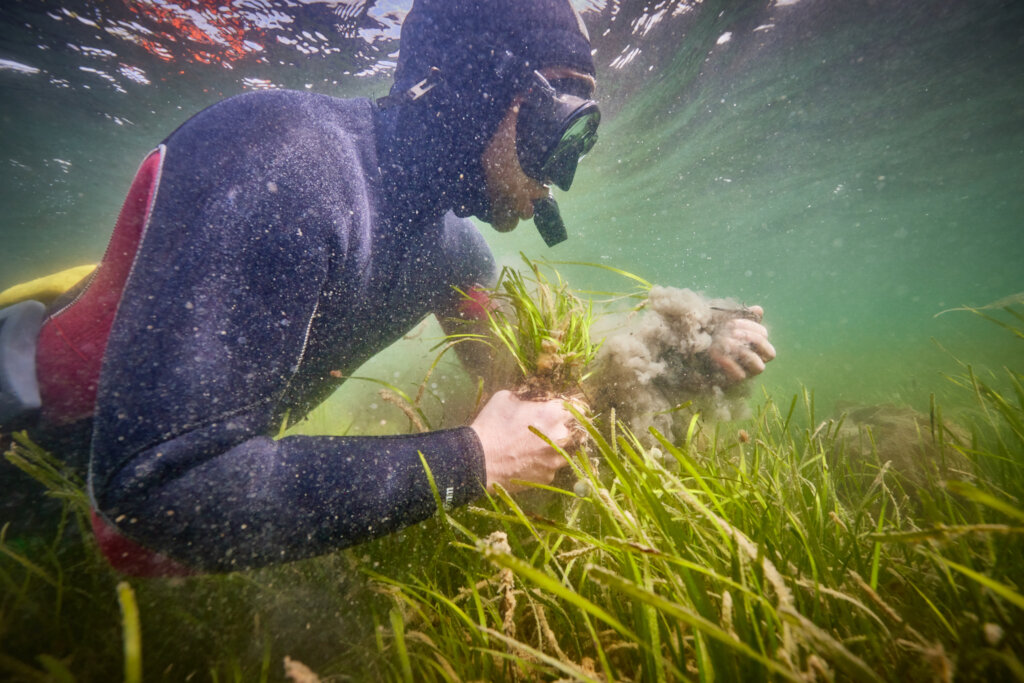
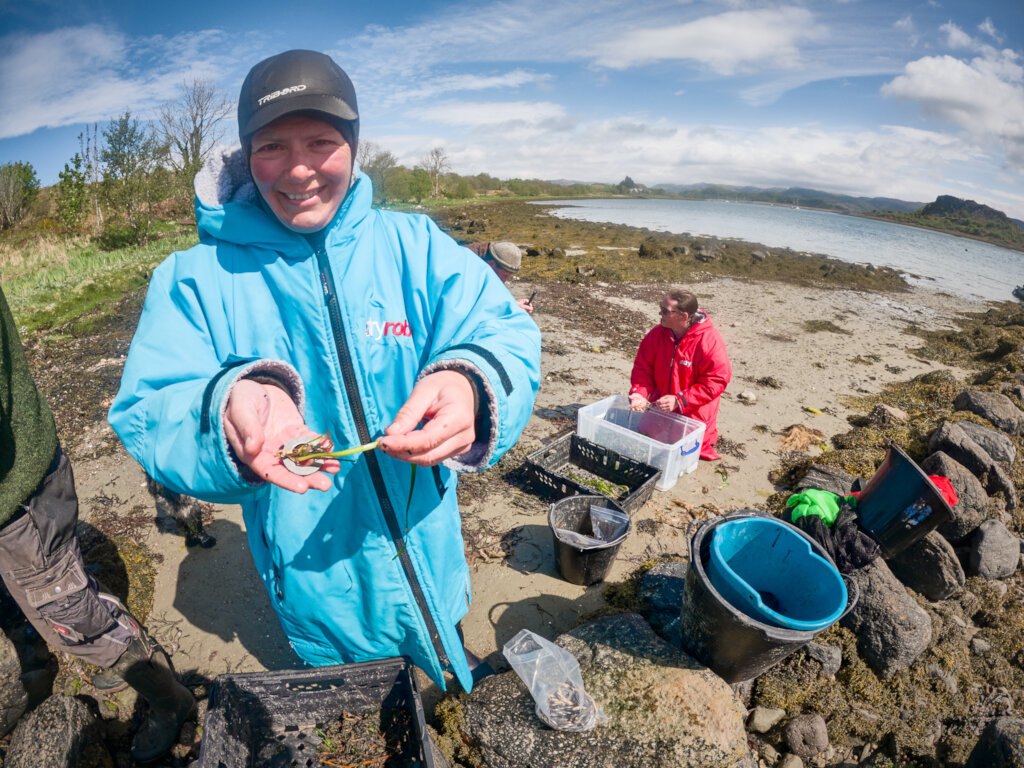
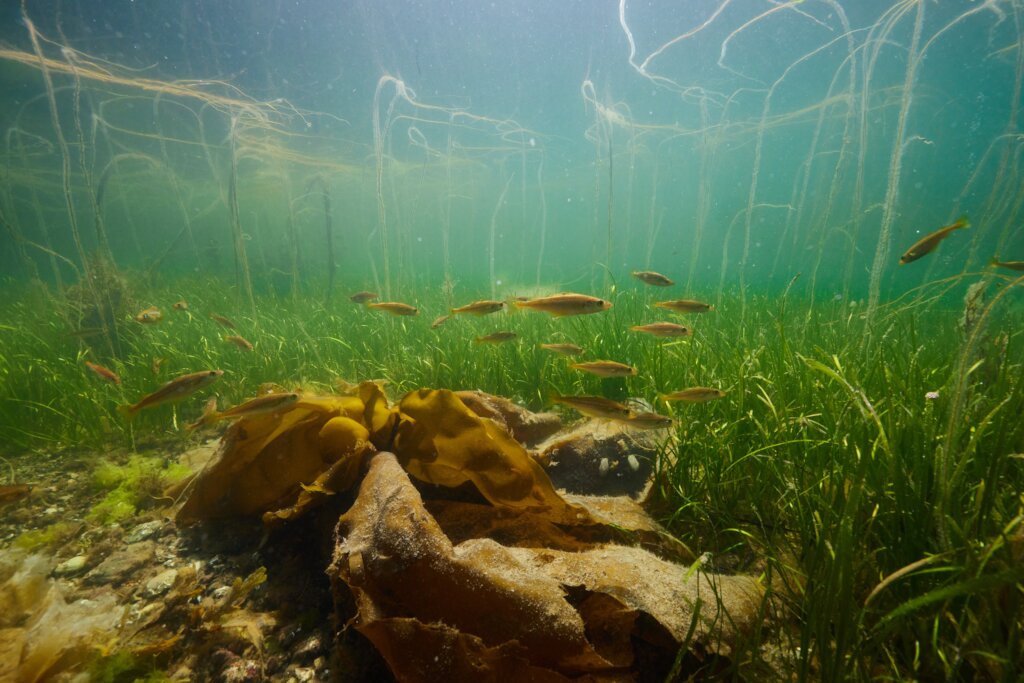
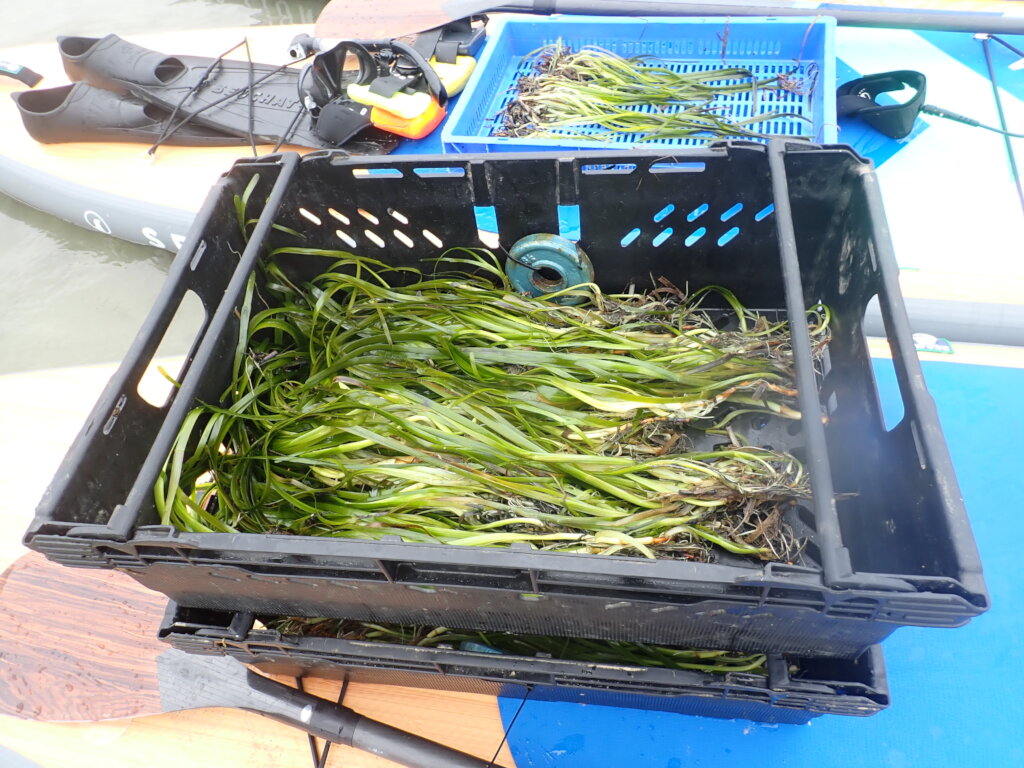
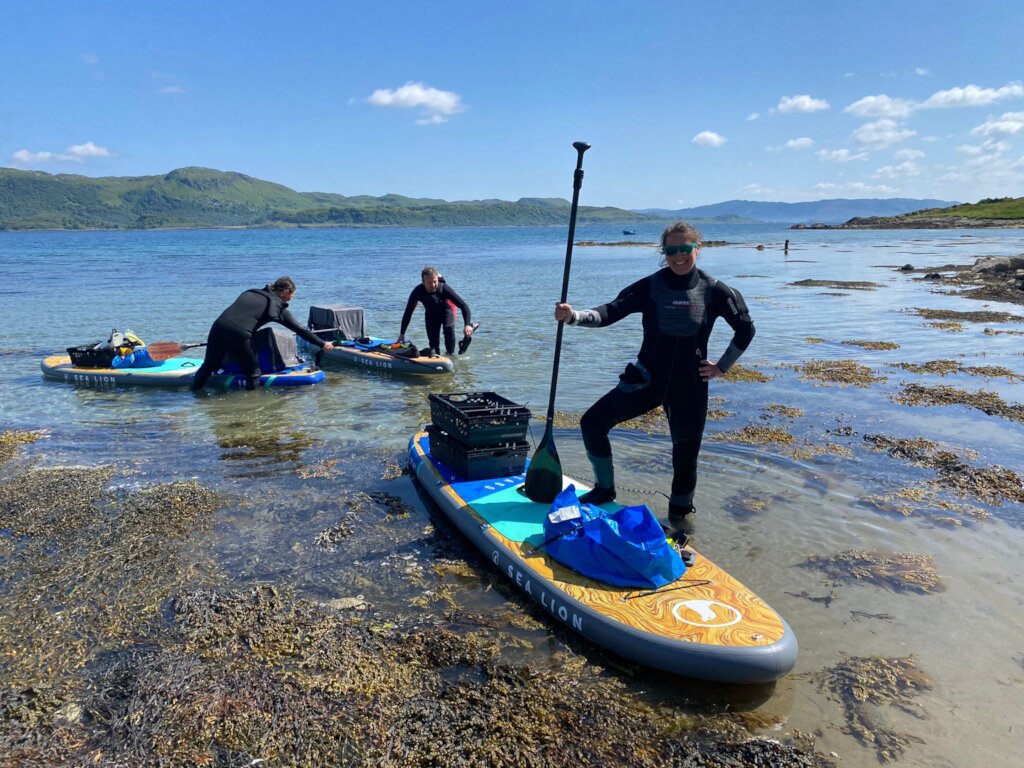
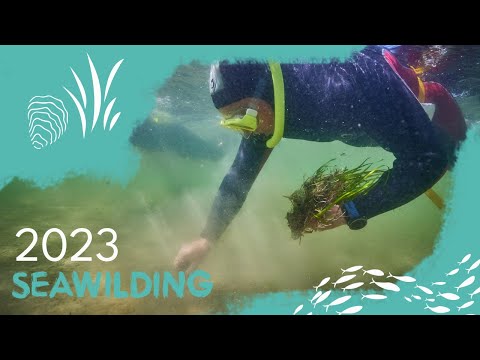
This year, between May – July, and with the help of over 40 volunteers we harvested, processed and replanted over 8,000 seagrass plants (rhizomes) in Loch Craignish over an area measuring approximately 0.12 of an acre. Informed by the above science, we focused on a single area, Dun Mhuilig Bay, adjacent to an existing seagrass meadow, where the seabed has positive oxygen levels. The seagrass was planted in bundles of 10 per m2.
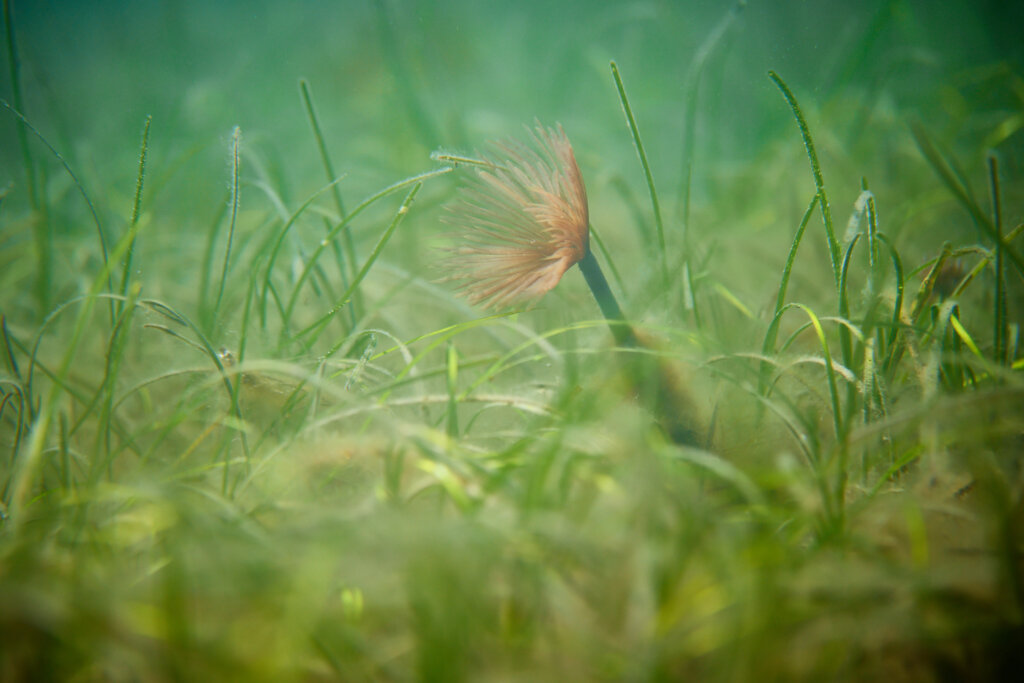
In September, we surveyed the restoration area again, and excitingly, the translocated plants are healthy, growing and showing a steep increase in the number of seagrass shoots and rhizomes spreading along the seabed with interconnection happening already.
The rhizomes planted in May 2024, have shown the most growth, with up to a three-fold increase in the number of shoots per bundle and up to a five-fold increase in the area of seabed covered by each bundle.
It’s still too early to say whether this planting success represents a break-through – we need to get through the winter season and survey again in the spring – but nonetheless these are the most exciting results to be seen in the short history of the Loch Craignish seagrass project so far.
Seagrass seed harvest:
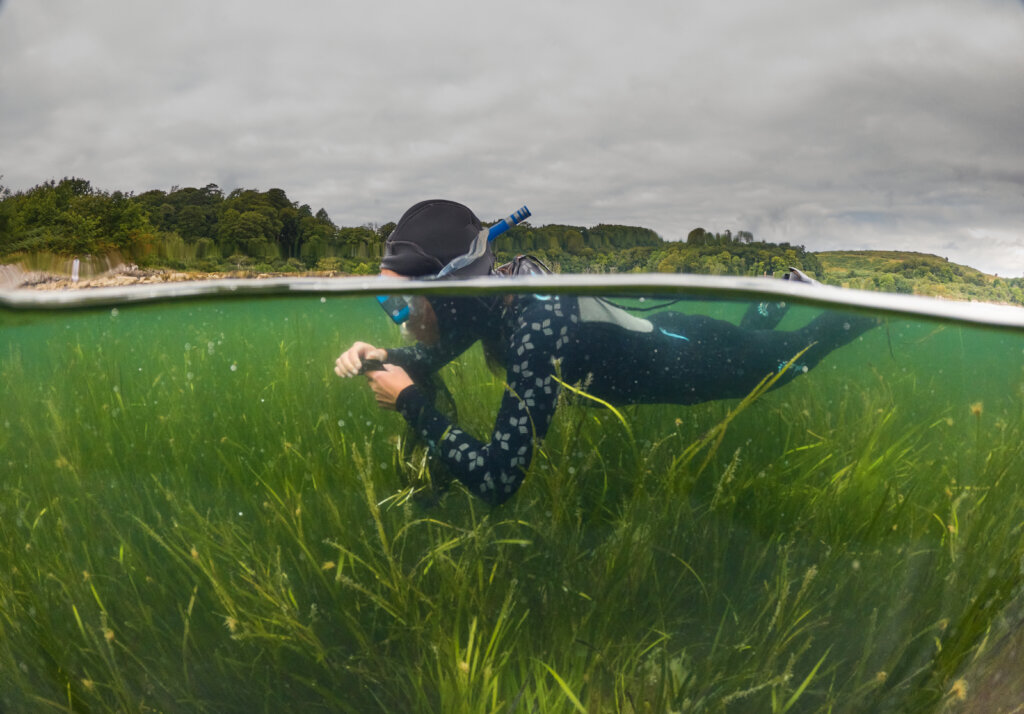
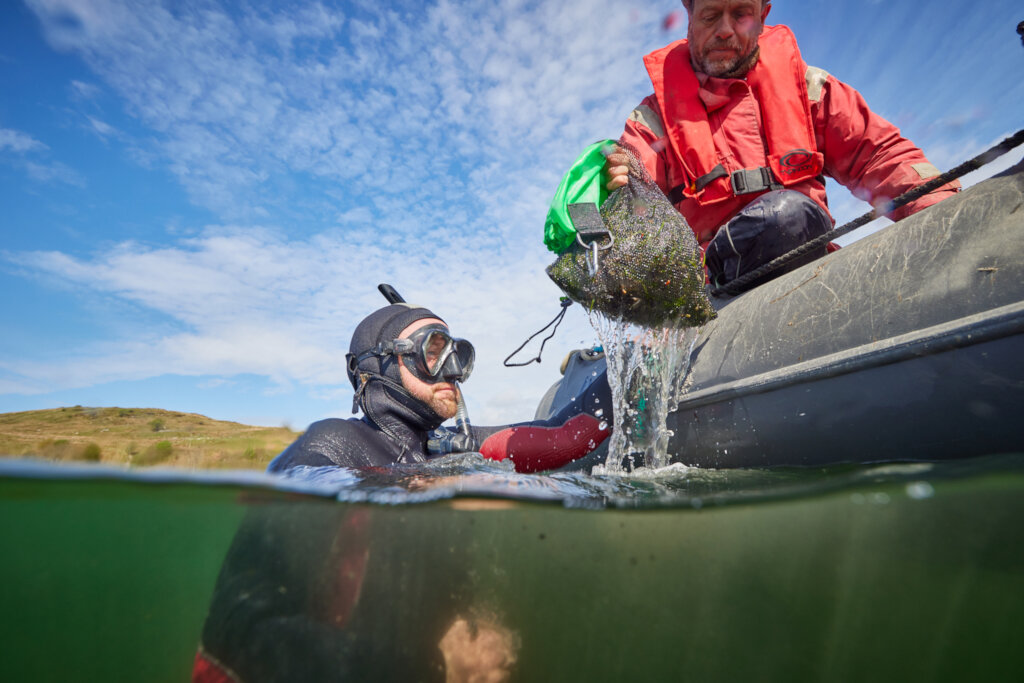
In August 2024, the team harvested 200,000 seeds from the donor meadow in Dun Mhuilig Bay over a three week period andSeawilding hosted two weekend volunteer sessions when we were assisted by 32 snorkel volunteers, some having come from as far away as the US and nine volunteers from the Dutch marine construction company Van Oord.
The seeds have gone into a chiller for winter storage and will be planted out next spring in a number of different trials. We are partnering with Van Oord to trial “sand-capping” by which 1000m2 of the lagoon will be covered in sand in 2024/25 to help mitigate the detrimental effects of anoxia and to try and improve seagrass seed germination rates. One hundred thousand seeds will be mixed into the sand and planted in the Spring.
In summary, over the last four years, we have learned much about the seagrass in Loch Craignish and, as a result of trial and error and the ongoing science, refined our methodologies accordingly. As we go forward, science will remain critical, and our engagement with the Scottish Association for Marine Sciences will continue on multiple fronts. It should be stressed that all these research outcomes are shared with our collaborative partners around the UK, notably Project Seagrass and Ocean Conservation Trust.
Other activities:
Oysters:
It’s been a frustrating year for our native oyster restoration efforts due to a lack of supply of new stock from the two UK hatcheries. Native oysters are notoriously difficult to breed and until supply issues can be resolved, all UK native oyster restoration projects hang in the balance.
However, we now have a significant stock of native oysters restored to the Loch Craignish seabed and our focus in 2024 has been to capture the wild spat to on-grow in our nursery cages where it’s afforded protection from predators. Guided by hydro-dynamic modelling, in June we suspended 150 cages filled with lime-covered mussel and scallop shell around the Loch. Adult oysters were added to release chemical cues to encourage larvae to settle.
These spat collectors are monitored regularly, and in November, newly-recruited oysters will be stripped off and placed in the nursery. However, oysters don’t spat every year, and because the sea temperature has been lower than normal – oysters need the water temperature above 16C to breed – we’re not overly hopeful this has been a good spatting year.
In October, we’re receiving a supply of juvenile native oysters - 25,000 - from Morecambe Bay hatchery, and we expect possibly tens of thousands more in November. These will over-winter in our nursery cages and be released on the Craignish seabed next year.
In September, the team has been snorkelling over our five oyster release sites to try and gauge the quantities of oysters on the seabed. We know we have released approximately 300,000, but these went down at a small size (approx. 10 grammes), and are very vulnerable to predation by green crab and starfish, both of which exist in the Loch in large quantities. Science estimates that in the wild, only 1 in a million oyster spat reach a reproductive age. Our team estimate that there are now between 15,000 - 20,000 oysters, many of a reproductive size, on the seabed and among these we are seeing newly recruited juveniles. These recent surveys will help us optimise release sites next year, as well as research potentially non-destructive predator control to reduce the large numbers of starfish where necessary. We believe these large numbers are owing to the decade-long presence of a large sea-trout farm ¼ mile away from our release sites. Fin-fish aquaculture producing large quantities of sewage on the seabed are known to attract starfish.
Meanwhile, the team has visited a research hatchery at Bangor University where a research team has successfully raised native oysters in bulk, and we’re exploring options for establishing a low-tech hatchery in Argyll to replicate their methodologies. We hope to have more news on this initiative over the coming months.
Outreach:
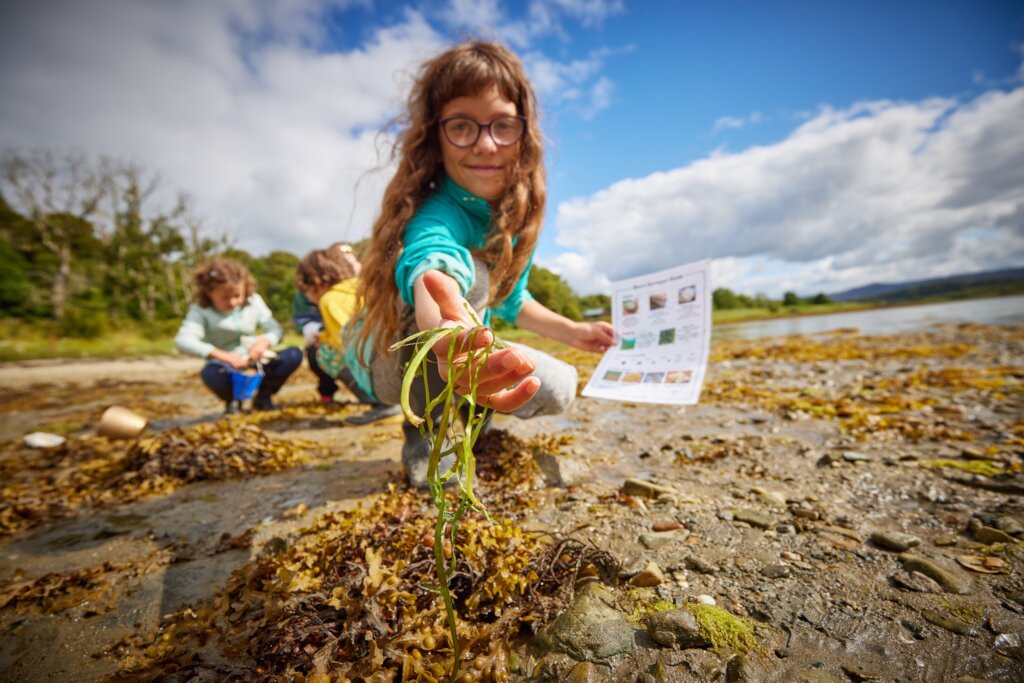
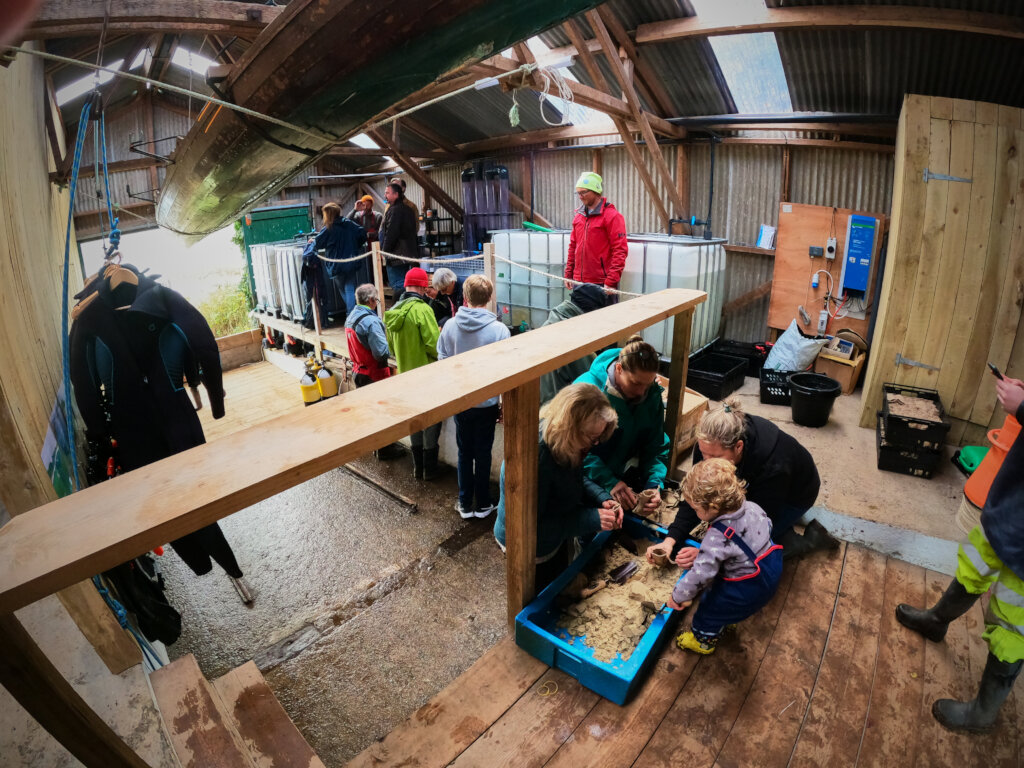
It’s been another busy summer, and other highlights include hosting three work-interns for a month who assisted with our seagrass harvest and oyster spat-collector deployment; training community volunteers to become advanced snorkel divers so they can assist us with our underwater activities; hosting 19 members of Nature Scot’s marine division for a day to learn about marine habitat restoration; and engaging with scores of children through our busy Seawildlings activity days and our school’s engagement programme.
Our application, in association with the community voluntary association CROMACH (Craignish Restoration of Marine and Coastal Habitats) for Demonstration and Research Marine Protected Area status for Loch Craignish has been submitted to the Scottish Government. This will go to public consultation in 2025 (we hope).
In addition, Seawilding’s pioneering activities continue to get plenty of media coverage, most recently on BBC2 Scotland: The New Wild; BBC Radio 4’s Rare Earth and The Herald.
Looking ahead to 2025:
We hope we’ve turned a corner with our seagrass restoration in 2024 (we won’t know fully until early summer, 2025) and on the assumption that we have, we are planning to ramp up our planting activities to cover at least half a hectare, trialling various different methodologies including sand-capping. Research will continue into the microbiome of seagrass and how we can optimise selection of restoration sites and donor plant material.
Subject to the supply bottle-neck being resolved, we plan to raise 300,000 native oysters in our nursery and continue our research into optimum site selection for restored oyster reefs and predator control. We’ll continue our research into wild spat collection and explore the potential for establishing a low-tech hatchery in Argyll with the assistance of Bangor University. If this seems viable, preparatory work will start in the winter 2024/25.
In terms of outreach, we plan to expand our internship programme for undergraduates studying marine biology and the natural sciences to give training and work experience to 6 students over a ten week period. We’ll continue to train local community members in coastal biodiversity surveying, and advanced snorkel skills; we’ll build on the network of restoration projects across the UK we’ve helped establish and continue our knowledge-sharing with nationwide and international forums engaged in the practise and science of marine habitat restoration.
We will continue our collaboration with Heart of Argyll Wildlife Association whereby approx. 200 primary school pupils a year visit Loch Craignish to learn about the sea and identify marine life. In addition, our youth group, Seawildlings, with 29 members of primary and secondary school aged children, will have yet another action-packed year of fun-filled, marine-related activity.
Seawilding now employs five people, four at Loch Craignish, and one at Loch Broom. It is funded by a variety of charitable foundations, for which we are continuously grateful.
Project reports on GlobalGiving are posted directly to globalgiving.org by Project Leaders as they are completed, generally every 3-4 months. To protect the integrity of these documents, GlobalGiving does not alter them; therefore you may find some language or formatting issues.
If you donate to this project or have donated to this project, you can receive an email when this project posts a report. You can also subscribe for reports without donating.



Support this important cause by creating a personalized fundraising page.
Start a Fundraiser