By Tiziana Tedoldi | General Manager
Seawilding Summer newsletter update: With air temperatures in Argyll hovering at 13C, the sea temperature much the same and our team still shivering in wetsuits, we’d love to welcome a proper summer, nonetheless our work to seawild Loch Craignish continues, always with good cheer, and there’s lots to report.
NATIVE OYSTER RESTORATION
Since we started in 2020, we’ve stuck to our ambition to restore the once plentiful population of native oysters that inhabited Loch Craignish, and which play such an important role in ecosystem health. We’ve been buying them in from a hatchery at finger-nail size, growing them to a bigger size in our floating nursery and releasing them on the seabed at a size that can withstand some predation.
So far, we’ve put down around 350,000 native oysters on the seabed, and owing to the unwanted attention of crabs and star-fish we reckon around 90,000 have survived. Still, that’s a lot of oysters and given the science indicates that only 1 in a million oyster larvae survives to become an adult, it’s pretty good. Excitingly, we’ve been finding small, juvenile oysters attached to boat hulls and nursery cages which indicate this newly restored population is now reproducing.
In 2024, we planned to grow another 300,000 oysters in our nursery to release on the seabed but, frustratingly, both UK hatcheries that supply native oysters have been struggling to get their brood stock to breed. A bit like Giant Pandas, you can give them all the love in the world, but they won’t necessarily oblige. It means that both our Craignish and Wester Ross projects, and every other UK oyster restoration project, has been without supply for over 12 months. We hope this will be rectified by the late autumn.
So we’ve had to be inventive, and this year, as our “restored” stock breeds, we’re trying to catch the wild oyster larvae floating in the water column to on-grow in our nursery. It’s a technique used by commercial oyster farmers in France. We’re suspending 150 lime-covered cages of mussel and scallop shell around the Loch and each of these “spat-collectors” includes adult oysters which release chemical cues to encourage the free-floating larvae to settle.
If successful, come October, we can transfer this “spat-on-shell” to either our nursery cages or directly onto the seabed restoration sites.
In the meantime, we’ve commissioned hydro-dynamic modelling of Loch Craignish from MTS-CFD Ltd to help us better understand the movement of oyster larvae and where to focus our restoration efforts. The larvae float in the water column for 14 days before they settle, yet our modelling shows that despite the ebb and flow of tides, most of the larvae stays in the Loch, apart from big Spring tides when some gets flushed out to re-populate other areas. This has been reassuring to see, and once again shows how this project is producing cutting-edge research which is of use to the wider science of native oyster restoration in Europe.
SEAGRASS RESTORATION
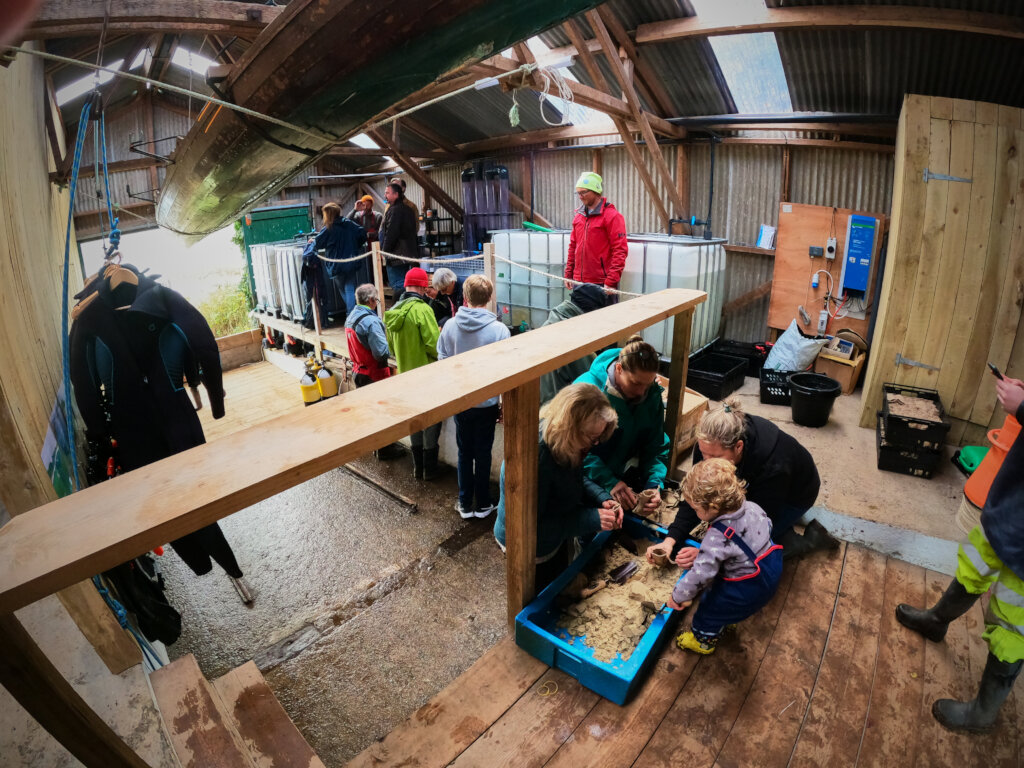
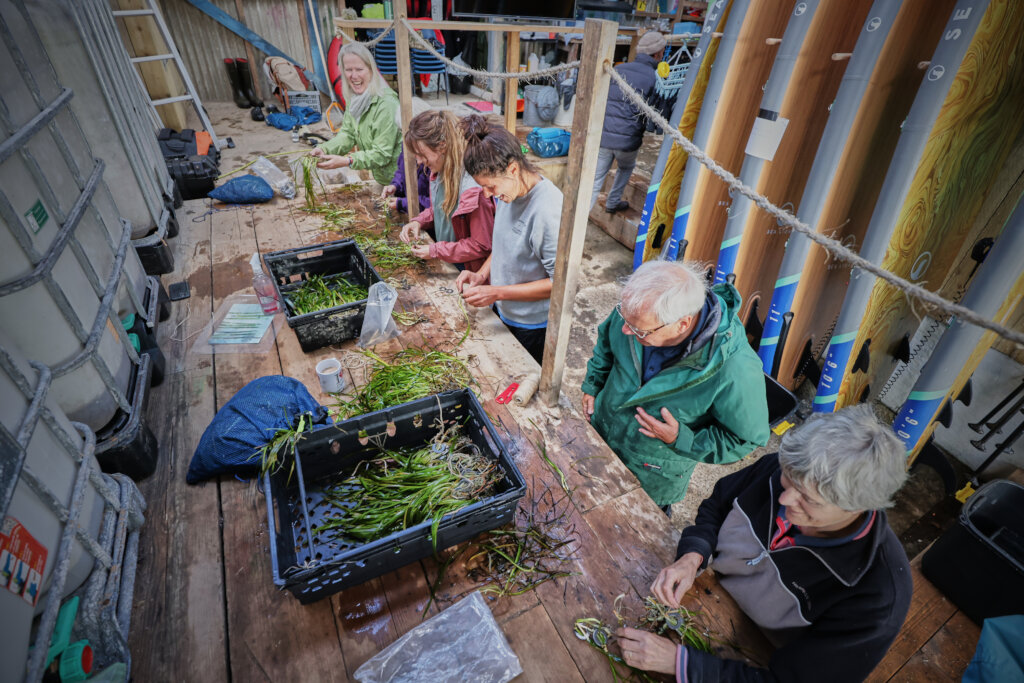
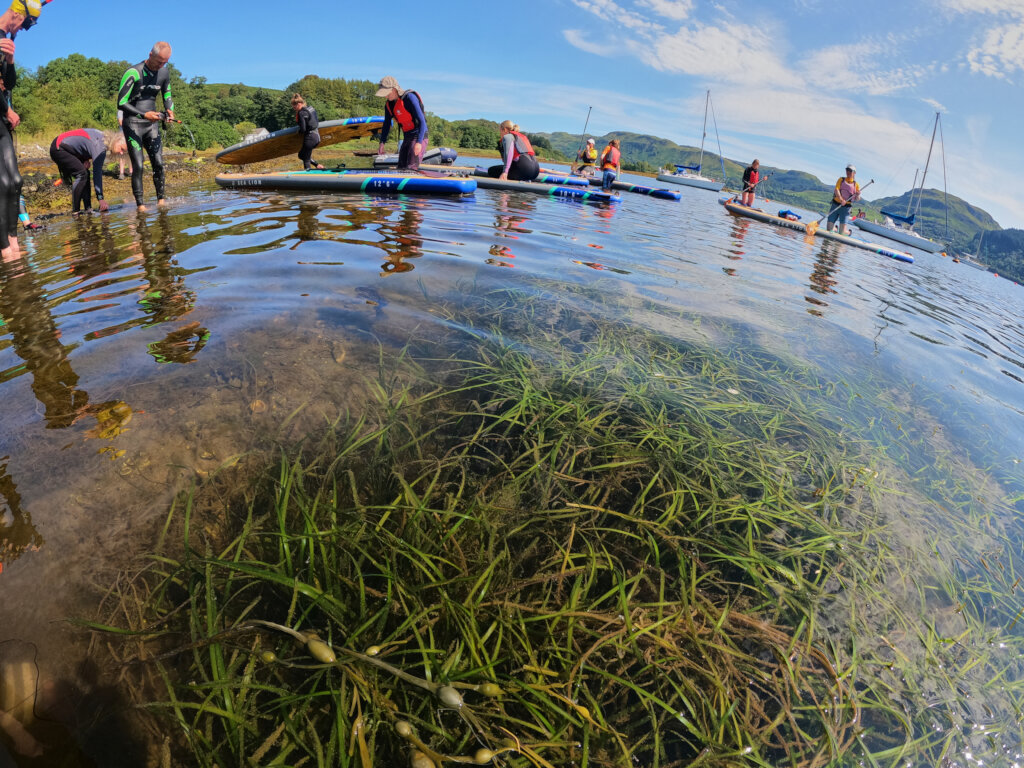
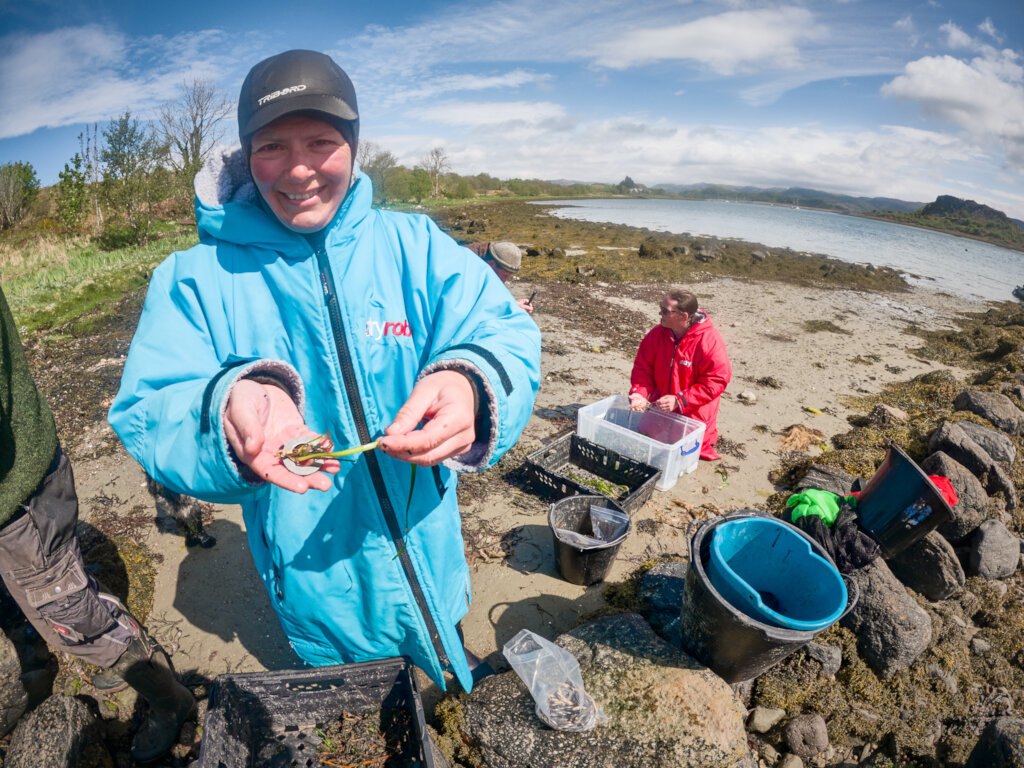
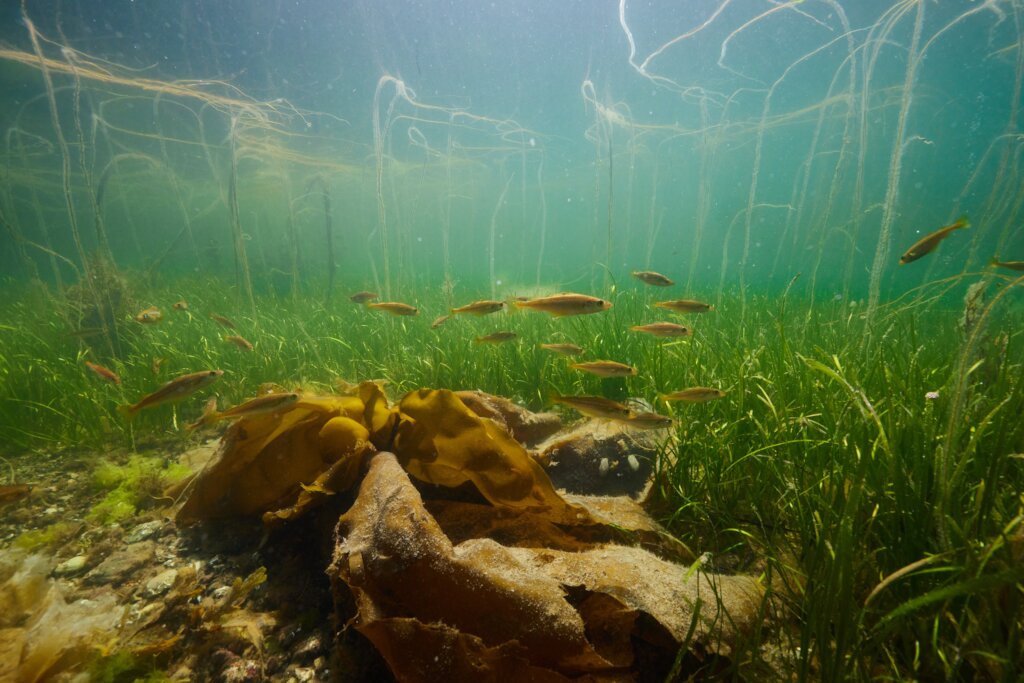
This spring and summer we have welcomed 42 volunteers – some from as far away as New Zealand and France – to our Craignish boathouse HQ to help process seagrass for transplanting onto restoration sites.
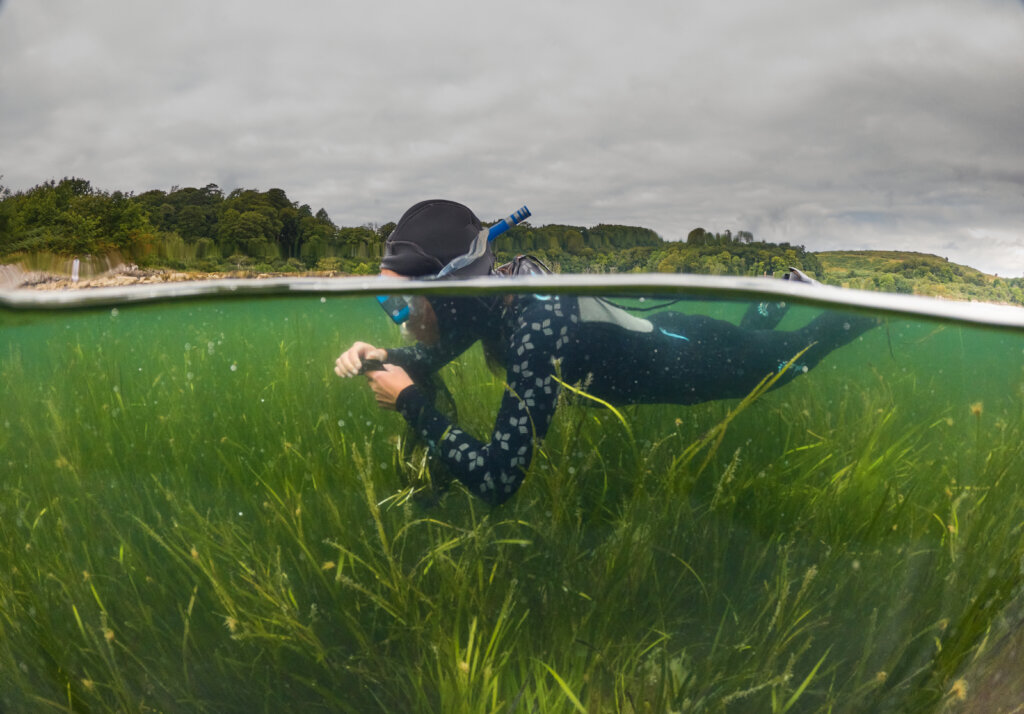
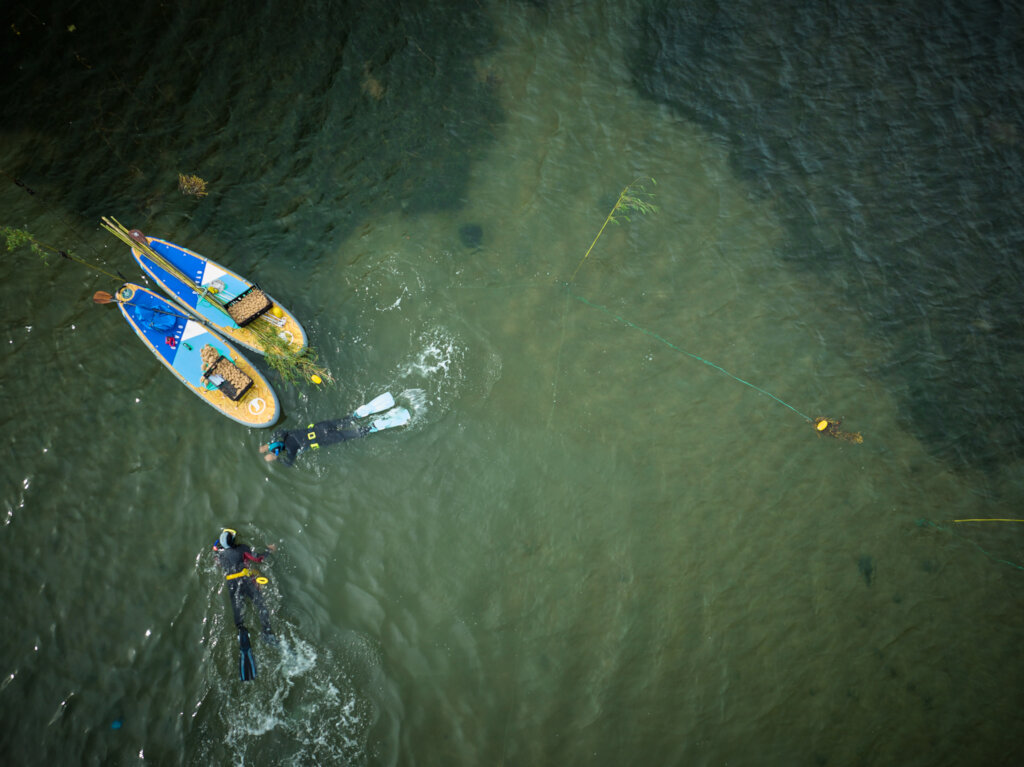
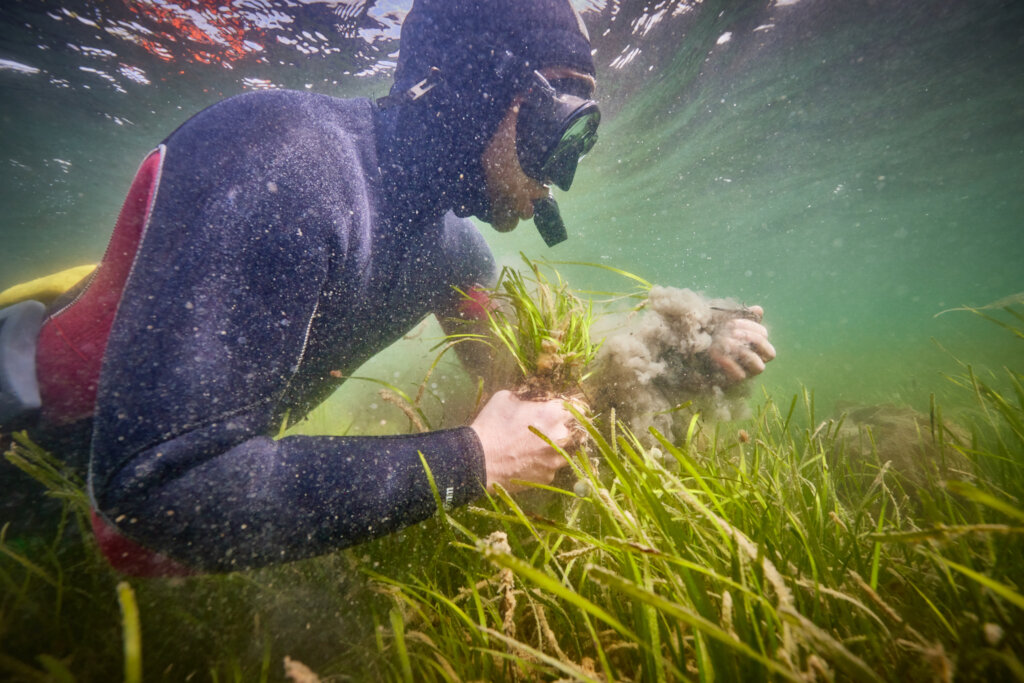
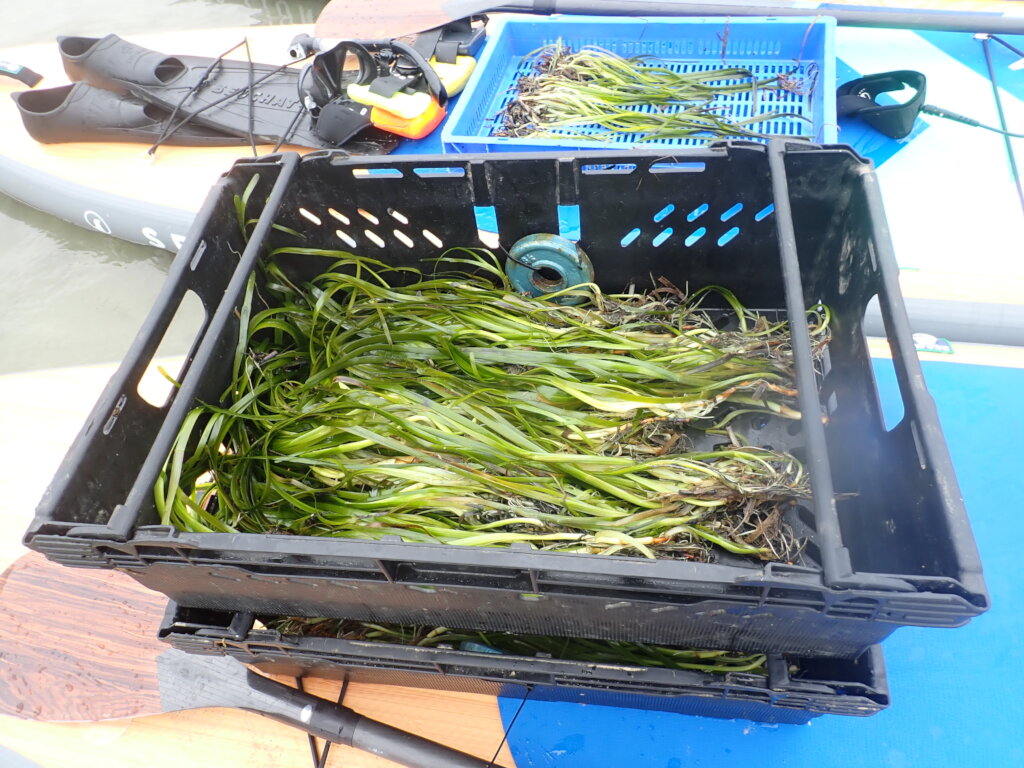
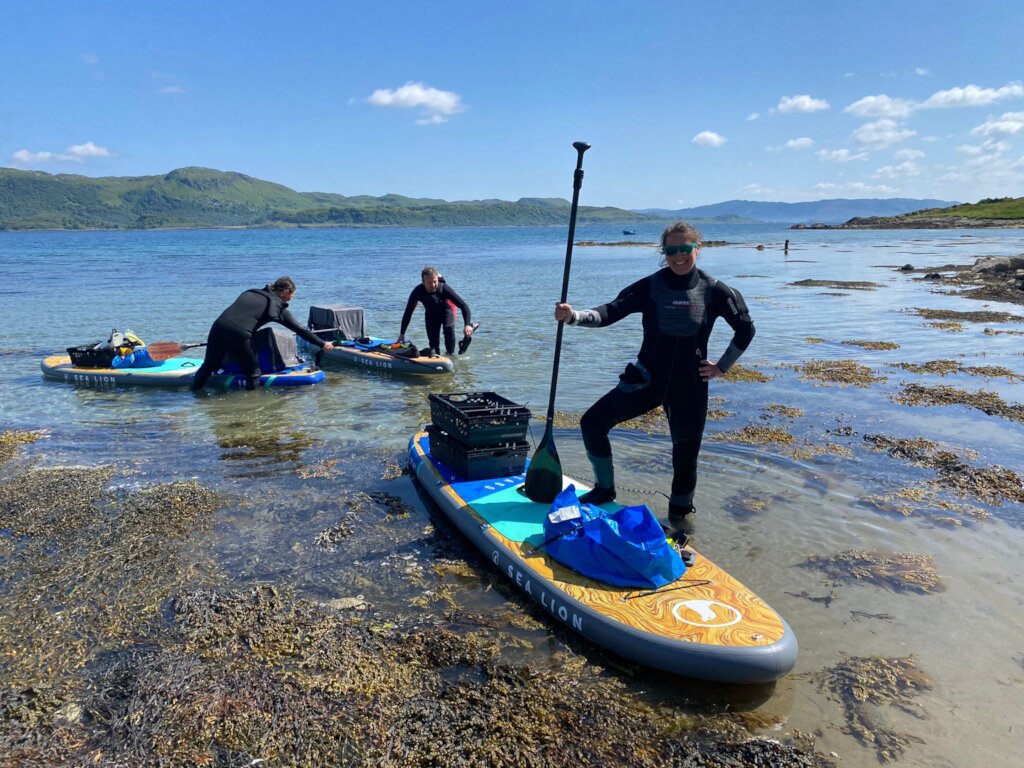
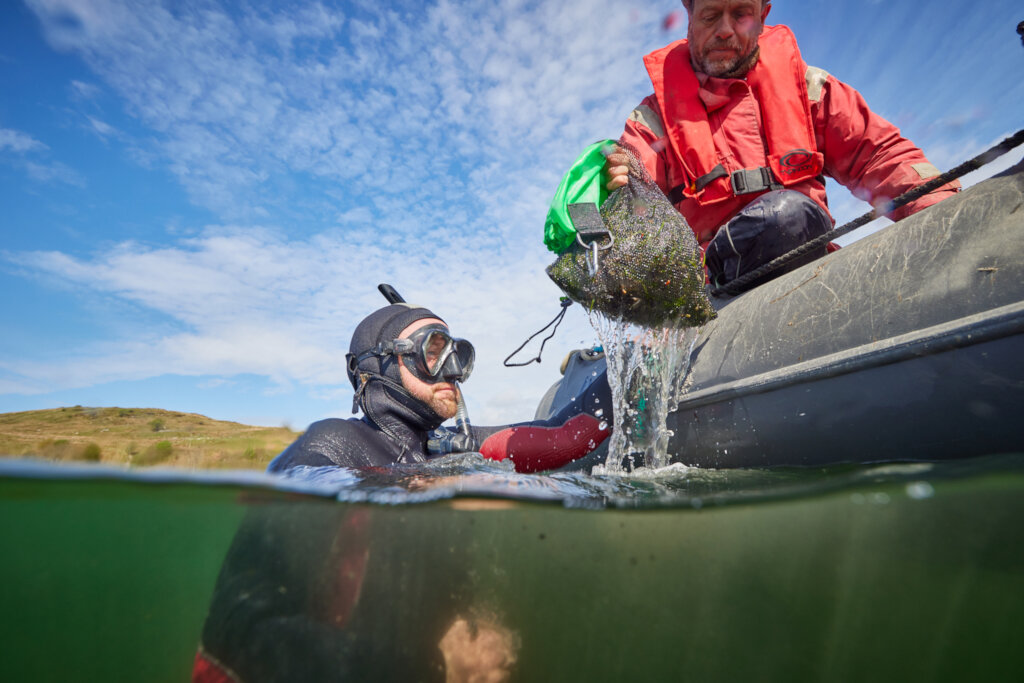
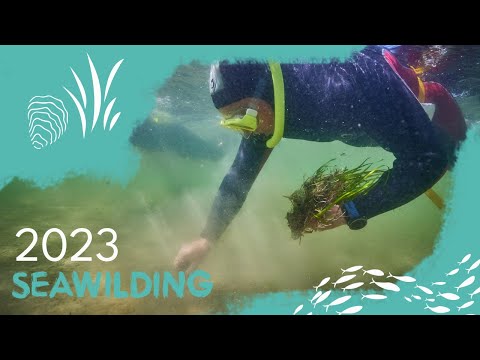
The Seawilding team of snorkellers harvest the plants from donor meadows at low spring tide; the volunteers separate and bundle them up with steel washers to give purchase on the seabed, and the bundles are transplanted onto the restoration sites in about 1 metre of water.
These hands-on sessions in our busy boathouse are always fun and rewarding, and we’re forever grateful to our enthusiastic volunteers. This year we aim to harvest at least 10,000 plants to enhance an existing meadow at Dunvhullaig bay.
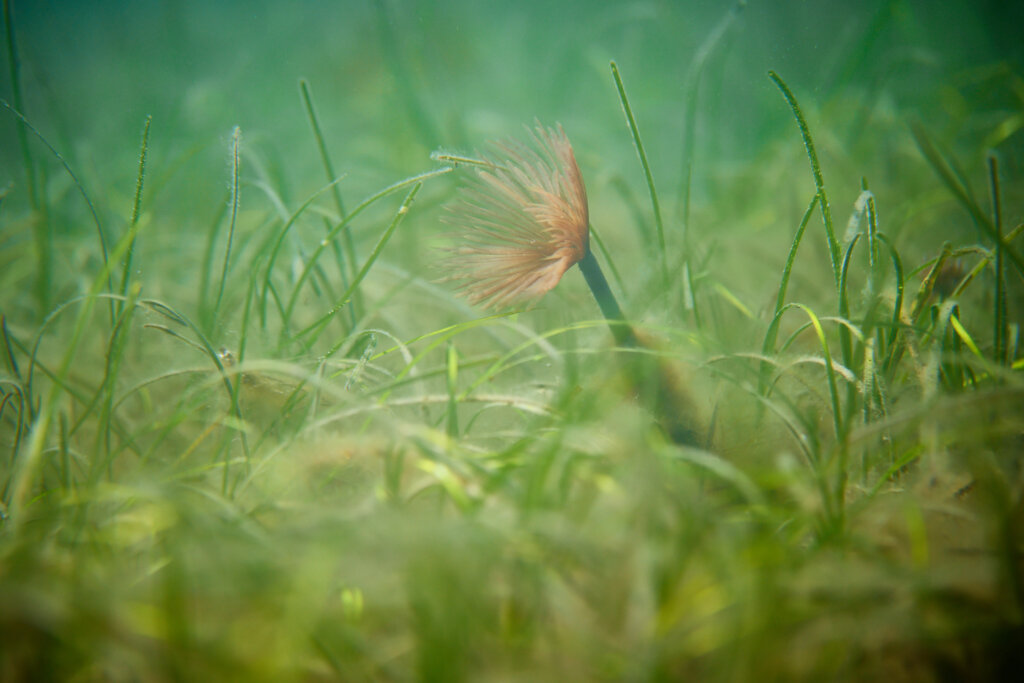
However, seagrass restoration is proving challenging. Last year we planted approx. ½ acre of seagrass plants in a muddy, lagoonal area of the Loch. We had high hopes that the plants would do better than seed. Our recent summer survey reveals that on average about 6% of the plants have survived. It’s success of a sort – we’ve proven plant transplanting works better - but there’s now growing evidence, backed by a recent scientific paper, that we’ve got a problem with the site. We’re learning that seagrass likes well-aerated substrates, and our Craignish lagoon is muddy and “anoxic” or lacking in oxygen, which impedes the growth of both seagrass seed and plants.
To counteract this, in 2024, we’ve been sampling the oxygen levels of seabed sediments and choosing better sites, while the Scottish Association for Marine Science is conducting laboratory analysis to understand our sediments better. We’re partnering also with the Dutch marine construction company Van Oord to trial “sand-capping” at Loch Craignish, whereby a thin skin of sand is deposited on the lagoonal mud to counteract anoxia. This technique has been successful in Sweden. In the autumn, Seawilding and Van Oord will harvest over 100,000 seagrass seeds with the aim of planting these in the sand-capped area next spring.
We long to say that we’ve cracked seagrass restoration, and we’re planting this wonder species at scale, but the truth is all UK seagrass projects face challenges. Certainly, there are pockets of success, we’re producing invaluable research, and because we’re networked together, the science is progressing fast. One day we hope this newsletter will trumpet that we’ve found the answer… Stay with us!
GREAT SEAGRASS SURVEY
In May, in conjunction with BSAC (British Sub-Aqua Club), we held the second year of the Great Seagrass Survey whereby snorkellers and divers around the UK survey seagrass meadows around the coastline.
The data is entered into the national databases, the hope being that by recording the whereabouts of these endangered species we can afford them better protection. So far, around the UK, 1118 hectares of different types of seagrass has been mapped by the project – an incredible result!
DIVE TRAINING
Two generous donors – True Travel Foundation and Weatherbys Bank – have provided the means for four of our team to train and qualify as scientific divers. This upskilling of our operational team and investment in kit is a game-changer as being able to spend significant time underwater, instead of duck-diving with a snorkel, should make our work so much easier.
In July, our divers will trial harvesting and planting seagrass for the first time. We look forward to seeing how much it increases efficiency while exploring the benefits of being unrestricted by tides, operating at greater depths and keeping warm in dry-suits. Now our dive team will be available to assist other restoration projects where diving is an advantage.
In the meantime we’ve been training community volunteers to advanced snorkel level and some of these will be helping us harvest seed in August.
INTERNS
We’ve had three delightful interns – marine and environmental science undergraduates, Holly, Damson and Liam, join us for the month of June. They’ve been helping with seagrass rhizome transplanting, native oyster surveying, and nursery cleaning while earning their “advanced snorkeller” qualifications. This is the second year we’ve provided internships – 6 interns so far - and it’s such a valuable offering. We gain from their enthusiasm, knowledge, insights and muscle-power and they get work-experience which is hard to come by for young people wanting a career in marine conservation. The interns were funded by Charities Aid Foundation America and Rewilding Britain.
WESTER ROSS
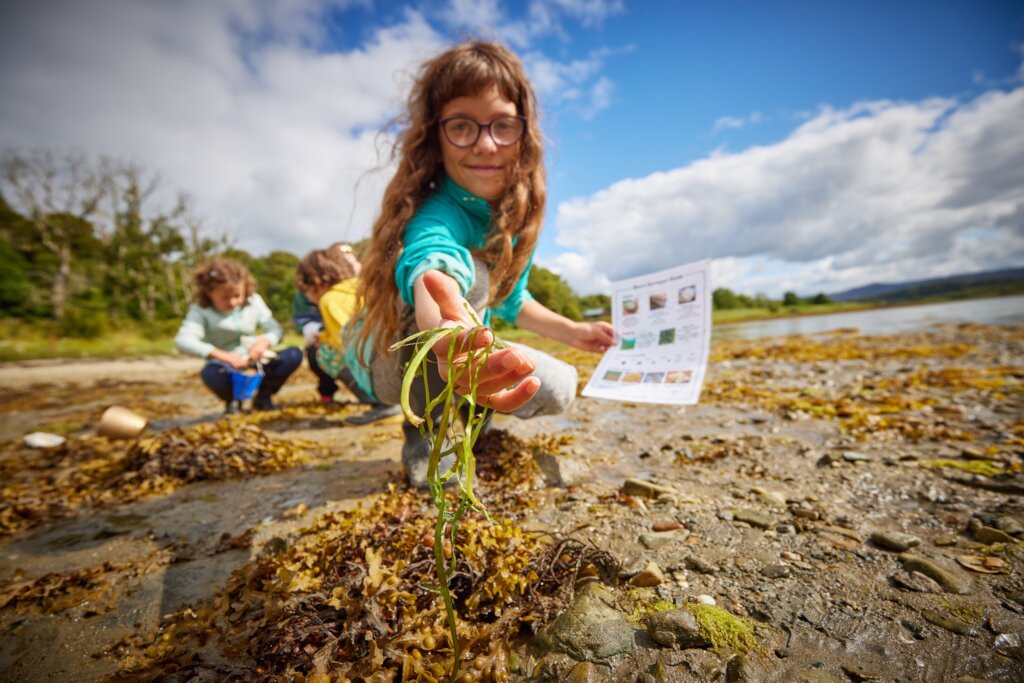
Our Wester Ross project, which aims to restore 300,000 oysters to Loch Broom, has also been hit by the lack of oyster supply. So, unable to do much in the water we’ve been doing a lot of outreach, working with 6 primary schools, the Ullapool Sea Savers and the Ullapool High School, doing classroom sessions on the importance of the sea, surveying the beaches of the Wester Ross Marine Protected Area and monitoring our oysters in Ullapool harbour. The children and the teachers love these hands-on sessions and fortunately the bivalves are robust. The project continues to raise 5,000 oysters in a floating nursery, and to survey and monitor the release sites in Loch Broom. Surveying has also started for a new native oyster restoration project at Loch Ewe in partnership with the National Trust for Scotland and Scottish and Southern Energy.
SEAWILDLINGS
Funded by The Monkeypuzzle Charitable Trust, our Seawildlings youth group has grown and now includes not only primary-aged school children but also high schoolers from the Craignish area. Marine-themed activities over the last few months have included coastal bushcraft, learning about ‘Victorian Female Collectors and the Sea’, sea-art installations, coasteering, rock climbing, abseiling, kayaking, snorkelling and an overnight camping trip with a bio fluorescent night-walk to observe all sorts of colourful seaweeds and marine creatures not visible in ordinary light.
CITIZEN SCIENCE
Our schools programme, run by our partner organisation Heart of Argyll, continues to see pupils from 7 local primary schools conduct “citizen science” on our oyster cages hanging off the yacht centre pontoons at Loch Craignish. The school children monitor bio-metrics such as growth and survival, and identify the multiple marine species that inhabit the cages. It’s a great success and since the programme started in 2020, 386 children have been involved and teachers from 11 different organisations.
ECO-MOORING
This summer, following a grant from the Crown Estate, we will be installing Loch Craignish’s first eco-mooring! Conventional moorings use chains that scour the seabed and are particularly damaging to seagrass and other sensitive habitats, whereas an eco-mooring has tackle lifted off the seabed and has minimal impact. We’ll be watching how it performs and maybe one day we’ll see many more installed in the Loch.
SEAWILDING BOAT
Seawilding has taken delivery of a new work-boat – Seawilder – funded by the Scottish Marine Environmental Enhancement Fund (SMEEF). Our boat will carry up to 6 staff/passengers around the Loch and will comply with rigorous health and safety requirements. The boat is in the process of being “coded” for commercial operations and should be launched later this summer. We hope the next newsletter will see bubbly spewing over her bow.
DEMONSTRATION & RESEARCH MARINE PROTECTED AREA
Finally, our community’s application for Loch Craignish to become a Demonstration and Research MPA has been submitted to the Scottish Government. The purpose of the D&R MPA is for the community and all the key stakeholders of Loch Craignish to work together to improve the health and biodiversity of the loch.
This will be the first time such a model of local community management will be operational in Scotland, and if successful it can be replicated in other areas around the country. We’re told it may be several years before we hear if we’ve got the designation - fingers crossed – it will be a triumph if we do.
By Tiziana Tedoldi | Administrator
Project reports on GlobalGiving are posted directly to globalgiving.org by Project Leaders as they are completed, generally every 3-4 months. To protect the integrity of these documents, GlobalGiving does not alter them; therefore you may find some language or formatting issues.
If you donate to this project or have donated to this project, you can receive an email when this project posts a report. You can also subscribe for reports without donating.



Support this important cause by creating a personalized fundraising page.
Start a Fundraiser