By Anna Bowden | Street Child US CEO
FINAL PROJECT REPORT FOR CRISIS TO CLASSROOM: EDUCATE CHILDREN IN NIGERIA
Street Child’s work to get some of Nigeria’s most vulnerable children back into education continues to deliver strong results.
In North-East Nigeria, years of conflict, displacement and poverty have created enormous barriers to education. Children may have never enrolled in school, dropped out after their families were displaced, missed years of learning or been unable to attend because their families simply cannot afford the costs associated with education. Some have experienced violence, separation from their families or association with armed groups.
Street Child’s approach recognizes that giving a child a school place is only one part of the solution. If they cannot afford materials, have fallen too far behind to participate in class, do not have a safe place to learn or their families remain under severe economic pressure, they are at high risk of dropping out again.
The Education for Every Child Today (EFECT) project therefore combines education, child protection, family livelihoods, community engagement and investment in better learning environments.
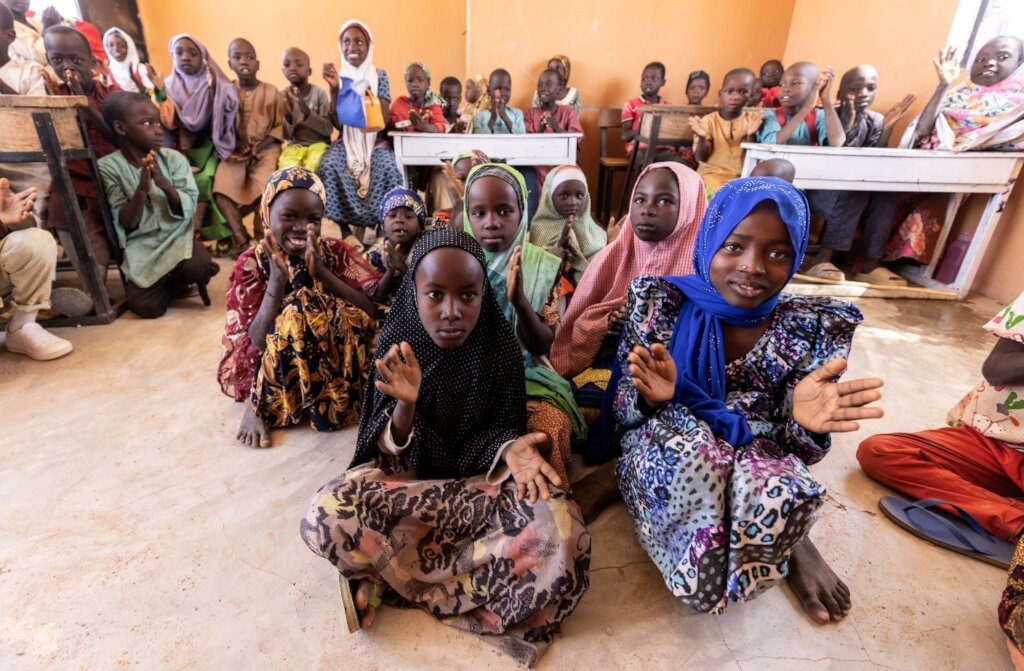
By the end of the second year of the program, 22,462 out-of-school children had been enrolled in education in Nigeria, including 13,262 children during Year 2 alone.
Enrollment
The project deliberately seeks out children who are least likely to return to school without additional help and supports enrollment. During Year Two, 1,057 particularly high-risk out-of-school children were supported to enroll in formal education, including 182 children with disabilities. Another 1,057 out-of-school siblings from participating households were also enrolled.
This support has been particularly important for children affected directly by the conflict. In Nigeria, 511 children associated with armed groups received targeted social work support to help them reintegrate into education and the project also worked with 1,527 caregivers of children affected by armed conflict, providing positive parenting training designed to strengthen family relationships and create safer, more nurturing homes.
Catch-up learning
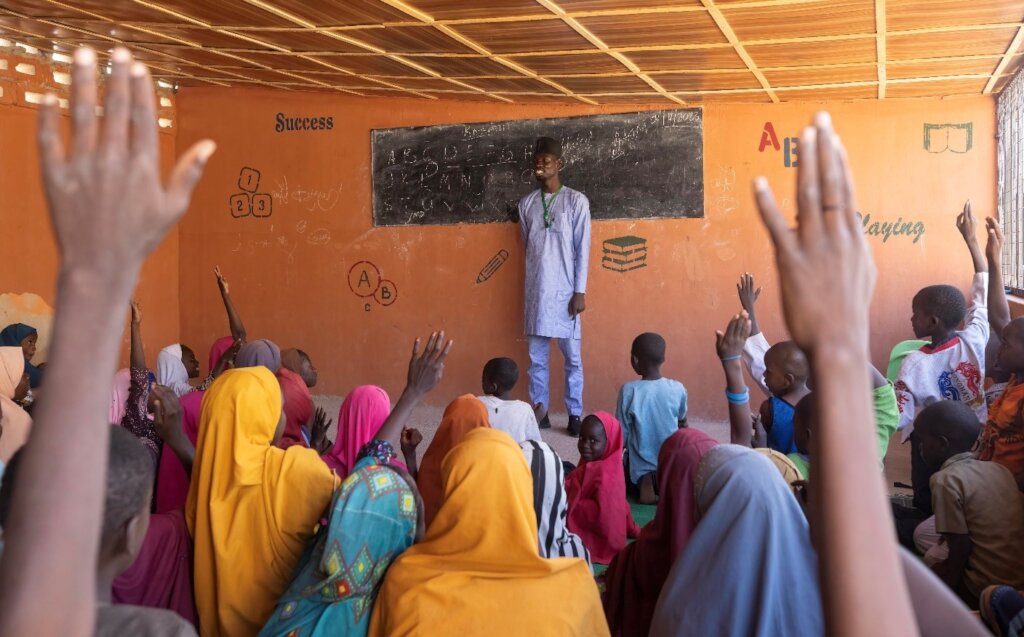
For many children, returning immediately to a conventional classroom is difficult. Some have been out of education for years and are significantly behind other children of the same age. Street Child therefore uses Nigeria’s government-approved Accelerated Learning Program, a condensed curriculum delivered over six to nine months. Children are taught according to their learning level rather than simply their age, allowing them to rebuild foundational literacy and numeracy skills before entering formal education. During the project, 100 Community Volunteer Teachers were trained to deliver this form of education.
Every child who completed the Accelerated Learning Program subsequently sat the mainstreaming examination and transitioned into formal education at a level appropriate to their ability. The teachers themselves were also supported to take teaching examinations to obtain accreditation, strengthening the local education workforce beyond the immediate life of the project.
Safe learning spaces
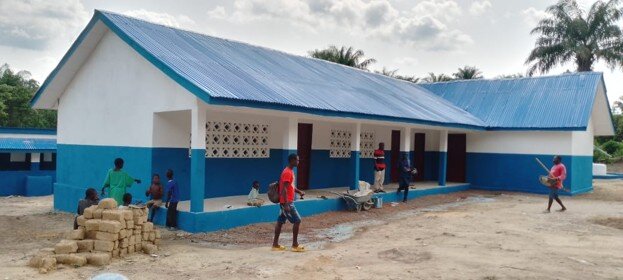
A lack of suitable classrooms remains another major barrier in communities affected by conflict and displacement, so EFECT has either constructed Temporary Learning Centers [TLCs] where appropriate or invested in improving existing government schools where possible. To date four TLCs have been established and successfully handed over to the government to run, while 46 existing classrooms have been refurbished. These classrooms can be used by formal school students during the school day and by children participating in accelerated learning in the afternoon.
Following these improvements, 8,517 out-of-school children enrolled in non-formal education through the temporary learning centers and refurbished classrooms.
This approach allows the project to reach children currently outside the formal system while also improving the learning environment for children who are already attending local schools.
Livelihoods to afford education
Poverty is one of the most persistent reasons children leave school, and even where education itself is free, families may struggle with the costs of uniforms, learning materials, transportation and other necessities. In households facing extreme financial pressure, children may also be expected to work rather than attend school.
Street Child’s Family Business for Education approach tackles this problem directly.
During Year 2, 1,053 caregivers in Nigeria received a cash grant to establish or grow a small business. All 1,053 reached the project’s target savings threshold, helping families build a more sustainable source of income from which they can continue meeting the costs of their children’s education.
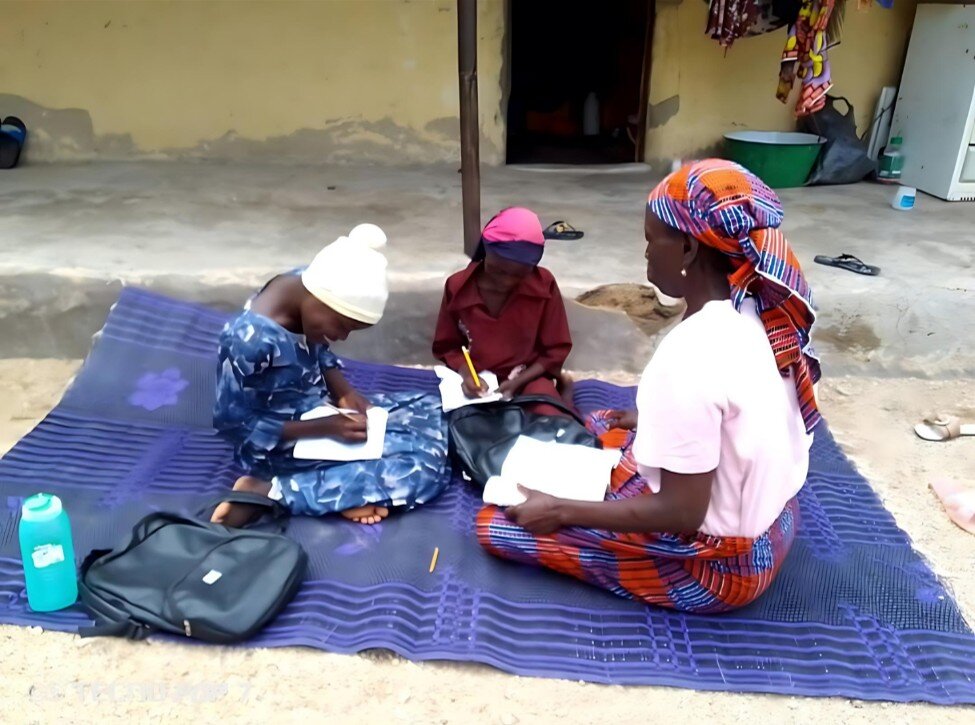
The impact of this approach can be seen in families such as Chioma’s in Adamawa State (pictured below). Her daughters, Sade and Fatima*, were supported to enroll in elementary school while Chioma received a small enterprise grant to establish a grain business selling maize, guinea corn and millet. She also participated in positive parenting sessions.
Before joining the project, Chioma lacked confidence in helping her children academically because her own education had ended at elementary level. Following the project’s support, she became much more involved in their learning. Within four months Sade’s math grades improved by 25%, and Fatima’s reading comprehension improved by two levels within five months. Chioma described becoming actively involved in their education as something that had strengthened the relationship between them.
*Names have been changed for safeguarding.
Looking beyond enrollment
The results in Nigeria demonstrate why getting children back into school requires much more than enrollment alone.
A child who has experienced conflict may need protection and psychosocial support. A child who has missed several years of school may need accelerated learning before entering a conventional classroom. A family living in extreme poverty may need help establishing an income before they can reliably keep their children in education. And communities affected by displacement need safe classrooms and trained teachers.
By addressing these barriers together, Street Child is helping children not simply enter a classroom, but stay in education, catch up on lost learning and build the foundations for a more secure future.
We will continue working alongside children, families, teachers, communities and government partners across North-East Nigeria so that some of the children who have been most profoundly affected by conflict have the opportunity to be safe, in school and learning.
Thank you for your support!
Links:
Project reports on GlobalGiving are posted directly to globalgiving.org by Project Leaders as they are completed, generally every 3-4 months. To protect the integrity of these documents, GlobalGiving does not alter them; therefore you may find some language or formatting issues.
If you donate to this project or have donated to this project, you can receive an email when this project posts a report. You can also subscribe for reports without donating.