By Shivani A. Datar | Field Researcher
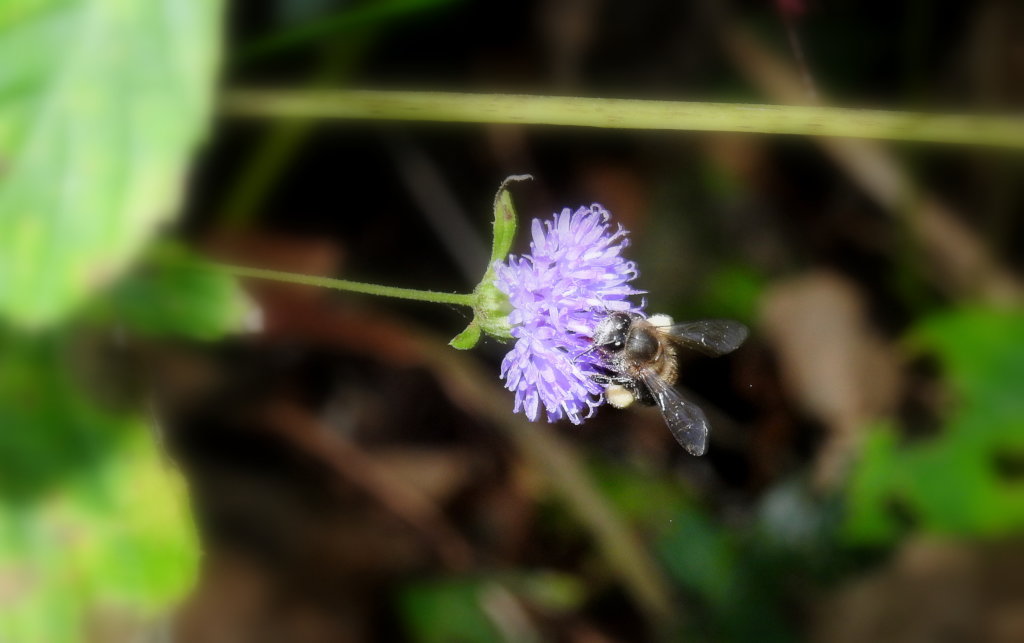
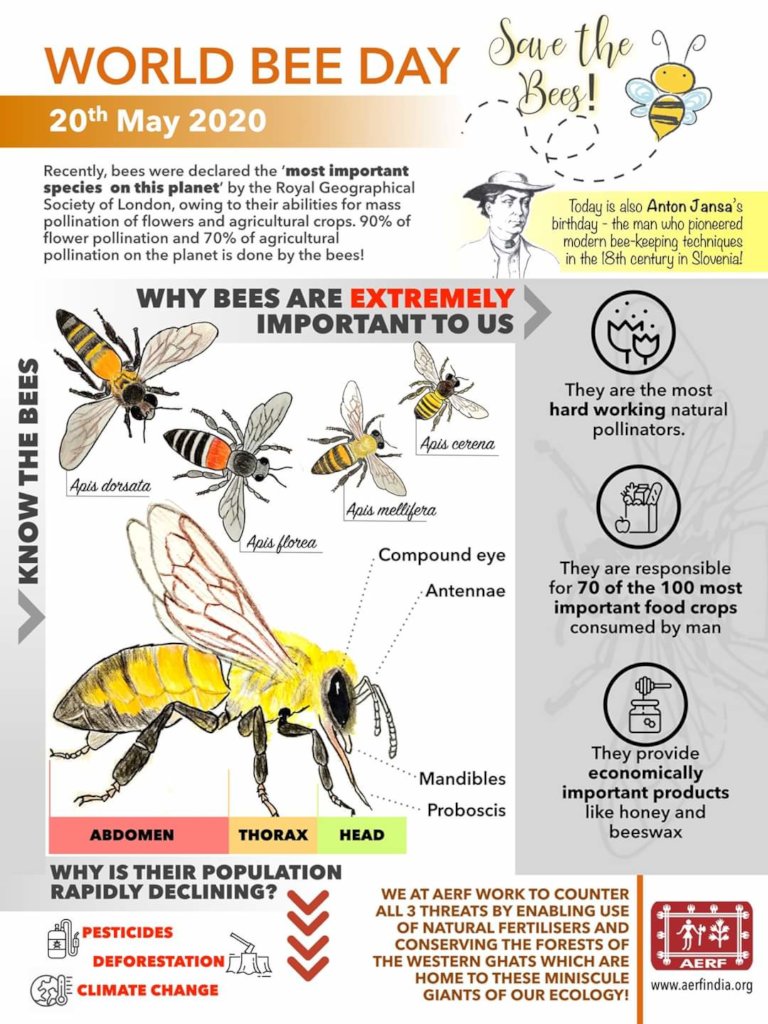
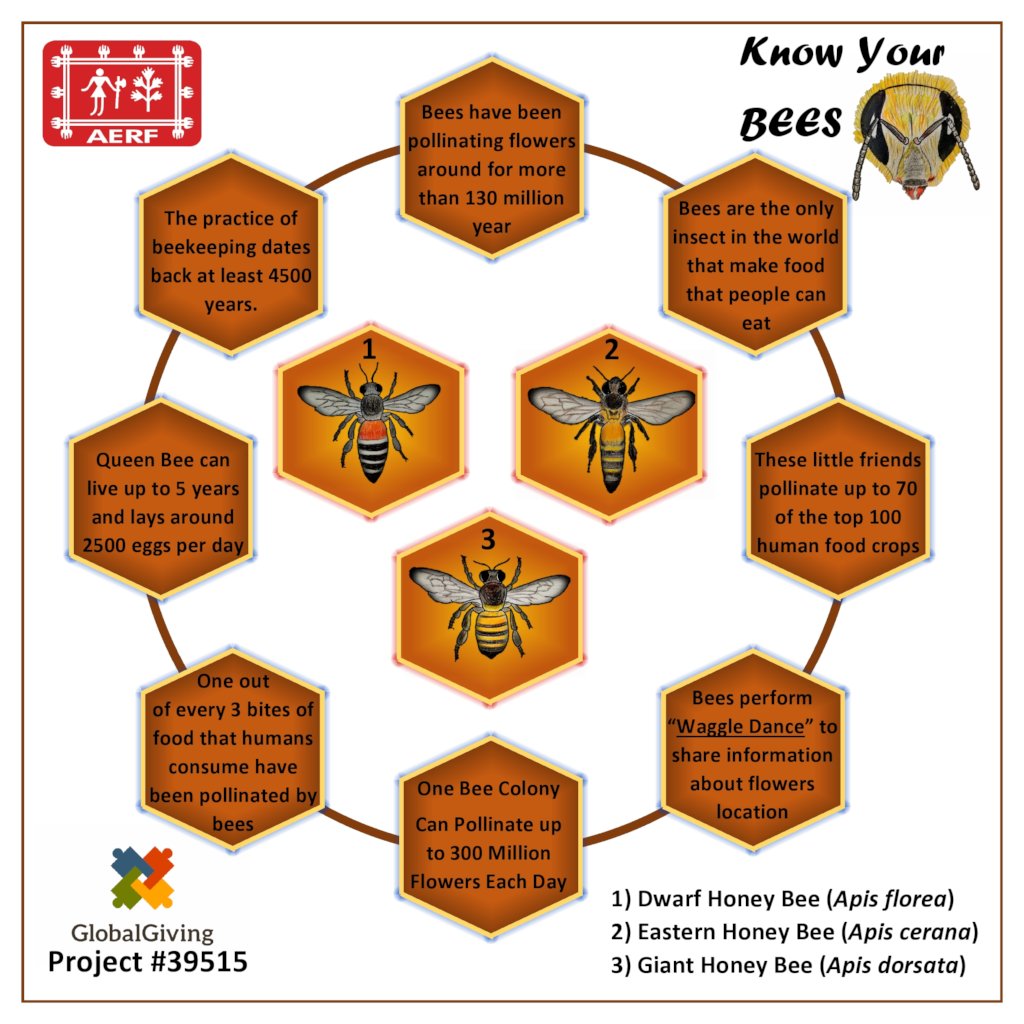
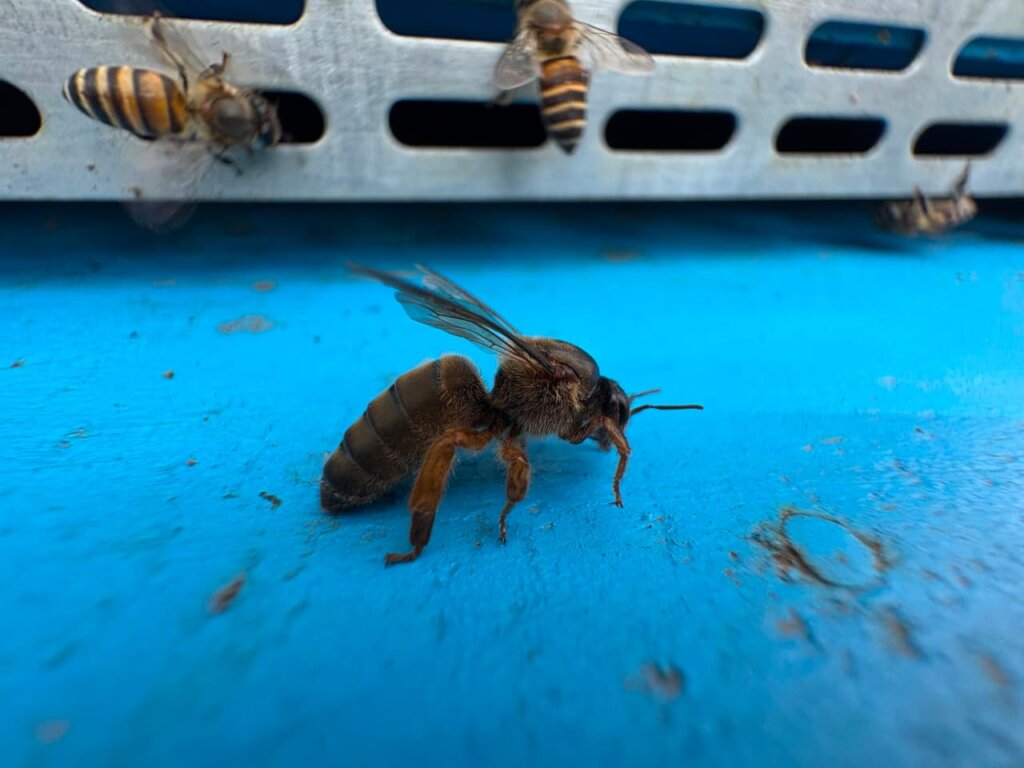
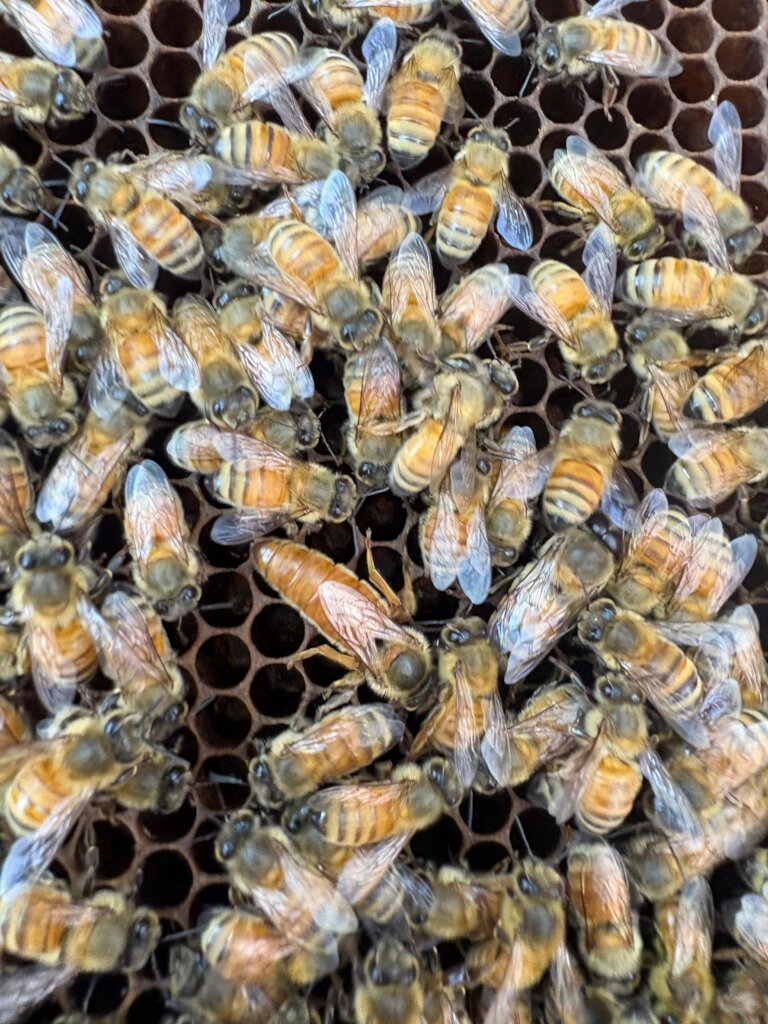
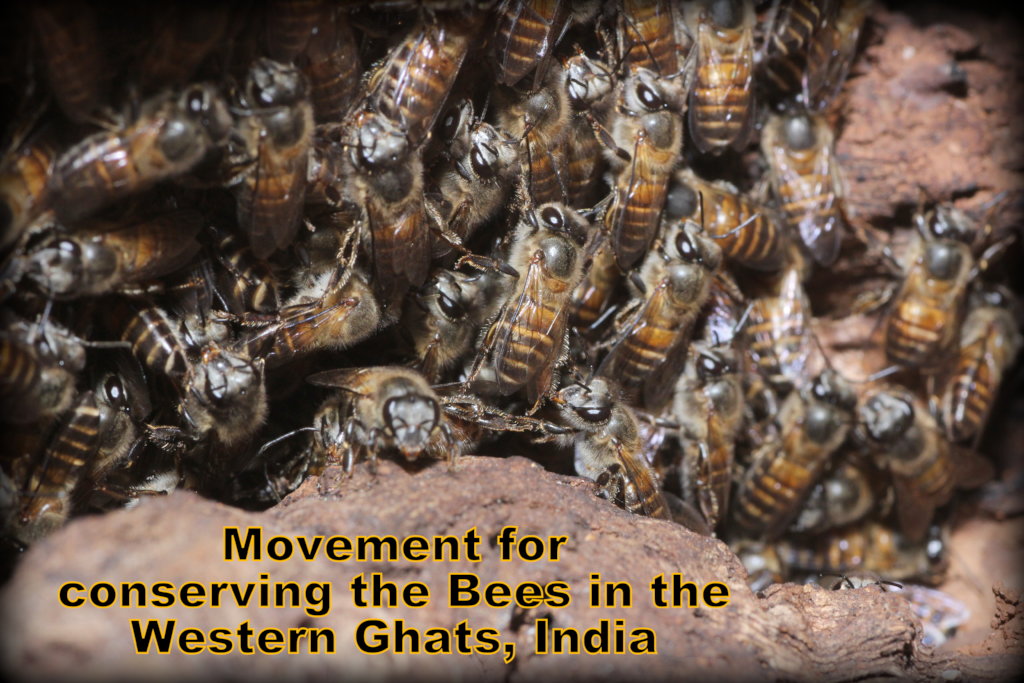
Hidden among the forests of Bhimashankar Wildlife Sanctuary (situated in the Western Ghats of India) is a small but powerful conservation partner, the indigenous honey bee, Apis cerana indica, locally known as Sateri.
They are remarkably adapted to the landscapes they call home. They are comfortable in the seasonal rhythms of the Western Ghats (recognized as a UNESCO World Heritage Site and one of the world's eight biodiversity hotspots), forage across a broad temperature range, and have evolved alongside the native plants that surround them.
A Bee Built for the Western Ghats
Apis cerana indica has several characteristics that make it particularly suited to community-based beekeeping:
For communities living around Bhimashankar, the relationship between bees, trees and livelihoods is not theoretical it is visible in the forest.
One important tree is Terminalia chebula, a highly valued medicinal species whose fruits are collected by local communities and traditionally used in Ayurvedic medicine, support digestion, detoxify the body, and boost overall immunity. Its flowering and fruiting are therefore important ecologically as well as economically. But the forest is experiencing increasing climatic uncertainty.
During the previous year, untimely and prolonged rainfall contributed to immature fruit drop in Terminalia chebula. At the same time, some bee colonies abandoned their hives. Communities subsequently observed reduced fruiting compared with the previous year. While many factors influence fruit production, this experience illustrates an important ecological connection: Healthy forests need healthy pollinators and communities need both.
Protecting pollinators is therefore not only about producing honey. It is about maintaining the ecological relationships that allow forests to reproduce and communities to benefit from forest resources.
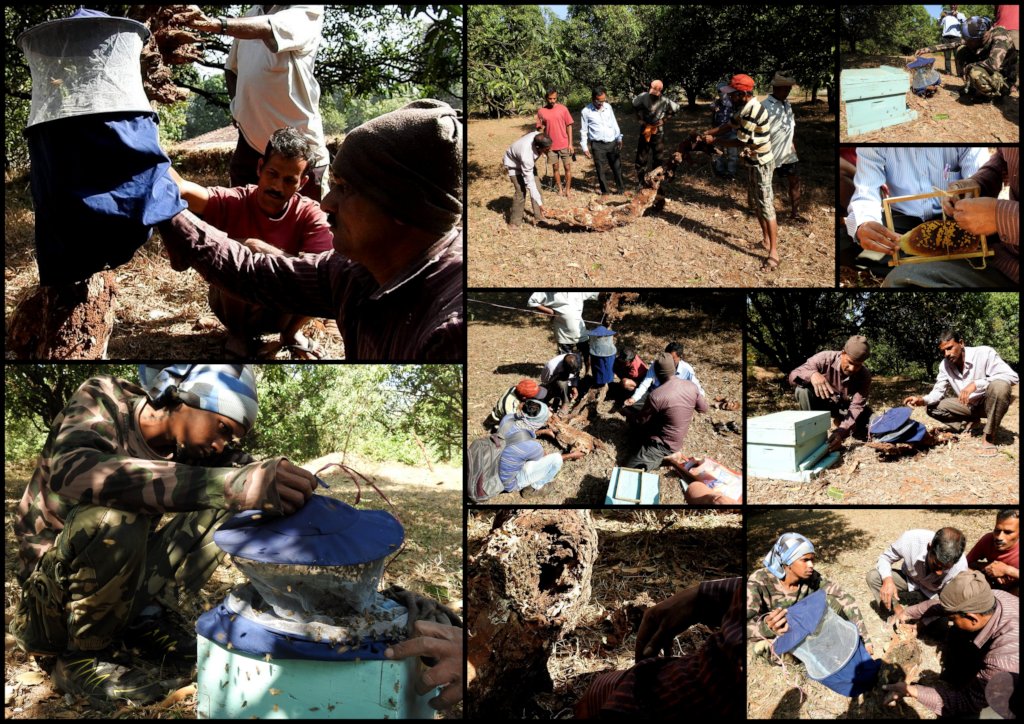
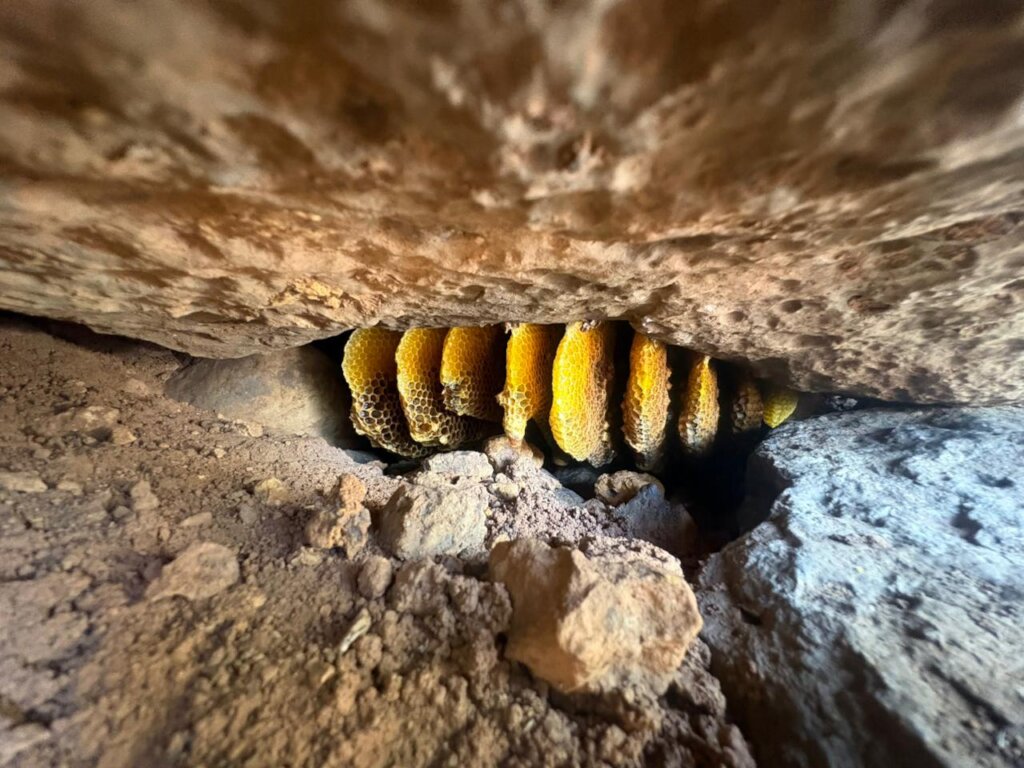
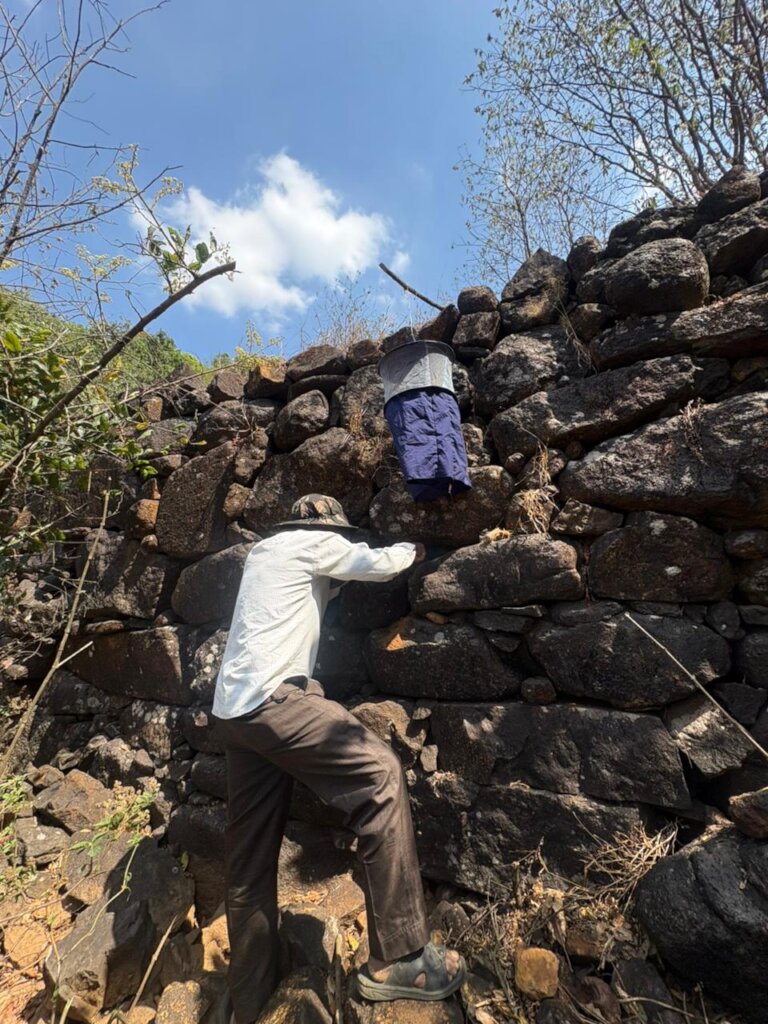
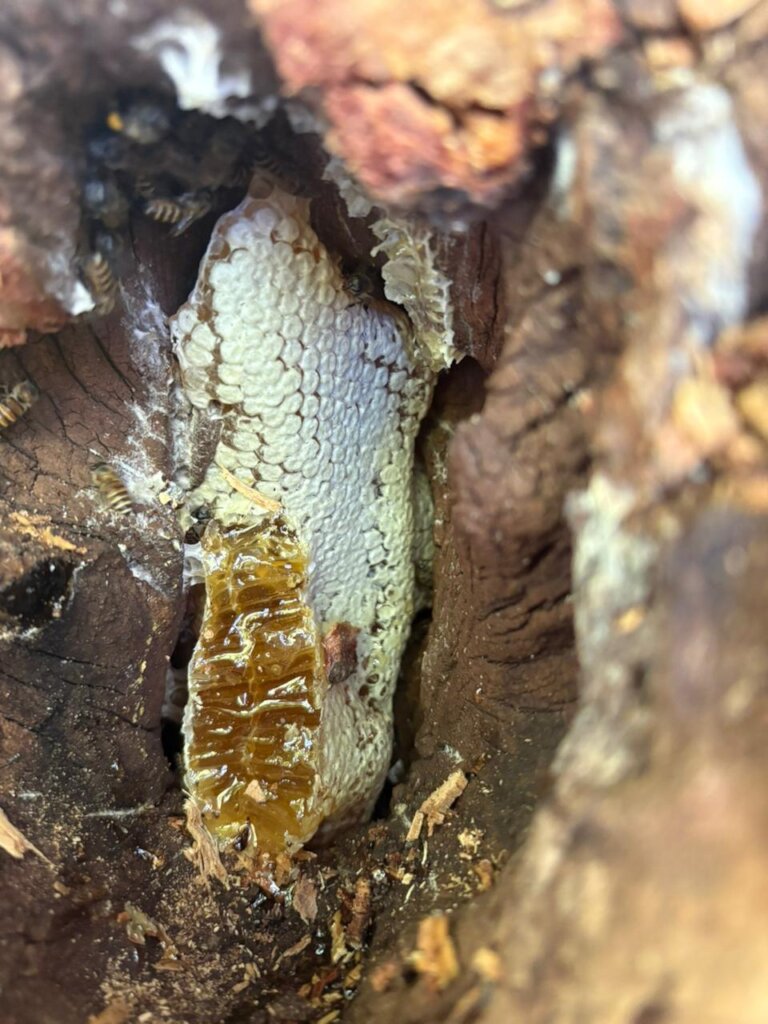
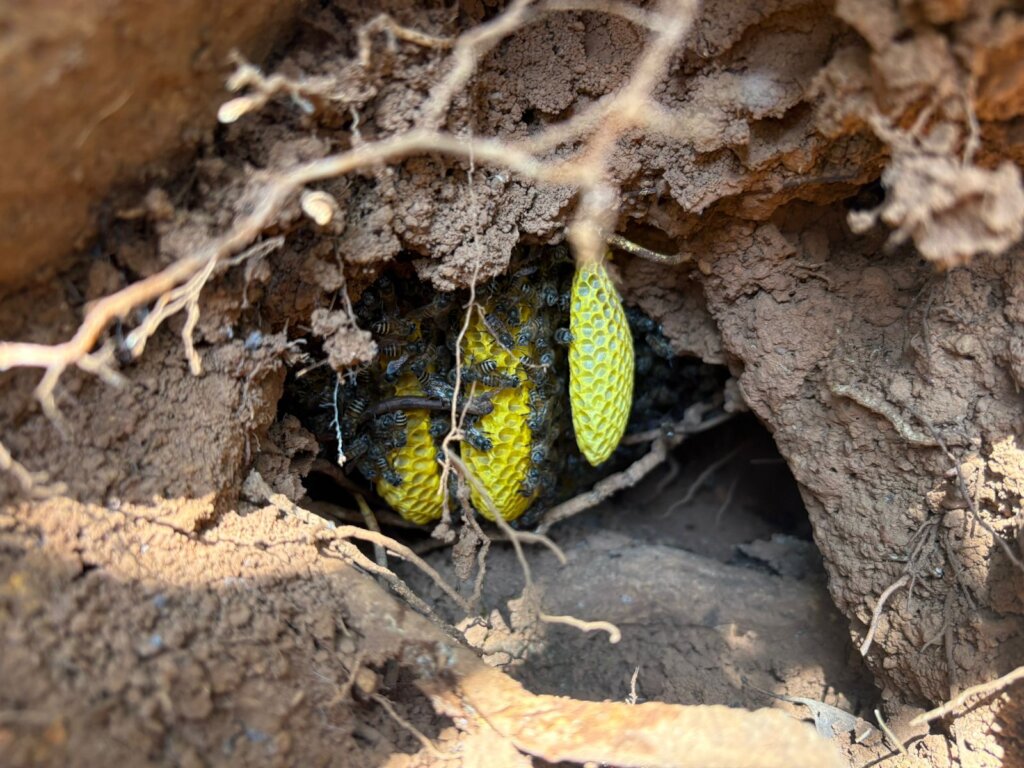
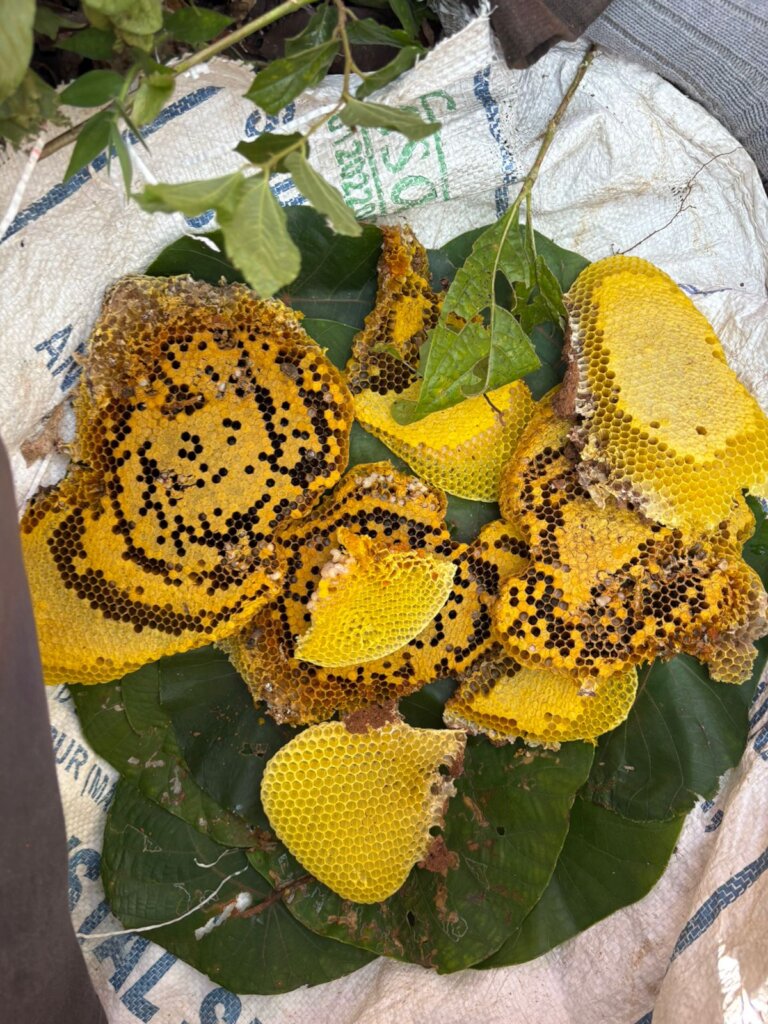
For generations, local communities collected honey from wild colonies. But traditional collection could be destructive. A wild hive would be located, bees driven away with smoke, and the entire comb removed. Brood, the developing young bees could be destroyed in the process, disrupting or eliminating the colony. AERF is helping communities change this relationship.
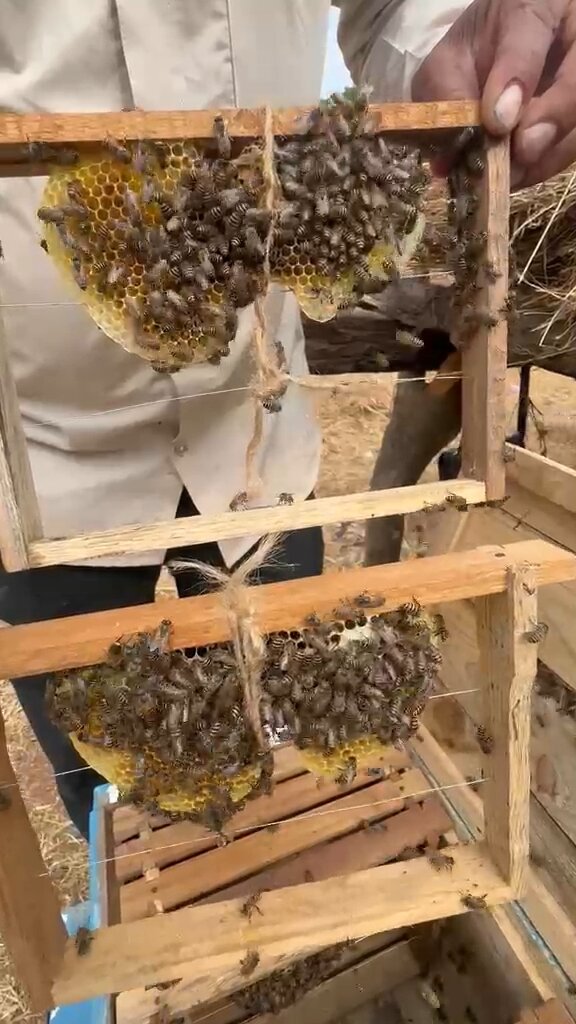
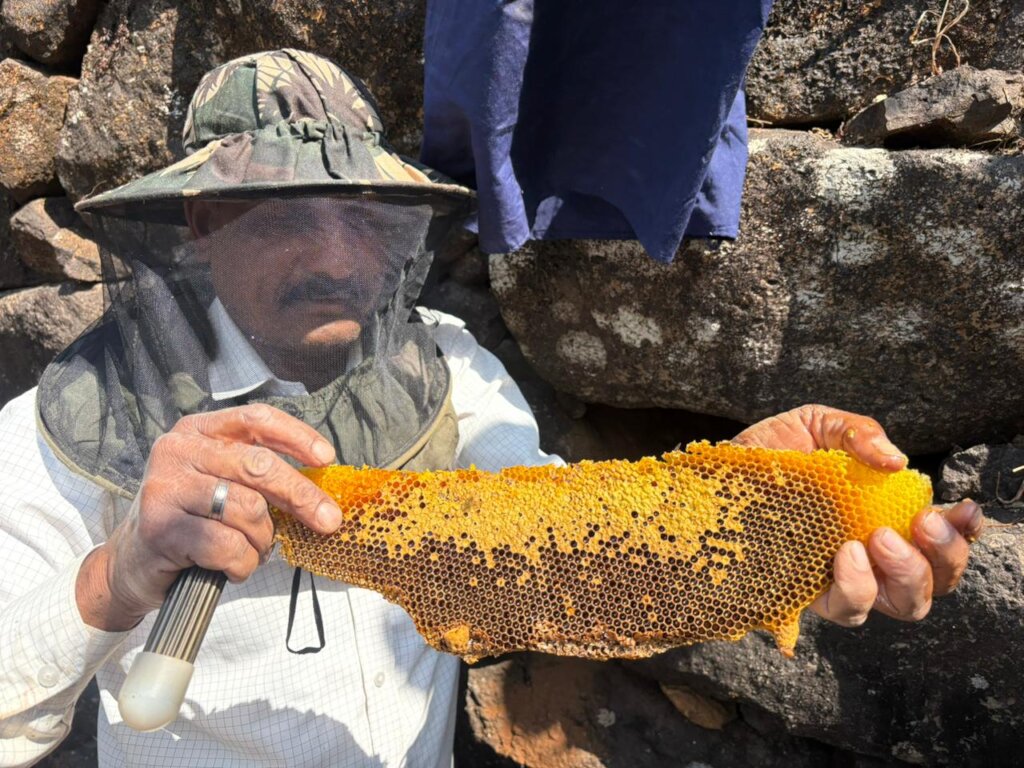
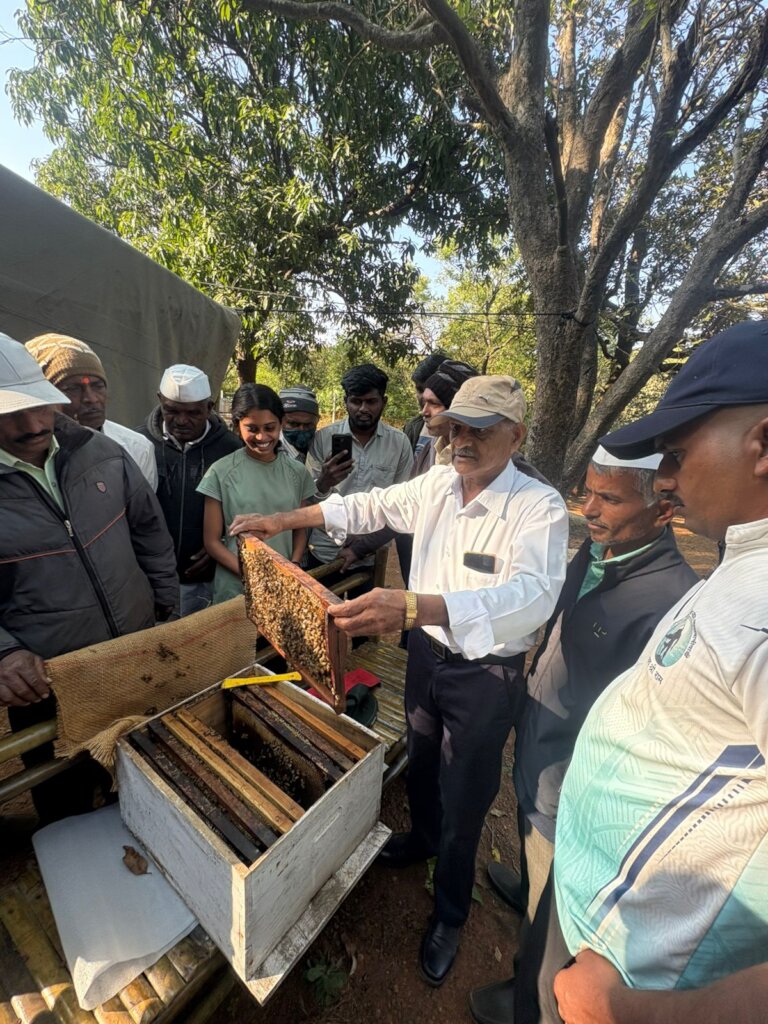
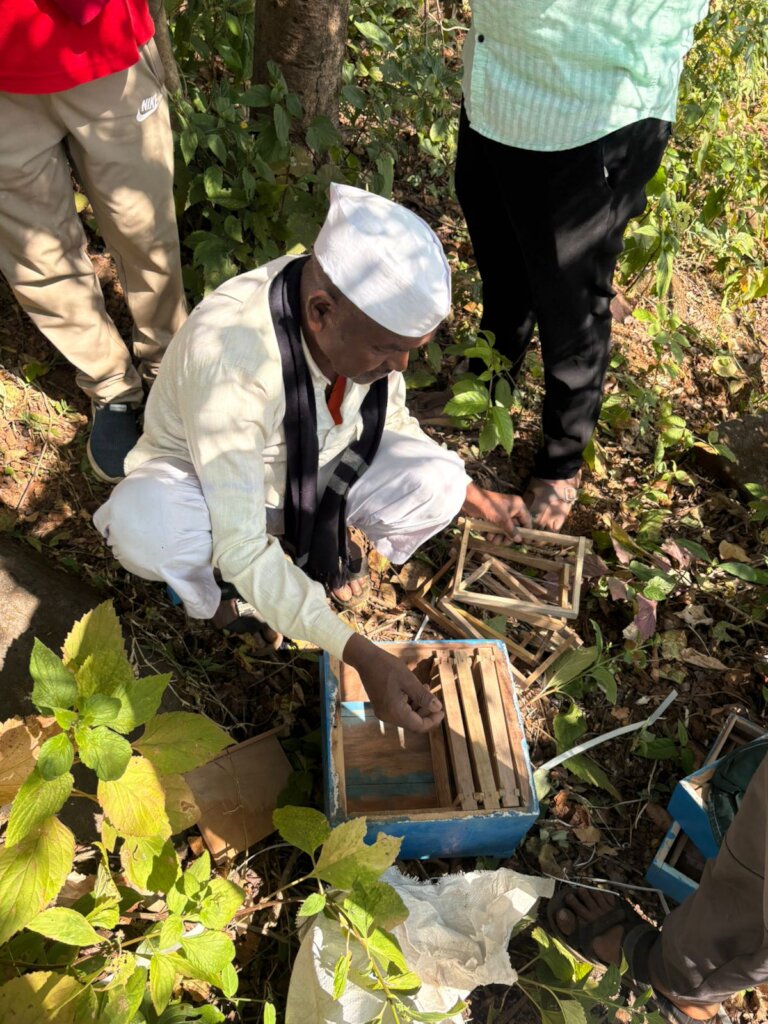
Instead of taking from the forest and destroying the colony, AERF has trained 20 local “Bee Champions” within the sanctuary and provided specialised bee boxes that offer safe homes for Apis cerana indica. These boxes are designed to provide bees with suitable shelter while allowing communities to care for colonies and harvest honey more responsibly.
By keeping colonies intact and within the landscape, Bee Champions can contribute to the continued presence of pollinators around local fruit trees, crops and other flowering plants. This is conservation that begins at the community level.
There is another story inside every jar of Apis cerana honey.
Unlike mass-produced honey, honey harvested from locally managed colonies reflects the flowers available in the surrounding landscape. The diverse native flora of Bhimashankar Wildlife Sanctuary gives this honey its own character, its aroma, flavour and colour can vary with the floral sources available to the bees.
Although Apis cerana generally produces modest quantities of honey around 8–12 kg per colony annually under the conditions described in the programme its value lies in more than volume.
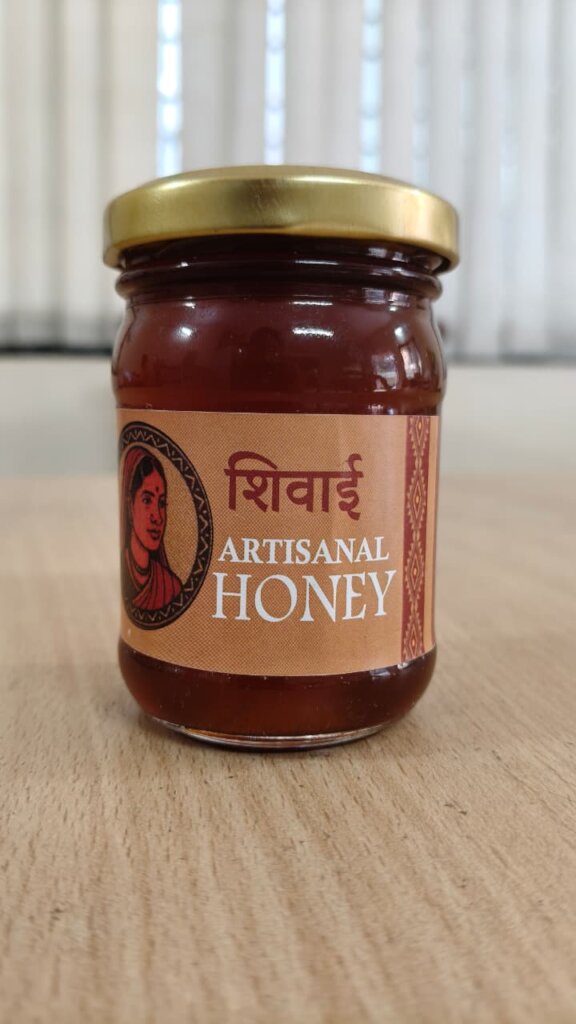
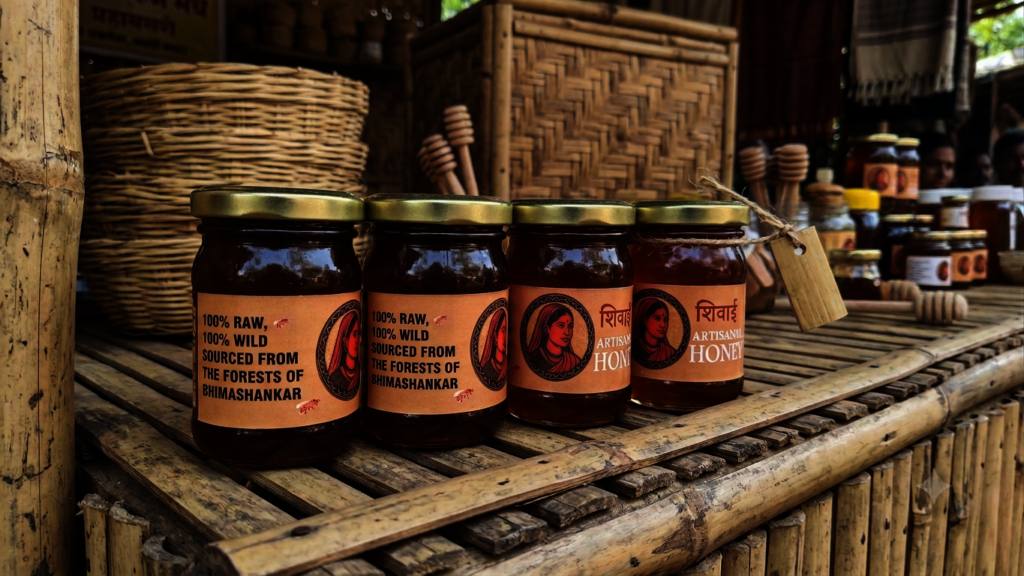
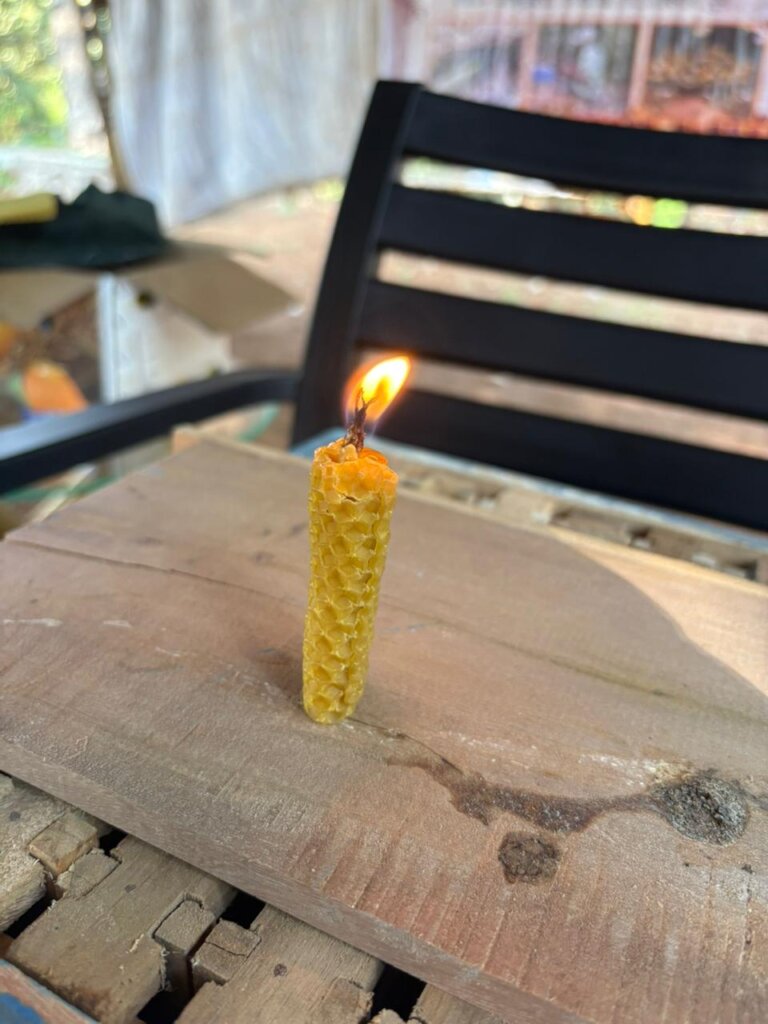
The Bee Champions have now produced artisanal wild honey among other products under the brand Shivai, made from nectar collected from flowers including Terminalia chebula.
Shivai is a women-led brand developed by women from Bhimashankar communities through their Self-Help Group (SHG), with support from AERF. It represents an independent community-led enterprise that links local knowledge and forest resources with sustainable livelihoods.0
AERF’s Bee Champion initiative is built on a simple idea:
Conservation becomes stronger when local communities become its custodians.
The next step is to expand the initiative to more surrounding villages, while training more women and young people to become Bee Champions.
Supporting a Bee Champion is not simply an investment in honey production. It is an investment in the invisible work that bees perform every day connecting flowers, forests, farms and people.
By Shivani A. Datar | Field Researcher
By Shivani Datar | Field Researcher
Project reports on GlobalGiving are posted directly to globalgiving.org by Project Leaders as they are completed, generally every 3-4 months. To protect the integrity of these documents, GlobalGiving does not alter them; therefore you may find some language or formatting issues.
If you donate to this project or have donated to this project, you can receive an email when this project posts a report. You can also subscribe for reports without donating.



Support this important cause by creating a personalized fundraising page.
Start a Fundraiser