By Mutiheba Jean Bosco | Field Operation Manager
Dear Patrons,
We sincerely thank you for your generous support toward the Livestock for 200 Poor Families in Rwanda Project. Your contribution is helping RWAYDAVO create practical opportunities for vulnerable families to strengthen their food security, improve household income, and build more sustainable livelihoods.
We are pleased to share this special progress report highlighting the achievements made so far, the families reached, the partnerships established, the challenges encountered, and the remaining needs as we work toward reaching the full project target.
The project was designed to provide livestock, particularly pigs, to vulnerable households that have limited economic resources. Livestock can provide families with an opportunity to build an income-generating asset while also contributing to household food security. The project is intended to go beyond a one-time donation by promoting responsible animal care, follow-up, and a model through which families can progressively improve their livelihoods.
Working in collaboration with Burega Sector in Rulindo District, RWAYDAVO successfully identified and supported highly vulnerable households. Beneficiary families were identified with the involvement of local authorities based on their socio-economic circumstances, particularly households classified under Ubudehe Category 1, representing families experiencing significant difficulty meeting basic needs.
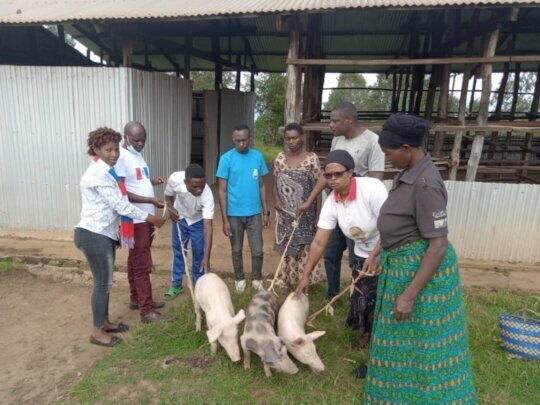
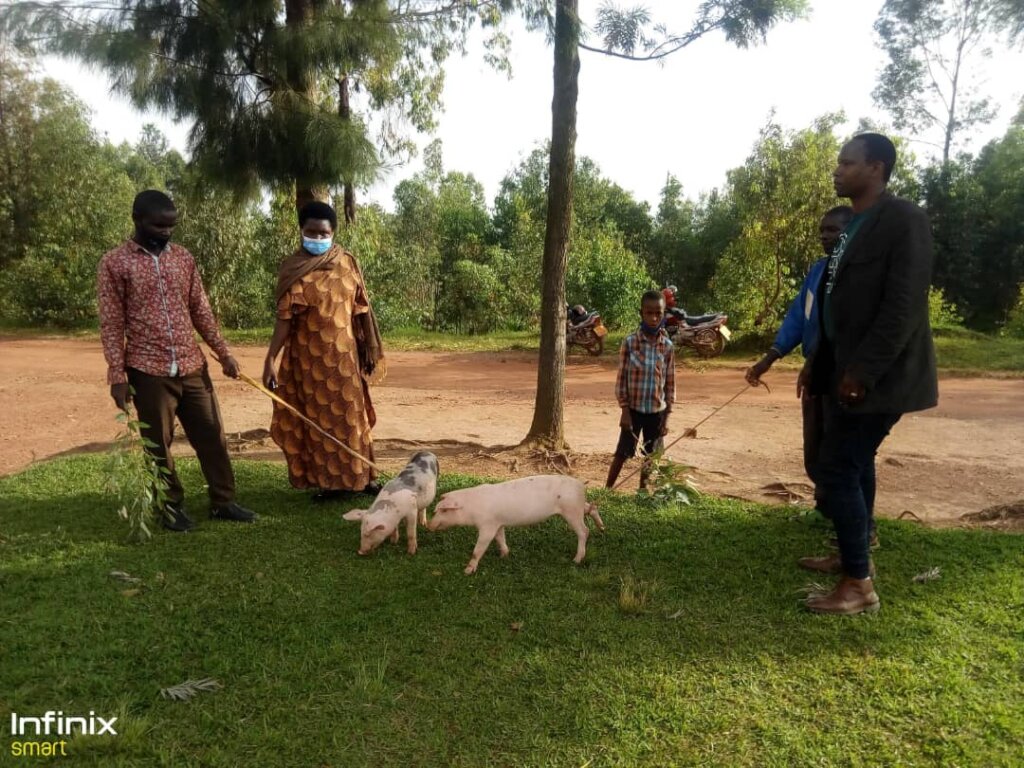
To date, five (5) pigs have been successfully distributed to five (5) vulnerable families. These families have received support intended to provide them with a productive household asset and an opportunity to begin developing a sustainable livelihood activity.
The project has also involved the procurement and transportation of pigs and the provision of feed to support proper care during the initial period. This support is important because successful livestock projects require more than simply distributing animals. Beneficiary families need appropriate housing, feeding, animal-health management, and continued guidance to increase the likelihood of successful outcomes.
An important achievement during this reporting period has been the development of a partnership with the Taba Community Empowerment Cooperative (TCEC). TCEC has initiated the construction of pig housing structures, creating an important foundation for improved animal welfare and more organized livestock management.
The development of appropriate pig housing is particularly important for the sustainability of the project. Good housing can help protect animals from adverse weather conditions, improve hygiene, facilitate feeding and monitoring, and create a more suitable environment for livestock management. The partnership with TCEC therefore provides an opportunity to strengthen the project beyond the initial distribution of pigs.
RWAYDAVO intends to continue developing this cooperative approach by supporting future livestock distribution while strengthening follow-up, monitoring, animal-care practices, and accountability. Where feasible, the cooperative model may also provide opportunities for beneficiaries to learn from one another and strengthen livestock-management practices within the community.
During implementation, local leaders emphasized that the number of vulnerable households requiring similar assistance remains high. This demonstrates that the five families reached so far represent only an initial step toward the project's broader objective.
The project target is 200 vulnerable families. With five families currently supported, 195 families remain to be reached.
This means that the project has currently reached approximately 2.5% of its intended beneficiary target, leaving approximately 97.5% of the target still to be reached.
The remaining need is significant, but the progress already achieved demonstrates that the project can move forward when resources become available. The first beneficiaries provide an initial foundation upon which RWAYDAVO can build.
The project continues to face one major challenge: insufficient financial resources. Limited funding has slowed procurement, reduced the number of families that can be supported, and delayed expansion of the project.
Additional resources are needed not only to purchase and distribute more pigs, but also to support responsible implementation. Depending on project needs and available resources, future support may include livestock procurement, transportation, feed, animal housing, veterinary support, beneficiary training, monitoring, and follow-up.
RWAYDAVO is committed to ensuring that future support is implemented responsibly and that beneficiary families receive appropriate guidance. Monitoring will help the project team understand how the animals are being managed, identify challenges early, document progress, and strengthen future interventions.
The long-term vision is to establish a sustainable livestock-support model in which vulnerable families receive productive assets and the necessary support to manage them successfully. As the project grows, RWAYDAVO will explore ways to strengthen local partnerships and encourage beneficiary participation in maintaining and expanding livestock activities.
The project also has the potential to contribute to broader household resilience. A successfully managed livestock asset can provide a family with an opportunity to generate income, meet certain household needs, and potentially invest in other livelihood activities. The exact outcomes will depend on animal health, management practices, market conditions, household circumstances, and continued support.
RWAYDAVO therefore views this project not simply as the distribution of pigs, but as an investment in livelihood development, household resilience, food security, and economic opportunity for vulnerable families.
At this stage, we respectfully appeal for continued support to help us reach the remaining 195 families. Additional contributions will allow the project to expand beyond the initial five beneficiaries and provide opportunities to more households identified as being in need.
We also welcome partnerships with organizations and individuals who can contribute livestock, animal-health services, training, feed, housing materials, technical expertise, transportation, or financial resources. Such partnerships can help reduce implementation costs and strengthen the project's long-term sustainability.
RWAYDAVO is deeply grateful to the patrons and supporters who have already contributed to this initiative. Your generosity has enabled the project to move from an idea into practical action and has allowed five vulnerable families to receive their first livestock support.
Although much work remains, these initial achievements provide an important foundation. With continued partnership and additional resources, we hope to expand the initiative and reach more vulnerable households in the community.
We will continue to provide updates on beneficiary support, livestock distribution, partnerships, challenges, and progress toward the target of 200 families.
Our current progress is:
Project target: 200 families
Families supported: 5
Families remaining: 195
Progress toward beneficiary target: 2.5%
Current focus: Expanding livestock distribution and strengthening sustainable livestock management
Key partner: Taba Community Empowerment Cooperative (TCEC)
Location: Burega Sector, Rulindo District, Rwanda
We sincerely thank you for your trust, generosity, and continued partnership. Your support is helping create opportunities for vulnerable families to build productive assets and work toward greater economic stability.
With sincere appreciation,
Mutiheba Jean Bosco
Field Oparation Manager, RWAYDAVO
Rwandan Youth Development and Voluntary Organization
Project reports on GlobalGiving are posted directly to globalgiving.org by Project Leaders as they are completed, generally every 3-4 months. To protect the integrity of these documents, GlobalGiving does not alter them; therefore you may find some language or formatting issues.
If you donate to this project or have donated to this project, you can receive an email when this project posts a report. You can also subscribe for reports without donating.



Support this important cause by creating a personalized fundraising page.
Start a Fundraiser