By Praveen Kumar | Project Leader
From the Back of the Room to the Front of the Line
When 14-year-old Meena (name changed) first entered Apne Aap’s community centre in Forbesganj, she would not take off her sandals.
She stood beside the door, schoolbag still on her shoulder, watching the other girls practise. The sharp calls, stamping feet, and unfamiliar movements made her nervous. Remaining near the exit meant she could leave quickly if anyone laughed at her.
Meena lives with her mother and two younger siblings in the red-light area. Her mother supports the family through irregular daily-wage work. Some weeks, there is enough food. Other weeks, school expenses, medicine, and even bus fare become difficult.
At school, other children had mocked Meena’s address and made comments about women from her neighbourhood. She responded by making herself less visible. She stopped raising her hand in class, avoided the playground, and sometimes stayed home altogether.
In April, one of Apne Aap’s older martial arts students persuaded her to try a class.
During her first weeks, Meena remained at the end of the line. She struggled to balance on one leg and covered her face whenever she made a mistake. When the instructor asked the students to shout “Stop!” during a self-protection drill, Meena moved her lips but made no sound.
Still, she kept returning.
What Happened During April–June
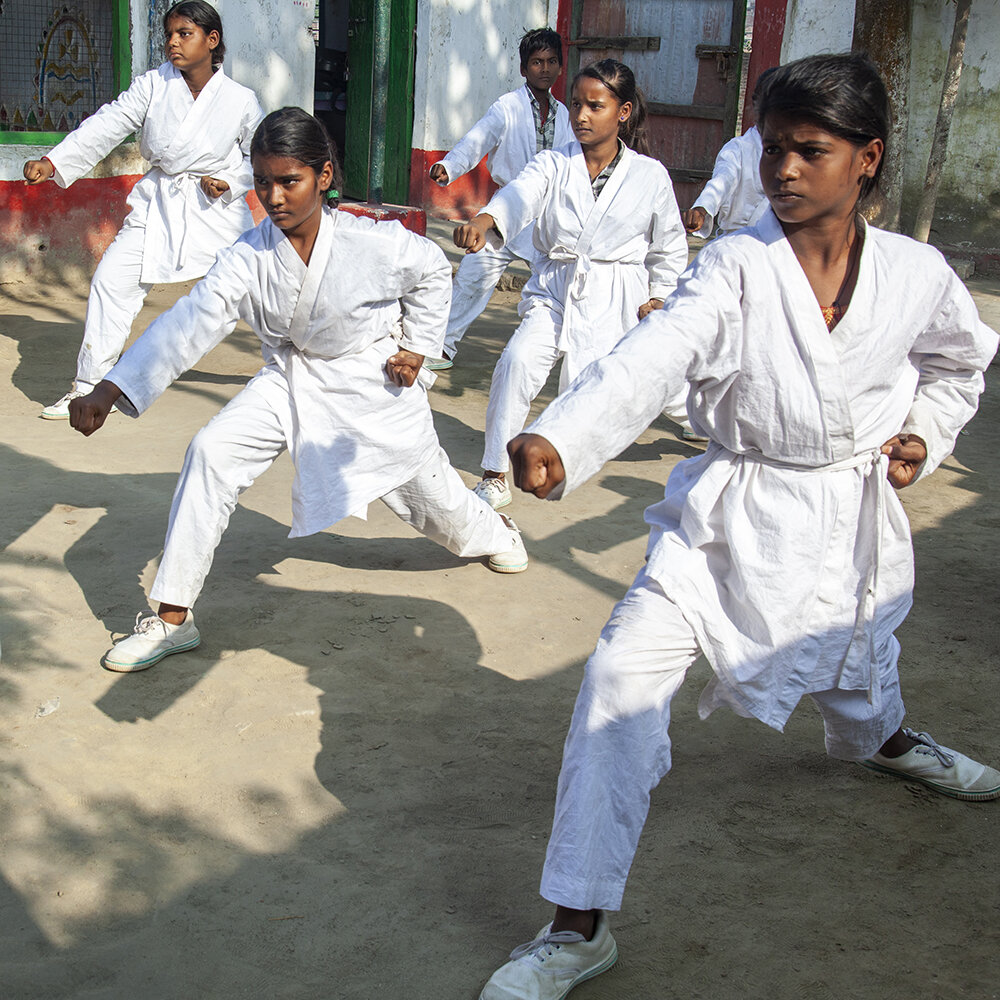
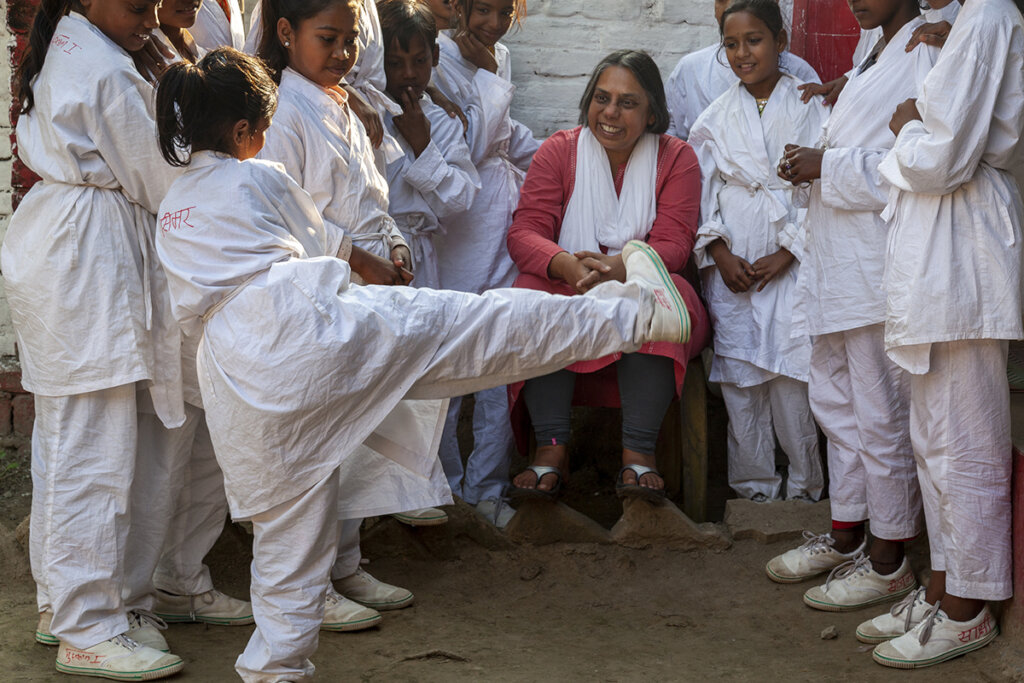
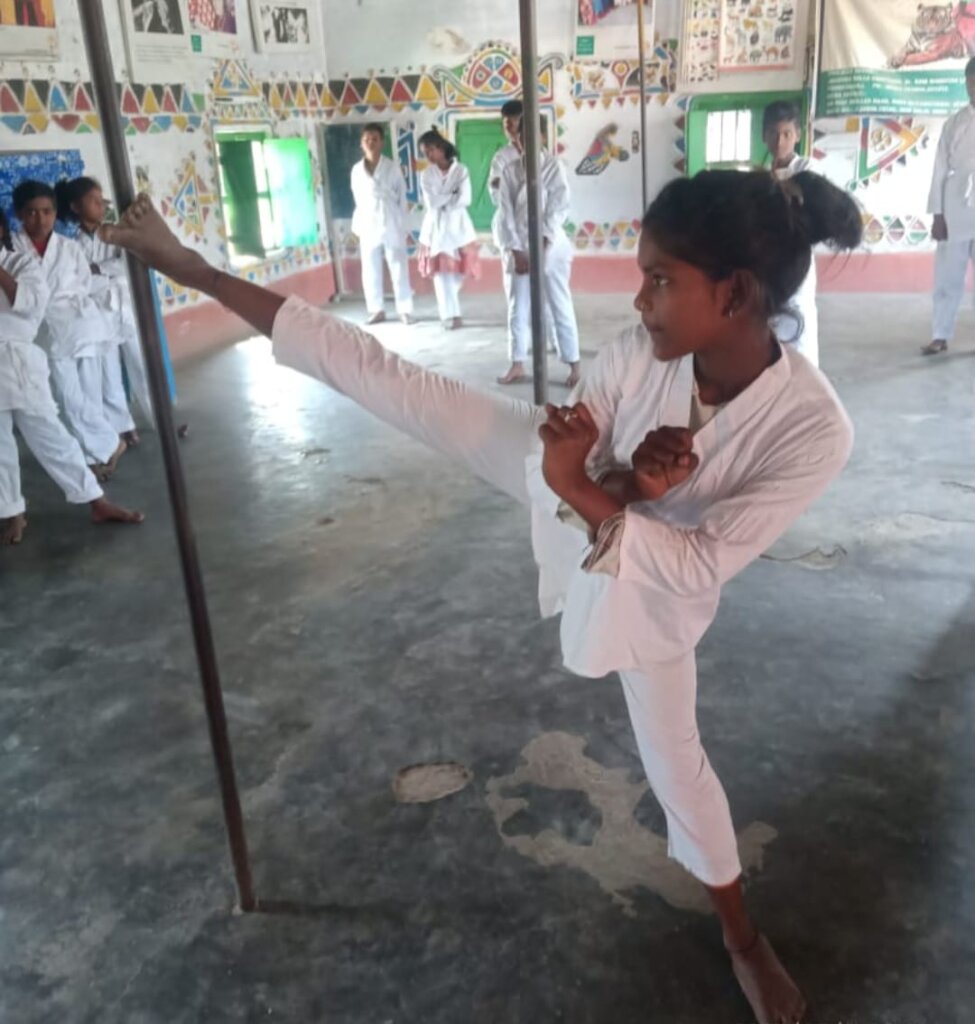
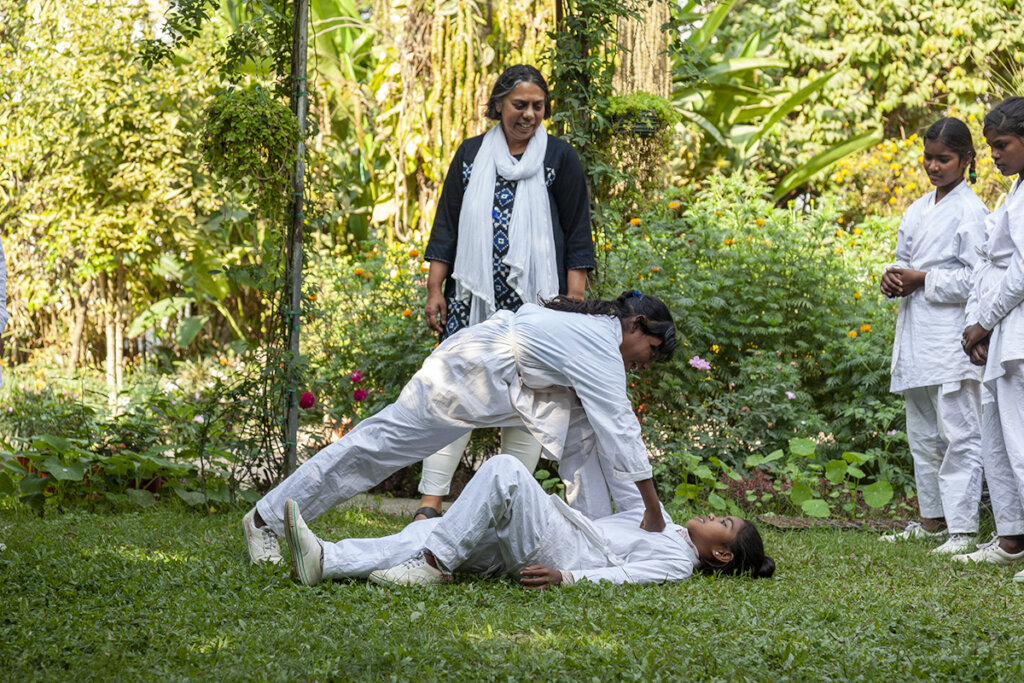
Over the past three months, Apne Aap conducted Kung Fu and Karate sessions three afternoons each week for children at risk of trafficking in Forbesganj. The students practised stable stances, footwork, blocks, controlled kicks, safe ways to break away from a grip, and how to call loudly for help.
Classes began with stretching and breathing exercises. Students then worked in pairs, taking turns as learner and guide. At the end of each session, they sat together to discuss bullying, unsafe touch, intimidation, and which adults they could approach if they felt threatened.
The girls were also taught an important lesson: self-defence does not always mean fighting. It can mean recognising danger early, moving toward a crowded place, refusing to go with an unfamiliar person, shouting clearly, and telling a trusted adult what happened.
By May, Meena had moved from the back row into the middle.
By June, she was standing in front.
During one class, the instructor asked for a volunteer to lead the warm-up. For several seconds, no one moved. Then Meena stepped forward. She counted each exercise aloud while the other students followed.
“Louder,” the instructor encouraged her.
Meena began again.
This time, her voice carried through the open windows and into the lane outside.
Meena’s Progress This Quarter
During April, May, and June, Meena:
Attended the martial arts programme regularly
Learned defensive blocks, release techniques, and ways to attract help
Progressed from watching near the doorway to training at the front of the class
Led a warm-up session for the first time
Began answering questions and participating more actively at school
Helped two newly enrolled girls learn the opening exercises
Her instructor told us:
“Earlier, Meena tried to hide whenever she made a mistake. Now she repeats the movement until she gets it right—and then helps another girl.”
Her mother has noticed the difference at home:
“She used to come back from school and say nothing. Now she tells me what happened. If something is wrong, she speaks immediately.”
One Afternoon, the Training Became Real
In June, while returning from school, Meena noticed that a man on a motorcycle had slowed down beside her and another girl. He repeatedly asked them where they lived and offered them a ride.
Meena remembered the safety discussions at the centre. She did not answer his questions. She took her friend’s hand, moved toward a busy shop, and called loudly to a woman they knew. The man drove away.
Meena did not use a kick or a strike.
She recognised the danger.
She used her voice.
She moved toward safety.
She told an adult.
That, too, is self-defence.
What Your Support Made Possible
During this quarter, donor support helped Apne Aap:
Provide regular Kung Fu and Karate classes for children in the red-light area
Teach practical responses to harassment, intimidation, and unsafe approaches
Offer a protected space where children could train, study, eat, and seek guidance
Build discipline, physical strength, confidence, and trust among the students
Connect girls with instructors and adult mentors who notice when they miss class
Help children remain connected to school and imagine lives beyond exploitation
Meena still arrives carrying her schoolbag. But she no longer keeps it on her shoulder or stands beside the exit.
She places it with the others, steps onto the mat, and takes her place at the front of the line.
In the next quarter, she hopes to advance in her training and help lead exercises for younger students.
“I thought strong girls were different from me,” she told us. “Now I know we become strong by practising.”
Your support is giving girls in Forbesganj more than martial arts lessons. It is giving them a safe place to practise taking up space, recognising danger, trusting one another, and speaking loudly enough to be heard.
Project reports on GlobalGiving are posted directly to globalgiving.org by Project Leaders as they are completed, generally every 3-4 months. To protect the integrity of these documents, GlobalGiving does not alter them; therefore you may find some language or formatting issues.
If you donate to this project or have donated to this project, you can receive an email when this project posts a report. You can also subscribe for reports without donating.



Support this important cause by creating a personalized fundraising page.
Start a Fundraiser