By Philip Mugerwa | Fundraising & Partnerships Manager
1. Project Summary
The Keep a Fellow in the Classroom campaign funds Teach For Uganda’s Fellowship Program, which recruits, trains, and places outstanding university graduates as full-time teachers in underserved government primary and secondary schools across Uganda. Each Fellow commits to a two-year placement in communities where quality teaching is scarce, delivering foundational literacy and numeracy instruction while developing as long-term leaders in education.
In 2025, Teach For Uganda marked its tenth year of operation. The organization now supports 97 active Fellows across 190 partner schools in 13 districts, has reached 86,578 learners since founding, and has grown an alumni network of 393 leaders who continue to advance education from within and beyond the classroom. This campaign directly sustains these frontline educators, covering stipends, training, coaching, and the ongoing support they need to remain effective and committed.
2. What we did
Teach For Uganda carried out the following core activities under the Keep a Fellow in the Classroom campaign:
Fellow Recruitment, Training & Placement
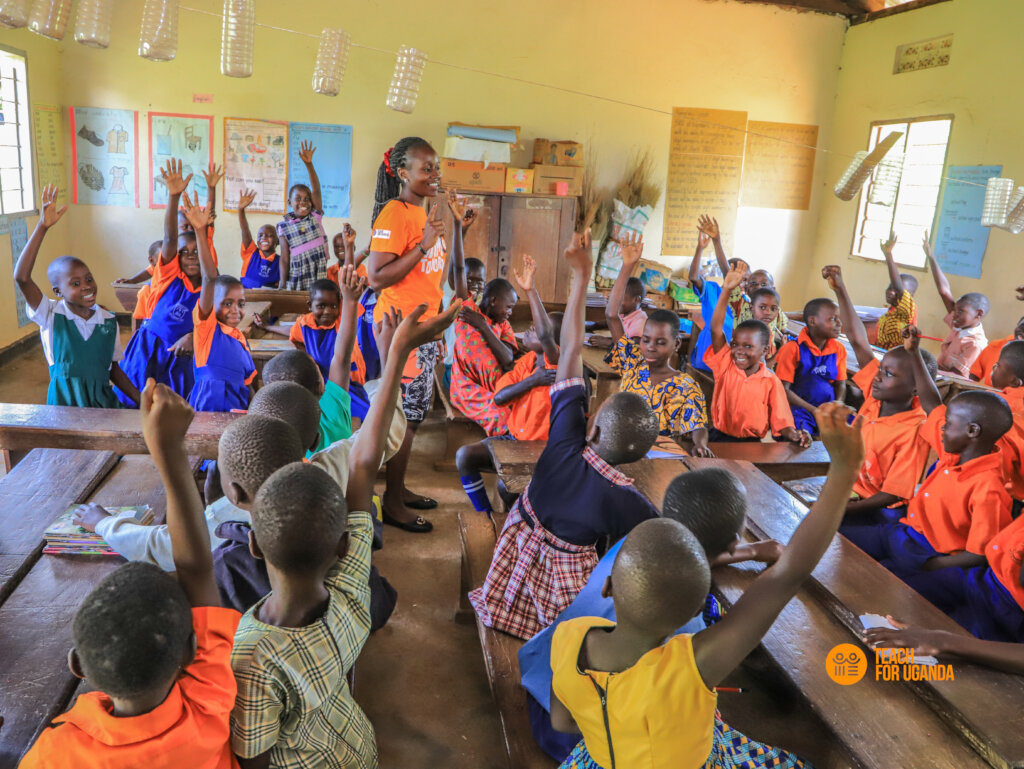
Teach For Uganda recruited, intensively trained, and placed exceptional university graduates into last-mile schools as full-time Fellows. Fellows received pre-service training in child-centred pedagogy, foundational literacy and numeracy instruction, classroom management, and leadership development before being deployed.
Ongoing Coaching & Leadership Development
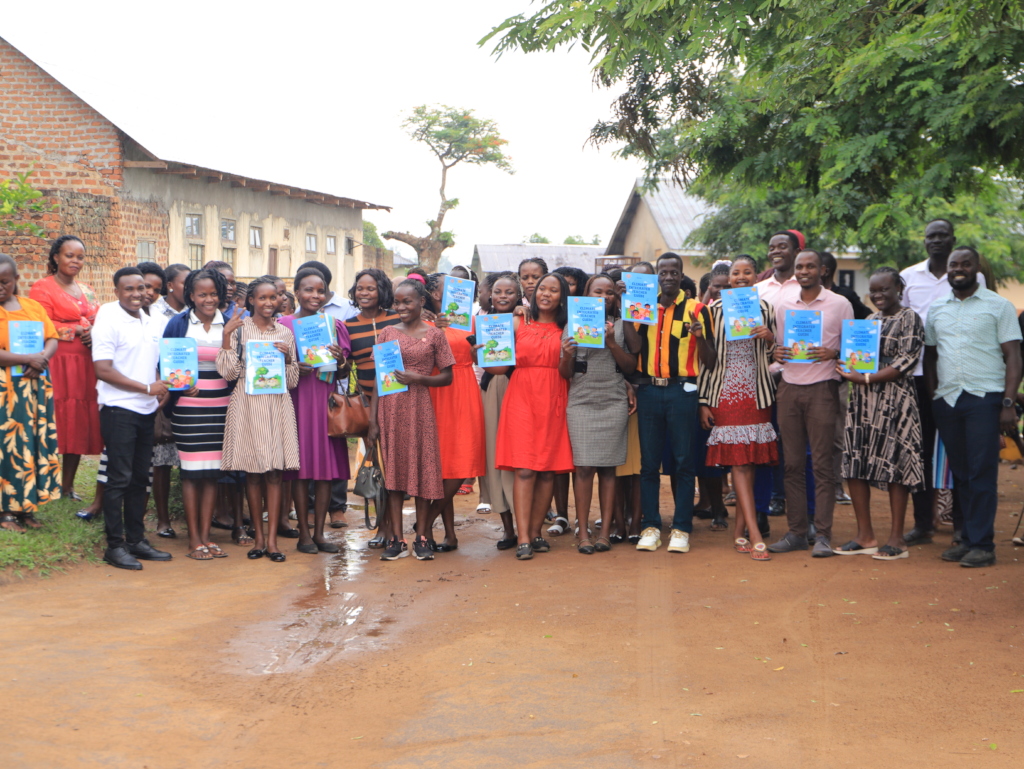
Throughout the year, deployed Fellows received structured, continuous coaching from Teach For Uganda’s program team. This included in-school observations, coaching sessions, peer learning circles, and leadership retreats. Fellows were supported not just to teach effectively, but to grow as community leaders.
Foundational Literacy & Numeracy Instruction
Fellows implemented structured and learner-centred classroom instruction targeting foundational reading and mathematics skills. Teaching approaches included the Teaching at the Right Level (TaRL) methodology, storytelling, group work, and locally relevant examples to make learning accessible and engaging for every child.
Community & Family Engagement
Fellows conducted home visits in response to absenteeism, academic decline, or behavioural changes, treating families as partners in their children’s education. These interactions helped rebuild trust between schools and communities and increased parental engagement in learning. In 2025, Teach For Uganda reached 27,782 community members through these and related activities.
Beyond-the-Classroom Programmes
Fellows led or supported three major complementary initiatives during the reporting period:
Alumni Network Activation
Teach For Uganda continued to engage its growing alumni network of 393 leaders. Alumni contributed to the mission as educators, social entrepreneurs, policy advocates, and community organisers — multiplying the program’s reach and impact well beyond the two-year fellowship period.
3. Our Reach
The Keep a Fellow in the Classroom campaign directly and indirectly benefited the following groups in 2025:
86,578 > Total Learners Reached (2016–2025)
97> Active Fellows on Program
190> Partner Schools
13> Districts Covered
393> Alumni Leading Change
27,782> Community Members Engaged
Of the 86,578 learners reached to date, 43,987 are boys and 42,591 are girls, reflecting a near-equal gender balance. The programme operates across 13 districts spanning Uganda’s Western (38.5%), Eastern (30.8%), and Central (30.8%) regions, reaching some of the country’s most underserved communities. In addition to learners, 190 headteachers received leadership support and engagement during the reporting period.
4. Literacy Outcomes (2023–2025)
Between 2023 and 2025, learners in Teach For Uganda partner schools demonstrated significant progression across all reading levels:
These shifts demonstrate that more children are moving from passive recognition to active, meaningful reading — a foundational outcome for all subsequent learning.
Numeracy Outcomes (2023–2025)
Learners also made strong gains in mathematical competency across the reporting period:
This progress reflects the effectiveness of learner-centred, structured numeracy instruction delivered by Fellows, and demonstrates growing mathematical confidence in classrooms that previously recorded very low performance.
Fellow Performance & School Leadership
90% of headteachers in partner schools reported marked improvement in child-centred pedagogy among Fellows. This reflects the quality and consistency of Teach For Uganda’s coaching and professional development support, which ensures Fellows do not just teach but lead with excellence.
Climate & Environmental Impact
93% of headteachers observed positive changes in learner attitudes toward the environment following Teach For Uganda’s Climate Education & Leadership (CEL) programme. Climate School Clubs became hubs of innovation, with learners showcasing eco-bricks, vertical gardens, and tree nurseries. Fellows and alumni are now participating in national and global climate leadership conversations.
Alumni Impact
Teach For Uganda’s 393 alumni continue to multiply programme impact across multiple sectors. Alumni are now serving as headteachers, school directors, programme officers, policy consultants, engineers, talent development specialists, and social entrepreneurs — all with a foundation shaped by their Fellowship experience and commitment to equitable education.
5. Persistent Foundational Learning Gaps
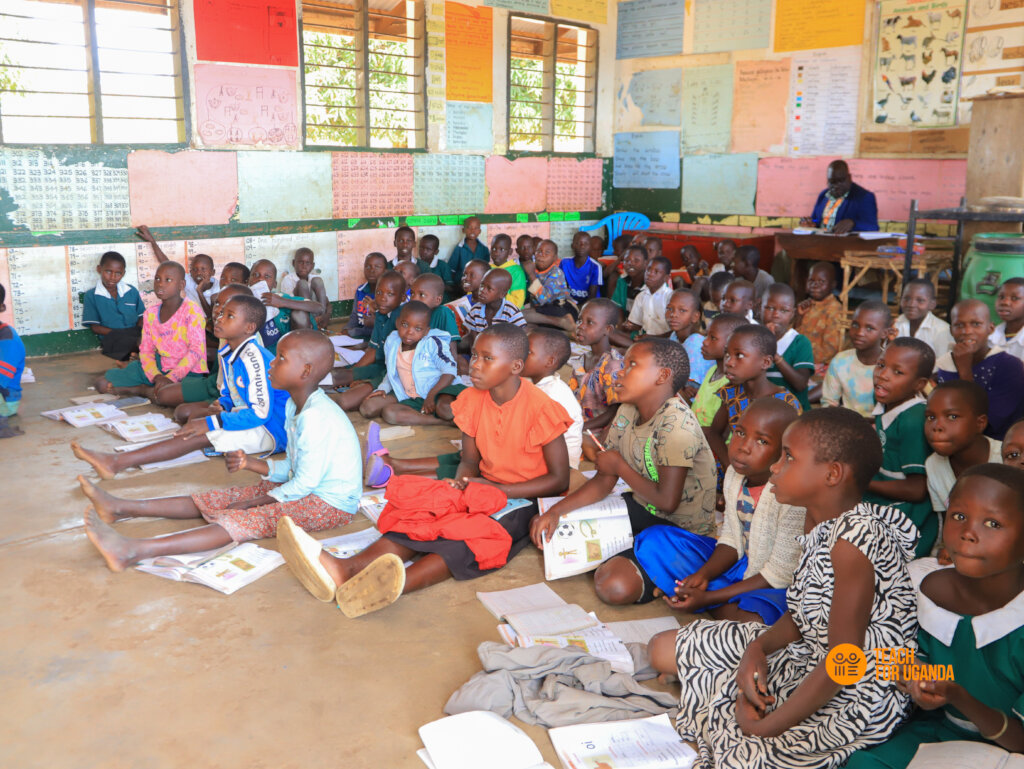
Despite significant progress in literacy and numeracy, foundational learning challenges persist, particularly in the most remote and under-resourced communities. Reading comprehension remains low, with fewer learners confidently interpreting stories and texts independently. In numeracy, many learners continue to struggle to transition from number recognition to operational mathematics, with multiplication and division remaining difficult for a large proportion.
Overcrowded Classrooms & Resource Shortages
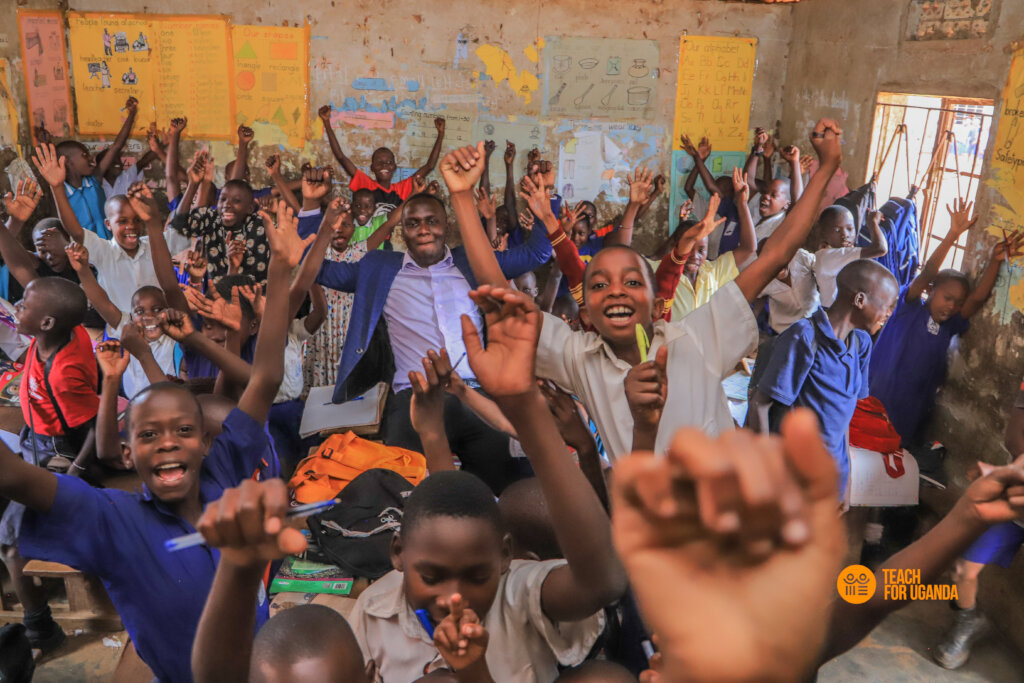
Overcrowded classrooms in rural schools continue to limit individualised learner support. Rural partner schools face persistent shortages of age-appropriate reading materials and instructional resources, affecting both the pace of learning and the consistency of foundational literacy outcomes.
Continuous Coaching Demand
As the number of Fellows and partner schools grows, maintaining the quality and frequency of in-person coaching and support requires significant investment of time and personnel. Ensuring every Fellow receives the level of ongoing support needed to sustain high performance remains an operational challenge as Teach For Uganda scales.
Teacher Retention Beyond the Fellowship
While the fellowship model produces exceptional short-term classroom leadership, sustaining this impact beyond the two-year period requires deliberate alumni engagement strategies and systemic support from the broader education ecosystem. Teach For Uganda continues to invest in alumni pathways, but institutional capacity to retain and deploy this talent within the education sector remains a work in progress.
6. What we have learnt
A decade of implementation has sharpened Teach For Uganda’s understanding of what works, what doesn’t, and where the model must evolve:
7. Next Steps?
As Teach For Uganda enters its second decade, the organisation has identified the following priorities for the period ahead:
Strengthen the Core Fellowship
Teach For Uganda will deepen investment in Fellow training, coaching infrastructure, and support systems to ensure that the quality of classroom leadership keeps pace with programme growth. This includes enhancing instructional quality through structured, learner-centred approaches and improving teacher coaching to address persistent foundational learning gaps.
Launch the STEM Fellowship for Women
Teach For Uganda is developing a STEM Fellowship that places young women at the centre of innovation, leadership, and climate action. This programme will recruit and develop graduates to serve as STEM leaders in secondary schools, increasing girls’ participation in science, technology, engineering, and mathematics, and redefining who leads in those fields.
Expand the Leaders in Teaching (LiT) Programme
As part of a five-year flagship initiative (2025–2030), Teach For Uganda will pilot a STEM Fellowship recruiting 160 recent graduates to strengthen STEM teaching in secondary schools. This initiative is implemented through a consortium led by the Luigi Giussani Foundation and supported by the Mastercard Foundation, and is designed to expand opportunities for young people — particularly girls — while contributing to a stronger, more responsive education system.
Grow the Alumni Network’s Systemic Influence
With 393 alumni now active across education, entrepreneurship, and policy, Teach For Uganda will invest in structured alumni pathways and advocacy platforms to ensure alumni voices shape education policy and practice at local, national, and global levels.
Deepen Geographic Reach & Community Partnerships
Teach For Uganda will continue expanding into underserved districts while strengthening community partnerships in existing locations. The goal is for every child in a partner school to graduate with strong literacy, numeracy, and 21st-century skills — regardless of where in Uganda they were born.
8. Voices from the Field
The most compelling evidence of this programme’s impact is heard directly from the people it serves:
“My teacher believes in me, and I want to succeed and be like her when I grow up.” — Mellisa, Age 10, Teach For Uganda partner school learner
“When these teachers come to our homes, our children feel cared for. It demonstrates that teachers are integral to our family, not just figures within the classroom.” — Parent, Teach For Uganda partner school
“The projector has turned my Numeracy lessons into a game — children now race to the board to solve problems. They’re learning faster, and they love it.” — Teacher, Kaluuba Primary School, Mayuge District
“The fellowship revealed deeper challenges in education, transforming me into an advocate for equity and inspiring change beyond my classroom.” — Britah Atusimiire, Cohort 3 Alumni
“In 2024, only one in twenty girls in my classroom demonstrated reading proficiency; now, that number has risen to over fifty percent.” — Nanfuka Vidah, Fellow, Cohort 7
Thank you for your partnership in keeping Fellows in the classroom.
Together, we are ensuring every child in Uganda has access to quality education and the opportunity to thrive.
info@teachforuganda.org | Block 244, Plot 5151 Majid Musisi Close, Kampala, Uganda
By Philip Mugerwa | Fundraising & Partnerships Manager
By Philip Mugerwa | Fundraising & Partnerships Manager
Project reports on GlobalGiving are posted directly to globalgiving.org by Project Leaders as they are completed, generally every 3-4 months. To protect the integrity of these documents, GlobalGiving does not alter them; therefore you may find some language or formatting issues.
If you donate to this project or have donated to this project, you can receive an email when this project posts a report. You can also subscribe for reports without donating.