By Fiona Beckerlegge | Clinical Drector
There are reportedly 9,349 children (2-17 years) living in the Kabarole district of Uganda with a disability (Uganda Bureau of Statistics 2014). Since the beginning of our pilot outreach programme in January 2015, KCDC has worked with 670 children with disabilities. That is an incredible achievement for a newly established organisation, but clearly demonstrates the need to expand the programme as we have only reached 6.8% of our target population.
Based on the children we have treated to date, we have been able to identify some key statistics which highlight the severity of the problems being faced in the region, and why our work is so necessary:
And of all these children:
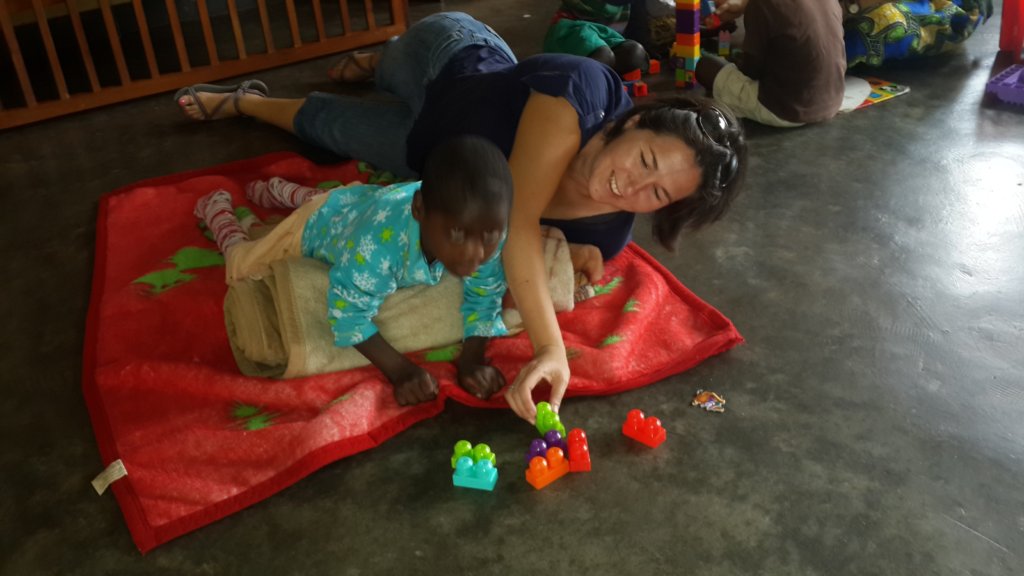
To reach many of these children, who are living in extreme poverty in rural communities, with limited access to health care and education, KCDC began their community outreach programme – which this GlobalGiving project is raising money to support. The programme runs monthly clinics at 8 local health centres, as well as 5 local schools and individual homes.
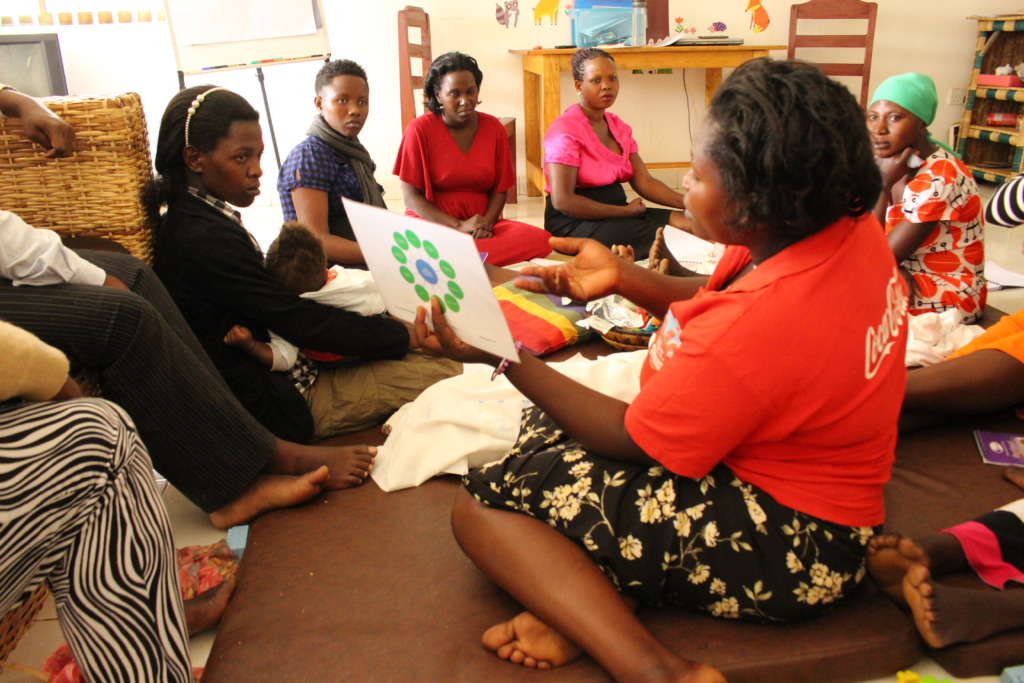
This year, we have focused on building the capacity of healthcare workers in these health centres, particularly midwives, nurses and community health workers. The objectives being to increase their understanding of what cerebral palsy and other disabilities are, how they are caused – to dispel the local myths of curses and the devil - and to increase their ability to identify and manage a child with a disability and be able to give the correct advice to families and caretakers.
We have run 2 half-day workshops, for 85 medical and nursing staff and students at the regional referral hospital and a local hospital, and 2 full-day workshops for 31 nurses and midwives from 14 local health centres. Following this training, we provided information posters and disability registration books to each of the 14 health centres, which has already generated 52 new referrals that may well have been missed before the training.
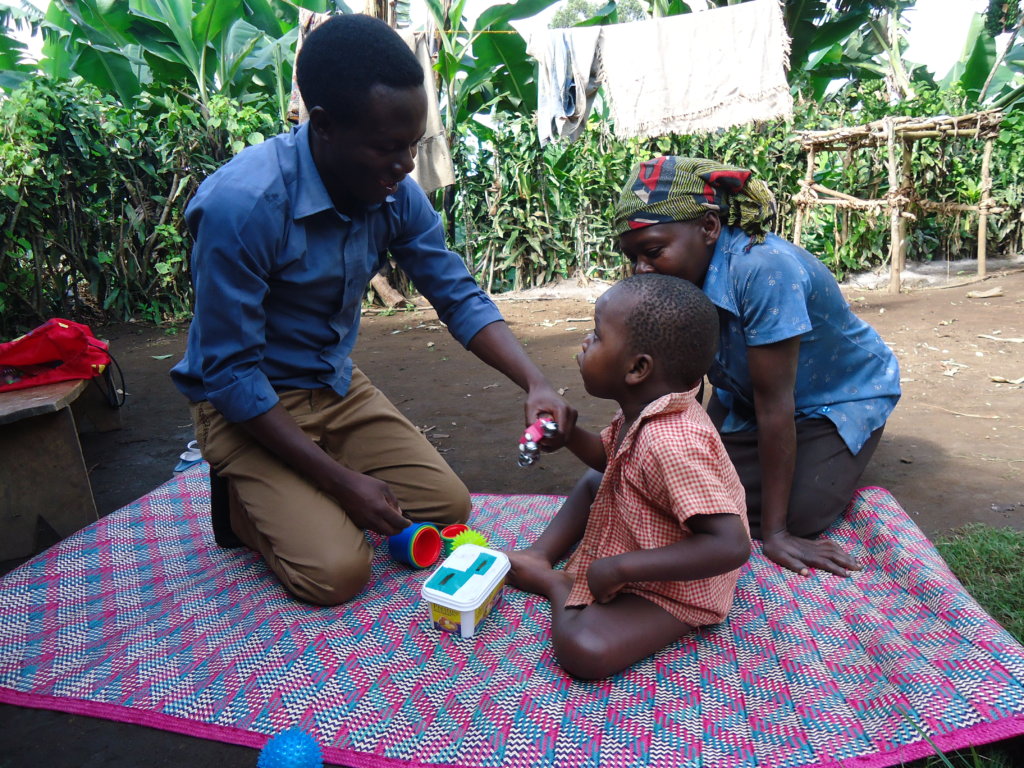
One health centre who has been particularly pro-active following the training is Rwimi Health Centre III, located 45 km from Fort Portal town, at the border with the neighbouring district. They had registered 34 children with disabilities who had attended their health centre in the first 3 months of 2017, and so KCDC arranged an outreach day to provide assessment, therapy intervention and education to the children and their parents and caregivers.
The children were aged between 9 months and 14 years, with a wide range of disabilities, including cerebral palsy, developmental delay, speech/language delay, autism and Down’s syndrome and none of the children or their families had received counselling or intervention for their disability before this day. Most families were unaware that rehabilitation was possible, and those that did know, were unable to afford the transport costs to travel to Fort Portal, where there is physiotherapy at the regional referral hospital and our centre, KCDC. The outreach programme will continue to vist Rwimi health centre on a monthly basis to follow up with these children and any new referrals that are made.
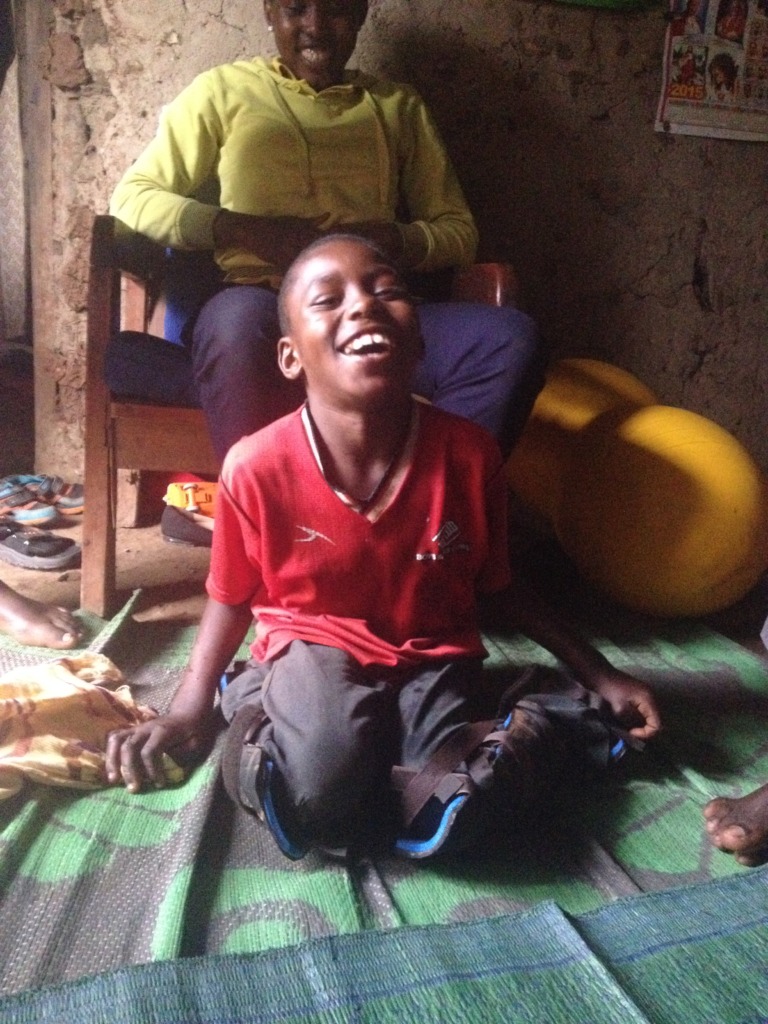
Children like 12-year-old Emmanuel, who has athetoid cerebral palsy, but has never received any rehabilitation and spends all day at home, while his mother, Sarafina, works in the garden growing food to feed the family, washing, cleaning and looking after his 3 younger siblings. Emmanuel does not have an intellectual disability and understands everything that he is told. He really enjoys hearing what his older brother learns each day at school, and wishes he could join him. But nobody thinks he can go to school because of his disability.
Emmanuel learnt to sit at the age of 5 years, and can move around the floor on his hands and knees but has never learnt to stand or walk. He finally learnt to feed himself last year, but still can’t do other personal care activities such as bathing or dressing and undressing. His speech is difficult to understand, because of the spasticity affecting the muscles in his face and tongue, and the spasticity has also caused his hands to become tightly fisted.
Despite these challenges, the KCDC team saw a lot of potential in Emmanuel and he and his mother were really excited and motivated to work with us. We will be working on functional independence with him, encouraging him to participate in washing and dressing, and working on improving his mobility in crawling and attempting to stand. He will also need a wheelchair so that he can go out into the community with the rest of his family. We will create a communication board so that he can make his needs known more clearly and explore options for school for him with his family.
However, this could have been a very different outcome for Emmanuel if he had received therapy intervention at a younger age. Physiotherapy could have helped him to sit earlier, and to learn to walk with a walking aid. Occupational therapy would have helped him to feed himself, wash and dress himself with assistance rather than relying fully on his mother, and would have helped him learn to write. Making splints for his hands and feet would have helped his mobility and prevented the fisting that has occurred. With a communication board from an early age, and speech therapy to help his oral motor skills, Emmanuel would have been more likely to be integrated into school and his local community, with the family and community having a greater understanding of his disability and his abilities.
This is one boy among hundreds who demonstrate the urgent need for our community outreach programme, who have no other access to urgently needed therapy and rehabilitation services that can change a life.
Links:
Project reports on GlobalGiving are posted directly to globalgiving.org by Project Leaders as they are completed, generally every 3-4 months. To protect the integrity of these documents, GlobalGiving does not alter them; therefore you may find some language or formatting issues.
If you donate to this project or have donated to this project, you can receive an email when this project posts a report. You can also subscribe for reports without donating.