Project Purpose
Livelihood and Enterprise Development is key in helping communities walk out of poverty. World Vision Lanka believes that every household should be food-secure and equipped to support the well being of their children.
However, this became a challenge when the country faced the pandemic situation in early March. Ever since, the most vulnerable families who live under extreme poverty are getting pushed to further vulnerability.
As a result, 90% of these families lost their daily income and where they had no means of providing for their children. Fighting hunger was crucial among these families.
Hence this project was designed in order to support 100 women headed families to stay resilient, rebuild and recover.
Project Activities & Implementation
Due to the lack of funds raised, project implementation is currently not in progress.
Building secure livelihoods in communities is one of the biggest strengths of World Vision. Over the years, we have been able to witness many success stories as a result of similar initiatives. Many project models have been developed to support families with dependent children, living with food-insecurity and an unstable livelihood.
All such livelihood interventions align with the government’s programmes for Food Security, Livelihood & Economic Development, in collaboration with key government institutions, the UN, non-governmental organizations and the private sector. This “HOME GARDENING” project was launched in partnership with the Department of Agrarian Development to promote household food security.
Success Stories from the past...
The Permaculture Project
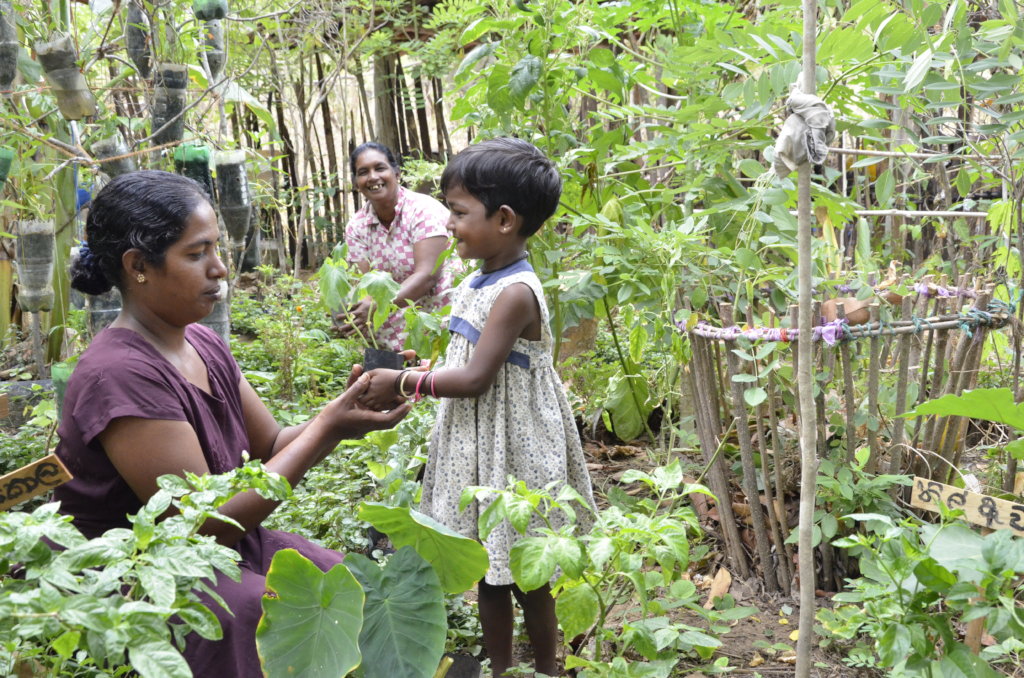
Krishanthi, a mother of two, a single parent, now has a lush garden in Nawagaththegama (a village in the North-Western province in Sri Lanka) due to World Vision’s permaculture project. The project establishes sustainable, eco-friendly agriculture using local resources and technology to improve farmers’ quality of life.
“World Vision gave me some coconut, jackfruit, and mango saplings as a start,” explains Krishanthi. She, joyfully goes on to say, “My garden has chilli, okra, beans, aubergine, bitter gourd, oranges, papaya, mango, banana… shall I go on?”
A gift of a garden
Life was hard for ManjulaPriyantha, his wife Thusharika and their two young children. As a day-labourer from Ganga IhalaKorale in the district of Kandy, Manjula could barely make ends meet.
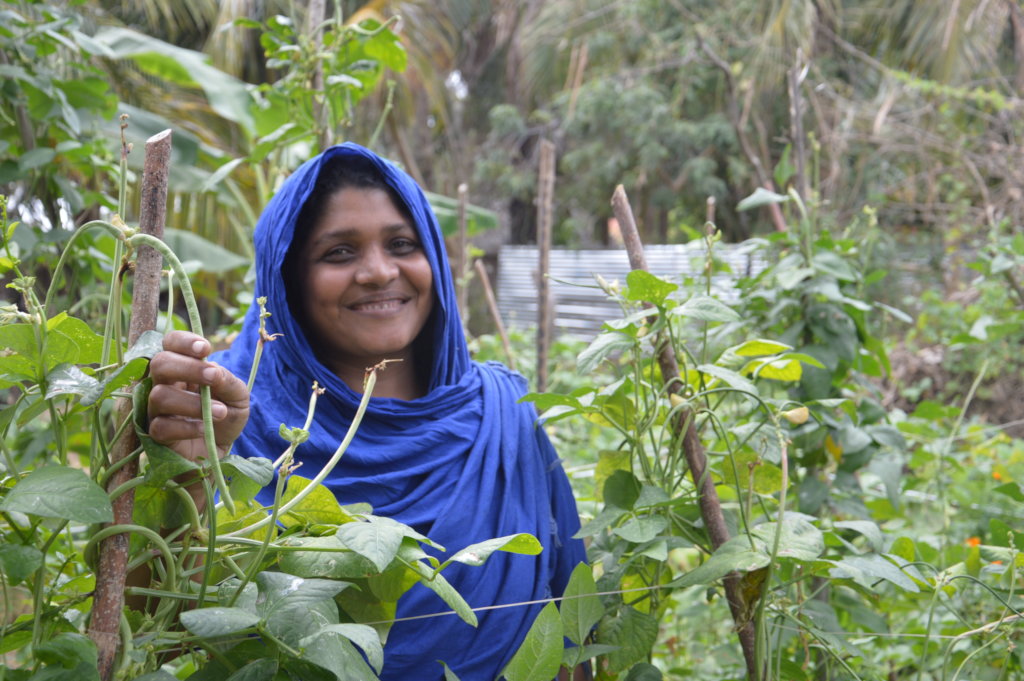
Through World Vision’s Livelihood Development programme, Manjula was trained, and he became a lead farmer in the project. He then began cultivating a vegetable garden in an unused plot of land he owned.
“I am so happy that now our family has nutritious food and my children are safe from diseases and infections due to their healthy diet. Now, instead of buying fruits and vegetables from the market, I am able to use that money for my children’s education,” says Manjula, beaming.
A mosaic of cultivation
Sumanadasadid slash-and-burn cultivation for a living. A World Vision agriculture programme helped him with a home-based stable income. Today, Sumanadasa earns from 1/4 of an acre within a month what he tried to earn from four acres in six months.
“That is when World Vision introduced us to home-gardening and new agriculture methods,” says the farmer. “We had no proper system of cultivation before, but the programme taught us methods of planting that saved a lot of space, soil and water conservation, compost making and many other techniques.”
“My garden was never like this,” smiles Sumanadasa, 46. “We never used to cultivate the land around our house. It was just over-grown with weeds and bushes.”
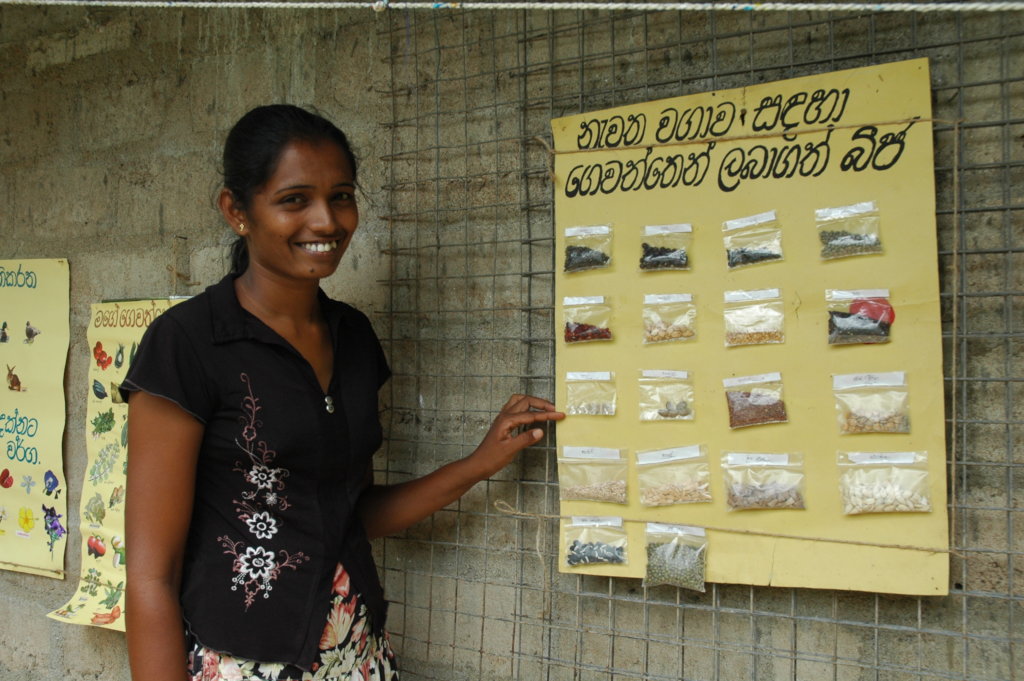
Raised funds will be used to train, equip and provide all the necessary raw materials for home gardening to 100 Women-Headed Households (WHHs) in Northern Sri Lanka to tackle hunger during COVID-19 restrictions and beyond.
Let's make a lasting impact!
Thank you!
Attachments:
![Share on Twitter]()
![Share on Facebook]()