Project Report
| Sep 4, 2008
September 2008 Update
By Katherine Zavala | Coordinator of Programs
In the past months OWDEB has facilitated vocational training in livestock rearing and small business development. The women who wanted to have more opportunities for selling their goods specifically requested this training to develop their knowledge.
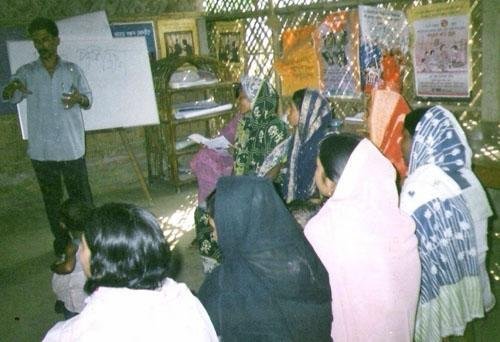
20 women participated in OWDEB’s livestock training where they learned about how to raise cows, goats, ducks, chickens etc. In the Small Entrepreneurial Development program OWDEB provided them with training on mushroom cultivation, tailoring, plantation etc. Next, OWDEB will conduct trainings on candle, soap confection and food preservation according to group members’ interest.
Furthermore, 16 group leaders received an orientation on marketing management to share with their groups. Motivated by the idea of improving their markets, some of the group leaders approached the managers of the Barama area market to request a stall for selling the vegetables produced by OWDEB group members. They are currently in negotiations with the market to open this stall.
![Share on Twitter]()
![Share on Facebook]()
Jun 4, 2008
June 2008 Update
By Katherine Zavala | Coordinator of Programs, IDEX
In the last year, OWDEB organized several training workshops to improve leadership development and gender equality among women.
The following trainings were conducted:
• 5 training workshops on gender relations to 101 participants
• 4 training workshops on “Women Rights and Our Law” and The Convention on the Elimination of all Forms of Discrimination against Women (CEDAW) to 90 participants
• 1 training on Human Rights/Leadership development for 22 group leaders
The main challenge for conducting these workshops has been the opposition of fundamentalists and religious leaders who believe that these activities go against Islam.
In order to address this negative perspective and attitude against women, OWDEB has organized meetings with the Chairman of the Union Parishad, an elected local government body. These bodies are for the management of local affairs by locally elected persons. In addition, OWDEB met with community members, community elite and leaders to explain the programs and activities of OWDEB, its expected output and its positive impact on the whole community.
![Share on Twitter]()
![Share on Facebook]()
Mar 6, 2008
March 2008 Update
By Katherine Zavala | Program Coordinator
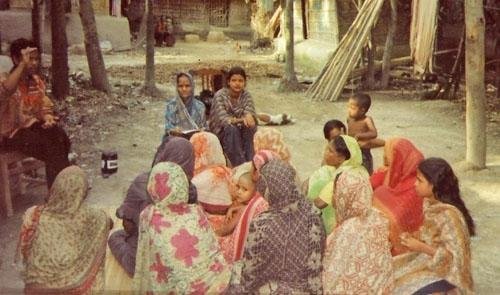
In January 2008 Yael Falicov, IDEX’s Director of Programs, visited Bangladesh and spent time at the Chandanaish field office of OWDEB. The day of the visit, 20 adolescent girls were in the office receiving training from a law student about their rights as women under the law. They were discussing birth registration (without a legal birth certificate, a woman cannot vote or enroll in school), marriage registration, domestic violence and property rights.
IDEX staff also met with a women's empowerment group consisting of 25 women who had been meeting weekly for one year. They had built a small savings fund and some of the women had applied for small loans for income-generating activities. They had received training from OWDEB on financial management and on the skills needed to run their small businesses. Some of the women are making embroidered fans for sale at the local market. Others are growing non-traditional crops such as roses and off-season vegetables.
One woman, Mitu Deb, received a loan to start a business making puffed rice, a Bengali staple. With the loan, she bought rice in bulk at 50 cents per kilo. She heats the rice on her clay stove and repackages it to sell at 70 cents per kilo. She now sells 50 kilos of rice per week, bringing in an income of $10. Her weekly loan payment is $2.85, leaving $7.15 profit. She will finish paying her loan this month, so that she will make a profit of $40 per month. Given that the typical wage of an urban factory worker in Bangladesh is $25 per month, Mitu is making a substantial income without having to leave her rural village.
![Share on Twitter]()
![Share on Facebook]()