By Hether Scheel | Foundation Relations Officer
Objectives:
General Objective:
Specific Objectives:
Activities Carried Out During the Reporting Period:
1. Assessment of the community and housing. Family selection.
a) Background.
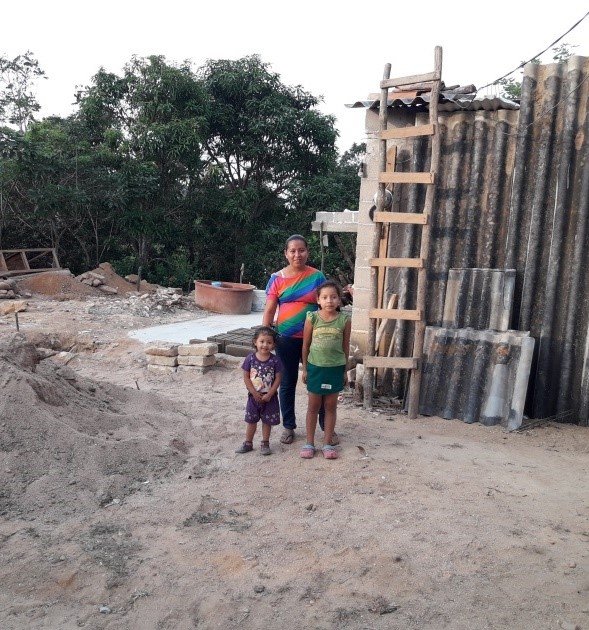
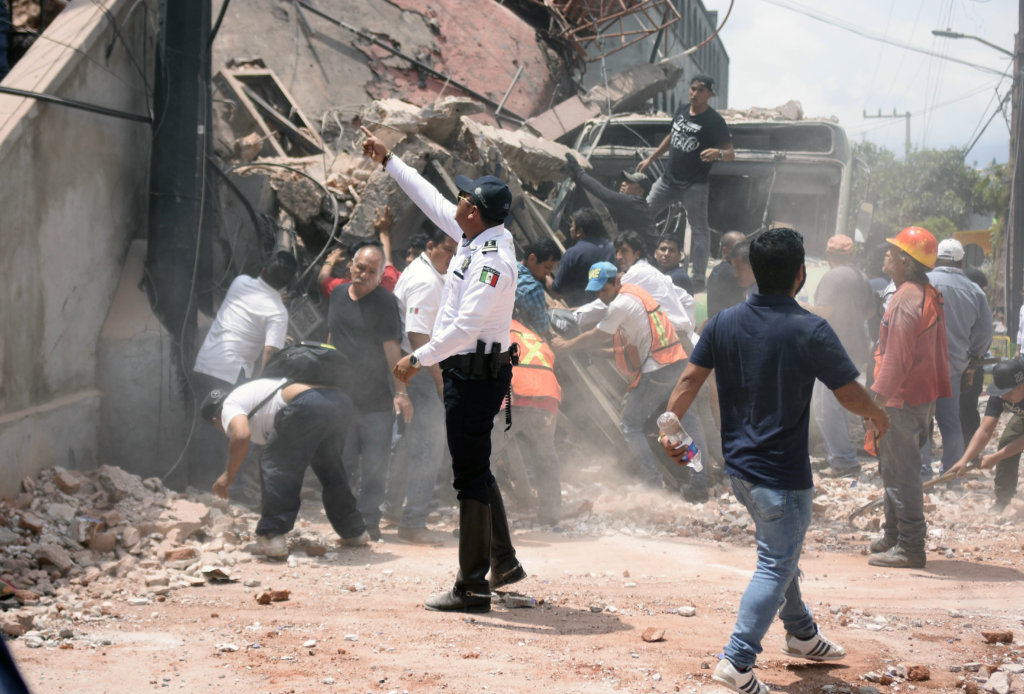
i) The earthquakes that struck in the country on September 7 and 19, 2017, affected public infrastructure as well as families and businesses. This natural disaster caused greater damage to homes located in the central and southern region of the country: Chiapas, Mexico City, Guerrero, Mexico, Morelos, Oaxaca, Puebla and Tlaxcala.
ii) In Chiapas, of 46,748 homes, 32,700 have partial damage and 14,048 have total damage.
iii) The affected dwellings have the following characteristics: Traditional dwellings of the zone, with a rectangular plant, covered with 2 water ceilings or with prolonged slopes reaching a maximum height of 5 m and a minimum height of 3.5 m or 3 m. Constructive system based on stone foundations, adobe walls of 40 cm, overlapped at the vertices in each corner of the building, without enclosure. Cover based on wooden beams and roof. Several houses with 2 water ceilings with wooden structure, planks and clay tile, maximum height of 3.30 and minimum of 2. 8. Stone foundation of the area, walls based on blocks of adobe with a thickness of 40 cms.
iv) The project is developed in the socio-demographic regions of the Central and Fraylesca Zone. The Central Region of Chiapas is composed of 22 municipalities, among them Jiquipilas, Cintalapa and Ocozocuautla, It is characterized as a region of agricultural production. La Frailesca or also Fraylescana Region is composed of six municipalities, among them Villaflores, this region is characterized by its high agricultural and livestock production. It received its name due to the abundance of friars who used to travel through this region; they were mostly Dominicans. Dominicans were owners of haciendas and also were in charge of evangelization. After the earthquake, productive activities were damaged, because families have prioritized allocating the few resources they have to rebuild their homes.
b) Municipality selection, localities and allies
c) Affected families selection
After carrying out the assessment route in the municipalities, the profile of the beneficiaries was defined:
2. Social Intervention: Organization and Workshops
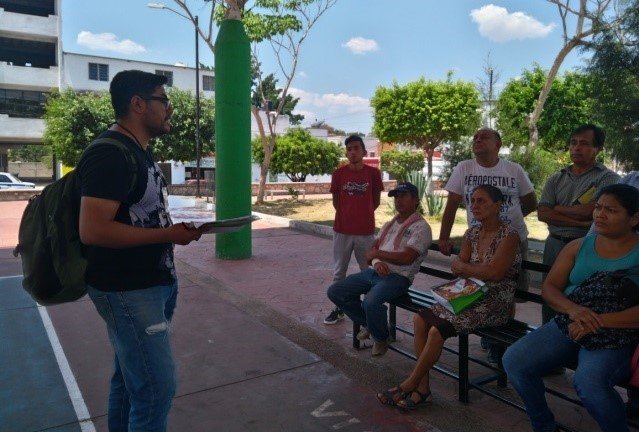
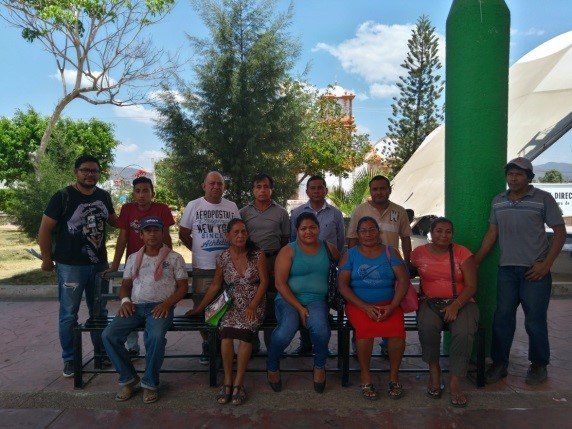
a) The programmatic social intervention carries out selection of the beneficiaries, according to the previously established profile. It promotes the community organization through the identification of existing organizational networks or, if not, fostering the community organization that allows form support networks in the community, and we expect that in the long term will manage resources for the benefit of their family and community environment. At the same time, there is a process to raise awareness of the impact of housing design and its importance for the family health.
3. Construction Technical Advice
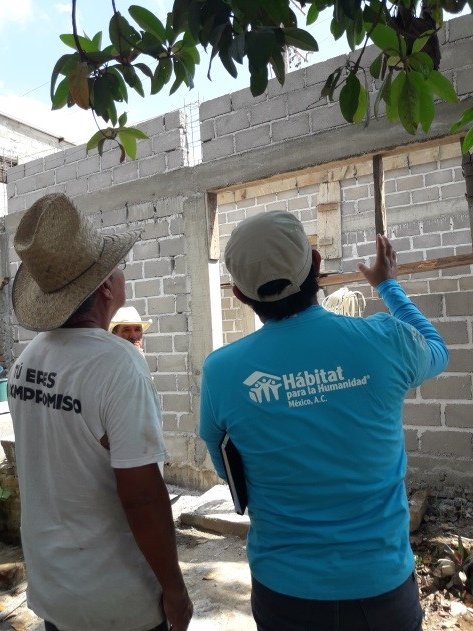
a) The attention given to the families for the correct execution of the project is an accompaniment that begins from the moment of conceptualization of the architectural project through a participatory design. It is strengthened in the constitution of the committees that allow transfer information through the workshops and reaches its high point with the monitoring of work that is provided to each project. We ensure the quality of the home through technical advice that is carried out in the following stages:
b) The houses will be rebuilt by families through the process of self-production in which they will be active actors during the process, for manpower management, through mutual aid or self-construction.
4. Architectural Proposal
The characteristics of the houses are established by region; this is because each region has different microclimates, as well as the variant of uses and customs.
The dimensions of each project respond to the particular needs of each community and the minimum habitable dimensions according to the number of members of each family.
The houses will be built with solid block or hollow walls, polished floor, covered with sheet, sanitary solution, the typologies of the new houses either complemented or made from scratch, do not decontextualize with the environment.
The configuration of each home is appropriate to the basic needs of the family, seeking to comply with the basic criteria of habitability and visualizing possible growth in future housing.
5. Auto-construction and housing monitoring
The process of self-production will be strengthened through the induction of the families to the construction process and the accompaniment of the Technical Advisor in the field through the realization of visits where the labor advances and constructive processes will be verified.
Project reports on GlobalGiving are posted directly to globalgiving.org by Project Leaders as they are completed, generally every 3-4 months. To protect the integrity of these documents, GlobalGiving does not alter them; therefore you may find some language or formatting issues.
If you donate to this project or have donated to this project, you can receive an email when this project posts a report. You can also subscribe for reports without donating.