By Zahra Alam | Head of Projects (Executive Body Member)
Two Projects for Summer and Fall 2015:
Project #1: School-Grounds (Starting June)
Phase I Experimental Phase:
Two schools have been selected to start off the School Project in June 2015. Based on the success of this phase, we will conduct Phase II (replication phase) with more schools.
Project proposals will be sent at the beginning of June to 2 local schools in Dhaka for Phase I.
Objective: Enhancing environmental education for children of age 11-12 through a holistic environmental education curriculum.
Goals:
Environmental Concepts to be introduced:
Activities:
Project #2: Rainwater Harvesting Project (Starting late July)
Phase I (Experimental Phase):
We are planning to start out with Uttara Society.
Phase II (Mass Replication):
We will expand our project and help in reducing water scarcity amongst low income-groups, depending on our success during the first stage.
Objective: To provide solution for water scarcity and reduce groundwater depletion.
Goals:
We are currently at Research Phase for this project.
Research Details
Presently, about 162.2 million people live on 56,977 sq. miles (1,47,570 sq. km) of land which makes Bangladesh one of the most densely populated country in the world. From the last census report of 2001, it is evident that between 1961 to 2001, the population increased by 123.1 million (12.31 crore). In 40 years, the population increased by 77 million (7.70 crore). The population was 75 million in 1971 and in less than 40 years it has crossed 152 million. The present figure of population is 162.2 million which will increase to 200 million by 2020 (The Daily Star, July 11, 2010). Moreover, speakers at a dialogue on January 12, 2011 at Dhaka University said Bangladesh's population would be 222 million by 2051 and 250 million by 2081.
Therefore, among other concerns, fresh water supply will be a crucial issue for this country as its population is ever on the increase and when the state will fail to provide it, this can lead to intense unrest and social instability. The gap between supply and demand of water is ever-increasing. In this regard, Chairman of National Disaster Management Advisory Council Dr. MA Quassem said, “Water availability in Bangladesh is around 90 billion cubic metres (BCM) during the dry season against the demand of about 147 BCM, a shortage of nearly 40 percent, resulting in drought- like situation in large parts of the country” (The Daily Star, August 22, 2010).
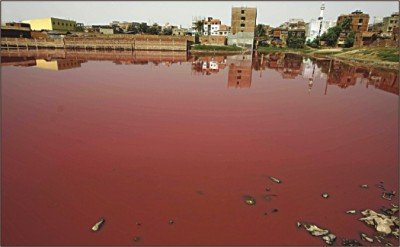
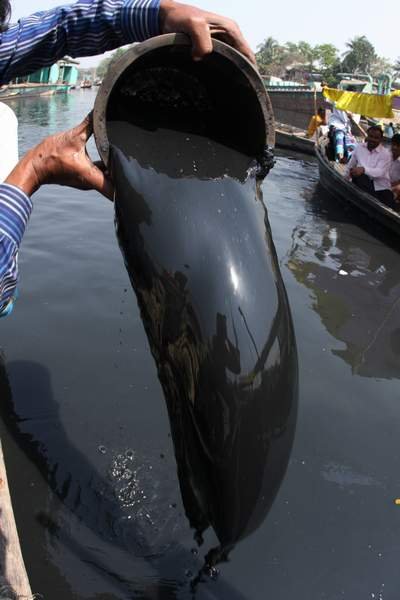
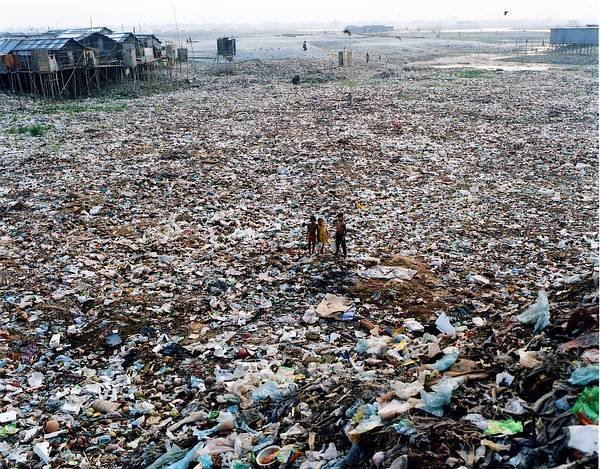
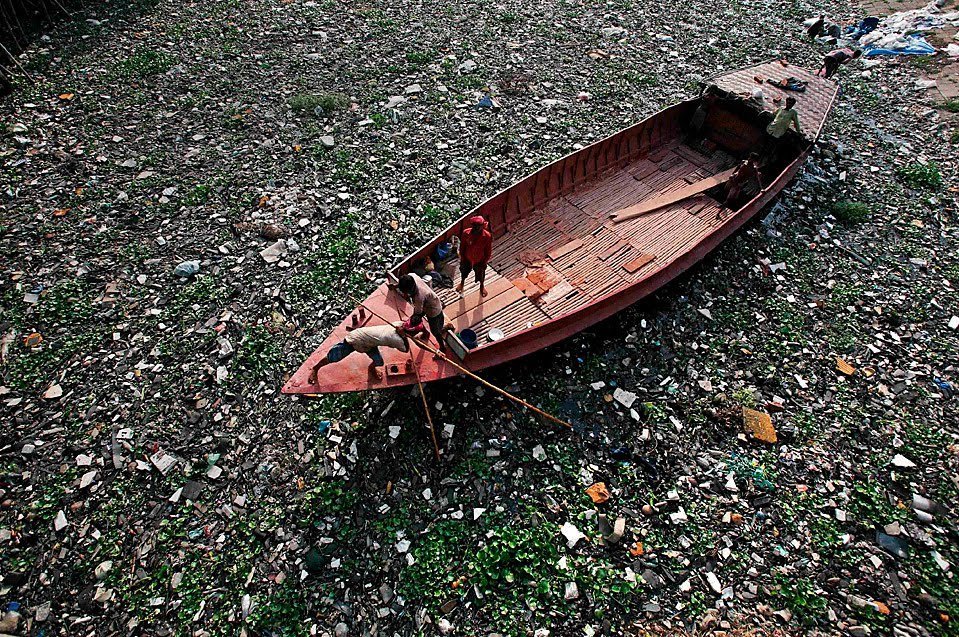
Bangladesh is going to face severe water crisis within the next couple of decades due to random contamination of surface and ground-water, absence of comprehensive water sharing with neighbouring countries and mismanagement in preserving rainwater. Although the whole world is seriously thinking of conserving their water resources for ensuring water security, Bangladesh is destroying its surface and ground water by throwing waste into water bodies and over extracting ground water.
Today, rivers around the country are being filled up or being encroached upon in such a manner that is threatening the very existence of human habitation. According to a survey conducted by the Bangladesh Water Development Board (BWDB), there are 310 rivers in Bangladesh. Of these, 57 are border-rivers, the condition of 175 is miserable and 65 are almost dead. Eighty percent of the rivers lack proper depth. The latest study of BIWTA reveals that 117 rivers are either dead or have lost navigability. Such rivers include Brahmaputra, Padma, Mahananda, Meghna, Titas, Dhaleswari, Bhairab, Sitalakkhya, Turag, etc.
As rivers got polluted we became more and more dependent on ground-water as a source of drinking water. It is reported that presently 86% of WASA's drinking water comes from ground-water. Besides, excessive use of ground-water during the Boro season may have an adverse effect on the country's drinking water, warned International Food Policy Research Institute (IFPRI) on January 23, 2010. The excessive use due to widespread urbanisation, the recharge of the ground-water is not occurring as before. As a result, the ground-water level is falling between 1-3 metres every year. For example, during the last 12 years the ground-water level has fallen to almost 34 metres. According to a study conducted by the Bangladesh Agriculture Development Corporation (BADC), in 1996 the ground-water level was 26.6 metres in different parts of Dhaka city which fell to above 60 metres in January 2008. If this fall of ground water continues, what will happen in 2050 when even deep tubewells will be unable to strike water. For example, in 2001, deep tubewells could strike at a depth of 200 to 300 feet but now they have to go about 1,000 feet to get uninterrupted supply.
Reuse of water can reduce the total water demand. It can be applied both in the domestic and industrial sectors. Rain-water harvesting can also reduce water scarcity. There must be mandatory provisions of rainwater harvesting for every new structure coming up which will be particularly helpful for purposes like car washing, gardening, etc., at least for a certain period of the year and also serve as a reliable source of drinking water in the coastal areas of the country. New innovative technologies are needed to accelerate the utilisation of rain-water.
Bangladesh is a tropical country and receives heavy rainfall during the rainy season. In the coastal districts, particularly in the offshore islands of Bangladesh, rainwater harvesting for drinking purposes is a common practice in a limited scale for long time (Chowdhury et al, 1987). In some areas of the coastal region with high salinity problem, about 36 percent households have been found to practice rainwater harvesting in the rainy season for drinking purpose (Hussain and Ziauddin, 1989). In the present context, rainwater harvesting is being seriously considered as an alternative option for water supply in Bangladesh in the arsenic affected areas.
Rainwater harvesting systems
Rainwater harvesting, low-cost systems that collect and store rainwater for year-round use, offers a cost-effective and practical solution to ease Dhaka’s water crisis. It is estimated that rainwater harvesting (RWH) systems could supply more than 15% of Dhaka’s requirements. Since 1997, one thousand RWS have been installed in Bangladesh, mostly in rural areas. The systems’ capacities vary from 500L to 3,200L, at costs in the range of US$50-150. If RWH is undertaken as a serious investment, it could help conserve groundwater and recharge the water table. About 150bn liters of rainwater could be harvested during the monsoon season alone. Water can be stored for four to five months without bacterial contamination – an important fact given that 110,000 children in Bangladesh die of waterborne illnesses every year.
Advantages:
Disadvantages:
By Zahra Alam | Head of Projects (Executive Body Member)
By Zahra Alam | Head of Projects (Executive Body Member)
Project reports on GlobalGiving are posted directly to globalgiving.org by Project Leaders as they are completed, generally every 3-4 months. To protect the integrity of these documents, GlobalGiving does not alter them; therefore you may find some language or formatting issues.
If you donate to this project or have donated to this project, you can receive an email when this project posts a report. You can also subscribe for reports without donating.