By Anna Demchenko | Grant writer
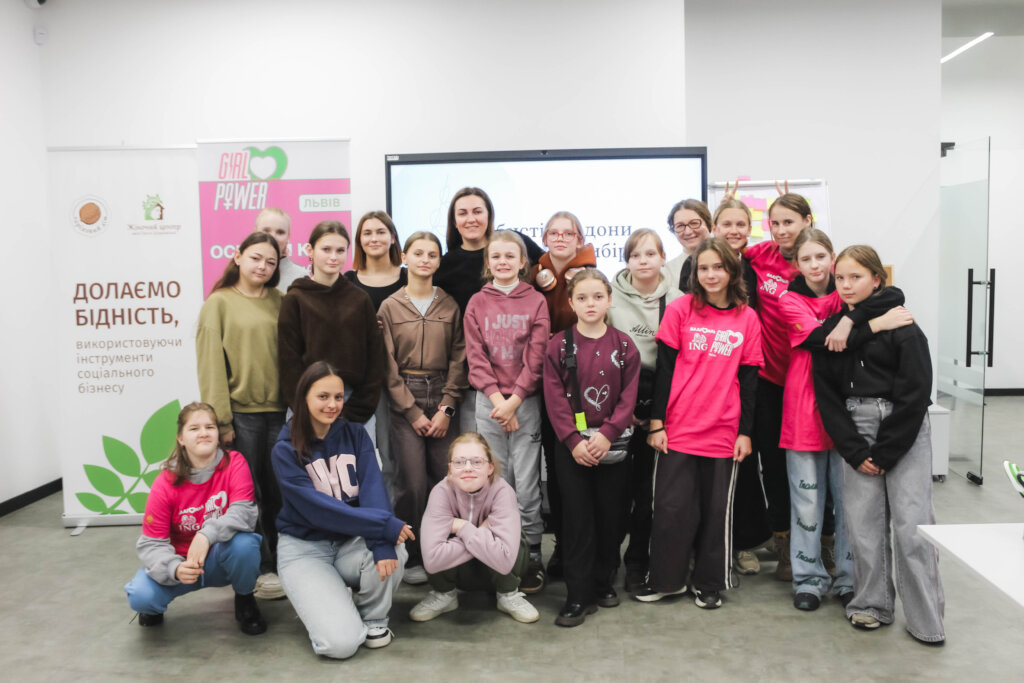
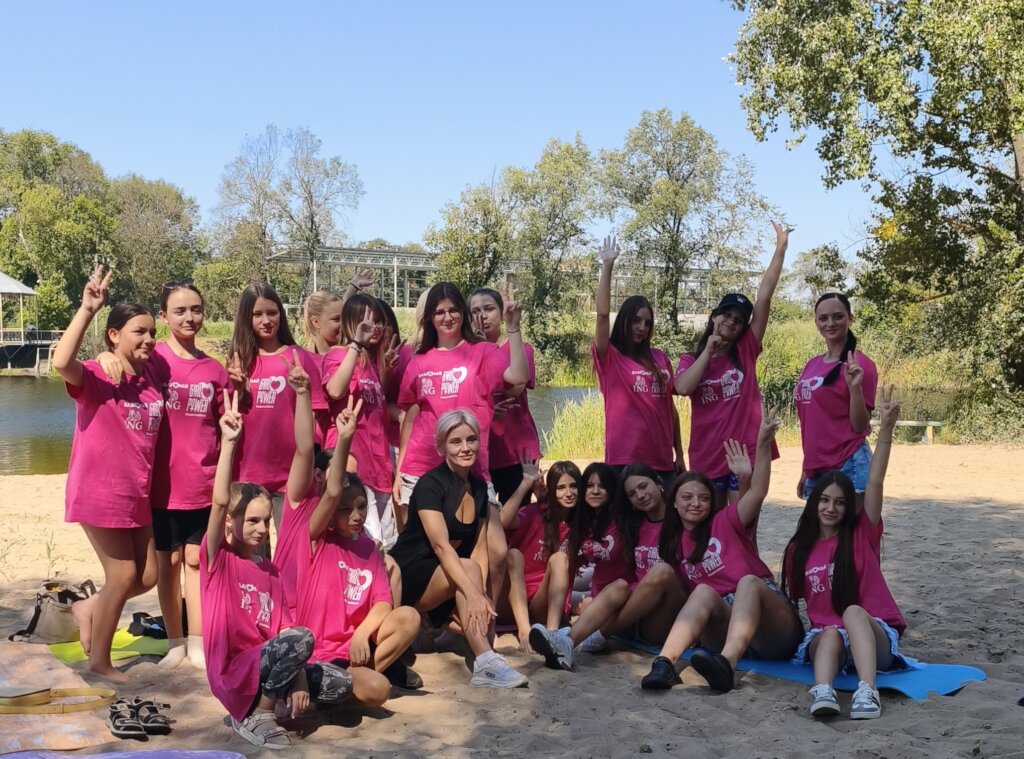
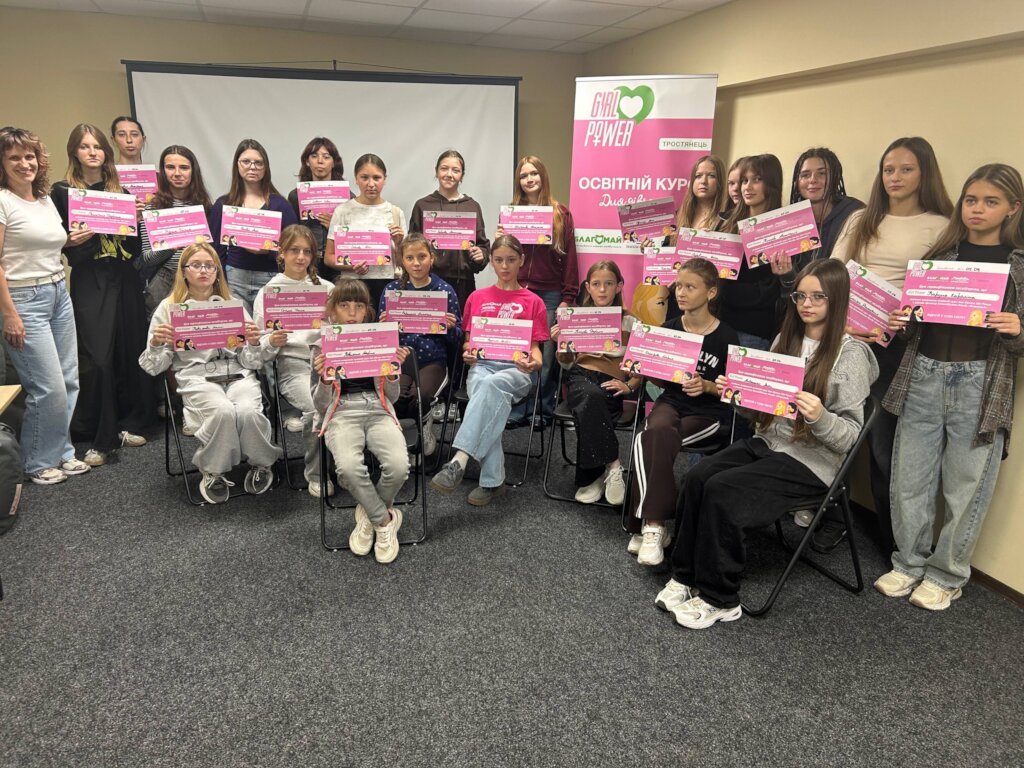
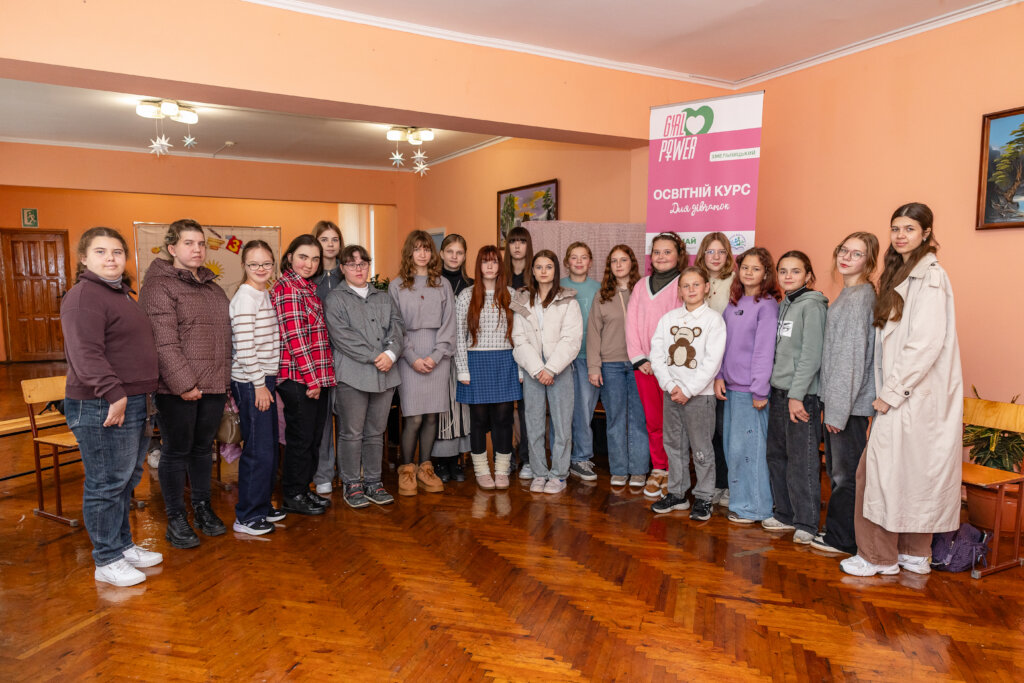
Between July and November 2026, Girl Power delivered nine full educational courses for 270 adolescent girls in nine communities across eight regions of Ukraine. Every course was run together with a local civil society organisation rooted in its own community, and two of the nine were designed specifically for girls with hearing impairments.
Where we worked
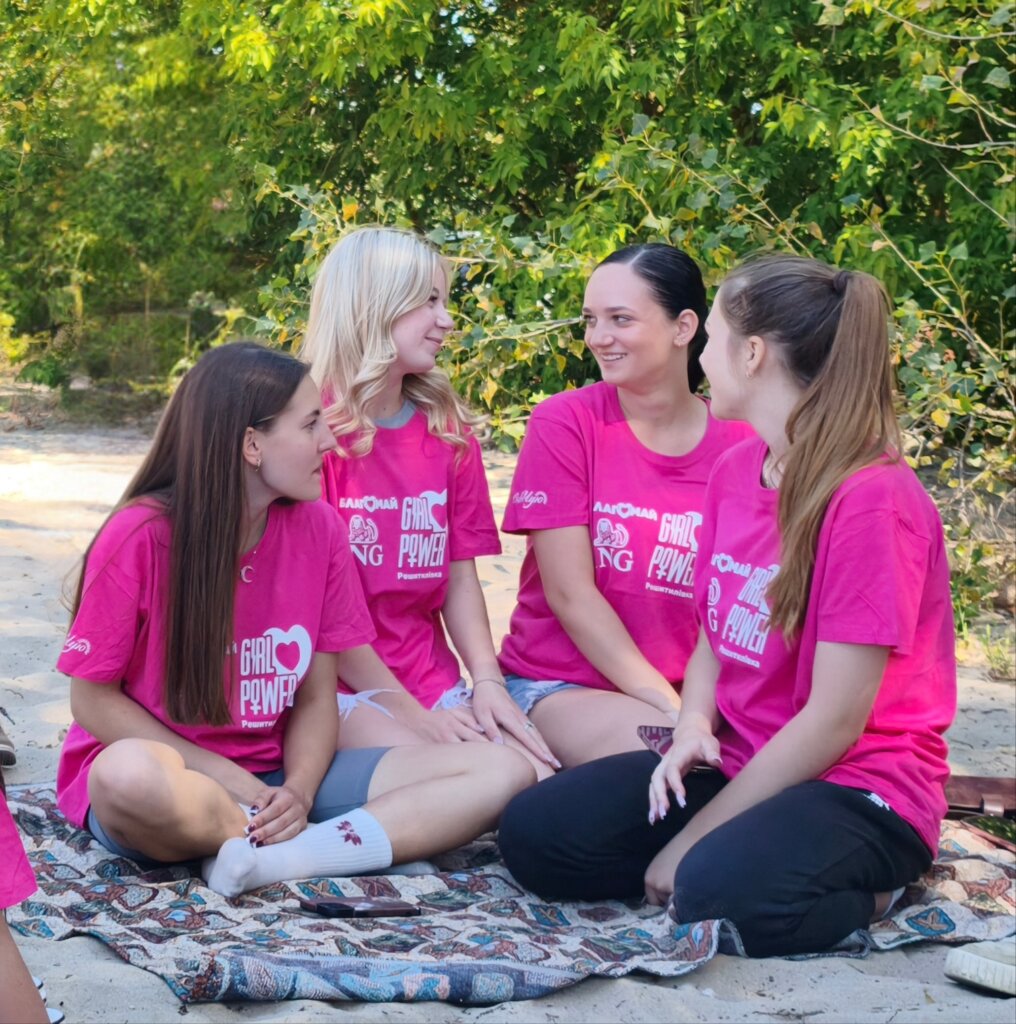
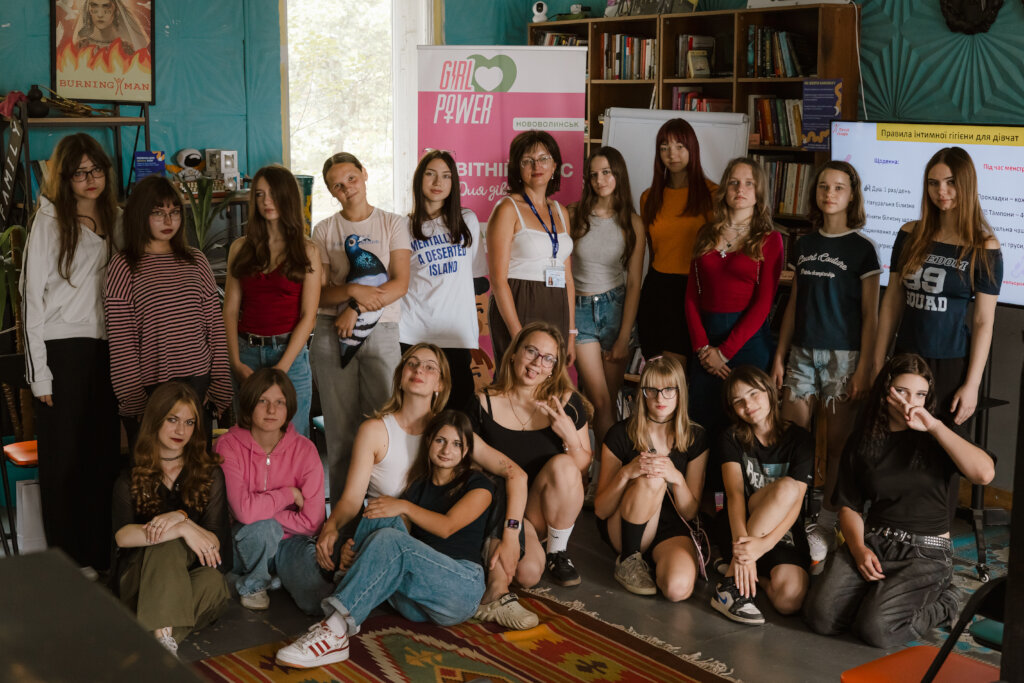
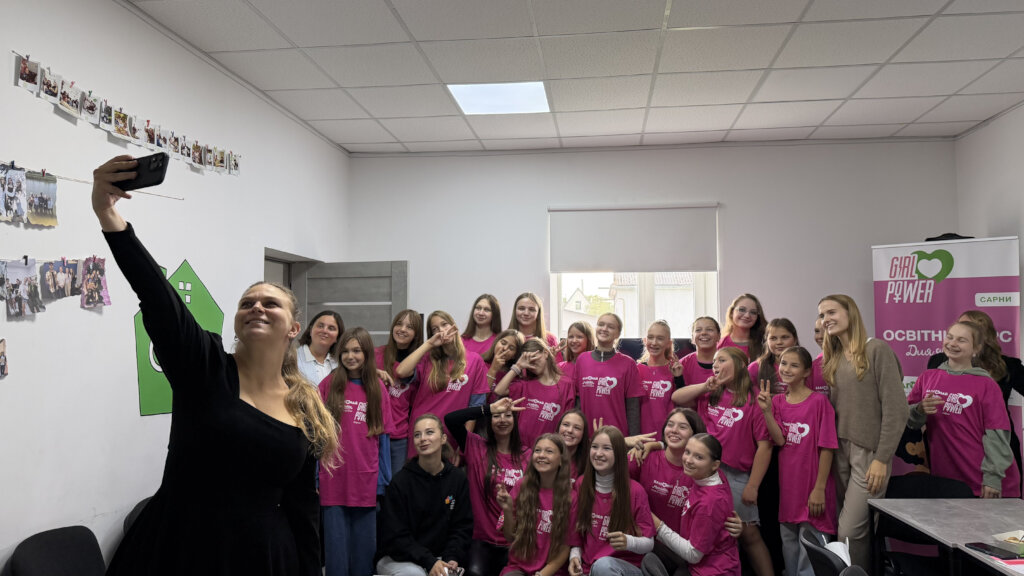
The programme deliberately focuses on communities where girls have fewer opportunities to access this kind of education and support: small towns and district centres rather than regional capitals. This period's courses took place in Novovolynsk (Volyn region), Reshetylivka (Poltava region), Trostianets (Sumy region), Sarny (Rivne region), Kamianka-Buzka (Lviv region), Zalishchyky (Ternopil region), Khmelnytskyi, Vinnytsia and Lviv.
Who took part
All 270 participants were girls aged 13 to 18 from socially vulnerable groups. Across the courses they included girls without parental care and girls living in family-type children's homes, girls with disabilities, internally displaced girls, and daughters of serving and fallen members of the armed forces. Partner organisations recruited participants through local social services, schools and community centres, which is how the programme reaches girls who would not find their way to an open call.
What the courses covered
Each course runs six modules over roughly six weeks, with two expert speakers per module — twelve specialists per course. The curriculum combines rights and safety with practical skills related to health, leadership, education and future careers:
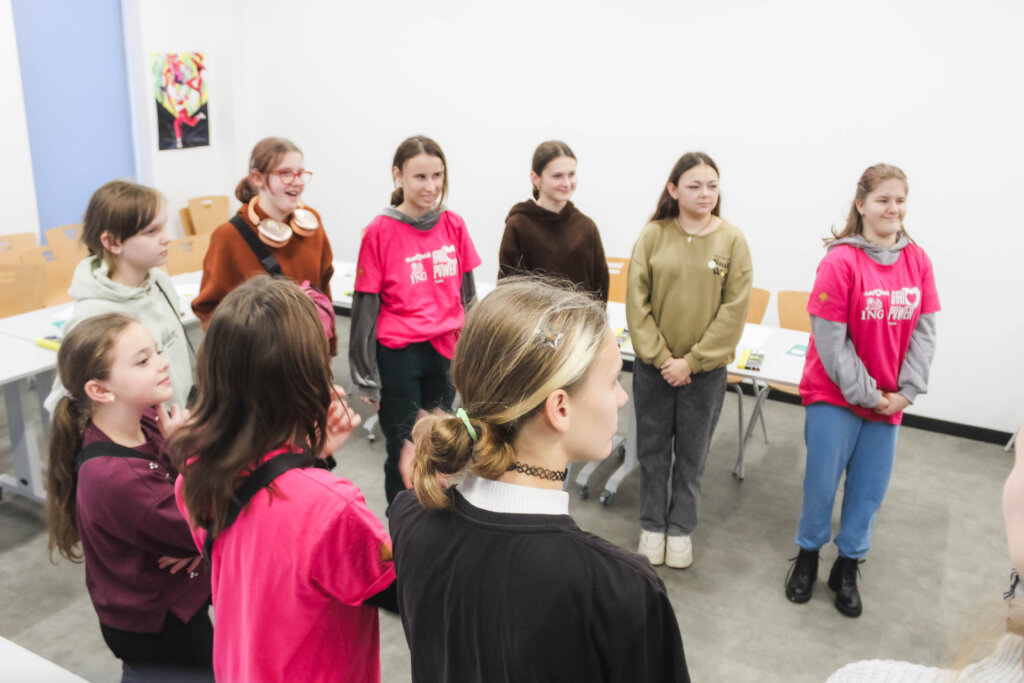
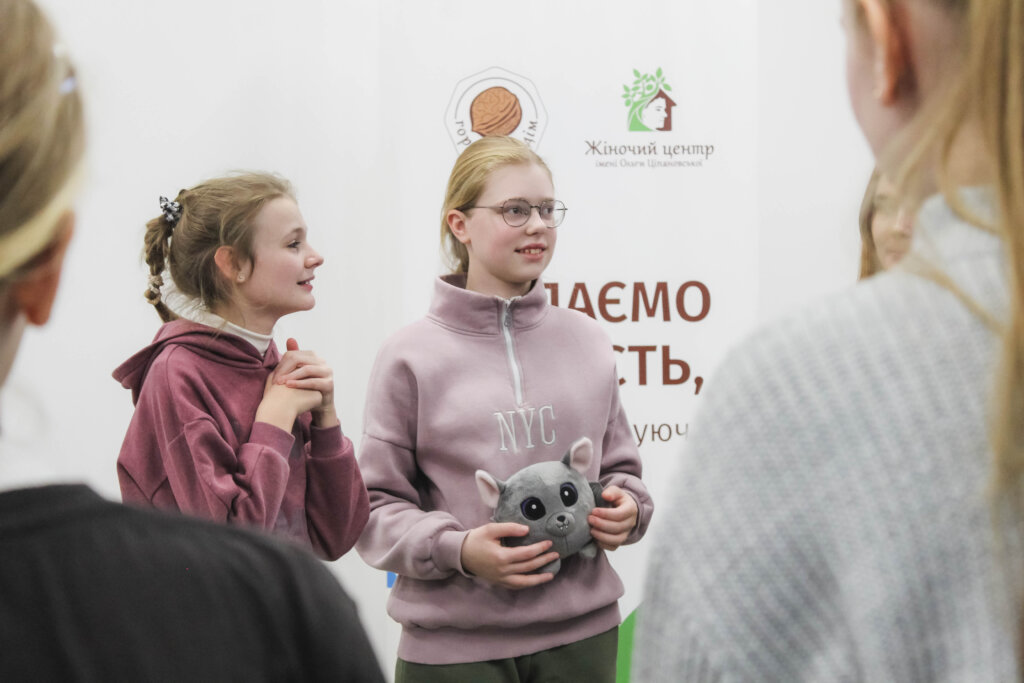
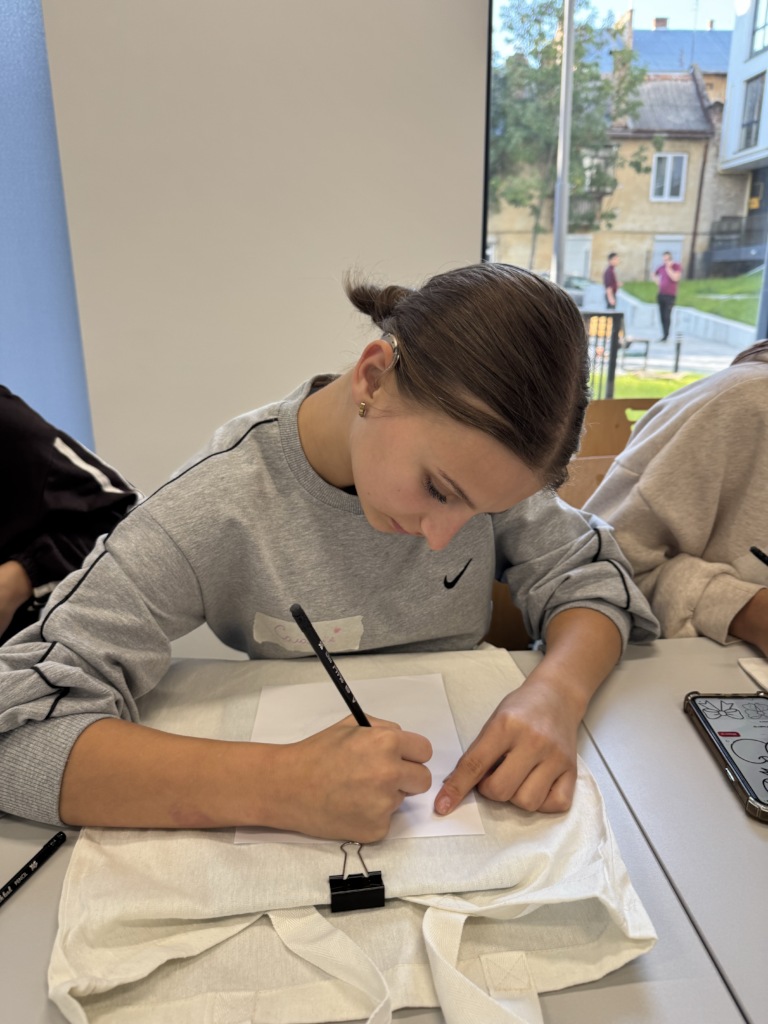
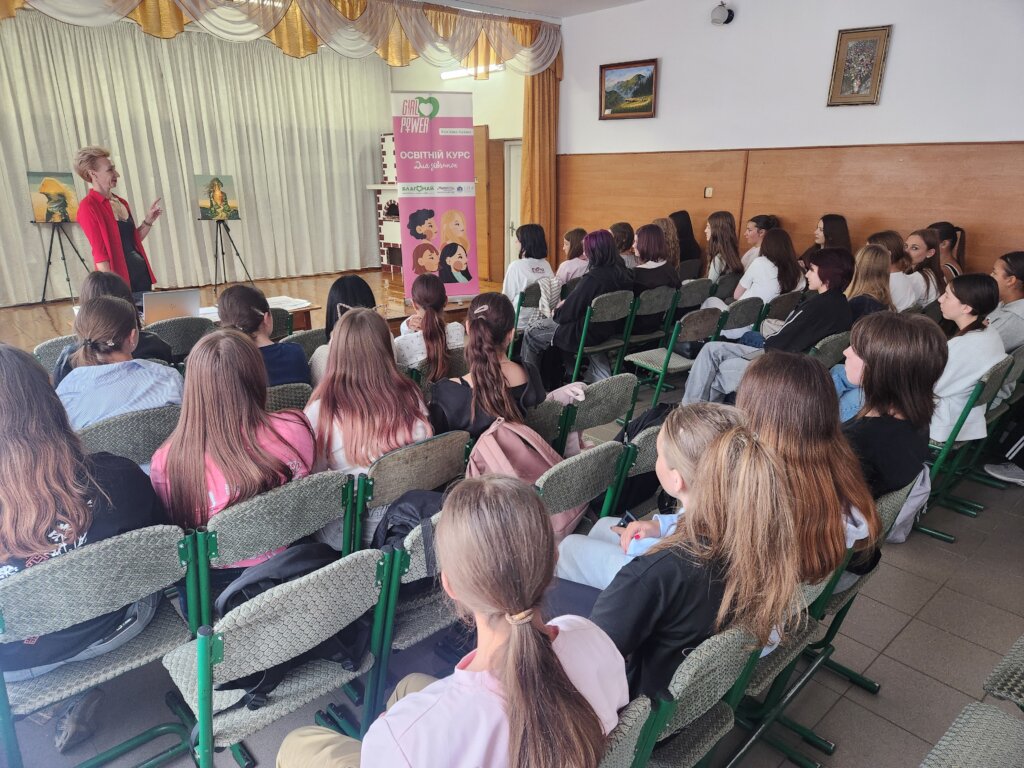
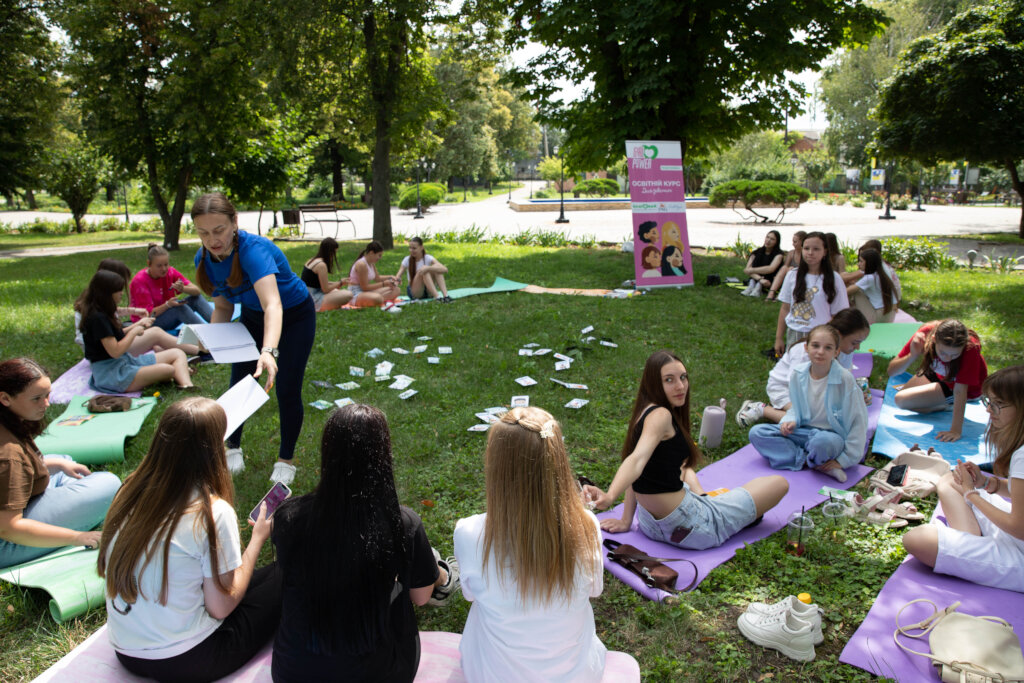
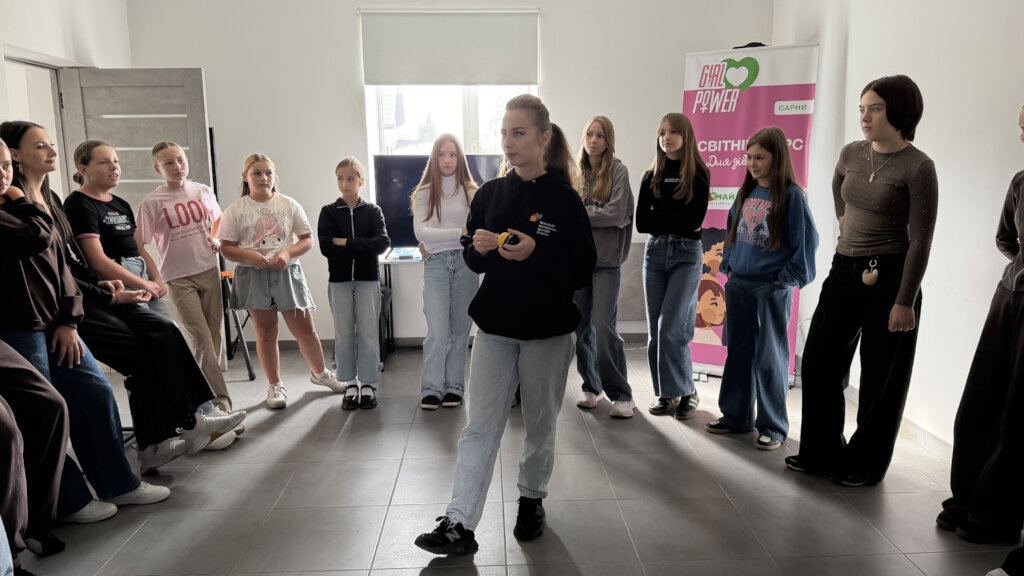
Sessions are built around interactive work rather than lectures: small groups, case analysis, role play and creative exercises. Facilitators include lawyers, psychologists, doctors, entrepreneurs and trainers certified by the Council of Europe in gender-based violence prevention. A psychologist is available to participants throughout each course.
Inside a course: Vinnytsia, September–October 2026
The Vinnytsia course, delivered with the Foundation of Ukrainian Identity for 50 participants, gives a concrete picture of what six modules look like in practice.
The financial literacy session was led by the head of a Raiffeisen Bank sales centre. Participants worked through four scenarios drawn from real fraud attempts — a caller claiming to be from the bank and asking for an SMS code, a prize notification requiring an upfront fee, a stranger requesting a transfer, and an unrecognised transaction appearing in a banking app — and decided in small groups what to do in each. A later session on financial goals ended with every participant setting one personal savings target and drawing up a plan to reach it.
In the module on opportunities and grants, participants divided into three groups and developed outline concepts for social projects serving internally displaced people, families of service members, and people with disabilities: identifying the need, defining an objective, and setting out expected results.
The careers session produced one of the clearest observations from the course. Each participant was given a modern profession, asked to work out the knowledge and qualities it requires, and then to assess which of those she already had. None of the participants identified a lack of skills as a barrier to pursuing the profession they had been given. The facilitator used that result to make the point directly: the capabilities are already there, before any formal work experience.
The sessions on sexual and reproductive health and on psychological wellbeing were led by a certified sex education trainer, a gynaecologist and a clinical psychologist who is a member of the Ukrainian Association of Art Therapists. Alongside the content on consent, personal boundaries and healthy relationships, participants used role play to examine body-shaming and other forms of prejudice, then discussed how such situations affect self-esteem and what respectful alternatives sound like.
Two sessions addressed disability directly, for a group of participants without disabilities. The first was led by the head of the NGO Harmony, an accessibility consultant and deputy chair of the Barrier-Free Council of Vinnytsia and the region, who uses a wheelchair and spoke from her own experience of physical and social barriers. The second introduced participants to Ukrainian Sign Language with a qualified interpreter from the regional social services centre. This approach means that inclusion is addressed both through adapted activities for girls with disabilities and through sessions that help other participants better understand accessibility and inclusion.
Results in numbers
What changed for the girls
Participants complete a questionnaire at the start and at the end of every course, and we survey them again three months later. Facilitators and partner organisations also submit a written assessment after each module. Four key areas of change emerged across the courses.
Girls are better able to recognise and respond to situations affecting their safety. Facilitators frequently report that participants initially have difficulty recognising or naming behaviours they may have already experienced. By the end of the module on gender-based violence, girls can distinguish forms of violence, recognise coercion and control in relationships, and identify where to turn for help — the police, a social service, a helpline or a trusted adult. In several courses girls disclosed experiences for the first time and were connected to the course psychologist.
Girls take a more active role in their health. Participants frequently identify the modules on reproductive health and mental health as particularly useful, often noting that these are topics they had not previously discussed in detail. Partners report girls going on to seek medical advice, talk to their families, and share what they learned with younger sisters and friends.
Girls expand their understanding of possible education and career paths. Participants often arrive with a limited understanding of the professions and opportunities available beyond their own communities. Meeting women working in law, medicine, technology and business helps broaden that perspective. By the final module, girls are identifying specific educational pathways, preparing applications and, in some cases, exploring their own small business ideas.
Girls gain a supportive peer network. Many participants had no structured activity outside school this year. The course provides a stable weekly group, a facilitator they can build trust with, and access to a psychologist when needed. Graduates stay connected through the national Girl Power community, and some graduates go on to participate in the annual camp and return to their communities as role models for the next group.
The programme's broader result is institutional. Each course leaves behind a local organisation that has now delivered the full methodology, a trained group of facilitators, and a relationship with the municipality's social services — capacity that remains in the community after the funding ends.
Expanding inclusion: courses for girls with hearing impairments
In Khmelnytskyi and Lviv, 40 girls with hearing impairments completed the full six-module programme in formats built for them, with sign language interpretation and adapted visual materials throughout. Girl Power has previously developed inclusive formats for girls with visual impairments; in 2026 the programme expanded this work to girls with hearing impairments. Content on consent, personal boundaries and where to seek help is now reaching girls who may face additional barriers to accessing mainstream prevention and support programmes.
Delivering through a fifth year of war
All venues used for the courses had access to a bomb shelter, in line with the programme's safety requirements. Sessions were occasionally interrupted by air raid alerts and rescheduled around power outages, and partners in Sumy and Rivne regions worked within the additional constraints that proximity to the front imposes. The programme completed all nine courses as planned.
Despite these challenges, the programme remained an important source of structured, in-person support for many participants. For a number of participants, it was the only structured, in-person activity outside school available to them this year. For some, simply having a safe, regular space to meet peers and a trusted adult was an important part of the experience.
In the girls' words
- This programme helped me see myself differently. Now I know I can get through anything.
- I always dreamed of having my own business but never believed it was realistic. On the course we learned how to build something with social impact, and I understood I could start now. My friend and I are launching our own project — a workshop making eco-bags.
- The war forced me to leave my home. At Girl Power I found friends, support and the motivation to keep studying. Now I know I can build my future despite everything.
What comes next
Demand for the programme is far greater than what we can currently fund. This year 111 local organisations from across Ukraine applied to host a Girl Power course in their community; we were able to support nine. The applications came from communities where local organisations and social services identified a clear need for this kind of programme, but where available opportunities remain limited.
In the year ahead we plan to expand to new communities, continue developing inclusive formats for girls with disabilities, including girls with hearing and visual impairments, and grow the online component so that girls in communities too small or too dangerous to host a group of thirty can still take part. We are also working towards the longer-term goal: turning the Girl Power modules into materials that Ukrainian schools can use directly, so that this knowledge can reach girls regardless of whether their community is able to host a donor-funded course.
Thank you
On behalf of the Charity Fund "Blagomay", our team and the 270 girls who took part this year, we wish to express our sincere gratitude to every donor who supported Girl Power Ukraine through GlobalGiving. Your contributions allowed nine communities to deliver the full six-module programme, in which girls learned to recognise and respond to violence, to care for their physical and mental health, to understand the rights they hold, and to form a clearer view of their own future.
Should you wish to continue your involvement, there are three ways in which it would make a direct difference. A regular monthly contribution is of particular value to us: predictable income allows the Fund to commit to a community several months in advance, rather than wait for the next grant cycle. Sharing the project with colleagues, friends or companies interested in girls' education, safety and leadership can also help us reach potential supporters and partners. And if you are connected to an organisation that funds work of this kind, we would warmly welcome an introduction — our team can be reached at info@charitymay.com. We are actively seeking partners to reach more of the communities still waiting for a course.
We are grateful for your trust and for the part you have taken in this work, and we look forward to reporting to you again on the progress of Girl Power Ukraine.
With sincere appreciation,
Charity Fund "Blagomay"
Project reports on GlobalGiving are posted directly to globalgiving.org by Project Leaders as they are completed, generally every 3-4 months. To protect the integrity of these documents, GlobalGiving does not alter them; therefore you may find some language or formatting issues.
If you donate to this project or have donated to this project, you can receive an email when this project posts a report. You can also subscribe for reports without donating.


Support this important cause by creating a personalized fundraising page.
Start a Fundraiser