By Aman Chhabra | Project Leader
Dear Donor,
Hope you and your loved ones are safe and Healthy!! Wish you a very Happy New Year and hope this year is much better than the one gone by.
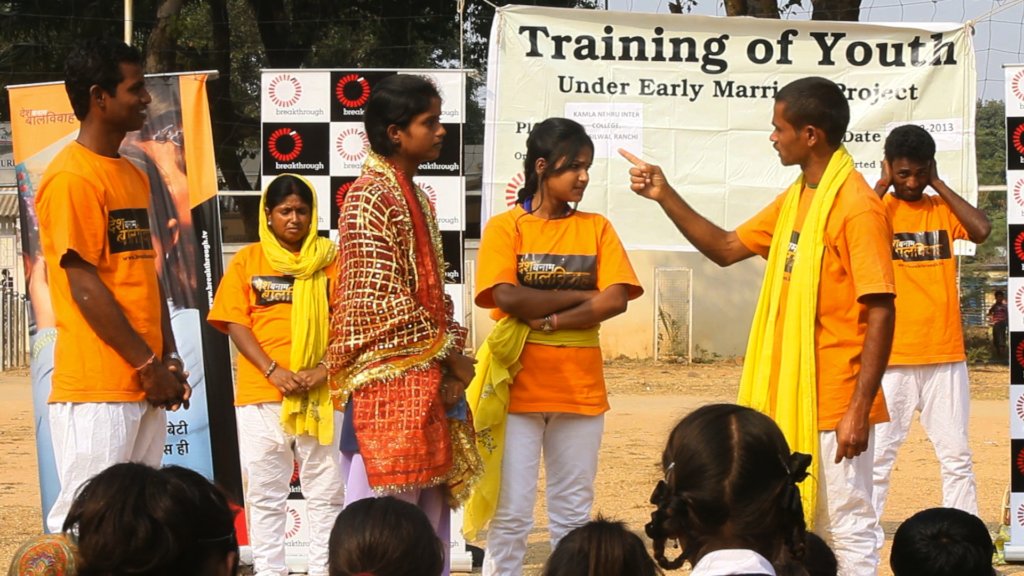
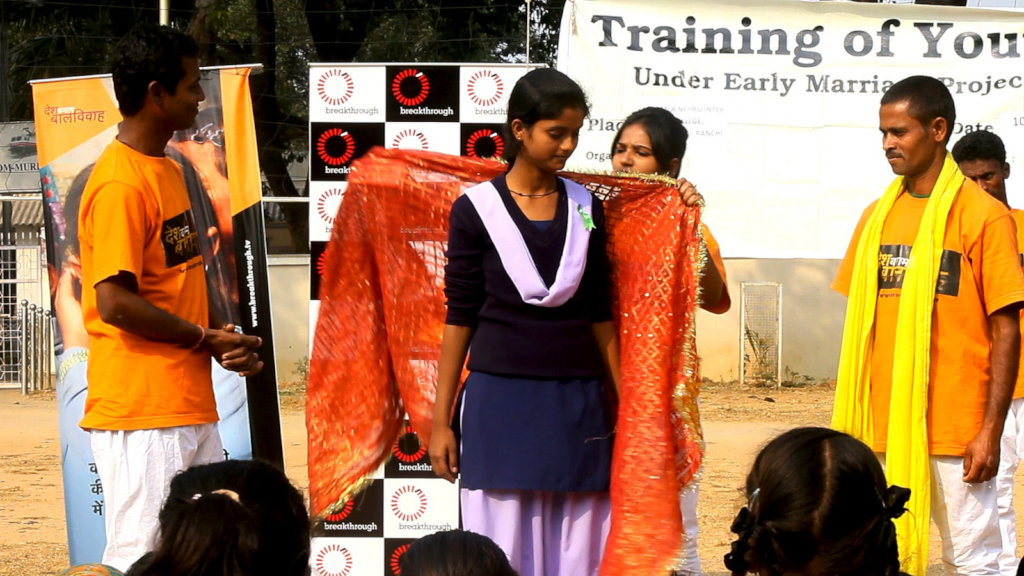
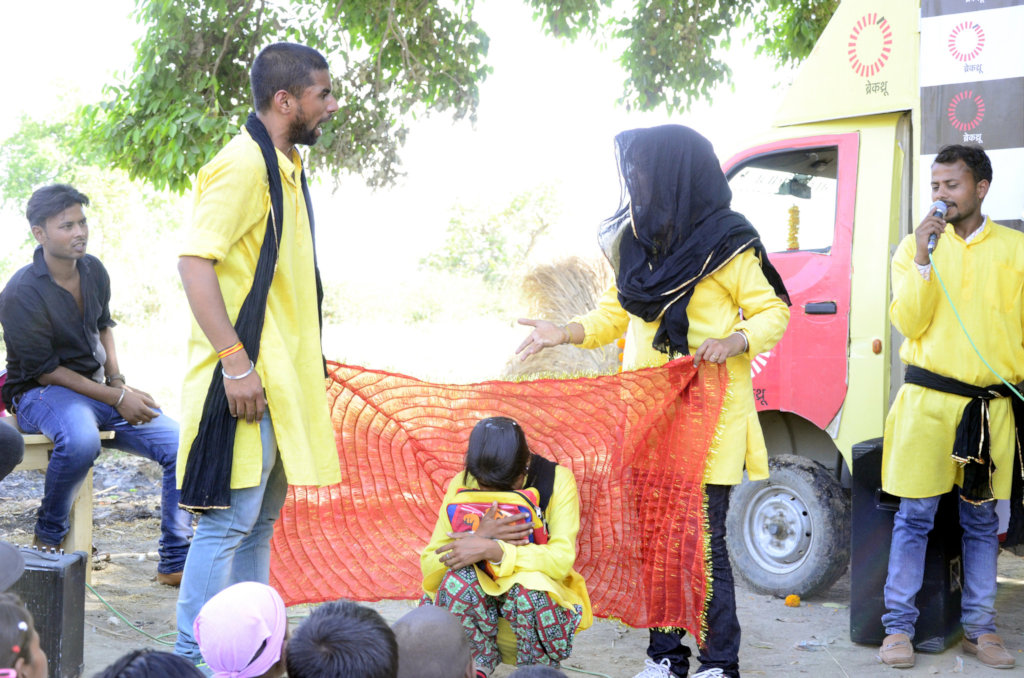
As you might be aware, Breakthrough’s Adolescents Empowerment Programme (AEP) is to cover 15 Gram Panchayats (GPs) in Hazaribagh district of the state of Jharkhand. The aim of this pilot initiative is to instil gender sensitive approach and attitude in young people at the age when their views are still malleable. The objective is to enable and empower youth with the skills of intergenerational and intergender dialogue, as well as leadership skills, so that they are able to participate in key decisions that impact their lives. In order to create an enabling environment for young people and to ensure that the girls are provided a safe, equitable and nurturing environment to thrive, Breakthrough works with different stakeholders in the system that includes parents, teachers, frontline health workers. We sensitise community members on gender issues like early marriage and discrimination, using popular culture and this also serves to reinforce adolescent learning.
As we were getting ready to commence the project on the ground, In the month of August 2020 after Nation-wide lockdown was withdrawn and following all COVID safety guidelines, the program team members were able to visit intervention GPs. This year we were supposed to work in 15 GPs (10 old and 5 new) but The team faced a few challenges in two of the existing GPs namely Mandaikala & Nayakhap and eventually had to identify two new GPs making it a total of 7 new GPs instead of 5 as originally planned. Since this would impact some of the planned activities, the implementing team had to modify and tweak those activities to respond to the emerging needs and field realities.
Key Activities and Highlights:
In spite of the unprecedented challenges brought on by COVID, so far the most successfully activities were:
Identification and Selection of New GPs:The selection of GPs was one of the critical aspects, as the team had to ensure that the project covers the proposed target numbers both in terms of beneficiaries and in terms of GPs. In the month of August 2020 after Nation-wide lockdown was withdrawn and following all COVID safety guidelines, the program team members were able to visit different GPs to brief community level stakeholders. However, to gather information from schools that were closed our district team collected phone numbers of respective teachers & principals from the PRI members, they were then able to collect school data and brief them about the project telephonically. The objective of this exercise was twofold i) to collect information about schools, students, number of older adolescents, AWCs and ii) to build rapport with school administrations, help them understand the objective of the program and finally to get their consent to conduct Taaron Ki Toli sessions with adolescents.
The outcome of this activity has been the selection of 7 new intervention GPs. We have also received assurance from school authorities that we can commence our activities once schools reopens in the meantime project interventions in the new communities have already started.
Creating content, Digitising and Conducting Digital Sessions:Since direct contact with students and communities was not possible, we decided to move to virtual platforms; it therefore became necessary to create relevant content, digitise it and to conduct both online & offline sessions. In order to execute this effectively it was important to keep in mind existing capabilities of both the staff and students as well as ability to access and understand digital technology. Therefore, the team took a step by step approach to:
i) Identified relevant information related to COVID and
ii) Added one new chapter (Saaf, Santulit, Swasthya) around cleanliness health and hygiene during on COVID with inputs from Community Developers CDs
iii) Digitised the content and curriculum
iv) Conducted online training sessions for field team to understand the TKT modules and to enable their facilitation skills to use online/digital platforms. The content created used audio-visual tools and storytelling methods. This has been very well received by all participants.
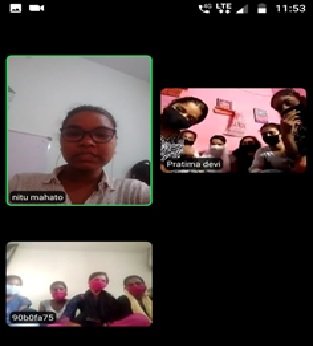
The outcome of this activity has helped in bringing a sense of ownership from the Community Developers(CD) because they gave the inputs on content, they have clarity on the purpose. Some have acquired a new skill of using digital tools while a few others have enhanced their capacities to successfully conducted sessions by using digital content. They are now familiar with Zoom tools and are able to make sessions participatory and relevant to ground realities.
Going forward the plan is to conduct a Pre and Post-test to assess the efficacy of knowledge transfer through digital means while conducting these sessions.
Working with Youths 19-25yrs (Team Change Leaders-TCLs):This is based on Breakthrough’s new five-year strategy of engaging youth in the 19-25 years’ age group. Members of this group will eventually become change agents after gaining knowledge of gender issues, ability to find solutions to change existing gender discriminatory norms and confidence to communicate and influence their own ecosystem. To identify team change leaders we conducted activities at two levels i) Selection ii) Training.
i) Selection: Potential Team Change Leaders were selected from the community based on their involvement in Breakthrough programmes, participation in TKT and interest in social change as well as recommendation from the CDs.
In Jharkhand 43 such potential candidates were chosen, these were further shortlisted to 28 based on telephonic interviews. As part of telephonic interviews, candidates were assessed on their interest in Breakthroughs work, ability to see discrimination, interest in social change, level of articulation, ability to volunteer time and ability to travel outside their villages. All the 28 shortlisted candidates underwent training by trainers from BT’s central team.
ii) Training: The three-day training covered topics on conceptual understanding of gender and discrimination, facilitation skills and Child Safeguarding Policy. For many participants this was the first time that they were attending a workshop of this kind. They felt a bit overwhelmed considering that they never had the opportunity or platform to discuss such topics. However, by the end of the third day of training they felt much more comfortable and were also able share their views because sessions were interactive and participatory.
The outcome of the training has been very encouraging because in such a short time span, the participants were able to identify forms of gender discrimination and its impact. In fact several women shared how their brothers went to private schools, while they were sent to government schools, that many were married off early, how some of the women managed to resist and defer their marriage, how some were able to continue their education and had a future career plan and how they had the support from their family. There were other women who shared personal stories of overcoming challenges and facing discrimination and violence in their lives. The last session was on Child Safeguarding policy which was conduct by a resource person from Child line and it was interesting to note that the women were willingly to discuss cases of violence and child sexual abuse that they know existed in their community. They now feel empowered because of the knowledge they have on how to access and report such cases to Child line, they said.
There is a felt need to have future workshops on clarifying myths and misconceptions around violence against women, abortion, and women’s rights.
Some of the other activities undertaken during this reporting period were:
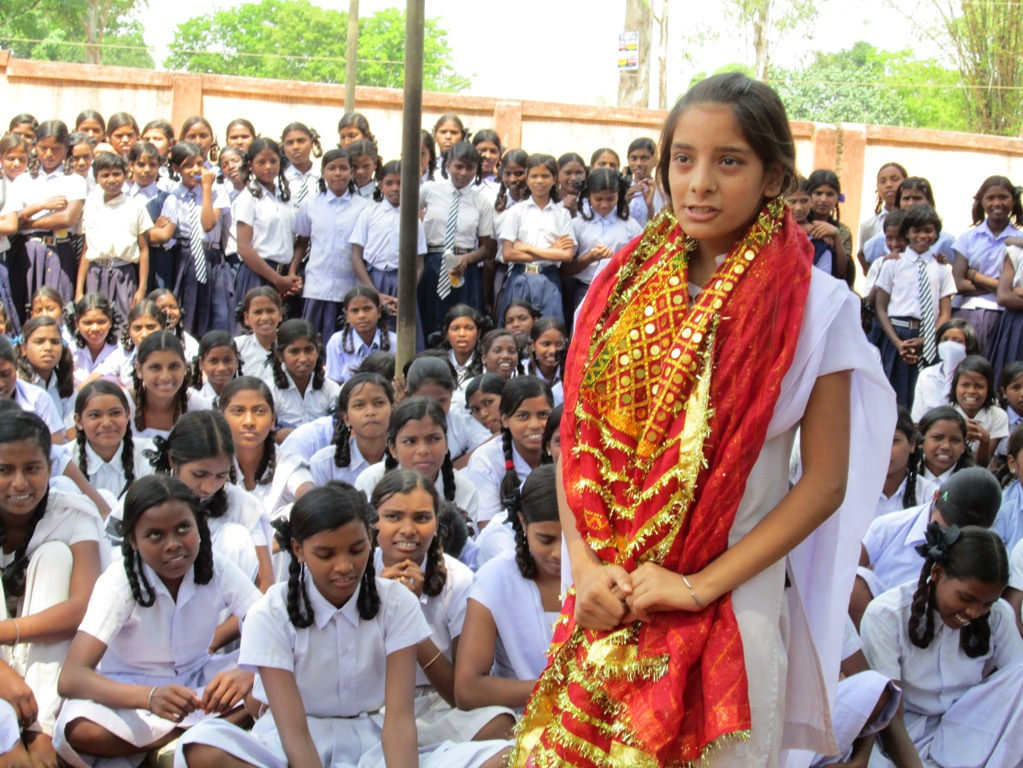
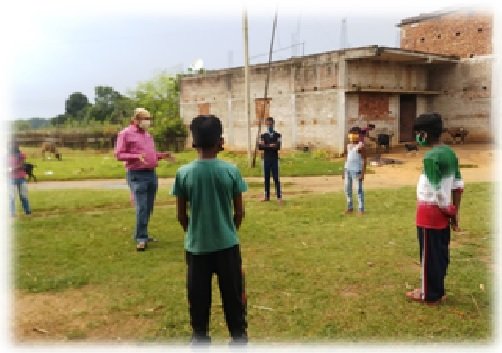
Working with younger adolescents’ girls (Ujjwal Tara; 11-14yrs): Following the COVID protocol the district team successfully conducted in person and online recap sessions of TKT with 563 younger adolescents GFF 2020-2022-India-2034 Progress Report Page 3 of 7 (361 girls and 202 boys from 8 old GPs. In September 2020, the district team initiated the new chapter (Saaf, Santulit, Swasthya) of digitized TKT module with 460 younger adolescents (301 girls & 159 boys) from 7 new GPs. Altogether we reached 1023 (563 + 460) in all 15 GPs through TKT sessions. The new chapter will help adolescents recognize the right to health including hygiene, and nutrition, right to food, equality to access and food, and health. This also gave us an opportunity to sensitize adolescents on COVID-19 and guidelines.
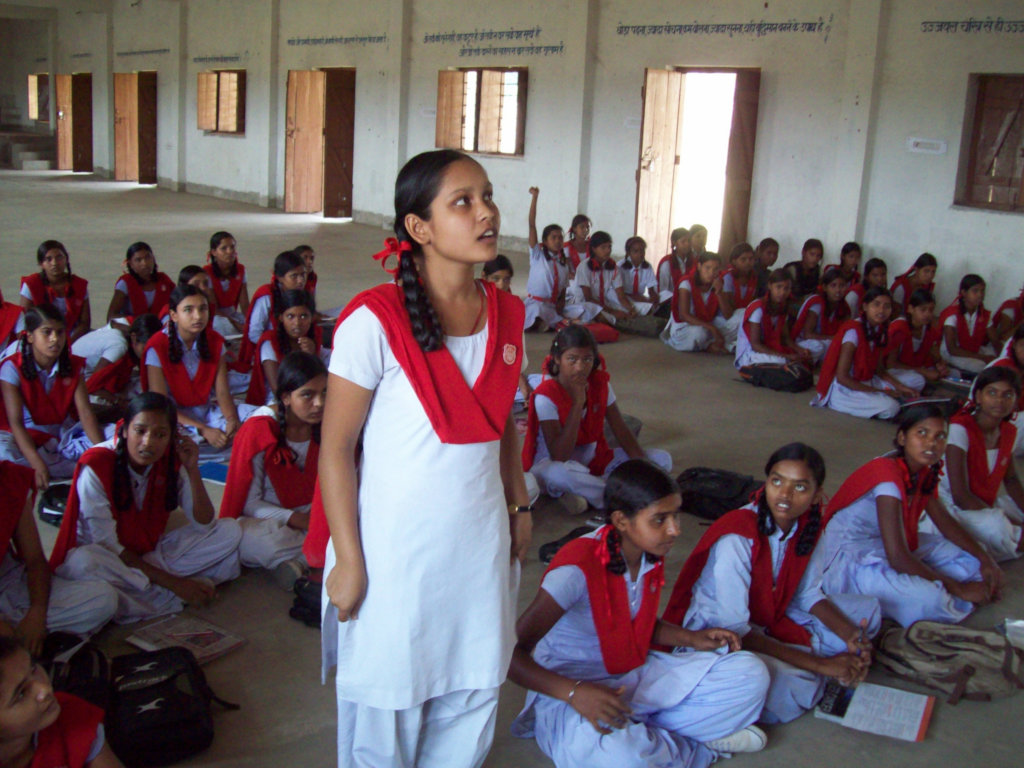
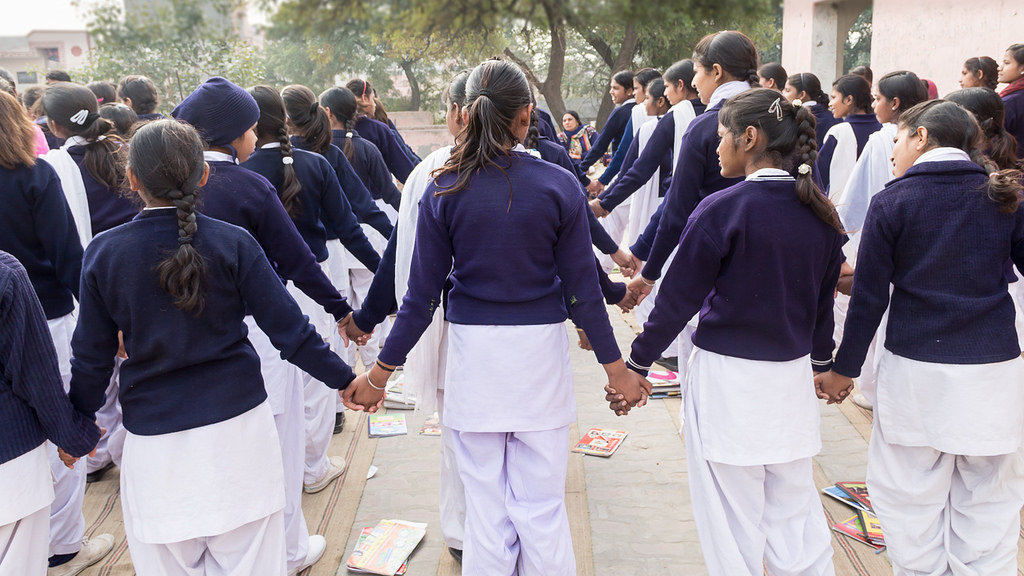
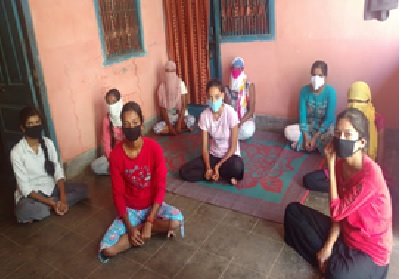
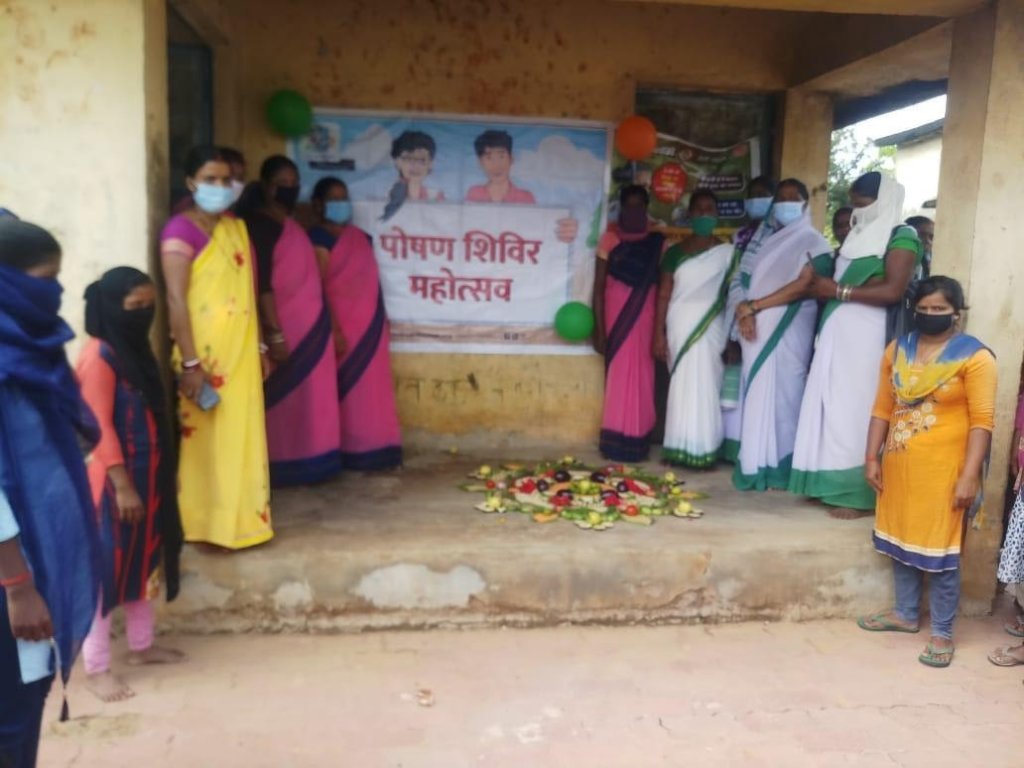
Working with older girls (Roshan Tara; 15-18yrs): The district team conducted recap sessions with 616 older adolescents’ girls from 8 Old GPs in September 2020 the district team initiated the new chapter (Saaf, Santulit, Swasthya) of digitized TKT module with 528 adolescents from 7 new GPs). Altogether we reached 1144 (616+528) older adolescents. In addition, members from Women and Child Development (WCD) and district team collaborated under its flagship program ‘Poshan Maah’ (Nutrition Month) to organize Poshan Shivir (Nutrition Fair) in 15 intervention Gram Panchayat (GPs) from 5 blocks between 22nd to 29th September 2020. These melas were conducted at the AWCs attended by 451 older adolescent girls (257 adolescents’ girls from Roshan Tara groups and 194 other adolescent girls from the GPs) following the COVID guidelines. It was exciting to see how the older adolescent girls from Roshan Tara groups came forward not only to take different responsibilities during the mela, invite their friends/peers from the local community but also took part in discussions during the nutrition mela.
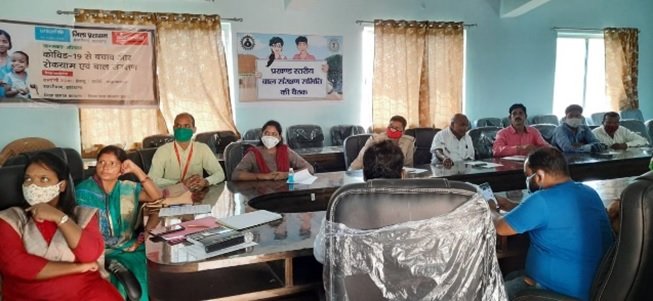
Activation and Strengthening of Block Level Child Protection Committees as part of widening the ecosystem and advocacy work: The objective was to activate and strengthen the child protection mechanism at block and community levels by building the capacity of committee members and parents. This year our focus is to activate Block Level Child Protection Committees (BLCPCs) and Village Level Child Protection Committees (VLCPCs) in all intervention areas. The role of these entities is to provide protection especially in case of early marriage, identify and ensure protection of vulnerable children as per the laid guidelines.
This all work is happening because of support of DONORS like you. In our fight against EARLY MARRIAGE, we need your support more than EVER!!
With Hope and Gratitude,
Aman Chhabra.
Project reports on GlobalGiving are posted directly to globalgiving.org by Project Leaders as they are completed, generally every 3-4 months. To protect the integrity of these documents, GlobalGiving does not alter them; therefore you may find some language or formatting issues.
If you donate to this project or have donated to this project, you can receive an email when this project posts a report. You can also subscribe for reports without donating.



Support this important cause by creating a personalized fundraising page.
Start a Fundraiser