By Nelly Mofokeng | Executive Director
Celebrating Growth, Enterprise & Opportunity!
1. Programme Overview
The Women in Entrepreneurship Programme – Class of 2026A was designed to equip women from Buffelshoek, Mpumalanga, with the confidence, practical skills and foundational business knowledge needed to explore entrepreneurship and develop income-generating enterprises.
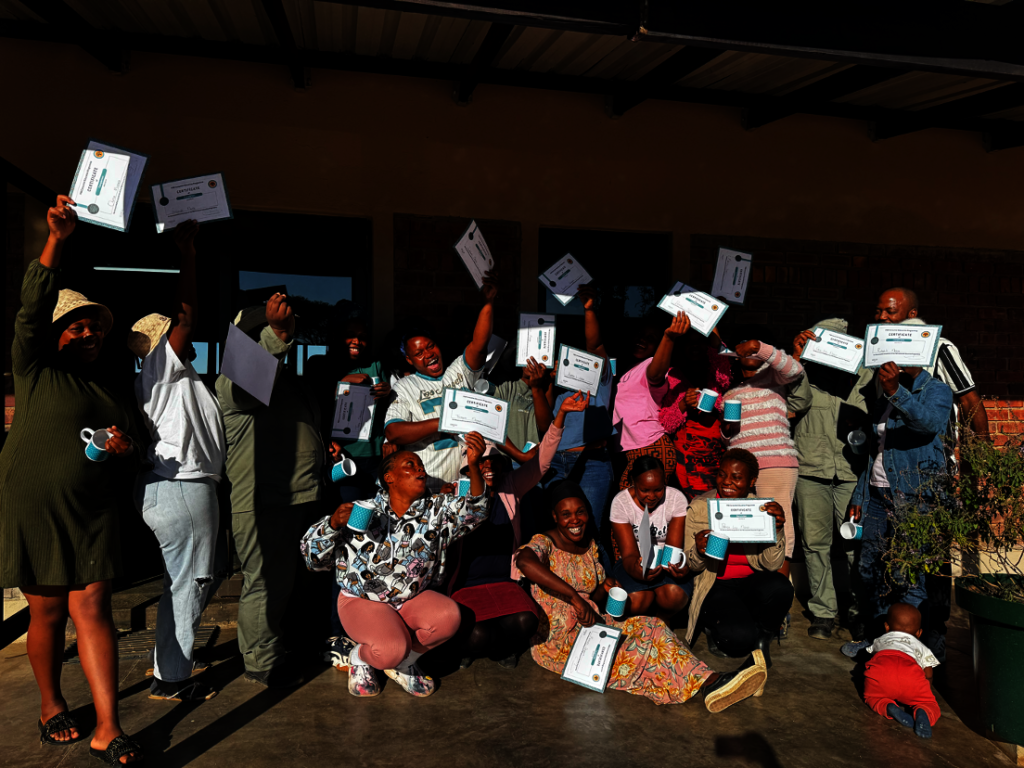
25 women enrolled in the programme, and 23 successfully completed the training and graduated on 26 August 2026.
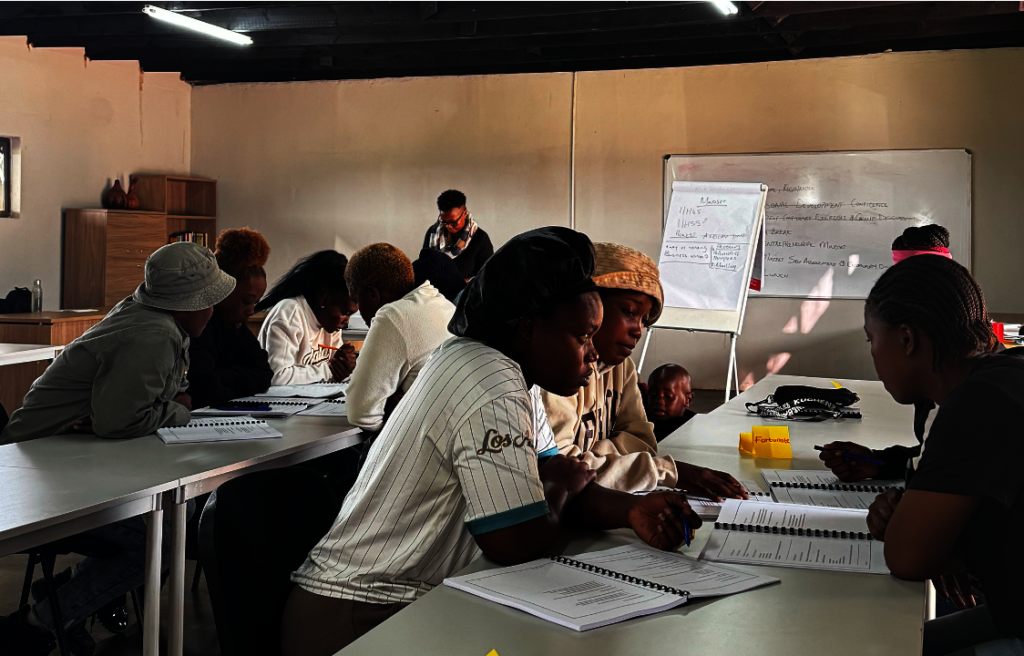
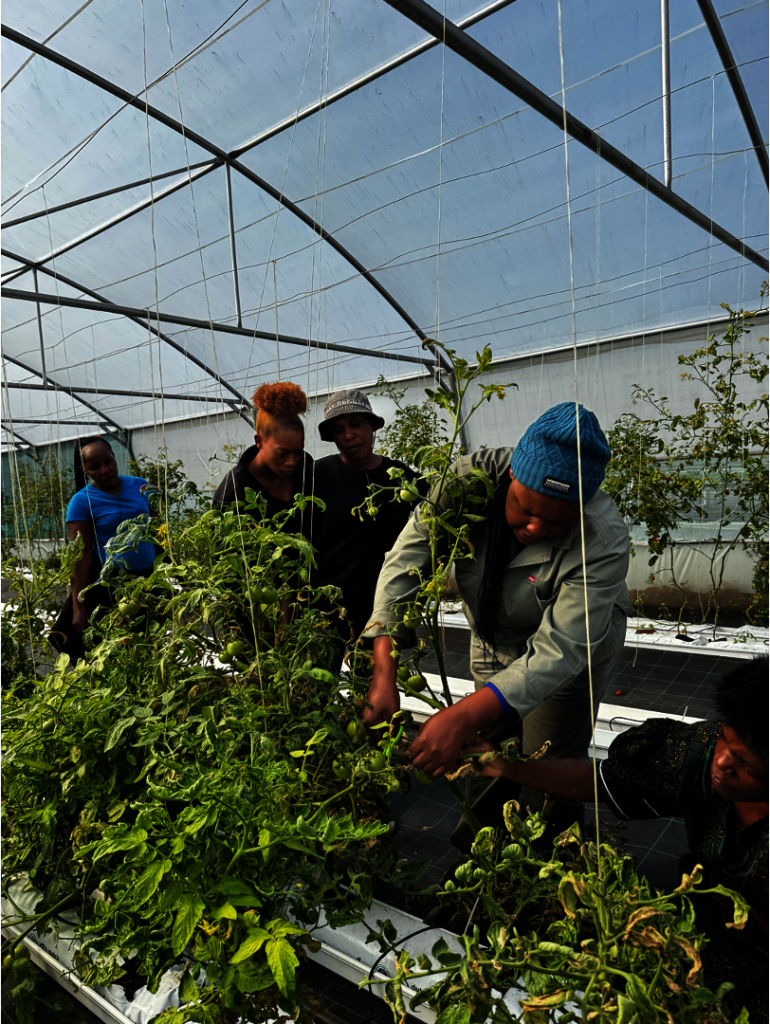
The programme combined personal development, practical agricultural and agro-processing skills, financial literacy, business management and enterprise development. A key principle was that entrepreneurship development should go beyond classroom training. The women were encouraged to learn, create, test, sell and improve products while still in training, giving them practical experience of what it means to build a business.
Following graduation, the three emerging cooperative businesses will continue to receive incubation and mentorship at the A Spring of Hope Community Eco-Hub until December 2026.
2. From Self-Discovery to Enterprise
The programme began on 25 May 2026 with a focus on personal discovery and confidence building. For many participants, this was an important first step in recognising their strengths and capabilities and beginning to see entrepreneurship as a possible pathway towards greater economic opportunity.
The first phase combined personal development with practical learning in:
While some of the women had previously been involved in small-scale buying and selling or had basic knowledge of farming, none had previously participated in a structured entrepreneurship training programme. The programme therefore provided participants with an opportunity to develop new knowledge and skills from a shared foundation, while learning through practical experience.
3. Building Financial and Business Knowledge
During the second week, the women participated in a personal finance workshop facilitated by FNB, providing an important foundation in financial awareness and personal money management.
This was followed by five days of basic business management training, introducing the participants to the fundamentals of starting and operating a small enterprise.
The training covered areas including:
4. From Training to Three Cooperative Businesses
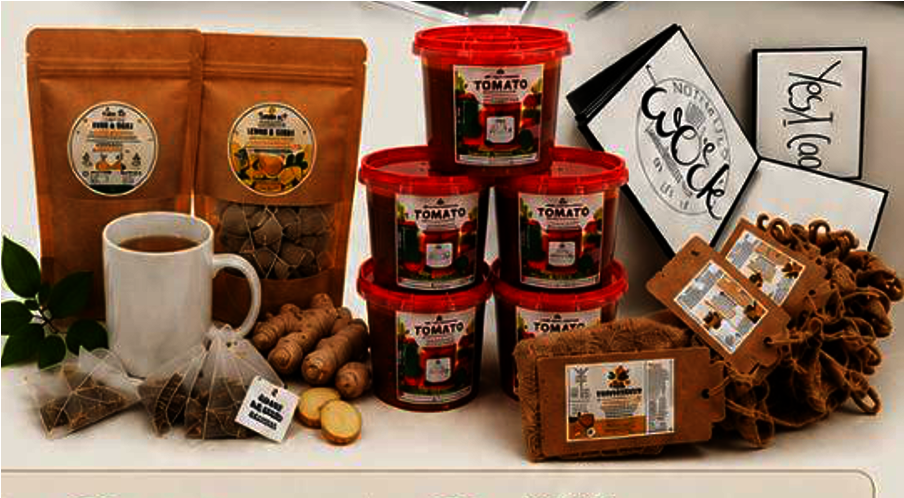
At the end of the business management phase, the women formed three cooperative businesses, each focused on developing products with market potential.
Cooperative
Product
Healthy Vibes
Herbal teas
Green Shine
Growing vegetables and producing tomato relish
Ubuntu Glow
Turmeric soap
The formation of these cooperatives represented an important transition from individual learning to collective enterprise development. The women were no longer simply learning about entrepreneurship. They were beginning to experience the realities of developing products, working collectively, understanding costs, building brands and taking products to market.
5. Agro-Processing: A Key Turning Point
One of the areas that generated the greatest excitement among the participants was agro-processing.
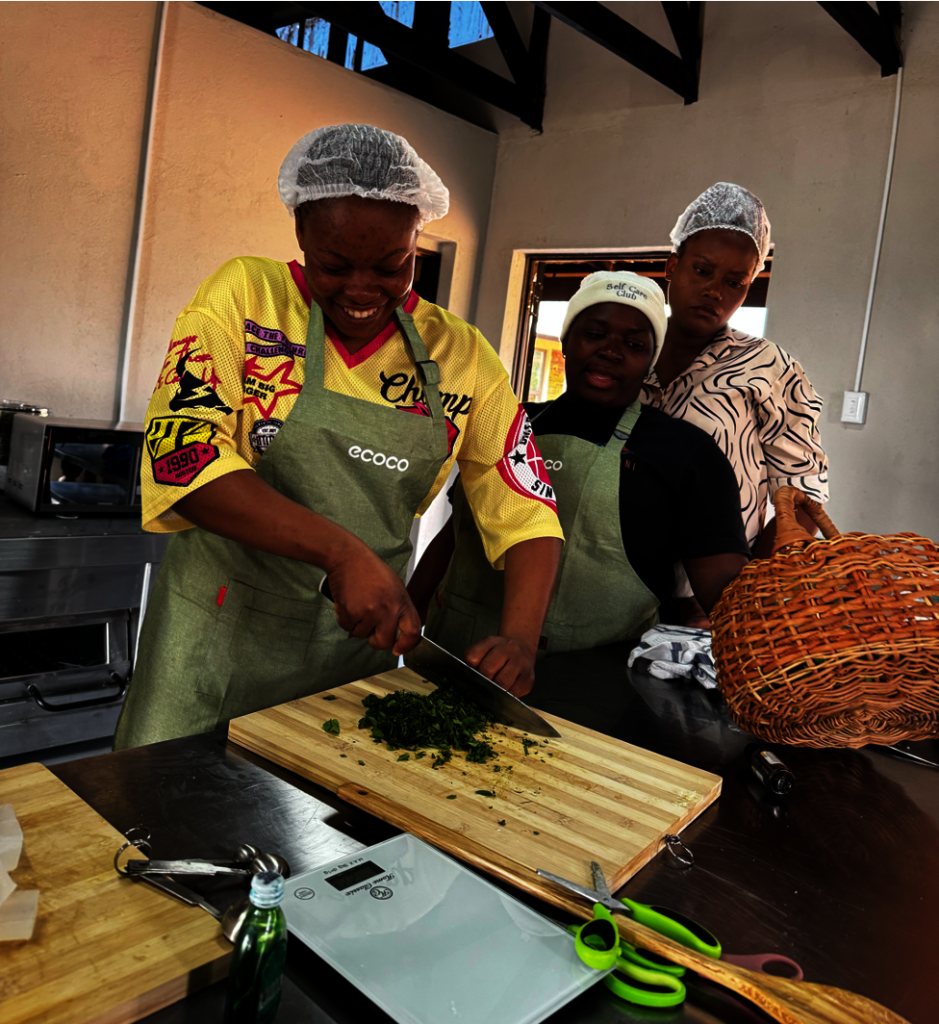
The women began to understand that agriculture could extend beyond growing and selling raw produce. Through value addition, agricultural products could be transformed into products with greater value and broader market opportunities.
“I can grow vegetables” became “I can turn what I grow into a product that I can sell.”
The practical agro-processing sessions helped make entrepreneurship tangible. Participants could see, touch and ultimately sell the results of their learning.
6. Developing Products for the Market
A strong emphasis throughout the mentoring process was placed on product costing, marketing and branding. The objective was to ensure that the women were not simply producing products for a training exercise, but were developing products that could ultimately be market-ready and commercially viable.
Mentoring focused on:
Although the vegetables planted by the women were not yet ready for harvesting during the first production cycle, the cooperatives purchased the necessary raw materials to enable them to begin production. This allowed the women to test their products, establish production processes and enter the market while still in training, rather than waiting until their own crops were ready.
7. Early Enterprise Results
The women exceeded expectations in their first month of production. Each of the three cooperative businesses sold at least 50 products during its first month. This means that the businesses collectively achieved at least 150 product sales in their first month.
The women began to experience:
Their strongest sales were achieved on graduation day, 26 August 2026, when the three businesses exhibited and sold their products to guests attending the graduation ceremony.
For the women, this was a powerful moment: they graduated not only with certificates, but with products they had developed, businesses they had established and customers willing to buy what they had produced.
8. Participant Voices
“I have tried different business ideas but never got far on my own. Through this programme, I have learned to work with other women who are bringing different skills and energy. I know we are going far.”
— Karabo Mahlakoane
Karabo's experience reflects the importance of collective enterprise and collaboration. The cooperative model has enabled women to bring together different skills, experiences and strengths while working towards a shared business goal.
“I thought this was just another training programme, but now I see myself as an entrepreneur. I have become more curious and I am confident that our herbal tea will take us places.”
— Thateho Seerane
Thateho's reflection captures an important transformation: the movement from being a participant in a training programme to seeing oneself as an entrepreneur with a product, a business and a future.
9. Key Achievements
Indicator
Achievement
Women enrolled
25
Women graduated
23
Programme completion rate
92%
Cooperative businesses established
3
Products developed
Herbal tea, turmeric soap & tomato relish
Minimum first-month sales
50+ products per cooperative
Minimum combined first-month sales
150+ products
Personal finance workshop
1, facilitated by FNB
Continued incubation and mentorship
September–December 2026
Women selected for leadership camp
8
10. Graduation: A Milestone, Not an End
The graduation ceremony on 26 August 2026 marked an important milestone in the women's entrepreneurial journey.
The three cooperatives exhibited their products, giving the women an opportunity to engage directly with guests, market their products and generate sales.
The graduation therefore represented more than the completion of a training programme. It celebrated the women's transition from learners to emerging entrepreneurs and provided an opportunity to showcase what can happen when women are given access to practical skills, facilities, mentorship and an opportunity to test their ideas in a real market environment.
11. Continued Incubation and Mentorship
Graduation marks the beginning of the next phase. Until the end of December 2026, the three businesses will continue to be incubated and mentored at the A Spring of Hope Community Eco-Hub.
The next phase will focus on helping the women move from early-stage production towards stronger and more sustainable enterprises.
Support will include:
The incubation model allows the women to continue learning through doing, testing, selling, adapting and improving.
12. Developing Women Leaders
The programme also recognises that entrepreneurship development and leadership development are closely connected.
Eight top-performing women from the 2026A cohort will attend a leadership camp in November 2026.
The camp will provide an opportunity to deepen their leadership, teamwork, decision-making and community leadership capabilities. These women have the potential to become role models within their communities and future mentors to other women entering the programme, helping extend the impact beyond the current cohort.
13. What Has Changed?
The most significant outcome of the programme has been the movement from potential to practical enterprise.
Confidence: Greater belief in their ability to learn, contribute and build something of their own.
Practical skills: Experience in farming, agro-processing, product development, branding and labelling.
Business knowledge: An understanding of costing, pricing, marketing and basic business management.
Collective enterprise experience: Three cooperative businesses have been established, enabling women to combine skills and resources.
Market experience: All three businesses have produced and sold products within their first month.
A pathway for continued growth: The women now have access to ongoing incubation and mentorship at the Eco-Hub.
The early sales demonstrate that the women are already beginning to translate their learning into economic activity. The next challenge is to help them turn these promising beginnings into consistent production, stronger markets and sustainable enterprises.
14. Looking Ahead
The experience of the 2026A cohort has reinforced A Spring of Hope's belief that effective entrepreneurship development requires more than a short training course.
Women need knowledge, confidence, practical facilities, mentorship, access to markets and time to develop their businesses. The Community Eco-Hub provides a space where these elements can come together.
The 23 women who graduated have taken the first step. They now have an opportunity to continue developing their enterprises with support, mentorship and access to the Eco-Hub.
Our ambition is to build on this model and reach more women across Mpumalanga, creating pathways for women to develop skills, establish enterprises and participate more meaningfully in the local economy.
23 women have taken the first step. Imagine what we can achieve with hundreds more.
With continued investment and partnerships, we can create this opportunity for many more women — moving beyond training to enterprise development, leadership and sustainable economic opportunity.
15. Acknowledgement
A Spring of Hope would like to thank the partners, facilitators, mentors and supporters who contributed to the success of the Women in Entrepreneurship Programme – Class of 2026A.
We particularly acknowledge the sponsor Itirele Foundation Charitable Trust for funding the full programme. FNB for facilitating the personal finance workshop and contributing to the women's broader financial capability.
We look forward to continuing to support this cohort through the remainder of 2026 and to building partnerships that will allow us to extend the programme to many more women and communities across Mpumalanga.
Celebrating Growth, Enterprise & Opportunity.
Project reports on GlobalGiving are posted directly to globalgiving.org by Project Leaders as they are completed, generally every 3-4 months. To protect the integrity of these documents, GlobalGiving does not alter them; therefore you may find some language or formatting issues.
If you donate to this project or have donated to this project, you can receive an email when this project posts a report. You can also subscribe for reports without donating.



Support this important cause by creating a personalized fundraising page.
Start a Fundraiser