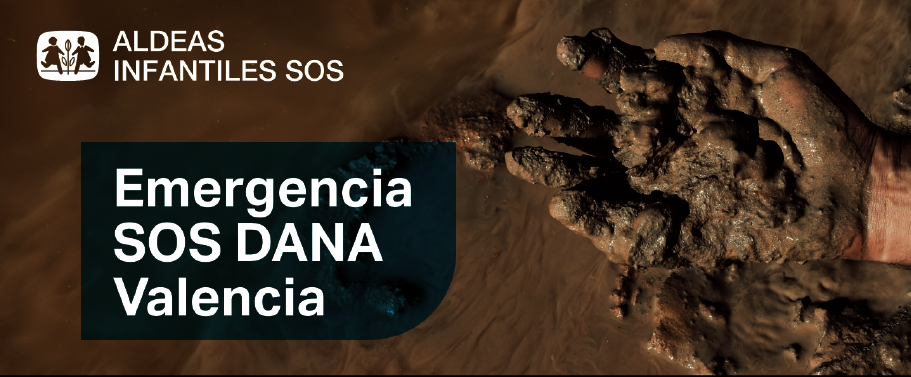
More than a year after the DANA, Aldeas Infantiles SOS continues to support the affected families through the longest and quietest process: recovery. This catastrophe devastated entire towns, destroyed homes, displaced families, and left many children facing an extremely complex reality.
When media attention fades and urgency disappears from the headlines, the longest and quietest phase of any emergency begins: recovery. A stage that is especially hard at times like these, when the lack of a home, the loss of loved ones, or emotional instability weigh even more heavily.
At Aldeas Infantiles SOS, we remain there. Through the SOS DANA Valencia Project – Phase 2, we support families in their emotional and social recovery process, strengthening child protection and supporting those who need it most. Our local presence and networked work with social services and authorities allow us to stay close, listen, and act—even when the emergency is no longer in the spotlight.
It is important to remember that these families cannot and must not be forgotten. That is why we spoke with Julia, Director of Aldeas Infantiles SOS programs in Valencia, about what was experienced and, above all, the importance of continuing to support the affected families.
How do you remember those first days after the DANA?
It was a shock. We didn’t understand what was happening or grasp the magnitude of the catastrophe, and yet we were devastated by everything that had occurred. Many of us had family members and friends in the affected areas, and spending the whole night unable to communicate with them—and the following weeks when they couldn’t leave their homes—was distressing.
It was very difficult to cope with the harshness of the situation, especially seeing the affected towns and being there helping our own people as well as people we didn’t know. Despite everything, an overwhelming wave of solidarity emerged, which we remember with great emotion.
As professionals, how did you experience that initial impact?
We knew we had to be there helping in some way, but the level of emergency exceeded our capacity for an immediate response. We needed several months to carry out thorough fieldwork: identifying needs, analyzing affected areas, and recruiting qualified staff—all in order to provide an appropriate, responsible, and sustainable intervention over time.
How did Aldeas Infantiles SOS respond to the disaster in the initial moments?
From the very beginning, Aldeas Infantiles SOS took part in coordination meetings with public authorities and other organizations. One to two months after the DANA, we began fieldwork in the affected areas, assessing where and how we could intervene, always aligned with our mission, vision, and values. In this way, we prepared for the subsequent phases: recovery and stabilization.
Currently, the work is focused on direct intervention with families affected by the DANA, both directly and indirectly.
What were the main needs you identified among the affected families?
The most urgent needs were related to housing conditions: destroyed homes, families forced to relocate to other municipalities, or people confined without basic supplies such as electricity or water. We also identified a severe lack of essential resources—hygiene, health, and food—due to the disappearance of shops, roads, and access routes.
And, of course, there was an enormous need for emotional support. Although the initial state of shock led many people to react quickly, there was deep sadness, anger, confusion, and pain. Many families lost loved ones, homes, and life projects in a very short time.
How did the DANA affect the most vulnerable children?
Pre-existing situations of vulnerability were clearly exacerbated: housing problems, forced displacement, lack of basic resources… Added to this was the destruction of schools, health centers, shops, and community spaces essential for their development and well-being.
What type of psychological support have you provided during this year?
We have provided psychological support sessions based on active listening, emotional support, and accompaniment through grief processes or whatever life stage each family was experiencing.
When a need for more specialized clinical therapy was identified, we referred families to local health and social services.
Is there any story or moment that particularly stayed with you?
What leaves the deepest mark is the sheer magnitude of the situation and the impact of witnessing everything firsthand. Being there, personally accompanying those who needed it most, is something you never forget.
Every story, every look, and every gesture of gratitude stays with you. But above all, the solidarity and unity of the community are deeply moving—despite pain and uncertainty, people came together to support one another and show that empathy and hope are stronger than any adversity.
What lessons have you learned from working so closely with these families?
Working closely with these families has been a profoundly enriching experience. I have learned from them the true meaning of resilience: the ability to overcome difficulties, to reinvent oneself in the face of challenges, and to keep hope alive even in the most complex moments, thanks to their strength and sense of community.
What has collaboration with social services and local authorities been like?
From the very beginning of the needs assessment process, we sought to work hand in hand with public authorities, contacting local councils in the affected municipalities and coordinating with departments of education and social services.
Collaboration with other organizations has been constant and smooth, creating a strong network that facilitated the launch of interventions and, above all, access to and direct support for the most affected families. Thanks to this networked work, we have been able to create a solid foundation for implementing a new family-strengthening program in Valencia: PONTS.
What challenges remain today, more than a year after the DANA?
There are still many. First, the reconstruction of homes, infrastructure, and community spaces, many of which continue to show significant damage.
Second, addressing the social and emotional consequences left by the catastrophe. Recovery is not only material—it involves accompanying people, strengthening the community fabric, and providing ongoing psychological support.
What would you like society to understand about long-term support in an emergency like this?
That collaboration between organizations and between people is essential. That unity makes strength. And that supporting a long-term emergency requires proper preparation, prior field studies, qualified and cohesive teams, alliances with public authorities, and, above all, truly connecting with the families we support.
Being there when it’s needed most
At Aldeas Infantiles SOS, we know that recovery does not follow short timelines. That is why we remain present in the affected areas of the Valencian Community, supporting families, strengthening their emotional well-being, supporting parenting, and protecting the most vulnerable children.
To forget a catastrophe is to leave alone those who are still living through it. And because every boy and every girl deserves to grow up in a safe environment—even after the storm.
![Share on Twitter]()
![Share on Facebook]()