By Grace Chebet | Monitoring Learning and Evaluation Assistant
Kenya
Climate Smart Agriculture: Increasing Productivity While Tackling Climate Change
Educating EADD II farmers on adopting Climate Smart Agriculture initiatives is one of the projects’ objectives in ensuring that farmers increase productivity as they adapt to the negative challenges of climate change. Smallholder farmers are particularly vulnerable to these changes such as erratic weather patterns, increased water shortages, shorter growing seasons, and changes in plant and animals diseases and agricultural pests. As a result of these challenges, water availability and soil quality decline. The knowledge and skills imparted by EADD II staff protect farmers against these changes.
Charles, a farmer from Kipsabuge village in Kaptumo Location, Nandi County is one farmer who has taken up initiatives to practice climate smart agriculture. After interacting with EADD staff during one of the many field days held in the area regularly, Charles has adopted reduction of greenhouse gas emissions initiatives and planting of drought resistant fodder as well as tree conservation in his farm.
Through the EADD Project, Charles was given drought resistant fodder seeds; Calliandra, Tricandria, Boma Rhodes and lucerne to plant for his cows. Besides, the farmer has also planted Napier grass and natural grass. Apart from Calliandra being rich in protein, it’s also a leguminous plant that helps to convert nitrogen into soil nitrates.
He was then given two silage tubes by ICRAF and was shown how to make silage. He got a chopper that he uses to cut fodder and maize stalks in small pieces, and then ferments it for twenty one days and uses it to feed his cows.He has also started a tree seedling nursery with a species of Gravellier Robusta and sells the trees.To supplement energy in his farm as well as manage manure, partly produced by his five cows and one bull, Charles hastaken up biogas production. A biogas unit was built on his farm with the help of ICRAF so that he could stop cutting trees for charcoal and maintain a clean environment.
Biogas is produced by bacteria during digestion or fermentation of organic matter under airless condition (anaerobic process). The gas consists mainly of carbon dioxide and methane (generated from cow dung) which destroys the ozone layer. This mixture of gases is combustible if the methane content is more than 50%. Biogas from animal dung contains approximately 60% methane. When methane is burnt, oxygen and water vapor is emitted hence reducing greenhouse effect.
According to Charles, the biogas unit has supported self-reliance, optimizes farm economy and fits in concepts of sustainable development – a key aspect of Heifer’s value based development. For example, the slurry which is the waste flowing out of the biogas unit is used by the farmer as fertilizer and the fodder grass plantation creates sustainability by protecting the soil against erosion.
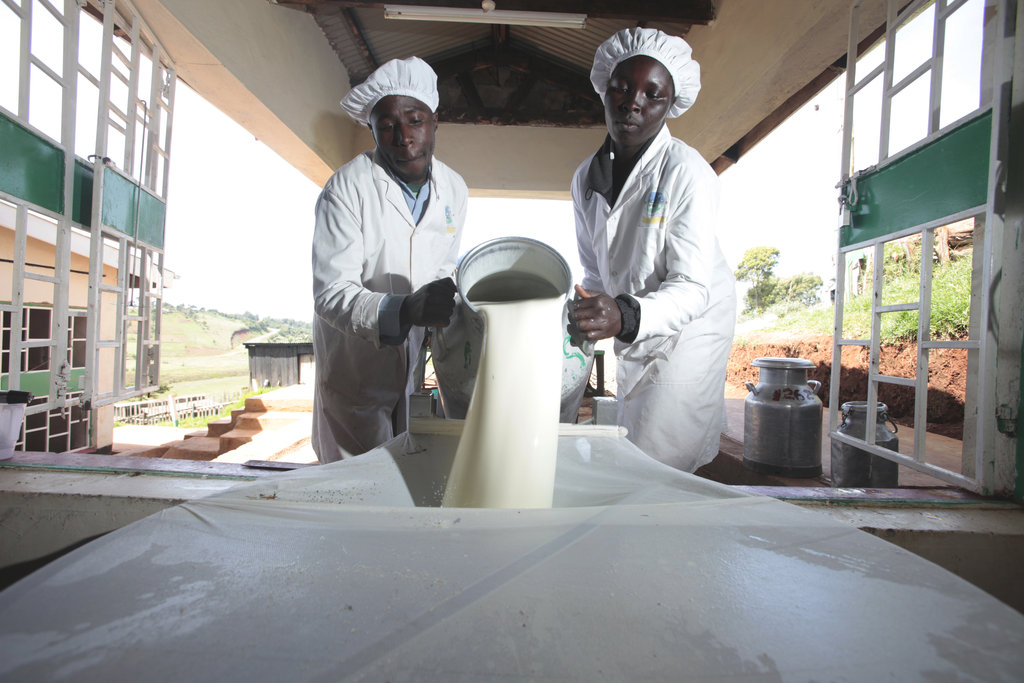
Before EADD came into the picture, Charles admits to being vulnerable to climate change. He was not keen on climate patterns, and he bought animal feed expensively and did not think outside the box on how to combat this problem. Charles would purchase 26 kilograms of gas cylinders and 1 bag of charcoal for his household to use every month. He would cut down trees to burn charcoal and use some as firewood hence contributing to the emission of carbon gas into the air. Now, after being trained on smart agriculture and provided fodder seeds, he has cut down costs on commercial feeds and has increased production to up to 15 liters per cow. The gas plant provides comfort and saves expenditure by supplying clean cooking and lighting fuel.
Charles has also bought a 5000 litre water tank and created troughs around the house roof to harvest water. Water harvesting helps to controls run off and soil erosion.
Towards sustainability of smart agriculture, Charles has formed a farmer group with his neighbors where he is the trainer, his farm is used as the demonstration farm. He encourages the adoption of smart agriculture technologies because most farmers in Kaptumo area have cows and they can use this to generate biogas and avoid cutting trees for firewood leading to a clean environment.
On climate smart livestock a system, Charles has built a dairy unit for is cows; he has also opted for the improved cattle breeds through the use of artificial insemination. "When you have good animals, the market selling price of the animal increases and the cow becomes an asset," said Charles.
Charles who is married with three children and five other dependents, hopes to increase his production by increasing the number of pedigree cattle. Other minor activities undertaken by the family are sheep, poultry and rabbit rearing.
Project reports on GlobalGiving are posted directly to globalgiving.org by Project Leaders as they are completed, generally every 3-4 months. To protect the integrity of these documents, GlobalGiving does not alter them; therefore you may find some language or formatting issues.
If you donate to this project or have donated to this project, you can receive an email when this project posts a report. You can also subscribe for reports without donating.