The East Africa Dairy Development (EADD) program is designed to boost the milk yields and incomes of small-scale farmers in Kenya, Uganda and Tanzania so they can lift their communities out of hunger and poverty. The second phase of EADD will work with more than 200,000 farmers to improve dairy production and access to markets over the next four years.
In East Africa, the traditional dairy market consisted primarily of smallholder farmers with low-producing cows. At best, farmers operated in disorganized groups, pooling their milk to sell in informal markets. These communities were considered too poor for investment by financial services, and less than 10% of farmers had bank accounts or input credit. This made it difficult at best for dairy farmers to make any more than just a subsistence living.
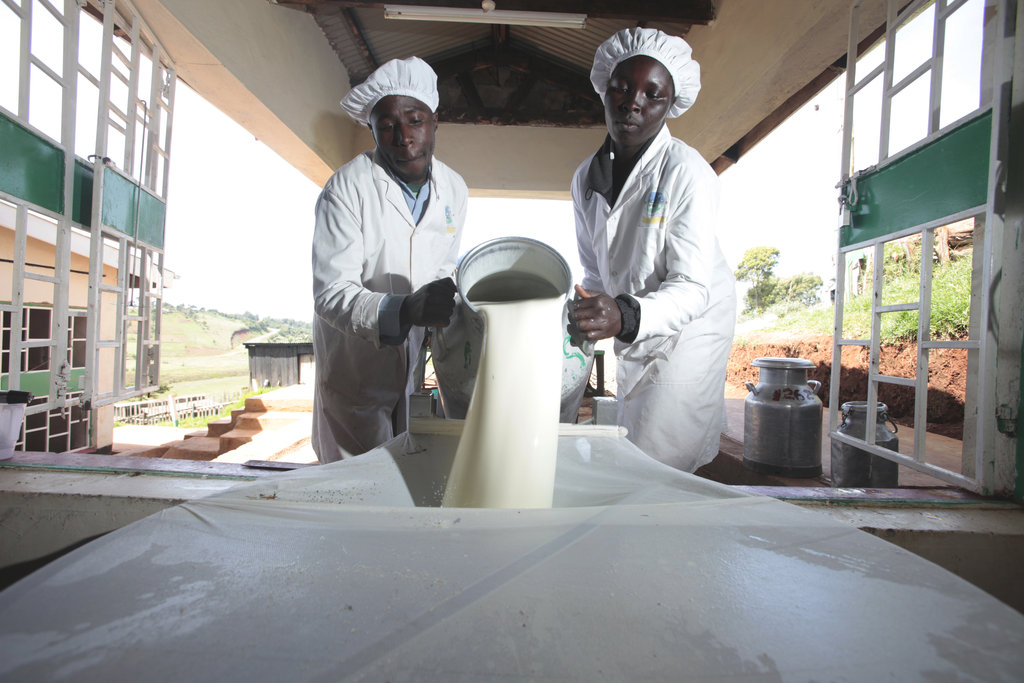
EADD has provided extensive training on dairy husbandry, business practices and operation, and marketing of dairy products to the 179,000 farming families in the program. Heifer and its partners also developed 27 milk collection hubs, strengthened 10 existing hubs, and formed 68 farmer business associations to manage the plants. The vision for EADD II is to provide an additional 136,000 smallholder farm families the opportunities to create financial independence and social equality.
Farmers: EADD will increase dairy production and improve net income for farmers. Hubs: all EADD hubs will increase performance and eventually be self-sustaining. Gender Equality: Heifer and its partners work to build awareness and capacity so women can take on active leadership roles, jump-start business opportunities and increase their household savings. Replication: hub approach will be adopted by at least one other country and included in relevant national policy.
This project has provided additional documentation in a PDF file (projdoc.pdf).