Citizen Helpdesk

by Accountability Lab Nepal
Citizen Helpdesk

Project Report | Jan 17, 2017
people Powered Accountability After Earthquake

By Kalpana Acharya-Coordinator, Samita Thapa | Resident for Learnings

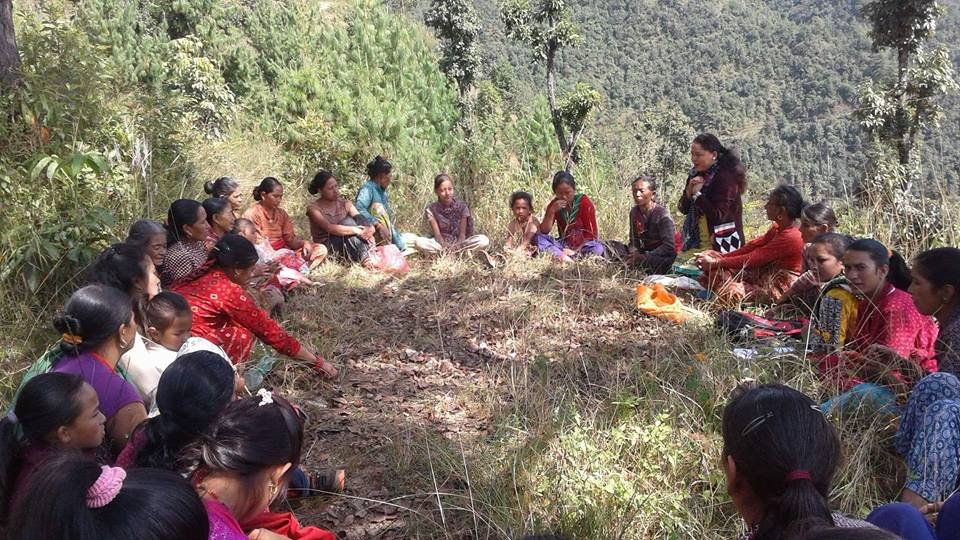
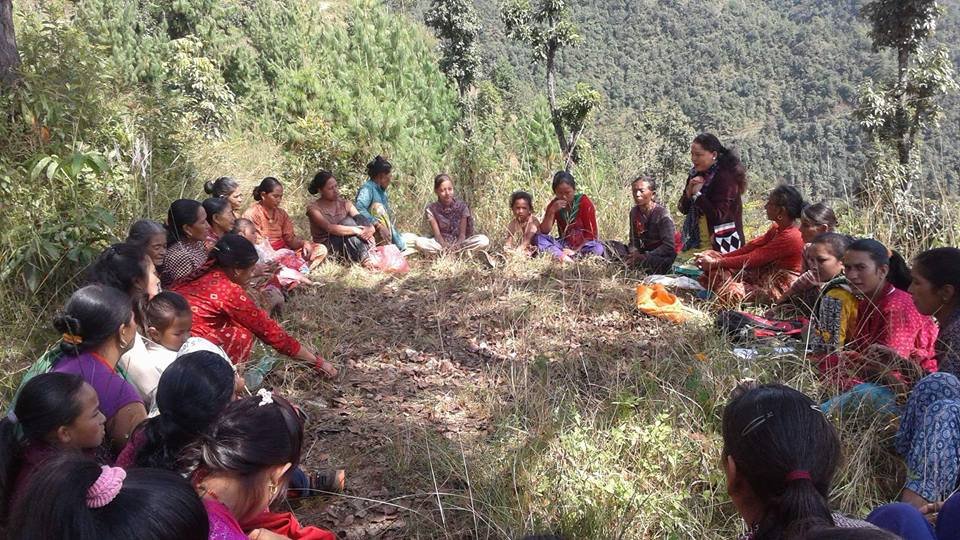
Women in village Discuss their Issues with CFA

Initiatives to close the feedback loop and ensure people powered accountability in Nepal

What is going well:

  • Recognition and trust from the community: The community members have given us positive feedback expressing their appreciation for an organization that is dedicated to listening to their feedback, conveying that feedback to the related stakeholders, and broadcasting it to the larger community through radio programs.
  • We have been able to bring out the stories of people’s concerns regarding the reconstruction process on the following:
  • The earthquake has had the greatest consequences on the lives of vulnerable communities - including adolescent girls, women, Dalit community, and those who do not have enough money to start rebuilding their homes.
  • People have started to find alternative ways to make a living after the earthquake, by starting home-based businesses weaving baskets or harvesting and selling vegetables.
  • Women are actively involved in the building of houses, as most of the young and able men have left the country to work as labor migrants abroad.
  • After raising awareness, people understand the importance of making earthquake-resistant houses and understand that there are different models of houses they can build.
  • People are still concerned that their names have not appeared on government lists and they have not heard back after filling out grievance forms.
  • Strong relations with Government Authorities: We have direct contact with the communications person at the National Reconstruction Authority, and after receiving their press releases via email, we then communicate the information to the Community Frontline Associates (CFAs). Through our community meetings and radio programs we have engaged a large number of local-level government authorities.
  • Organizations working on the ground in those Village Development Committees (VDCs) are able to share their progress and updates through our community meetings and radio programs.

What we’ve achieved:

  • Access for Remote Communities: 7 radio stations have aired 10 program so far about our community meetings and earthquake reconstruction updates. We estimate that about 10,000 people have directly benefited from our radio programs. The radio has become one of the best platform to disseminate information for people living in inaccessible areas.
  • Grassroot Mobilization: Through the helpdesks we have been able to mobilize action in 22 VDCs in 4 districts, covering a population of about 100,000 people who were affected by earthquake. All of our CFAs are locally-recruited journalists who understand the local dynamics very well.
  • Strong Community Engagement: Through the helpdesks’ community meetings, 1,044 people have had the chance to learn about and discuss issues related to housing reconstruction, livelihoods, water and sanitation, education, adapting during the winter, and health.
  • Trust and credibility: We are mobilizing local volunteers, who are also earthquake victims themselves, on daily basis to interact with citizen directly and listen to their issues and problems. They have gained credibility as they connected them to the responsible authorities, NGOs and other network to close the feedback loop and ensure that their concerns are resolved. So far we have reached 2,500 people through these individual interactions.
  • Mechanism for Citizen to Speak Up: The helpdesks have played a key role in creating communication channels between citizens and the relevant stakeholders, such as National Reconstruction Authority (NRA) representatives, authorities at health posts, engineers, Chief Districts Officers, Village Secretaries, women from mothers groups, and youth clubs members. It has also created an opportunity for many NGOs and INGOS (including the Red Cross, UNDP, JICA, etc) to receive reliable information on citizens’ needs and concerns - which helps them develop more citizen-centered and effective strategies.

Challenges we’ve faced:

  • Some communities are resistant to our community meetings, as they see no point in giving feedback if we don’t promise to solve the problems they share. Given the slow pace of the reconstruction process, these feelings are completely valid. We faced this resistance in Kharanitar, in Nuwakot, and we took the time to explain to them that we are trying to serve as a bridge to those stakeholders in the community, and that we will take their feedback and concerns to the broader community through the radio programs as well. After this, they were appreciative of our efforts as the only organization actively asking the community for feedback.
  • Sometimes local government officials don’t attend our community meetings, making it difficult for us to bring together all the concerned stakeholders to hear the community’s feedback. When our CFA held a community meeting with the Dalit community (one of the vulnerable communities) in Dhading, no public officials showed up.
  • Women still aren’t very vocal about their concerns in a public setting. We are now trying to deliberately have women-only meetings, or community meetings focused on women issues, to ensure women’s voices are heard.
  • While some of our CFAs are hard working and responsive, other are not as responsive, and thus it has sometime been difficult to manage them remotely from Kathmandu. We are planning to bring them all together soon in Kathmandu to reinforce their roles and responsibilities and clarify any questions they may have. They also tend to expect the headquarters staff to attend each community meeting, which we are unable to do regularly in each district, so we also need to revise expectations during this meeting.
  • Given that it has already been more than a year since the earthquakes, the community members aren’t always interested in talking more about reconstruction, so sometimes it is difficult to get enough people to attend the community meetings or talk about their concerns about reconstruction.
  • In most of the community meetings people frequently ask when the second installment of government relief funds and the grievance form will be addressed by the government, which is very difficult for us to give an answer to because it is beyond our control.

Plans for the next 3 months:

  • Air the PSAs from the National Reconstruction Authority during our radio programs so that our listeners can also get immediate updates from the central authority.
  • Hold more women-focused community meetings as they have been less vocal in the general community meetings.
  • Visit our CFAs in the field as often as possible as well as bring them together for more trainings in Kathmandu so that everyone has a better understanding about expectations and roles and responsibilities.
  • Organize round table meetings in Kathmandu with stakeholders working on the earthquake reconstruction process.
  • Develop a bulletin to disseminate information on community feedback to a larger audience.

Case Studies:

  • One of the biggest problem faced by community of Irkhu village in Sindhupalchowk is the shortage of water and electricity, due to an electricity transformer that has been damaged for more than 3 months. Even though the facilities were provided by UNDP, it has taken too long to fix it because of a lack of coordination and support from the local government. This issue was raised in one of our community meetings in front of the Chief District Officer, NRA representative, and other local bodies.  The Chief District Officer committed to solve that issue in a month. The broken transformer has now been replaced, and the water problem is almost solved. Similarly, a woman named Sunita and a blind young man were both having difficulty getting citizenship cards, and the CDO personally committed to resolving this issue. Our CFAs are helping these two individuals through the citizenship card process and are following up with the District Office to ensure that it gets done. Sunita is not registered as a citizen, and our CFA is still working hard to help the young man obtain his citizenship card
  • 400 sweaters were distributed to students five schools in Kavre, during the cold winter season, after we connected an organization (Kehi Garau) with our CFAs. This ensured that the resources were distributed to the most vulnerable students and not kept within the friends and family of the local contact as usually tends to happen.
  • Our CFA has been helping citizen to debunk rumours related to government decisions. For example, one citizen shared: “We have heard that the government will only provide their first installment if we build concrete house using cement.” Our team dispelled this rumour in the district by collecting the facts from the NRA - such as that local materials can be also used to build houses to be eligible to get the government subsidies.
  • Shree Mahakali higher secondary school in Nayagaau Deupur, Kavre, was fully damaged by the earthquake. More than seven hundred students have been studying there in the temporary shelters. After learning of the situation, our frontline associate, Kesav conveyed the message to the Mukta Nepal organization. As a result, the president of Mukta Nepal visited the school and the organization made a decision to rebuild the school’s building. Our frontline associate played a crucial role in bringing together.


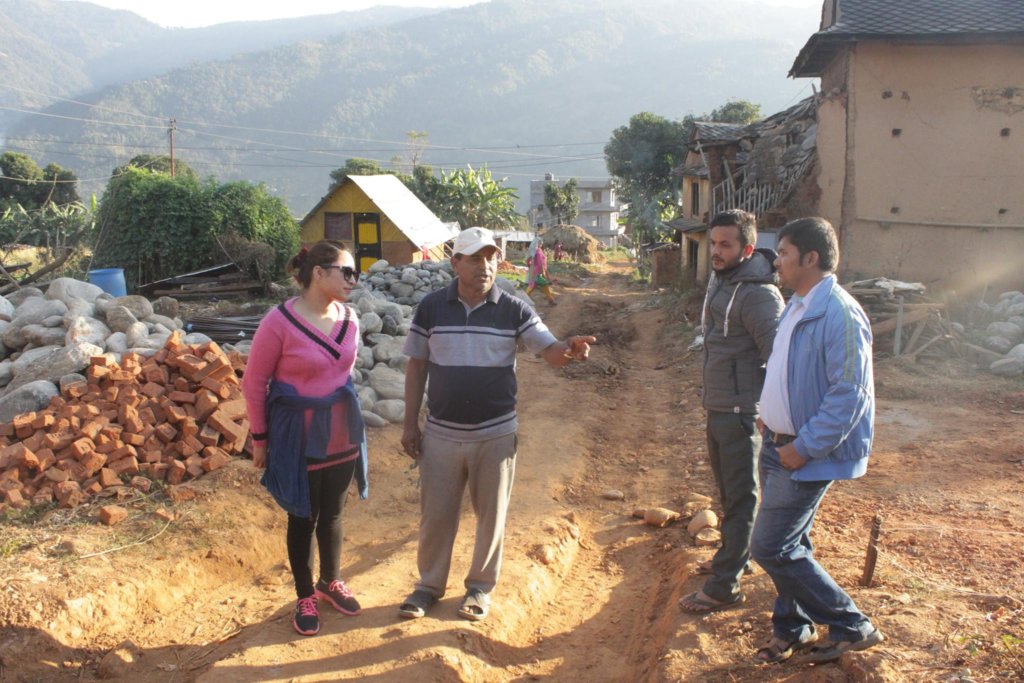
Nuwakot Survinors Sharing Info with Helpdesk Staff

Links:

Share on Twitter Share on Facebook

About Project Reports

Project reports on GlobalGiving are posted directly to globalgiving.org by Project Leaders as they are completed, generally every 3-4 months. To protect the integrity of these documents, GlobalGiving does not alter them; therefore you may find some language or formatting issues.

If you donate to this project or have donated to this project, you can receive an email when this project posts a report. You can also subscribe for reports without donating.

Sign up for updates

Organization Information

Accountability Lab Nepal

Location: Kathmandu, Bagmati - Nepal
Website:
Facebook: Facebook Page
X / Twitter: Profile
Accountability Lab Nepal
Project Leader:
Accountability Lab Nepal
Kathmandu , Nepal

Retired Project!

This project is no longer accepting donations.
 

Still want to help?

Find another project in Nepal or in Peace and Reconciliation that needs your help.
Find a Project

Learn more about GlobalGiving

Teenage Science Students
Vetting +
Due Diligence

Snorkeler
Our
Impact

Woman Holding a Gift Card
Give
Gift Cards

Young Girl with a Bicycle
GlobalGiving
Guarantee

Get incredible stories, promotions, and matching offers in your inbox

WARNING: Javascript is currently disabled or is not available in your browser. GlobalGiving makes extensive use of Javascript and will not function properly with Javascript disabled. Please enable Javascript and refresh this page.