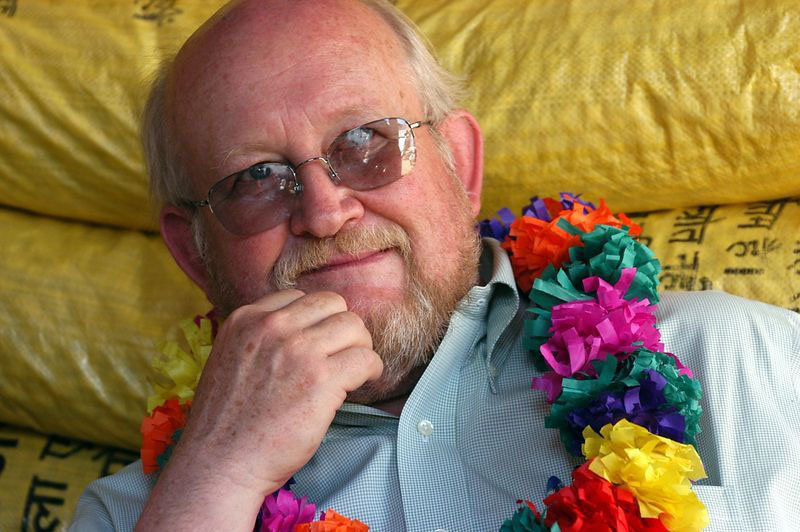
By Henk Knipscheer | Senior Associate
The lack of front-line female agricultural extension agents may well be the most limiting factor in increasing food production and food productivity in Africa. Women farmers produce 70 percent of Africa’s food. A successful strategy for increasing food availability in Africa must include female farmers.
These are the important factors:
Despite great efforts, the SAFE program has not yet been successful in increasing the pool of female agricultural advisors. The Christopher Dowswell Scholarship Program aims to increase the pool of female extension agents by providing modest financial support during their mid-career degree academic program. The program started in 2014 with a total of five scholars in Ethiopia, Mali and Nigeria. Presently the number has grown to 60 scholars, 20 of whom have already completed their diploma or Bachelor of Science (B.Sc.) degree. The remaining 40 scholars are making good progress, and not one scholar has dropped out. The program in Mali particularly stands out: the program has supported 22 mid-career female diploma students, nine of whom are still enrolled. At the end of last year, Tanzania was added to the program, as female extension officers can apply for scholarships at Sokoine Agricultural University (SUA). Five awards have been made.
To further determine the strength of the extension department at the University of Abomey-Calavi (UAC) in the Republic of Benin, a senior delegation of Sasakawa Africa Foundation visited Benin In April. Dr. Simplice Vodouhe gave an update of the SAFE program at UAC. This program gives degree opportunities to mid-career agricultural extension staff who have demonstrated good extension skills while posted in the field. The program, which started in 2003, lasts three years and leads to B.Sc. Degree in Agricultural Extension. Four years ago, a Distance Learning version of the program was established. It targets extension workers, especially women, who cannot afford to be away from their jobs for three consecutive years. At present, 73 mid-career staff (21 women and 52 men) are presently benefiting from this program. There is a pool of more than 1,000 candidates who can enroll in this version of the SAFE program. This proportion of female students (29 percent) in the Distant Learning Program is significantly higher than the overall average female enrollment at SAFE partner universities (only 20 percent) and is increasing. As a sign of support to this innovative program, UAC will be included in the next round of scholarships.
The Christopher Dowswell Scholarship Fund started with a donation from various members of the Dowswell Family totaling USD 51,000. SAA/SAFE made an initial contribution in 2013 of USD 70,000 in 2013, followed by four annual contributions of USD 10,000 during 2014-2016, amounting to a total of USD 110,000. Early in 2017, Winrock International contributed USD 25,000. Individual donations via Winrock added nearly USD 19,000 to the pool of funds. (Individual donations can also be made through GlobalGiving, here.) In August 2017, the Dowswell family committed another USD 5,000 to the program. Total contributions have now reached USD 215,000. An estimated USD 60,000 is not yet committed. We are optimistic that at the end of this year the Christopher Dowswell Scholarship program may be able to reach the target of 100 scholars.
By Henk Knipscheer | Senior Associate
By Henk Knipscheer | Senior Associate
Project reports on GlobalGiving are posted directly to globalgiving.org by Project Leaders as they are completed, generally every 3-4 months. To protect the integrity of these documents, GlobalGiving does not alter them; therefore you may find some language or formatting issues.
If you donate to this project or have donated to this project, you can receive an email when this project posts a report. You can also subscribe for reports without donating.