By Atsuko Hottori and Yoshitaka Okada | Secretary General and Board Representative
Five years have already passed since the East Japan Earthquake and Tsunami Disaster took place. Three public complexes for those who are in the temporary housing have been completed, and some people are gradually moving to the complexes. Despite so, people are still living in one hundred temporary houses on a high school ground, while high school students are taking athletic classes right next to them. This is partly because many people just cannot afford to move into new complexes. The new stage of redevelopment strangely has not really generated changes in people’s living style so far.
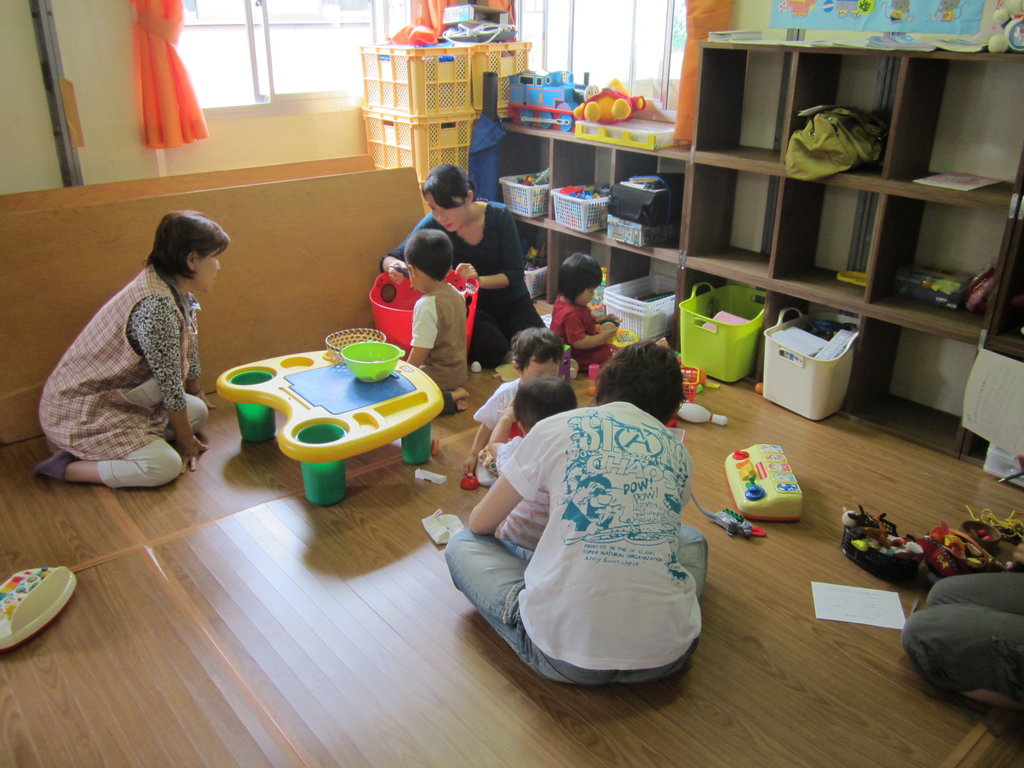
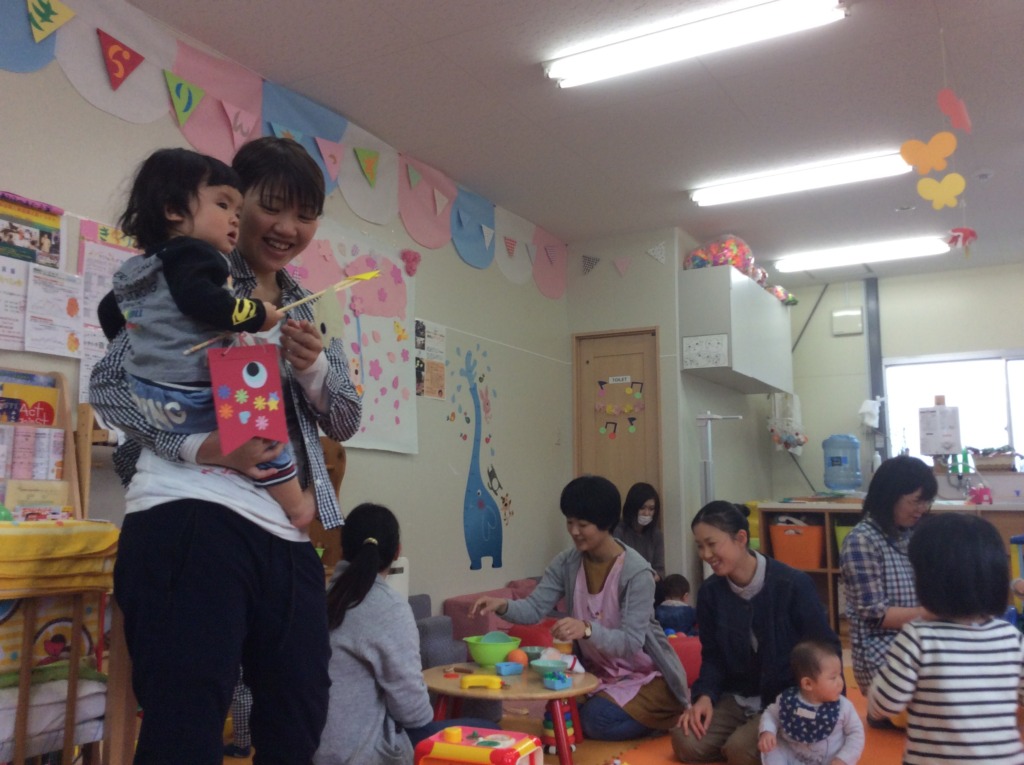
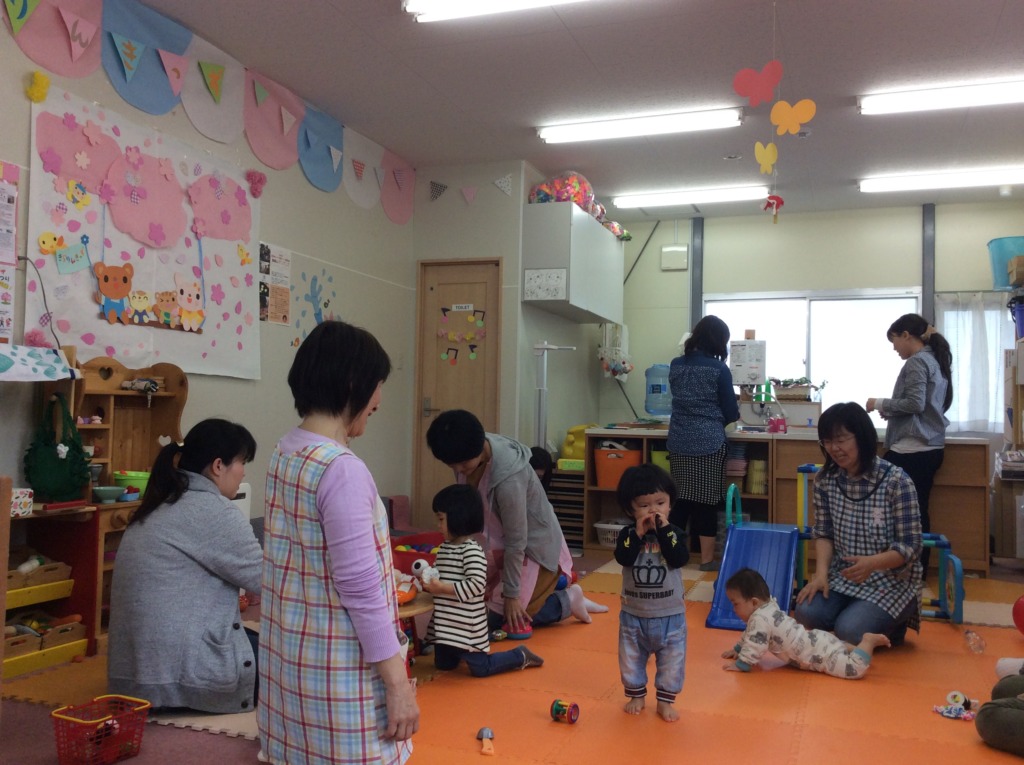
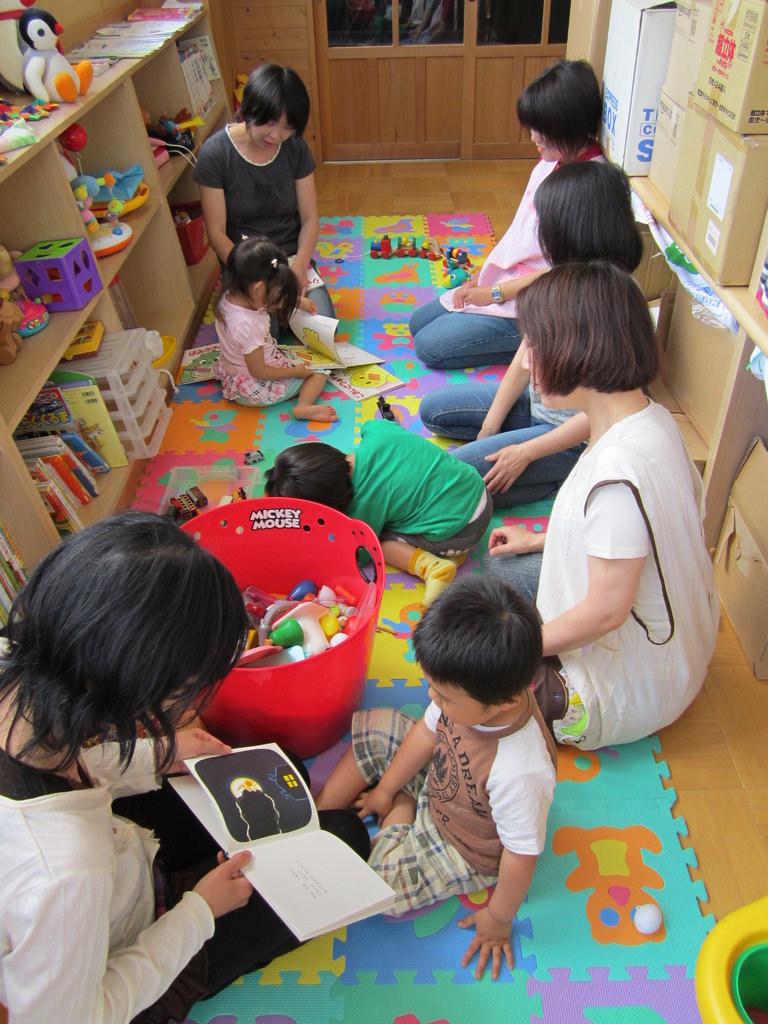
In April when a new fiscal year starts, the Director of Kirarin Kids (KK), Ms. Masako Ito, recognized that the population of children in Rikuzen Takata City has not increased or might have even declined. It may be partly because younger people have not yet coming back to work in the city, since the raising of land level has not yet completed. It is one reason. But there seems to be another reason for KK not being able to increase participants. Due to the Abe Government’s new policy of “Activating All 0.1 Billion Japanese,” more women started working even in Rikuzen Takata, and they are leaving children at nursery schools. In urban areas, the shortage of nursery school is a serious problem. It is not a problem in Rikuzen Takata, though some mothers have to drive a little bit far away to find vacant seats for their children. The lack of problem is a problem for KK, since it is promoting parents-children relations. The change in environments is not working favorable to KK.
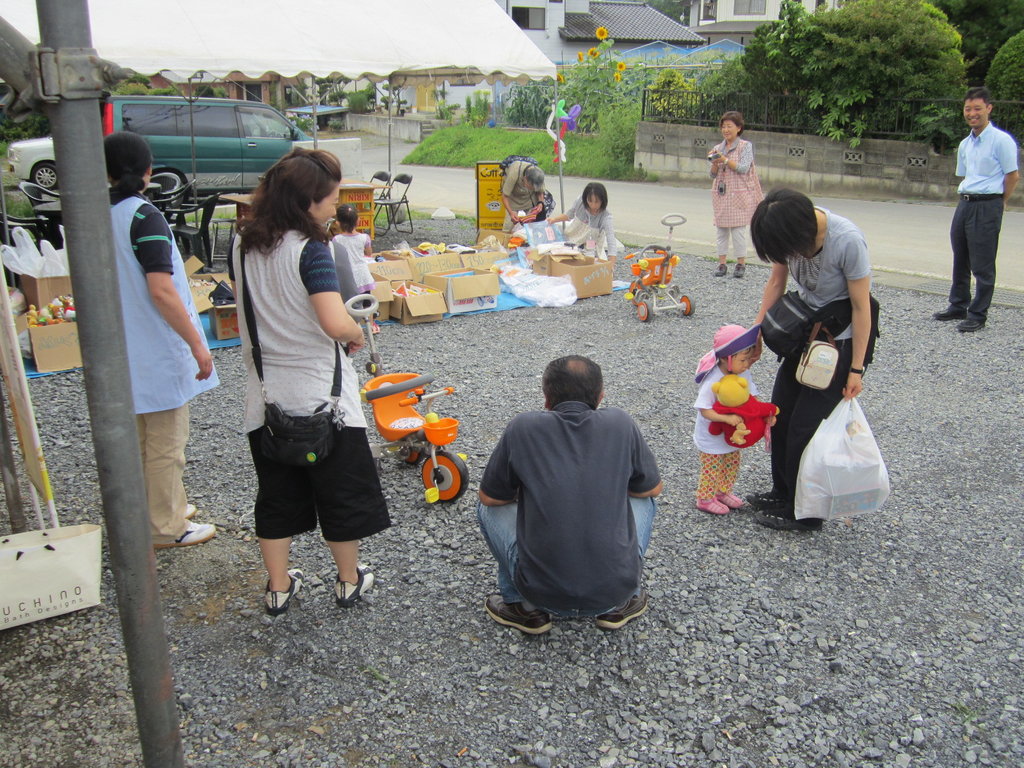
Discussing strategies among KK staffs to cope with this environmental changes, they decided to cover a wider area as well as to improve their program quality. For the first strategy, they decided to include Hirota area where AEON supermarket operates and also the Sun Shine House which was donated as a community space exists for multiple purposes, such as music performances and workshops. It has a very nice space of 240 square meters with a kitchen facility and a hall. KK started having an extended KK program there once a month. However, the key problem is poor management. It is donated by a private foundation, but strangely two organizations manage the facility, making them incapable of deciding quickly. It is quite unfortunate that spaces for community uses remain unused, since they are not quite open and efficient. Though the deterioration of community is really a serious problem in the disaster-stricken area, places to be used for community building remain closed for an open use. This is the type of behavior which KK has been trying to change by requesting improvements in managerial policies. Whenever KK does new things, they function to introduce new ways of thinking and stimulates changes in the area. They are doing the same to the Sun Shine House.
For improving their programs, they now started working with experts in diverse areas. One collaboration is to bring two local food experts designated by the Iwate Prefecture and have cooking events with KK mothers for the purposes of transmitting local traditional food to the future generation, creating opportunities to recognize the existence of valuable local culture, and enhancing their attachment to local culture. The other is collaboration with medical practitioners. Every other month, KK invites midwives and public health nurses, and opens “Health Saloon” for the purpose of raising health awareness and improving health conditions of KK mothers’ families, and consequently improving the health condition of the community. Since people think that the Tohoku disaster-stricken area is not any more the target of disaster support, cost for bringing experts to KK became higher than before. While the KK’s basic operation is covered by a subsidy from the city government, program improvement requires KK’s efforts to raise money. On the one hand, Ms. Ito is really willing to listen to KK mothers and tries to do her best to realize improvements. However, on the other hand, a big question still torments her whether KK can really improve programs under the present financial limitation and without giving additional burden to her staffs. This question remains as a key issue to be solved in a long period of continued struggle for redevelopment of this disaster-stricken area.
Links:
Project reports on GlobalGiving are posted directly to globalgiving.org by Project Leaders as they are completed, generally every 3-4 months. To protect the integrity of these documents, GlobalGiving does not alter them; therefore you may find some language or formatting issues.
If you donate to this project or have donated to this project, you can receive an email when this project posts a report. You can also subscribe for reports without donating.