By Yoshitaka Okada | Board Representative, Ippan Shadan Hojin DSIA
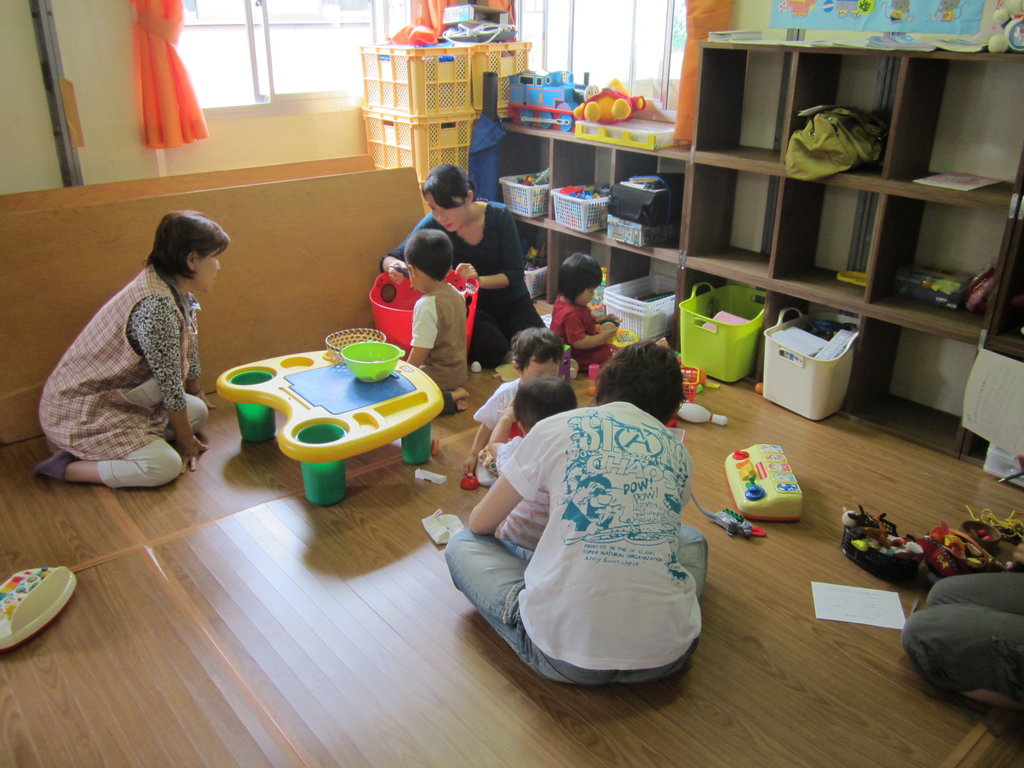
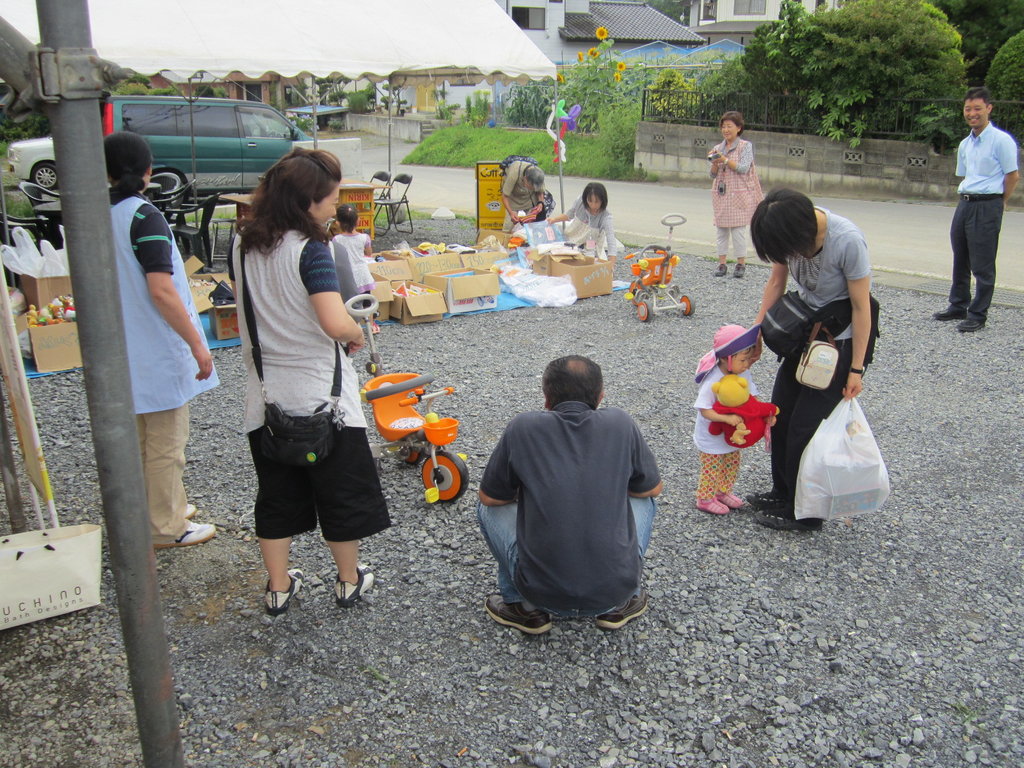
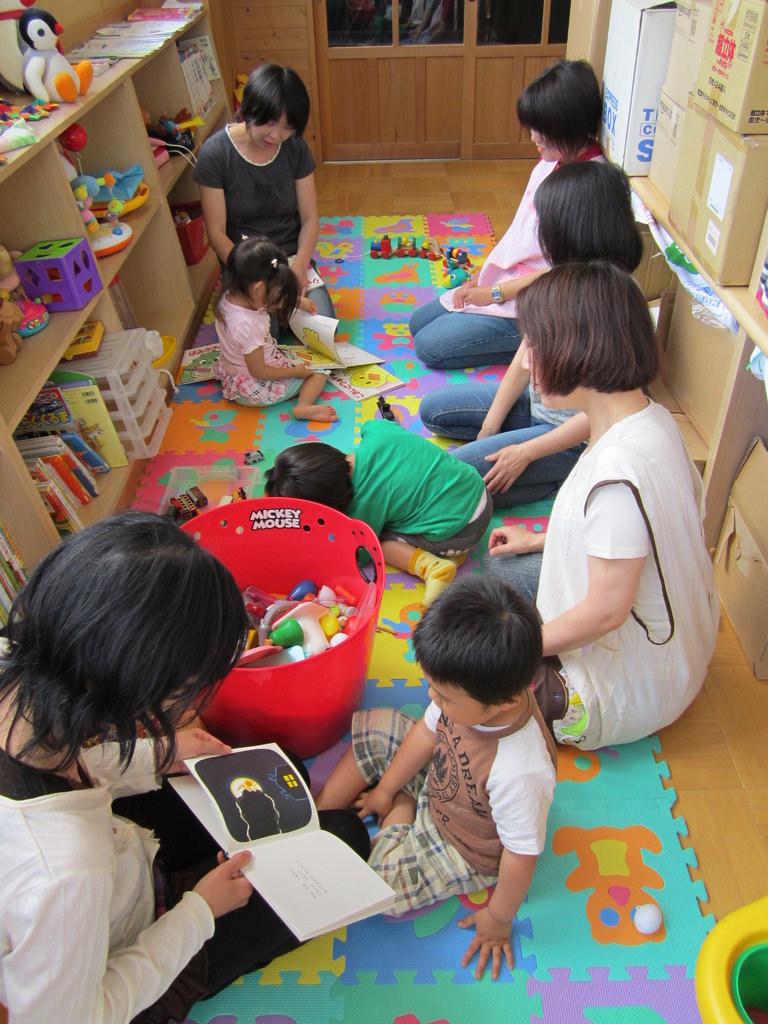
Kirarin Kids’ (KK) playroom was unusually noisy with more children and parents than before (see an attached picture), because of the beginning of summer break. Since I was a little bit too busy, I was late to come to visit KK for about one week. This unavoidable difficulty turned out to be good. I usually come on Friday at the beginning of July, when KK usually does not carry any special event. This time, though without any special event, was different from other times, having many clients.
I came to recognize in their pamphlet that KK started organizing their activity structure. They now focus on eight major programs: (1) Kirarin Kids; (2) Kirarin Egg and Baby; (3) Kirarin Mama; (4) Kirarin Papa; (5) Kirarin Café; (6) Kirarin Miniature Farming; (7) Kirarin Refresh; and (8) other events. I shall explain briefly below:
(1) This is the key program to provide diverse activities to children, such as playroom activities, birthday parties, diverse seasonal children’s activities, etc.
(2) This is a session for mothers and babies, in which mothers learn how to conduct baby massages and even share experiences and worries related to babies among them. It is a highly important program, especially for new mothers. They also offer diverse measuring devices to keep the record of children’s growth.
(3) They have yoga sessions and seminars for mothers. The latter is to discuss about how to care children among mothers. Often, volunteer experts come to visit KK to offer counselling.
(4) This started as a special session to provide opportunities for families that lost mothers in the disaster. But now it is opened to all fathers to have opportunities to play with their children. This is not yet popular, but several fathers come to make use of this nice opportunity to play with their children whom they hardly have time to be with.
(5) This is a session to prepare lunch or make cookies and cakes and enjoy eating together. They make sure to include the cooking of traditional local food. This program is becoming quite popular, since mothers find this a good opportunity to meet other mothers, while children actually engage in making food with mothers.
(6) Now, KK rents a small plot of farm land nearby. Children lean the value of farming by not only making vegetables, but also experiencing the joy of cropping. They also use crops at the Kirarin Café.
(7) This is a program to offer diverse activities to refresh mothers, such as making candles, learning about aroma and color therapies, etc.
(8) In other activities, they have doctors come for providing health advises on childcare, collect Bell marks together to donate money to schools, have a City’s mobile children’s library coming to KK, a mobile toy library to come to KK, rent baby goods, bring specialists to provide special consulting related to children, offer lessons on baby food, and promote inter-generational and local mingling.
This is the first time I see their activities presented in this organized manner. This suggests that they need to clarify their positions due to severe competition among childcare organizations in Rikuzen Takata. The number is increasing, especially day care centers for working mothers. By law, one child minder is necessary for every four children. Because of increased demand for daycare centers, now there is a serious shortage of child minders in Rikuzen Takata. In contrast to growing sector of daycare, KK differentiates to focus on improving child-mother relations and building warm family relations, inheriting a good part of traditional-community-based living and practices. This is the key attraction of KK, highly valuable to rebuild disaster-stricken communities and preserve local identities. But the reality seems to be going in favor of daycare centers and working mothers. KK’s fight is not only to obtain a pair of mothers and children, which is becoming increasingly difficult to find, but also to preserve some good aspect of local culture and tradition, which is also becoming less attractive to young mothers. KK is not losing a game, but is facing competition from increasing competition and changes in the society. But KK started having grandmothers and grandfathers, bring their grandchildren to KK, finding their services highly valuable. Grandparents remain highly important childcare providers in a rural community, while mothers are away working, but they tend to be highly hesitant to mingle with young mothers. Now, this trend is changing. Even grandparents started using KK for keeping their grandchildren happy. A few fathers are finding the KK Papa highly useful to play with their children. So, despite competition, KK is finding new types of clients.
As a way of attracting their clients and bringing people to interact more, KK usually plans one annual big event. The last year, they rented a bus and went to the New Zealand Village. Because KK is from a disaster-stricken area, it was given a free access to the Village, and even the cost of the bus was donated by a Tokyo-based NPO. Now, three years after the disaster, donation is really drying up, and having such an annual event is becoming increasingly difficult because of cost. Even though KK started charging a small amount of money in diverse events, this bus trip is too costly. For this Fall, they are planning to go to “Anpan Man Land (an amusement park based on a Japanese famous cartoon),” they are not certain yet whether they can reduce the cost of the operation by donations and offer the event.
Your future contribution is highly appreciated for several reasons: (1) to keep an organization trying to nurture warm child-mother relations in the midst of opposite trend of daycare center popularity taking place in Rikuzen Takata; and (2) to keep big events to promote such relations when donations are becoming less and less. Thank you very much for your kind and continuous support.
Links:
Project reports on GlobalGiving are posted directly to globalgiving.org by Project Leaders as they are completed, generally every 3-4 months. To protect the integrity of these documents, GlobalGiving does not alter them; therefore you may find some language or formatting issues.
If you donate to this project or have donated to this project, you can receive an email when this project posts a report. You can also subscribe for reports without donating.