By Atsuko Hattori and Yoshitaka Okada | Board Representative and Board Member
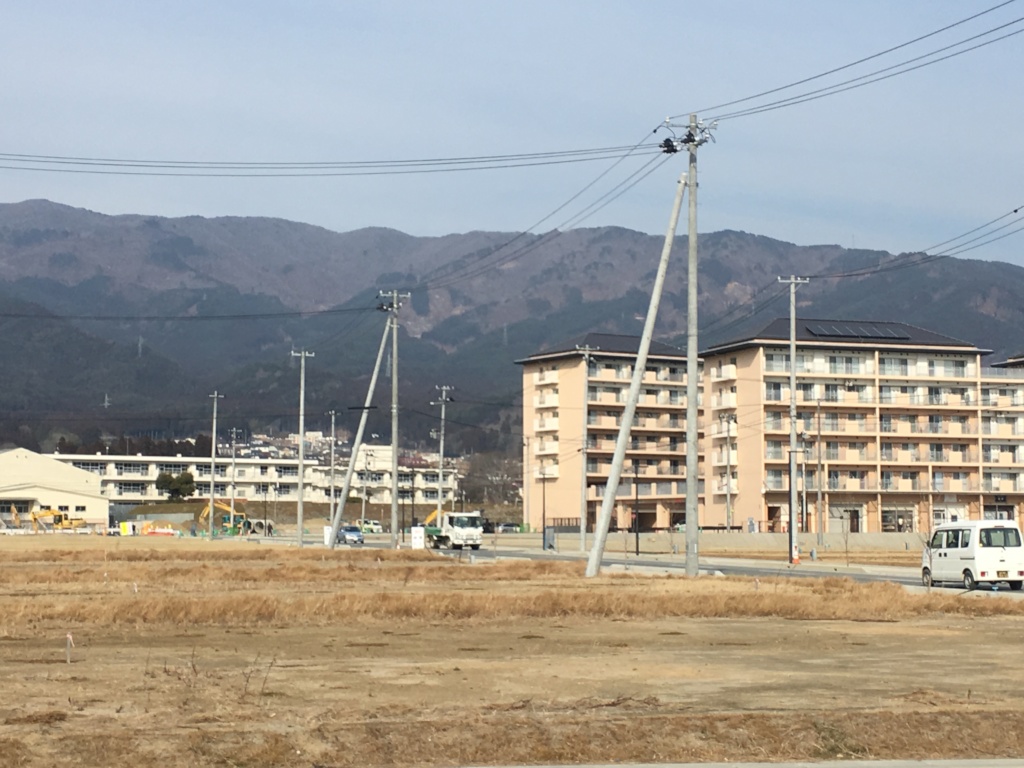
In our visit to Kirarin Kids (KK) in Rikuzentakata City, we recognized that the redevelopment of the coastal area is advancing fairly well. The level of a fairly large portion of land was raised, and now we see electricity polls standing in some areas. The development seems to be advancing from the stage of land raising to that of infrastructural installations. Shops seemed to start appearing in the order of convenience stores, temporary shops, schools, a large-sized mall, and redevelopment housing. After these constructions, individual’s houses came to be built, following the last year’s rush for building temporary shops. It took eight years to see the beginning of restoration in people’s living. However, it is also true that some people decided not to come back to where they used to live and sell their restored piece of land which has a sign of “For Sale”. The new City Office will be built behind redevelopment housing (Picture 1). Many people must have been forced to change their living style, needless to say, about their living itself.
According to KK, family structure has been drastically changed due to the East Japan Earthquake and Tsunami. The nuclear family, which is very much a characteristic of urban area, replaced the traditional extended family structure of rural area in Tohoku. Grandparents used to take care of their grandchildren, whose mothers are at work. Now, younger generations move out of rural area, while grandparents remain in the mountain side or their old places. Now, only twenty percent of parents bringing children to KK had the experience of the earthquake, but the remaining eighty percent of parents are those who moved in anew to this area, in order to engage in redevelopment works.
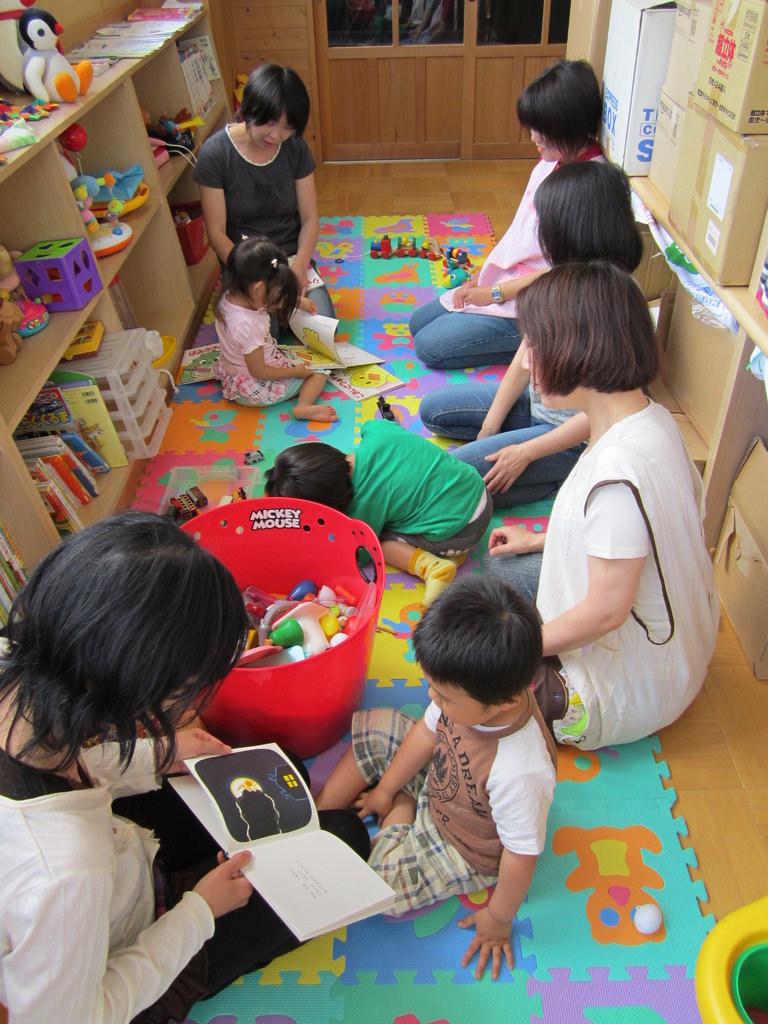
Playground for Children and Parents (Oyakono Hiroba) has been developed in many communities all over Japan for promoting interactions and exchanges among parents and children. However, some groups carry fairly big responsibilities in their communities. KK is clearly this case. It plays very important roles of exchanging information and sharing their feelings among parents and children, which the City Government uses as a monitoring place of opinions and feelings. KK contributes to providing information for formulating City Government’s policies. Because of their important roles, KK feels that they are nurturing children by providing comfortable environments for good parents-children relations and are helping to retain young generations in the city. KK is one of key actors to create the future image of the city. In a sense, as we see electric polls being established as a part of hard infrastructure, KK is now trying to establish soft infrastructure in the city.
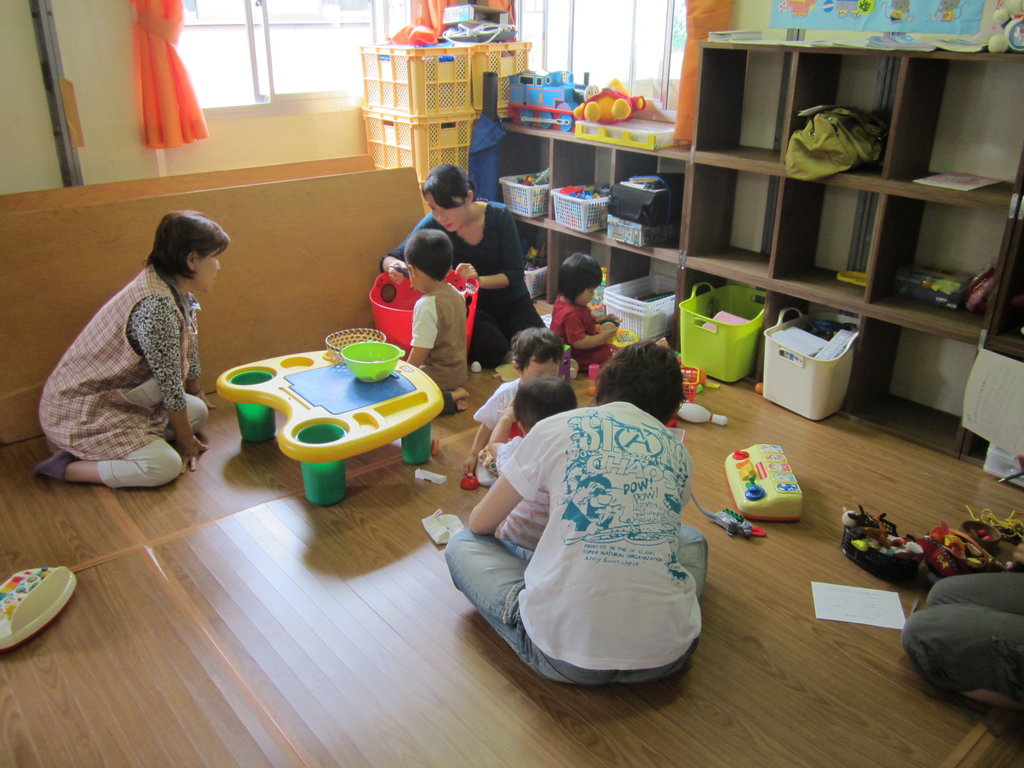
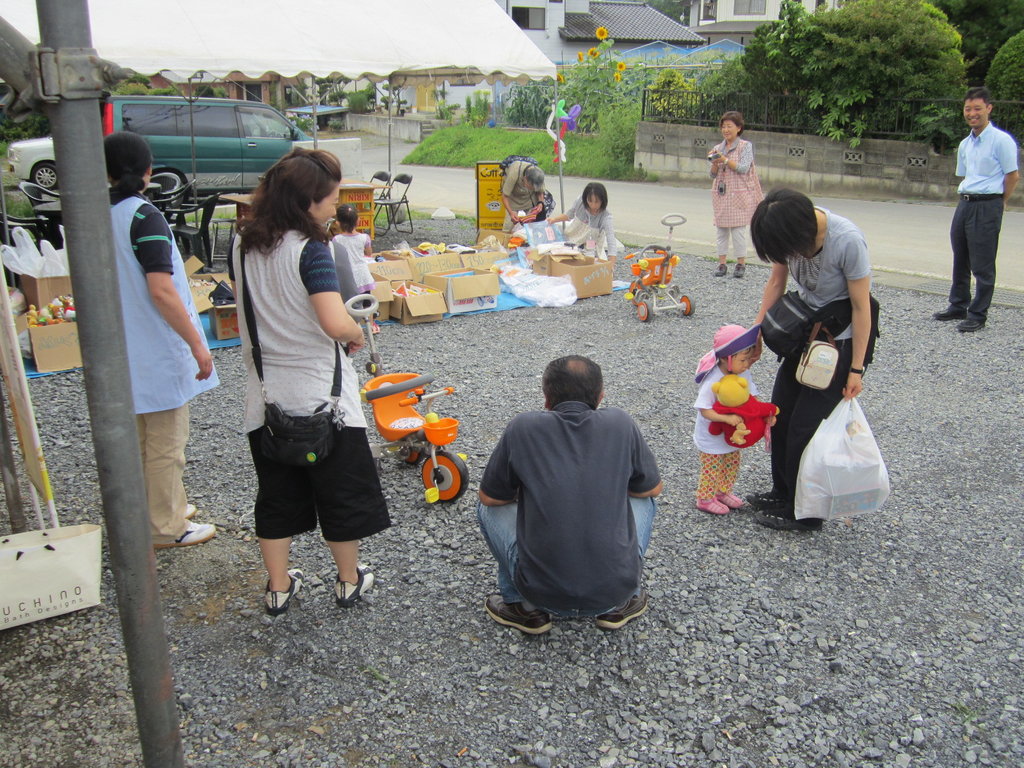
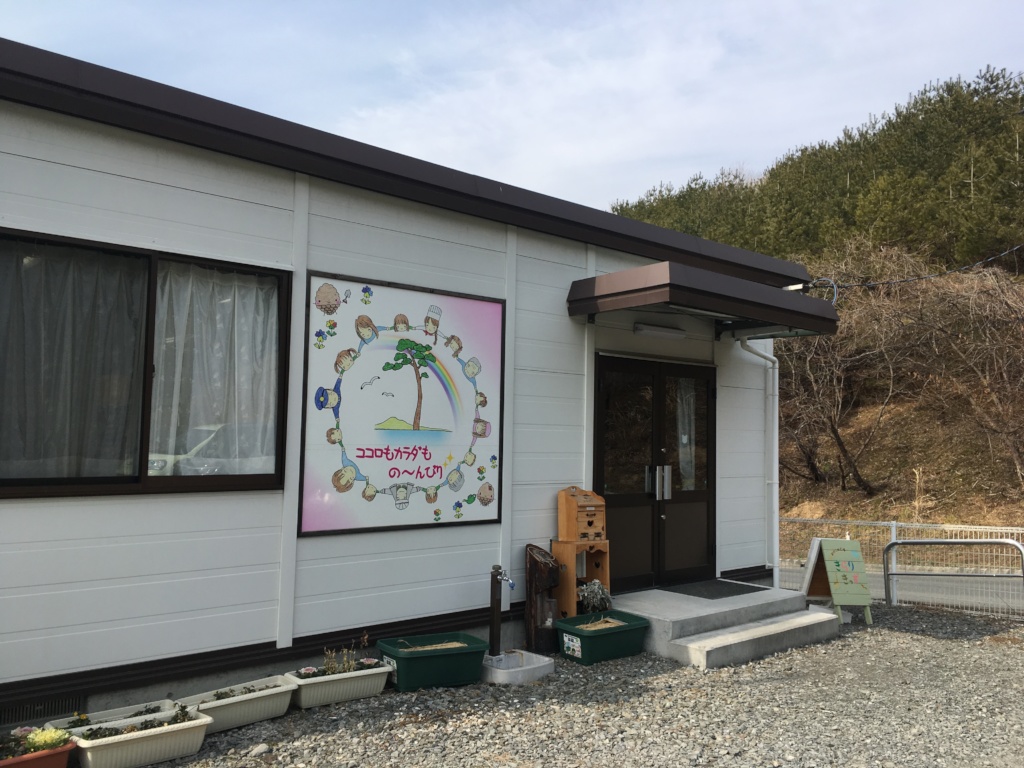
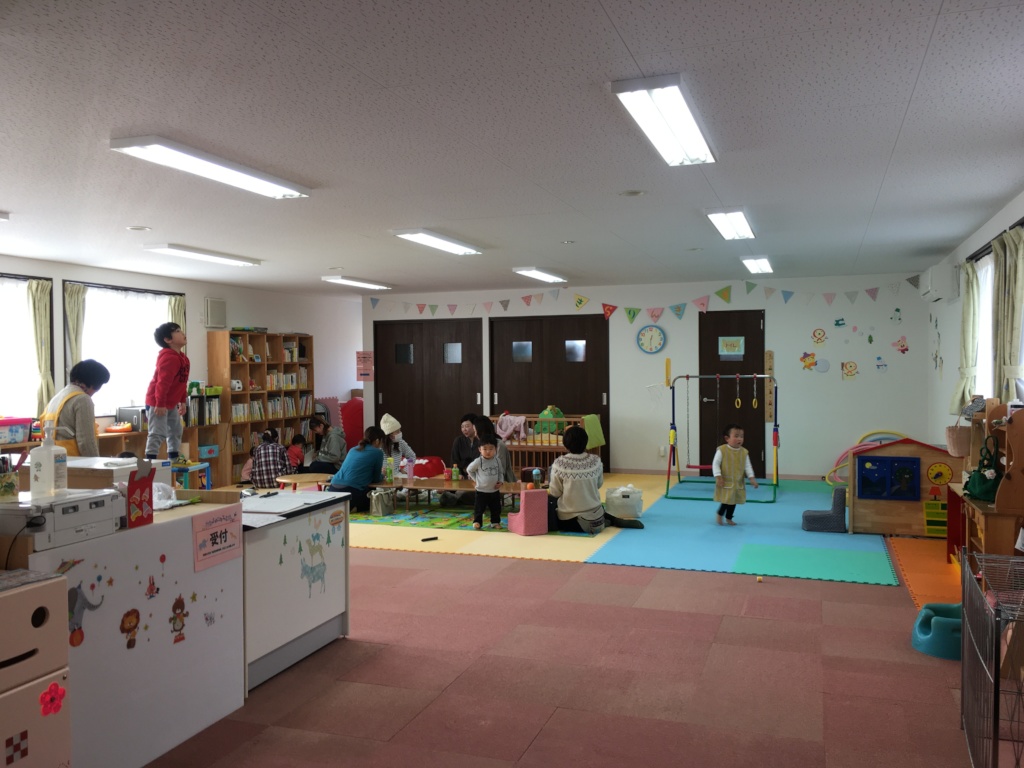
From the days of New Year Celebration, KK has been extremely busy to move to a new, but another temporary place. The present temporary shop arcade is placed in a private land, to which the Government provided subsidies for free rents. Despite that the Redevelopment Agency promised to keep free rent until the next place can be found, the land and shop owners agreed to end the free provision of facilities and land. From October 2018, KK’s place has been costing them \90,000 (about $800) per month. KK’s operation has been provided free of charge, especially to allow children to come out of their own houses and join together to play around. The philosophy also applies to children’s parents. Hence, it is extremely difficult to suddenly charge money for their fun time. But if they pay \90.000 per month, KK will soon bankrupt. After a tormenting period of discussions with the City and staffs, they decided to move to a place in a higher elevation, donated by the Rotary Club and owned by the City, which happened to be previously used as another Playground for Children and Parents. The temporary place is better owing to a larger playground and an adjacent office (Picture Two). It is safer and more efficient. Besides, it is free of charge. But this place is until they move to a place in the central part of newly developed city center.
KK is moving into a new house this coming Fall, built by the support of a company, where they pay a far lower rent than the previous place. After they move to the new place, in order to provide KK’s activities to many parts of the city, they are planning to conduct satellite activities (Odekake Hiroba). Given their sense of responsibility to contribute to the development of the city, they would like to expand their activities to many parts of the city. They may be able to respond to much wider needs of children and parents. Naturally, this additional operation with two new staffs joining this Spring costs money, and KK has to figure our how to financially manage such activities. But it is also nice to know that they have built networks with many of such professionals as nursery teachers, counselors, nutritionists, retired kindergarten presidents, etc.
KK is growing and evolving as the City gradually redevelops. Instead of rushing to do many things, they always stick with their goals and sense of responsibilities, which enabled them to keep stuffs motivation very high all the time. Relative to the period of the disaster, KK’s roles and responsibilities to the community grew big. Consequently, KK came to be trusted and relied by people in the community and the city.
Undeniably, declining population is advancing in many rural areas in Tohoku. Rikuzentakata is not an exception. To cope with this difficult problem, attracting younger generations to move into this area is indispensable. KK’s summer events attract many young students from big cities. Some come every year. Having them come to the city and see how development is taking place itself is already a contribution to the city, simply because attracting young people to come to city is the beginning of getting young people moving into the city. But their traveling cost is high, which also works negatively to attract young students to come to the city. For the sustainable development of rural areas in Japan, people need to learn how development takes place and know what they can do for the goals. It still requires time and ingenuities. KK is struggling with their ingenuity to fight against this big trend of depopulation.
Links:
Project reports on GlobalGiving are posted directly to globalgiving.org by Project Leaders as they are completed, generally every 3-4 months. To protect the integrity of these documents, GlobalGiving does not alter them; therefore you may find some language or formatting issues.
If you donate to this project or have donated to this project, you can receive an email when this project posts a report. You can also subscribe for reports without donating.