By Carlos de los Rios | Senior Research Coordinator
Overview
We cannot manage something if we cannot measure it. We know that understanding what makes a farmer and a rural community resilient is critical in order to improve their livelihoods and to achieve the Sustainable Development Goals. We saw how a severe epidemic related to climate change (coffee leaf rust) wiped out almost half of the income for 97% of the small farmers we surveyed in Guatemala. We found that some farmers coped better and had fewer losses than others. What made them more resilient?
The Committee on Sustainability Assessment - COSA - is grateful for your support for this study to build our understanding of resilience in a coffee-growing region in Nicaragua.
We recommend you see the attached PDF of this final report, which contains additional information such as relevant graphs, that demonstrate some of the findings in this report.
Importance of resilience metrics
Resilience is a multidimensional framework that can be understood as “the capacity that ensures adverse stressors and shocks do not have long-lasting adverse development consequences” (FSIN, 2014a). The notion of resilience plays a significant role in mitigating the effects of severe unexpected shocks is becoming widespread across the development community. As a result, efforts have been made to translate the concept of resilience into actionable metrics in order to better understand it.
Objective
Our objective was to apply resilience metrics in a real-world situation where farmers were experiencing multiple shocks affecting their livelihoods. The validity of a resilience measure, enables policy makers to target the most exposed households. Enhancing resilience through investing in the key drivers enables household to better face shocks and prepare adequate response plans.
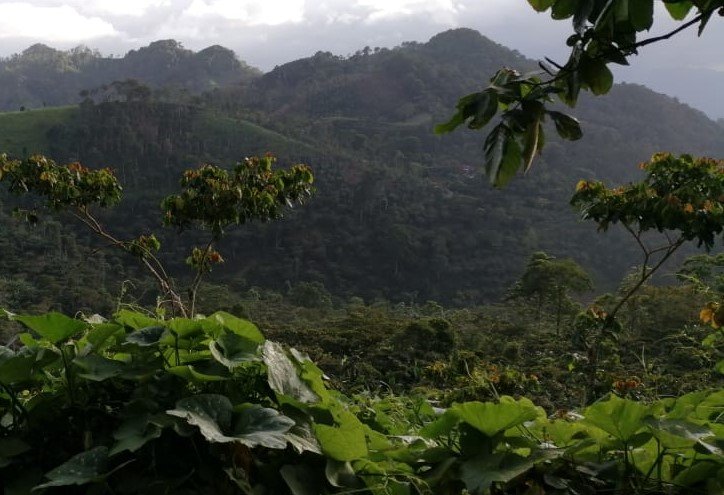
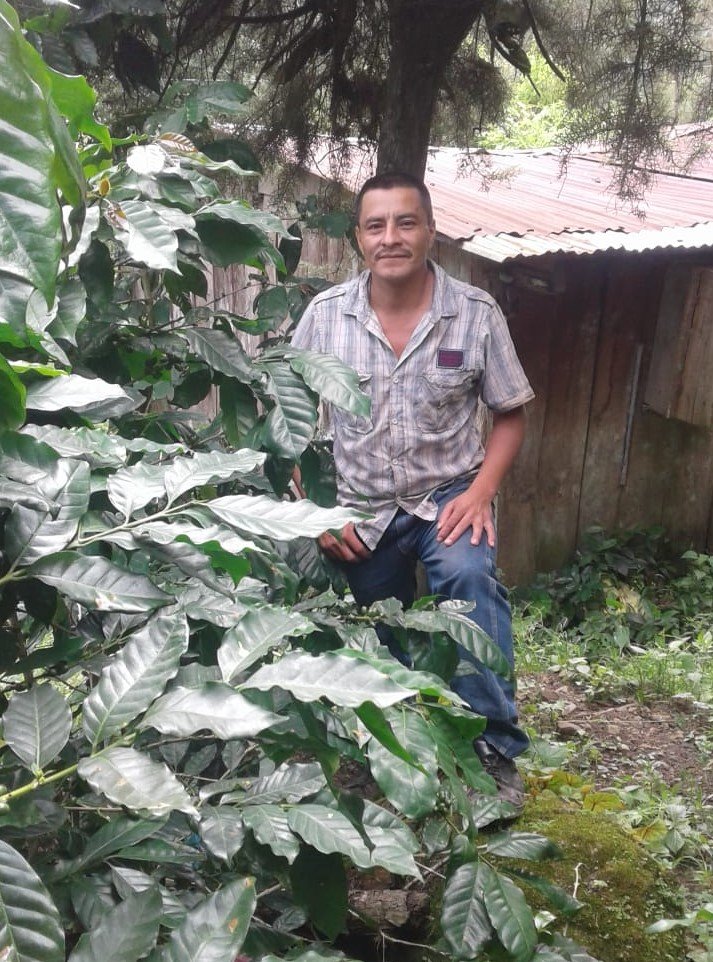
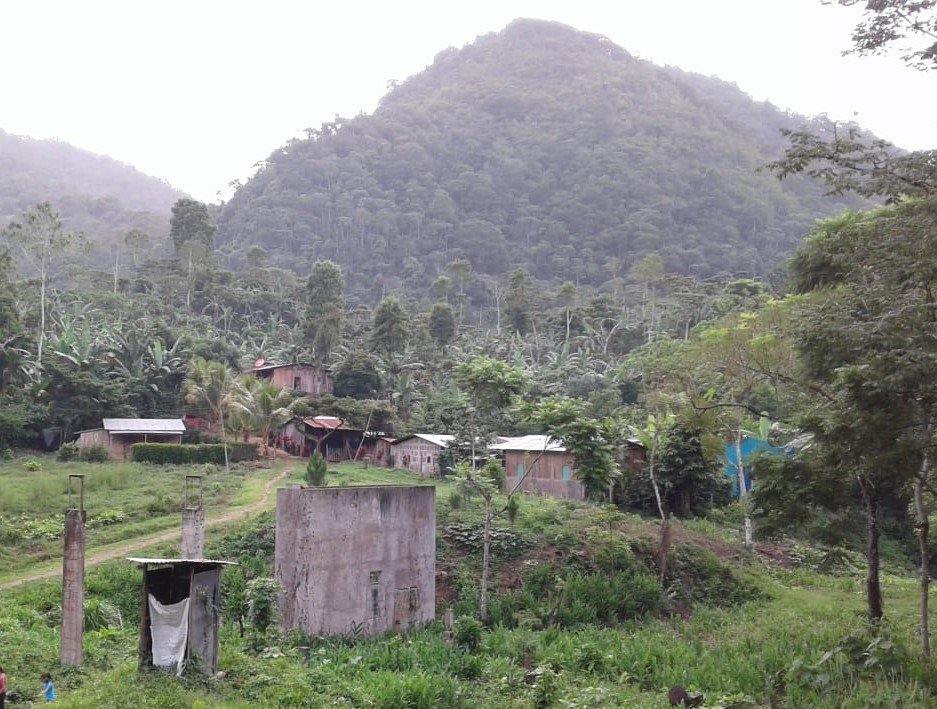
To achieve our goals, we leverage from a study in Jinotega (Nicaragua), where we collected farm level data from more than 600 coffee farmers in three different years (2015, 2017 and 2019). During the study, coffee farmers were exposed to a sharp decline in coffee prices and other shocks that severely affected their incomes and livelihoods. These shocks provided us with a unique opportunity to estimate farmers’ resilience and explore on the role of resilience in ensuring recovery from a shock, and in identifying the most vulnerable groups.
Background
In Jinotega, there are about 30,000 small and medium sized coffee farmers that produce about 47.5% of total coffee production in Nicaragua. In the 2012 / 2013 coffee season, approximately 80% of coffee farmers in Jinotega were severely affected by the coffee leaf rust[1]. Coffee farmers began a coffee tree renovation process using improved varieties resistant to the leaf rust. In the 2014 / 2015 coffee season, we found that around 25% of coffee trees had been recently planted with improved varieties.
As of 2014 / 2015 productivity was on average 874 kg of GBE per hectare. Perspectives were looking good, as higher production from new coffee trees was expected in the coming years. In fact, as of 2018 / 2019, average productivity rose 63% to reach 1426 kg of GBE. However, while production rose, prices took a sharp downward trend, reaching levels that did not entirely compensate farmers’ costs, generating a severe crisis. Furthermore, in April 2018, Nicaragua entered into a political crisis that severely affected the country’s political stability, exacerbating the crisis.
Even under better conditions, coffee farmers face a myriad of risks associated with coffee farming. The market crisis (declining prices to historical minimums), and the severe political crisis (2018/2019), together with the constant presence of other agricultural risks (e.g. pests and diseases), has forced some farmers to go out of business, leaving or selling their coffee farms; and some others to migrate out from Jinotega (mainly to Costa Rica) hoping for better opportunities.
What we did
Inspired by Béné (2012, 2015), we developed a resilience metric based on the idea that resilience is a multidimensional and dynamic concept that relies on human behavior. This approach considers the interaction between the capacity to absorb the impacts of the shock in the short-run, and the ability to respond to the impacts of the shock through adaptation strategies, and the ability to transform the system when adaptive capacities are not enough to overcome the magnitude of shocks.
We defined a set of indicators for each of the three dimensions and aggregate them into a resilience metric. For the absorptive capacity, we chose indicators associated to access to liquidity (assets, farm size, access to credit) to allow for immediate reaction to the shock (mitigation); and, indicators associated to good agricultural practices (soil and water management, integrated pest management, pruning, inputs use), and income diversification, representing the degree of preparedness of farmers to the coming shock. For the adaptive capacity, we consider indicators associated to knowledge and ability to use technical and innovation skills to overcome the shock as long-term responses once the absorptive tools are exceeded by the shock. In this sense, we consider indicators, such as education and training as a proxy for the ability to adapt and access to technology and market information as proxies for level of farmers’ knowledge. Finally, for the transformative capacity, we consider all indicators that enhance governance and enable conditions for resilience and transformation, as access to services and infrastructure and inclusion.
Once we developed our resilience indicator, we assess our indicator and test its strength and validity within our sample farmers. For the sake of simplicity, our resilience indicator ranges from 0 (no resilience) to 1 (full resilience).
Key learning
We found that despite the significant increases in coffee production (more coffee trees in productive age), the pricing crisis significantly affected overall returns to farmers: 96% considered their coffee incomes were significantly affected, and 90% considered that it was the most damaging shock for their family economy. In fact, average losses in coffee farming were around 30% on average between 2017 and 2019.
Farmers used various strategies to overcome the effects of the shocks, and some of them implied severe consumption adjustments (50% reduced food consumption, and 53% reduced the consumption of other goods), seeking external support (16%), using savings (16%), and others. But still, as of November 2019, 74% of farmers declared they haven’t been able to recover from the effects of the crisis.
Despite the significant effects of concurrent shocks, farmers with higher resilience scores performed significantly better. In fact, we observed that the higher the resilience level of the farmer, the higher the probability of recovery. Furthermore, this is an exponential effect; the more resilient you are, the more likely that a minimum increase in resilience will imply a higher probability of recovery.
Additionally, we found that the absorptive capacity is the most relevant one for farmers in Jinotega. This suggests that short-term preparation efforts were more important for recovery than longer-term (and more structural) efforts.
Conclusion
Our study suggests that a farmer’s ability to cope with risk is strongly correlated with short-term preparedness strategies such as the use of good agricultural practices, soil and water conservation practices as well as diversification strategies. Furthermore, the fact that around 60% of farmers in 2014 / 2015 were renovating their coffee plantations ensured strong productivity improvements that were key to support the price shocks.
The price of coffee has reached lows that have not been seen in more than a decade. Many value chain stakeholders are struggling for answers or ways to make a difference. It is true that many traditional approaches can benefit producers, however, there are not adequate metrics that can offer guidelines on how to proceed. The Living Income Community of Practice (LICoP, https://www.living-income.com/) has been working hand-in-hand with various stakeholders to provide metrics to assess farmer living income and to contrast it with a living income benchmark created to assess the cost of a basic but decent life for a typical farmer’s household. Addressing the price issue using such metrics and taking advantage of the options market is an alternative to ensure a minimum price that allows farmers continue in the market.
Finally, policy makers should devote attention to short-term responses to shocks, by offering support to farmers in moments of crisis, as many of the social costs can be avoided with an adequate response.
[1]https://www.elnuevodiario.com.ni/economia/269478-roya-afecta-80-productores-jinotega/
By Carlos de los Rios | Senior Research Coordinator
By Carlos de los Rios | Senior Research Coordinator
Project reports on GlobalGiving are posted directly to globalgiving.org by Project Leaders as they are completed, generally every 3-4 months. To protect the integrity of these documents, GlobalGiving does not alter them; therefore you may find some language or formatting issues.
If you donate to this project or have donated to this project, you can receive an email when this project posts a report. You can also subscribe for reports without donating.