By yuji kishi | president of NPO
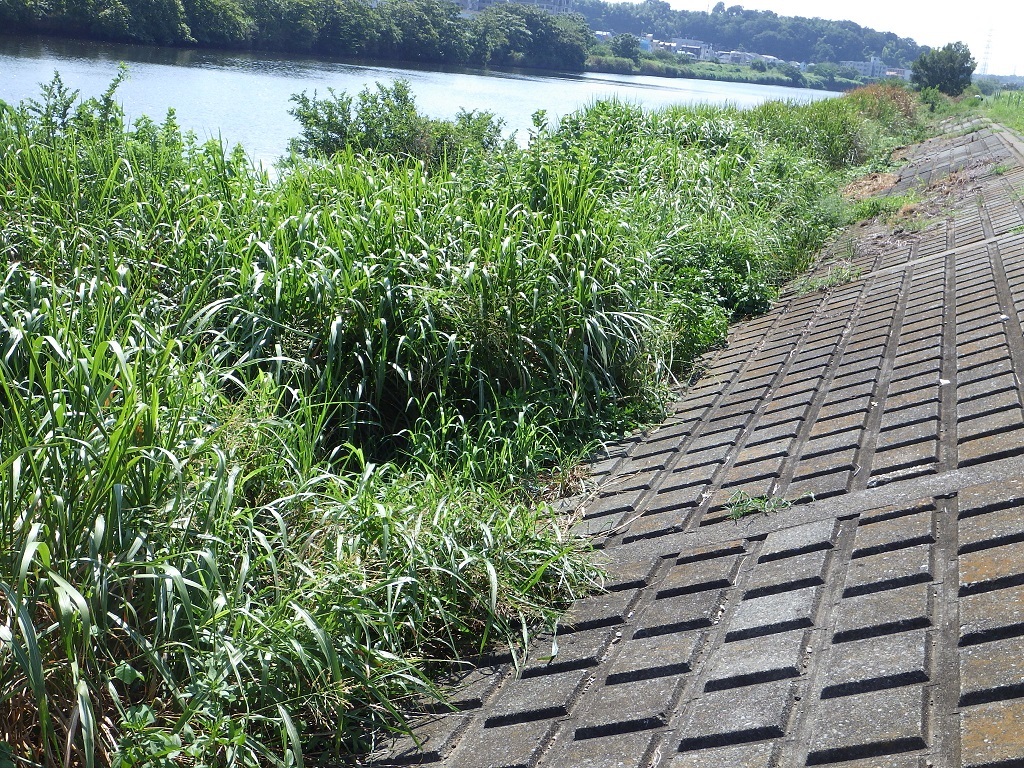
Since the time of our previous report, our field , the lower segment of the Tsurumi-river Tsunashima Riverside Green Belt in Yokohama Japan, has experienced long rainy days from June to mid-July and harshly hot summer days from mid-July to late August.
During the monsoon rainy days Oghi plant , the target species to be restored in our program, has produced new shoots lavishly in our field attaining a doubly large area of its coverage (ca, 70% of the field) than that of last summer, an unexpectedly good result.
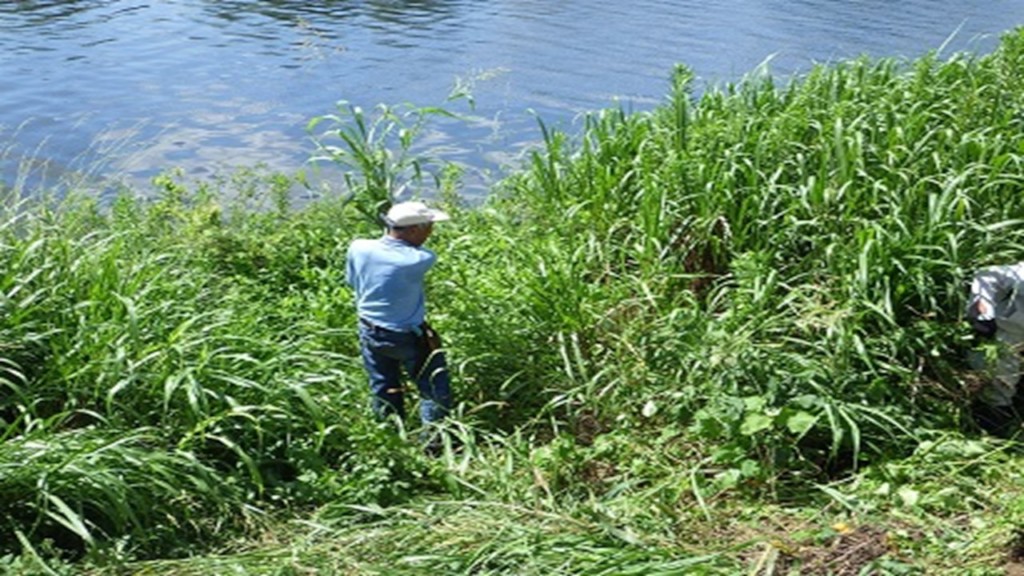
Our efforts during the rainy season have concentrated to cut off the remaining rye rat grass (pollen allergy causing grass) flowering and withering in early July and, afterwards, during the harsh dry summer days, to pull off encroaching climbing species ,burr cucumber (Sicyos anguratus) , both from North America.
Result of our work during those three months is remarkable in that the area of Oghi community at the time of this report has been kept almost the same during the harsh dry summer days.
September is the month of autumn rainy days here in this part of Japan. We will continue work to pull off encroaching climbing species, foreign or native, to support the maturing process of our Ohgi plants.
Fine days of coming October and December will see a wide row of flowering silver ears of Oghi plants all along our river side field. We hope that one more year of intensive effort will make our Oghi plant the dominant vegetation again in this part of the river-side green zone.
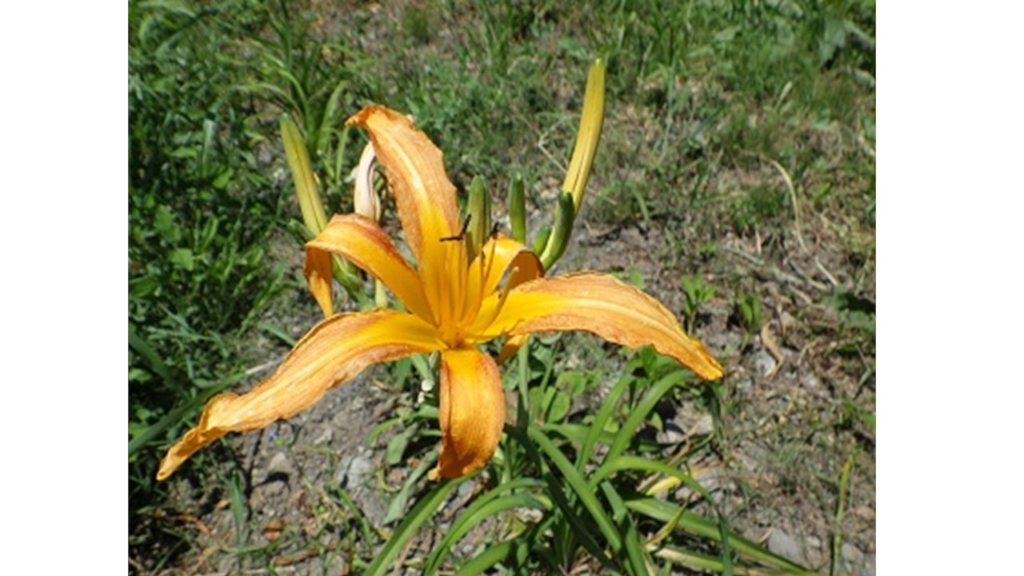
In this year we successfully began to divert a part of our effort to make a nursery bed for a native herb Heracleum sphondylium, a species famous as a plant that rear caterpillars of a large beautiful butterfly Papilio Machaon (old world swallowtail ) in our field. We also started additional effort to rear a native day lily, Hemerocallis vulva, as another measure to replace the rye rat grass.
See you in late December
Project reports on GlobalGiving are posted directly to globalgiving.org by Project Leaders as they are completed, generally every 3-4 months. To protect the integrity of these documents, GlobalGiving does not alter them; therefore you may find some language or formatting issues.
If you donate to this project or have donated to this project, you can receive an email when this project posts a report. You can also subscribe for reports without donating.