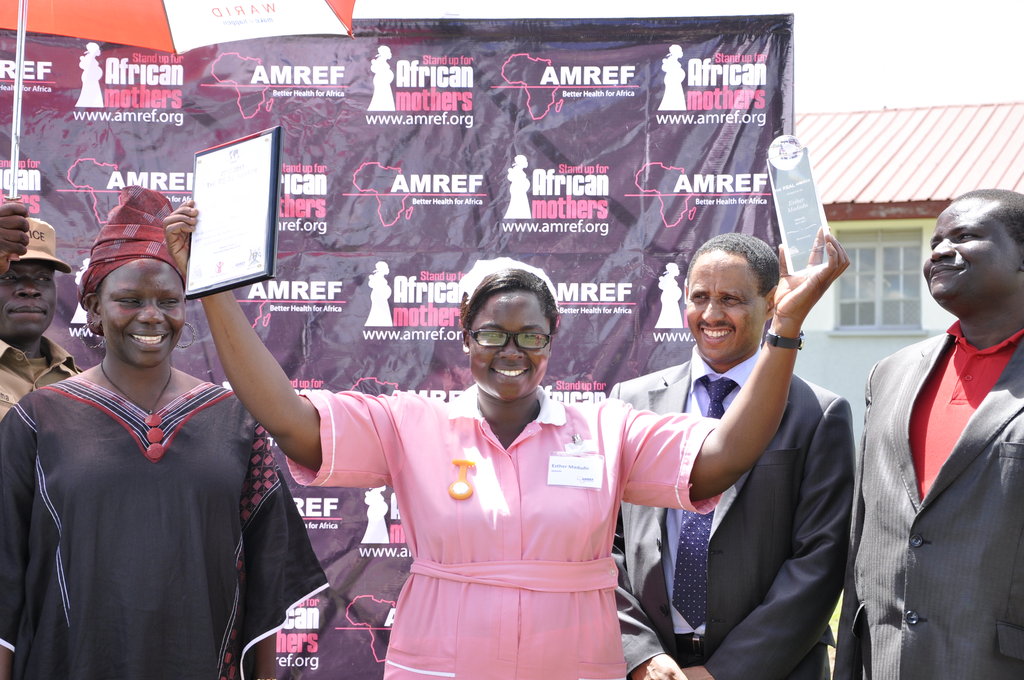
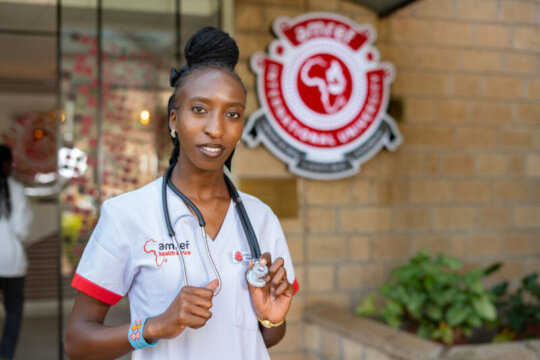
One of my ongoing pleasures is to welcome staff from AMREF headquarters in Nairobi. It’s always so enlightening for our team to hear firsthand about their work and the outcome of AMREF’s programs as told by the experts who manage them. This past week, AMREF’s eHealth Program Manager, Caroline Mbindyo, was in New York to speak at the UN GETHealth (Global Education & Technology) Summit where she was a panel member in two sessions – how IT can empower women and health workers and what strategies achieve program scalability and sustainability of IT innovations for health workers.
Caroline is responsible for the development and implementation of AMREF’s eHealth programs, including eLearning and m(mobile)Health, across sub- Saharan Africa. She leads the team that implemented the pioneering eLearning program for nurses in Kenya, which significantly impacted the delivery of sustainable, cost-effective training for health workers in remote and low resource settings.
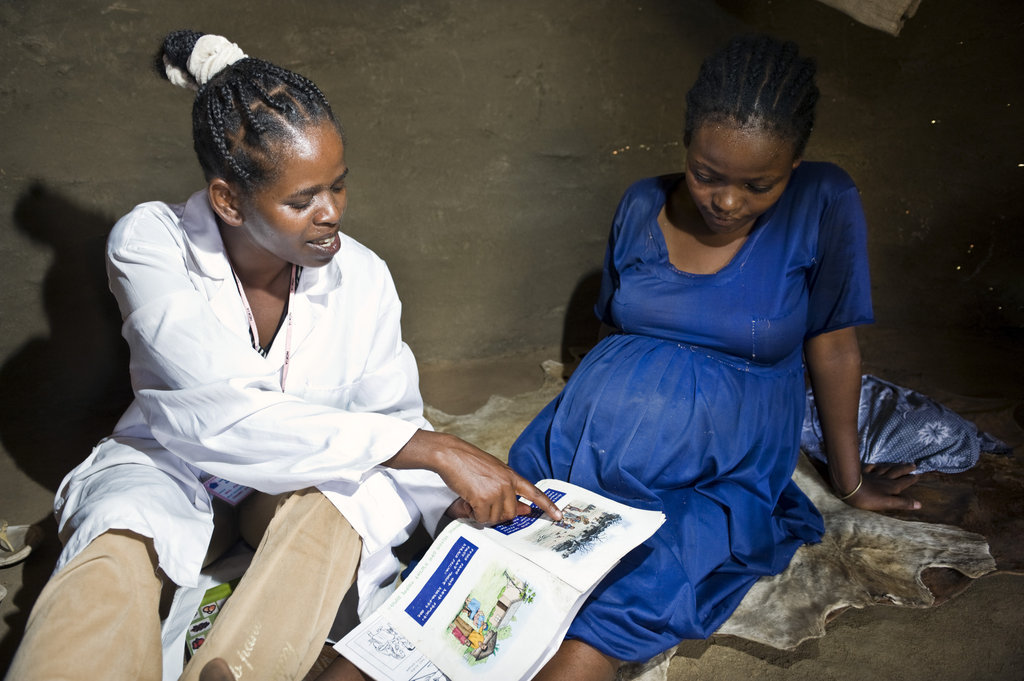
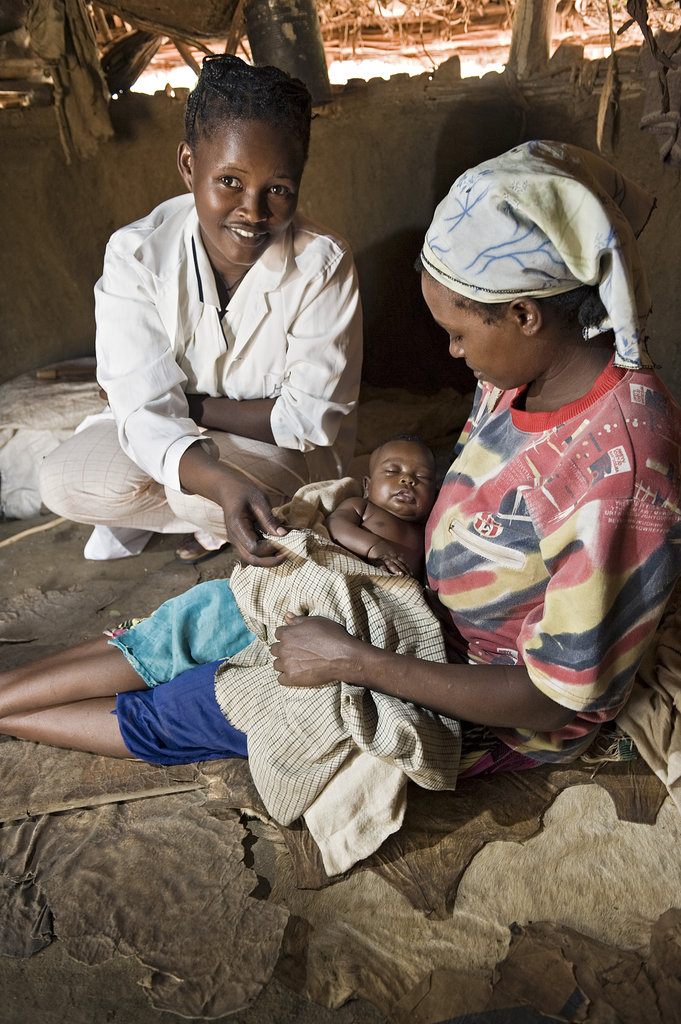
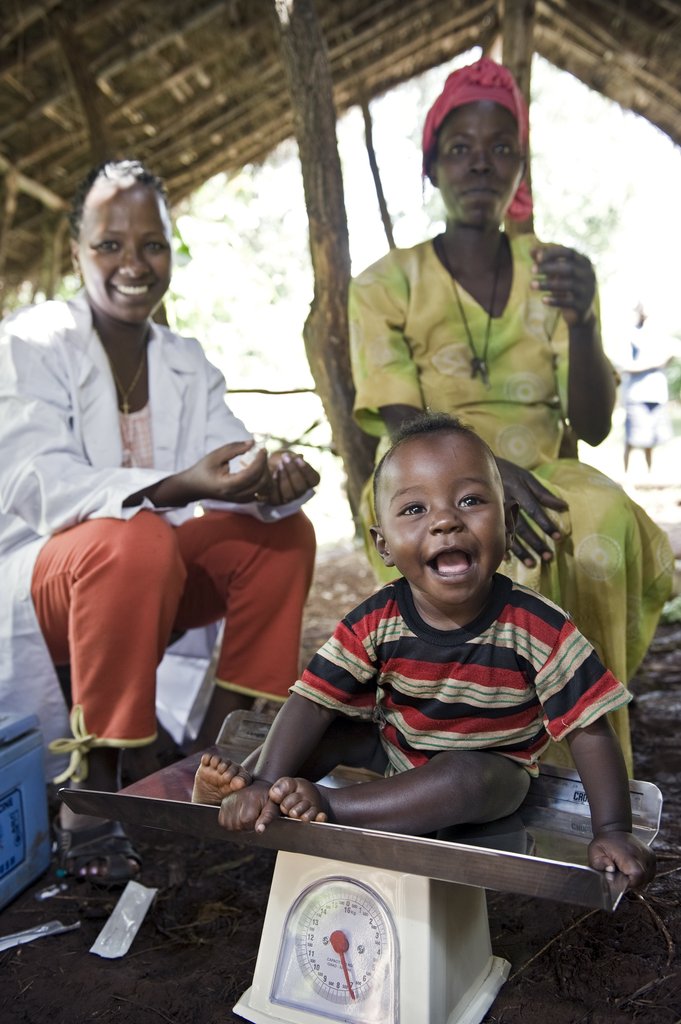
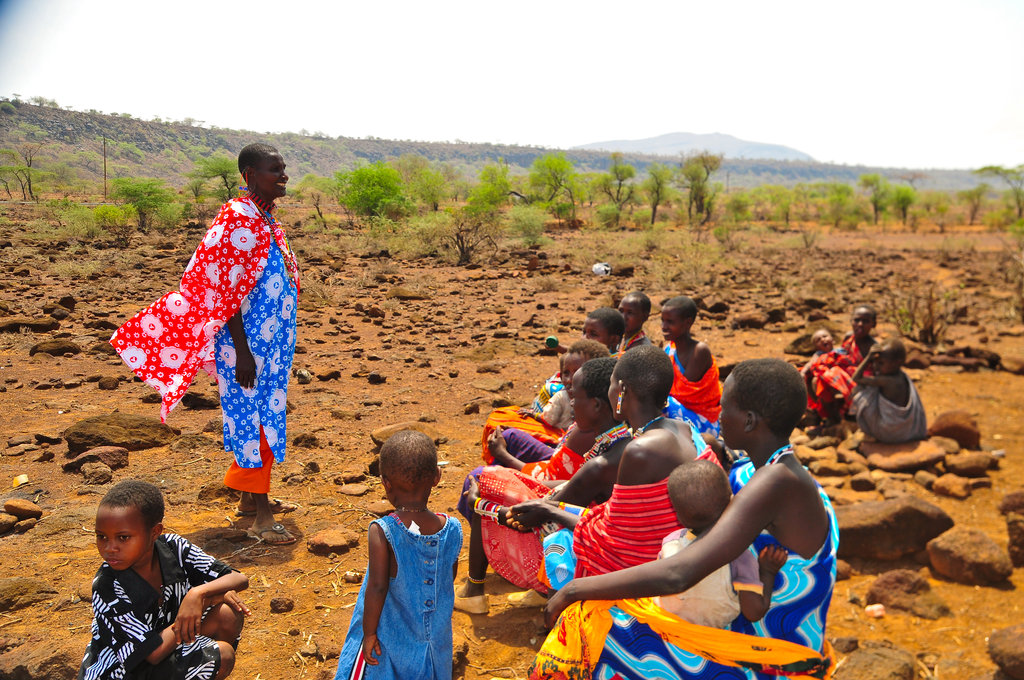
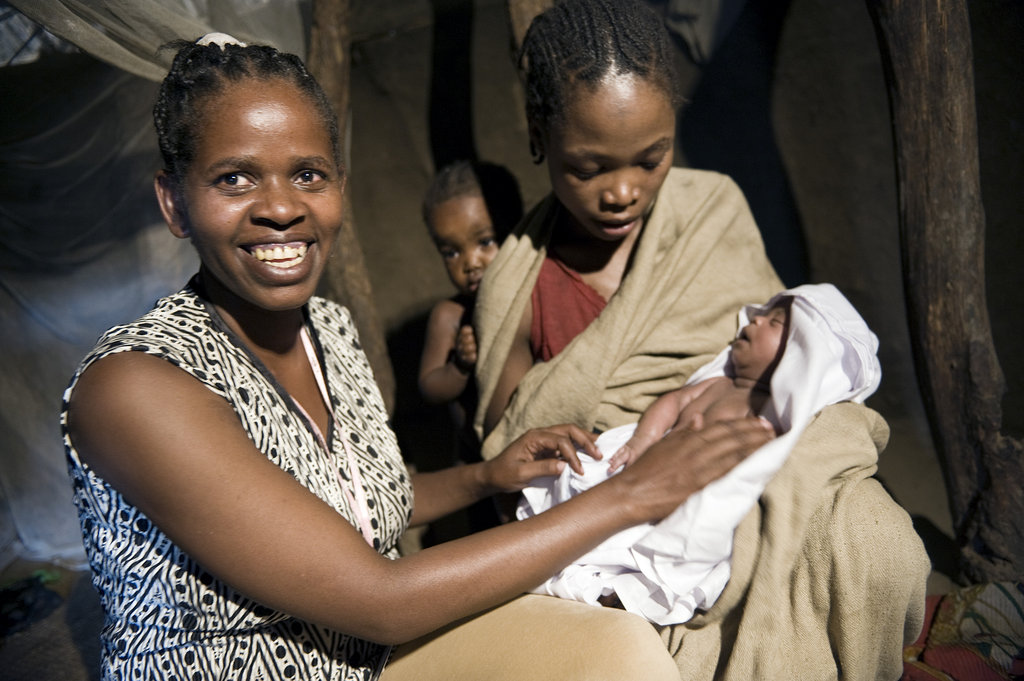
Over 60 per cent of Africans live in rural areas, far from any health facility or hospital. Most of them will never see a doctor in their lifetimes. Instead, they depend on the care of community health workers, nurses, traditional birth attendants and midwives, if they are lucky enough to have one who lives nearby and is qualified to deliver effective health care.
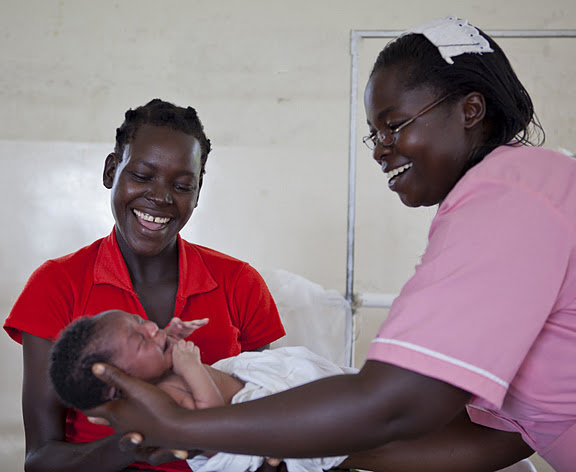
The lack of health workers is one of the key barriers to improving health in developing countries. Begun in 2005, AMREF’s eLearning program in Kenya aimed to upgrade the skills of certificate level nurses to that of Registered Nurse over two years. At that time, there were four nursing schools in Kenya with a total of 125 students, an enrollment rate of 100 students per year, and an additional 20,000 nurses in the wings waiting to get in.
In both panel discussions, Caroline spoke about the seemingly overwhelming challenges of building this program. How to set up electronic learning when less than 30% of Africans have access to electricity? There was no infrastructure, no mobile phones and no computers. How do you motivate a health worker in isolation – how do you support her? How to introduce nurses to infectious diseases like HIV/AIDS or the multiple mutations of malaria treatment, when none of that existed in their former training? What technology partners were willing to take on the challenge and how could the outcomes be beneficial to all stakeholders? With more nurses trained, would there be adequate clinical practice facilities? Could the newly certified nurses expect pay increases when they graduated? The questions were endless.
The program was a public private partnership led by AMREF, the Ministry of Health, the nursing regulatory body in Kenya, and funded by Accenture, a global management consulting firm. It involved setting up a national eLearning platform, development of the eLearning curriculum and content, building the capacity of nursing schools to use the eLearning approach to teach nurses, 98% of whom had never used a computer before, setting up supporting and supervisory mechanisms to ensure learning of both theoretical and practical skills and creating a monitoring and evaluation framework to enable all partners to track the key performance indicators (KPIs) in which they were interested.
Slowly the program took off and the health impact has been quite remarkable. From four schools with a total of 125 students, there are now 34 eLearning centers enrolling 1,400 students each year. Over 7,000 nurses have graduated since the inception of the program, which was handed over to the Ministry of Health and the Nursing Association in Kenya, thereby assuring its long term sustainability. In fact, that ability to develop local capacity in creating lasting health change that is sustainable by local communities is a hallmark of AMREF’s work. It is also what sets us apart from other organizations.
Remarking on the program partnership, the moderator of Caroline’s second panel discussion, Dr Esther Ogara, Head of eHealth, Continuing Professional Development at Kenya’s Ministry of Health, noted “AMREF is fantastic because they mobilize resources and we, as the government, provide human resources and infrastructure. It becomes easy to work with them. That is why their programs are successful and sustainable – unlike the others.”
Now considered an ‘African’ program, the success of AMREF’s eLearning initiative is being replicated by the Ministries of Health in Uganda, Rwanda, Tanzania, Zambia, Lesotho, Malawi, Senegal and Zanzibar with a focus on various cadres of health workers.
And Caroline, well, she and others recognize the growth of mobile devices as the “computer of Africa”. Following her eLearning success, Caroline is now directing a two year multi-country study on how mobile devices can be leveraged to improve health care delivery in sub-Saharan Africa.
Until next time, Lisa
Links:
![Share on Twitter]()
![Share on Facebook]()