By Laura Peckyno | Development Manager
Our education systems involve a wide range of stakeholders, which means that systems-level change can't happen without teamwork and coordinated efforts between the businesses, individuals, organiztions, and programs involved. In support of our work to leverage STEM education to create social change, Washington STEM builds Partnerships and relationships that can create lasting, collective impact.
OUR WORK
Washington state ranks among the top states in the nation in the concentration of STEM jobs, and opportunities are increasing rapidly. By 2030, more than 70% of high-demand, family-wage jobs available in our state will require postsecondary credentials, or education beyond high school, in the form of a two- or four-year degree or certificate. Of those desirable jobs, 68% will require STEM credentials or STEM literacy.
But our systems have not equitably or adequately prepared Washington students to take advantage of these opportunities. Today, only about 40% of all students are on track to obtain a postsecondary credential. Furthermore, students of color, rural students, girls and young women, and students experiencing poverty still lack access to these career pathways—they face disparities early on and fall further behind as they move through the education system.
In our state, STEM is at the forefront of discovery, has made its way into nearly every employment sector, and serves as one of the largest pathways to family-wage careers and economic mobility and stability. STEM pathways have promise like few others in Washington and it’s imperative that students who have historically faced barriers, or been excluded, have equal opportunity to benefit from the transformational possibilities that STEM has to offer.
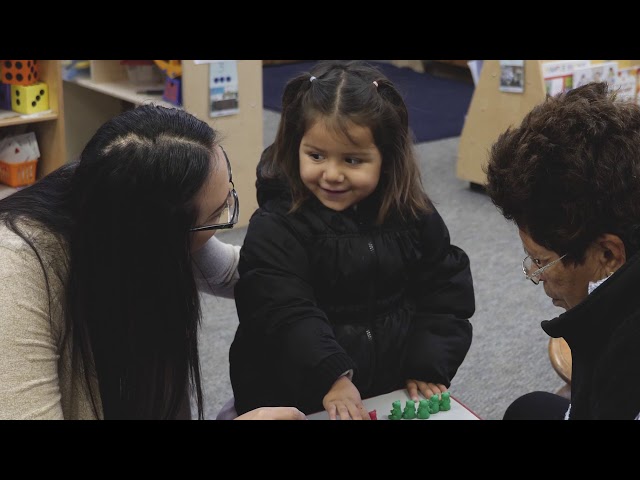
Washington STEM is focused on making systems fair and just, equitable all along the educational continuum. On the younger side of the spectrum, these systems help Washington’s littlest learners access early math skills and high-quality early learning and care. On the other end of the continuum, these systems inform and engage students around college-bound pathways, financial aid, and postsecondary prep. We look at things like processes that decide who has access, how resources are allocated, and how information and knowledge is shared, and we identify and work to remove barriers that underserved and historically excluded populations face. By making systems level change, we’re able to support current students as well as future generations of students.
PARTNERSHIP IS CRITICAL
Working in partnership with others is critical to engaging in effective, community-centered, equitable systems change. Washington STEM forges partnerships that focus on addressing systemic issues first and foremost—issues that go beyond programming—and aim to address the barriers that limit and skew participation. These mutually beneficial partnerships focus on driving outcomes for priority populations: rural students, students of color, girls and young women, and those experiencing poverty. It is through building these relationships that we are collectively able to identify what’s working, as well as barriers in the system, opportunities for creating and scaling effective local solutions, and effective ways to measure our collective impact.
DATA TO IDENTIFY OPPORTUNITIES
In order to go anywhere or design anything, we need a baseline. Are there opportunities to increase participation? Who’s being served? Who’s not being served? What are the issues we’re aiming to solve? What are we trying to improve? This is where quantitative and qualitative data come into play. Quantitative data helps provide a high-level picture of what’s going on—things like the number of students served, demographics, graduation rates, labor sector needs, and the current pipeline of those pursuing degrees across a variety of sectors. Washington STEM partners with state agencies like the Office of Superintendent of Public Instruction (OSPI), Washington State Department of Children, Youth, and Families (DCYF), and the Washington Employment Security Department on obtaining and using statewide data. Data sharing agreements with agencies and institutions help provide Washington STEM with information that we can use to translate into publicly available, free resources for the community. You can explore one of our data tools here. Data can help identify systemic barriers in the system, indicate solutions, and measure progress and change over time. Yet, these data alone do not provide the whole picture.
In order to make improvements to part of a system, qualitative data is also key—it helps provide the more complex and nuanced contours to the numeric data by informing the numbers with lived experience through engaging with a community. When numbers are ground-truthed in the communities we’re seeking to serve, effective solutions can be identified. A good example of this approach is a collaborative project in Yakima in which we partnered with Eisenhower High School, OSPI, students, and their families to assess student access to college and career readiness opportunities. Quantitative data told us that there were disparities in which students were earning college credit in high school. Further exploration using both quantitative and qualitative data helped us understand that one underlying challenge was that students and teachers had different ideas about what students aspired to and who they relied on for guidance. You can read more about this dual credit focused project here.
ENGAGING COMMUNITY PARTNERS TO IDENTIFY NEEDS
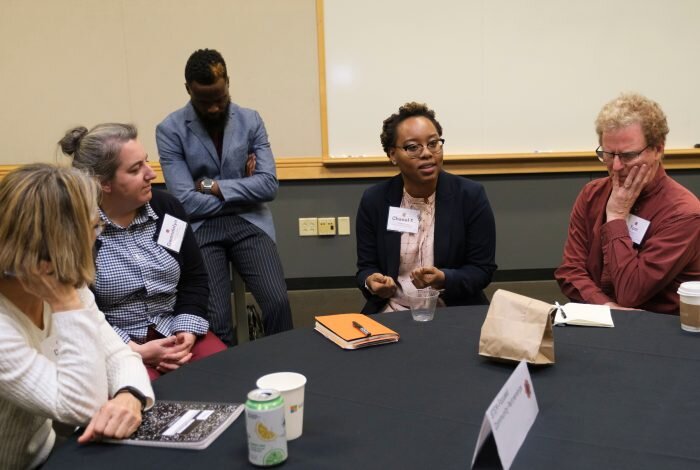
Key to making the data actionable is looking at it through the eyes of people living in the community the data intends to reflect. One of Washington STEM’s most significant community engagement partnerships is our relationship with our 10 regional STEM Network partners. STEM Networks work to inform and lead local work. They operate independently across Washington state, collectively serving 1M+ students and working in very close coordination and alignment with Washington STEM. Washington STEM serves in a leadership capacity, convening Network leaders several times each year to surface opportunities and systemic issues or challenges. We also work collectively to identify shared goals and strategies, build internal capacity, co-create scalable solutions, and share and spread best practices and creative approaches.
It is in partnership with these critical Networks that we are able to design and implement effective strategies that help create greater access to things like STEM skills, college and career readiness opportunities and pathways, and financial aid. Our Network Partners have their fingers on the pulse in their communities and work to engage local business and education leaders, elected officials, other nonprofit organizations, and community members.
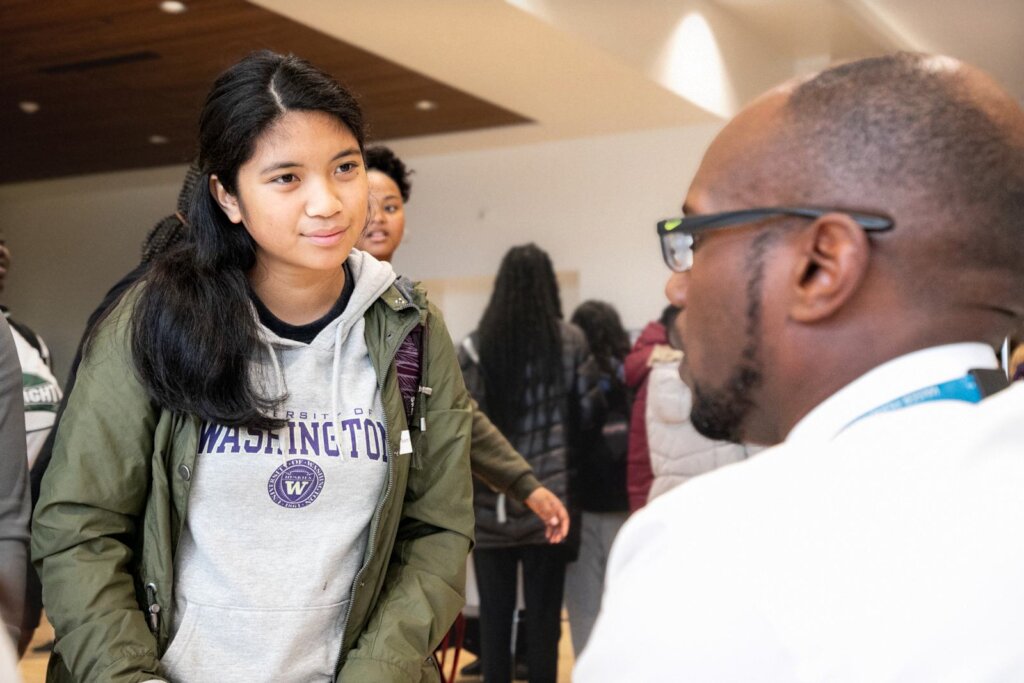
In addition to the 10 regional STEM Networks, we also work in close partnership with Career Connect Washington, a Governor-appointed collective creating work-based and academic programs for young people to explore, learn, and earn money or college level credit. And, when there are strategically- aligned opportunities, we also engage in partnerships with educational institutions like the University of Washington and Washington State University, the community college system, and central Puget Sound-based organizations working in education and STEM.
LEARN MORE
From the beginning to end, partnership is a critical strategy for our work, enabling the collective to authentically engage communities, identify effective localized solutions, and see them through in order to make lasting, equitable change for generations of students in the state of Washington. Learn more about how we're leveraging partnerships to build a better Washington in our blog.
Links:
Project reports on GlobalGiving are posted directly to globalgiving.org by Project Leaders as they are completed, generally every 3-4 months. To protect the integrity of these documents, GlobalGiving does not alter them; therefore you may find some language or formatting issues.
If you donate to this project or have donated to this project, you can receive an email when this project posts a report. You can also subscribe for reports without donating.



Support this important cause by creating a personalized fundraising page.
Start a Fundraiser