By Joan Ariemu | Project coordinator
PROJECT REPORT
Project Title:
Plate of Hope: Food Relief Program for School Children
Submitted By: Joan Ariemu
Submitted To: GlobalGiving Foundation
Project Location: Peakwill Schools, Sigma bond school, Idimu Community schools, Idimu, Lagos State. Nigeria.
Project Duration: September 2025 – Till Date
Executive Summary
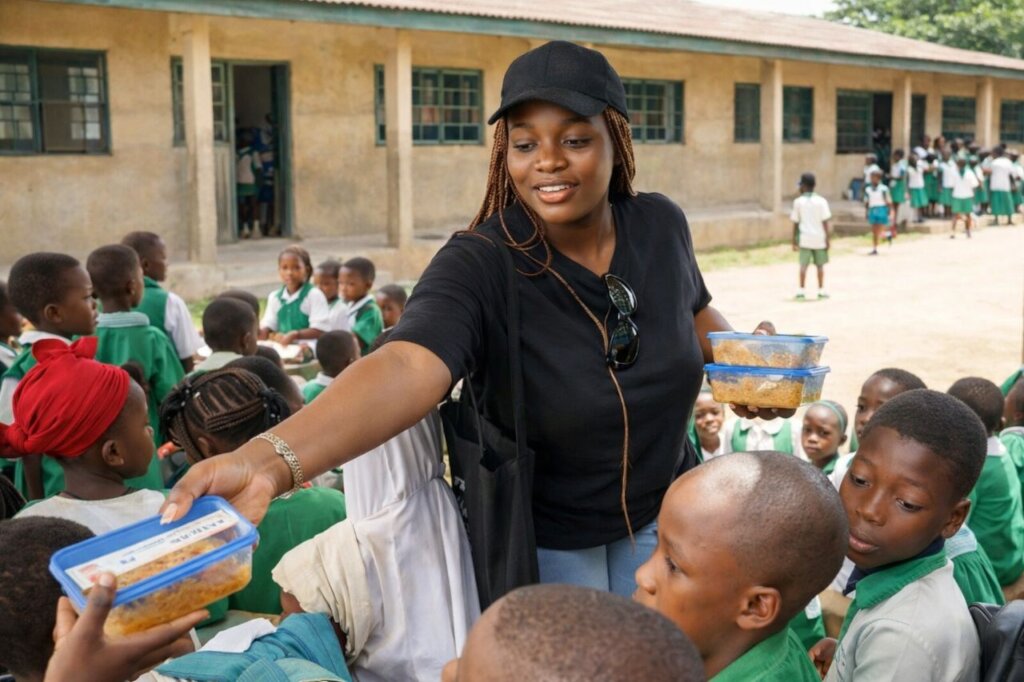
The Plate of Hope project is a humanitarian food relief initiative that supports school children from low-income and vulnerable households by providing nutritious meals during school hours and food items during festive periods. The project aims to reduce hunger, improve school attendance and concentration, and promote children’s overall well-being.
The initiative was implemented in collaboration with school authorities, volunteers, and donors to ensure that children who cannot afford school meals receive food free of charge while maintaining dignity and inclusiveness.
Background and Problem Statement
Hunger among school-aged children remains a major challenge in underserved communities. Many children attend school without adequate nutrition, negatively affecting their health, academic performance, and emotional well-being. Teachers have reported poor concentration, fatigue, and absenteeism linked to hunger.
The Plate of Hope project was established to address this challenge by ensuring that vulnerable children receive at least one nutritious meal during school hours.
Project Objectives:
The objectives of the Plate of Hope project are to:
Target Beneficiaries:
The primary beneficiaries are:
Project Scope and Activities:
The project activities included:
Resources and Funding:
The project was supported through:
Outcomes and Impact
The project achieved the following outcomes:
Overall, the project helped create a more conducive learning environment and reduced hunger among beneficiaries.
Challenges Faced
The major challenge was the time required for food preparation and distribution, which affected efficiency and consistency.
Other challenges included limited funding, rising food costs, and logistical constraints.
Sustainability and Future Plans:
To address time constraints and improve efficiency, the project adopted a school-led feeding model. Schools received monthly food supplies, while designated caterers handled meal preparation and distribution. This approach improved coordination and ensured consistent meal delivery.
Children who can afford school meals continue to pay, while vulnerable children are served free of charge, ensuring inclusivity and dignity.
Additional sponsorship is required to maintain balanced and nutritious meals daily. We are actively engaging more sponsors to improve meal quality, variety, and sustainability.
Future plans include:
Strengthening partnerships with schools and caterers.
Conclusion
The Plate of Hope project demonstrated that access to nutritious meals during school terms and festive periods improves children’s well-being and educational outcomes. With continued support, the project can expand its reach and impact.
Acknowledgement
We sincerely appreciate the support of our donors, volunteers, school authorities, and partners who made the Plate of Hope project a success. Your contributions brought smiles and hope to many children, especially during the Christmas season.
Project reports on GlobalGiving are posted directly to globalgiving.org by Project Leaders as they are completed, generally every 3-4 months. To protect the integrity of these documents, GlobalGiving does not alter them; therefore you may find some language or formatting issues.
If you donate to this project or have donated to this project, you can receive an email when this project posts a report. You can also subscribe for reports without donating.



Support this important cause by creating a personalized fundraising page.
Start a Fundraiser