By Iain Guest | Project coordinator in the US
This report is being sent to 148 friends of The Advocacy Project who have donated to our ten appeals on GlobalGiving on behalf of families in Vietnam that have been damaged by Agent Orange.
We posted the first appeal in July 2016 on behalf of Mrs Do and her five children. Our most recent appeal, last year, sought $4,000 for the families of Mr Cu and Mr Kiem, who were exposed to dioxin poisoning by their parents, both veterans of the war. This appeal has raised $2,527 – enough to buy a cow for each family – and is still active.
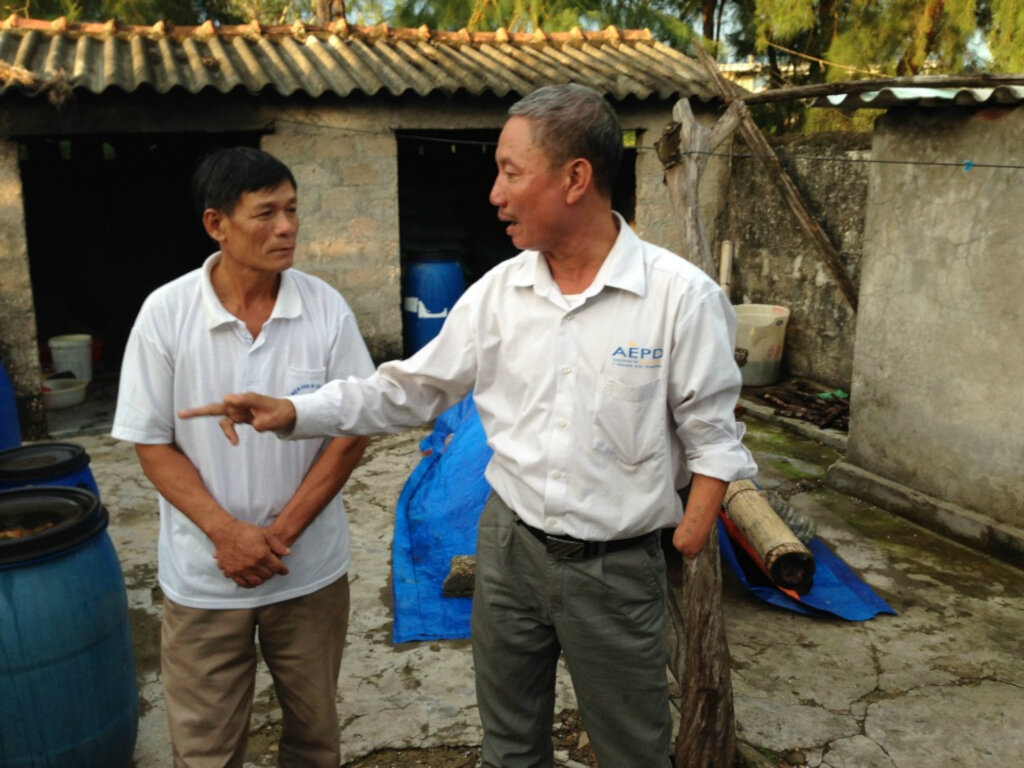
All of the families live in Quang Binh province and are still supported by our Vietnamese partner, The Association for the Empowerment of Persons with a Disability (AEPD), a leading expert on war disability.
To all of you who have donated since 2016, we say thank you!
*
Our report is being sent to all 148 donors because we feel the families in Vietnam are part of a single story, spread over ten years.
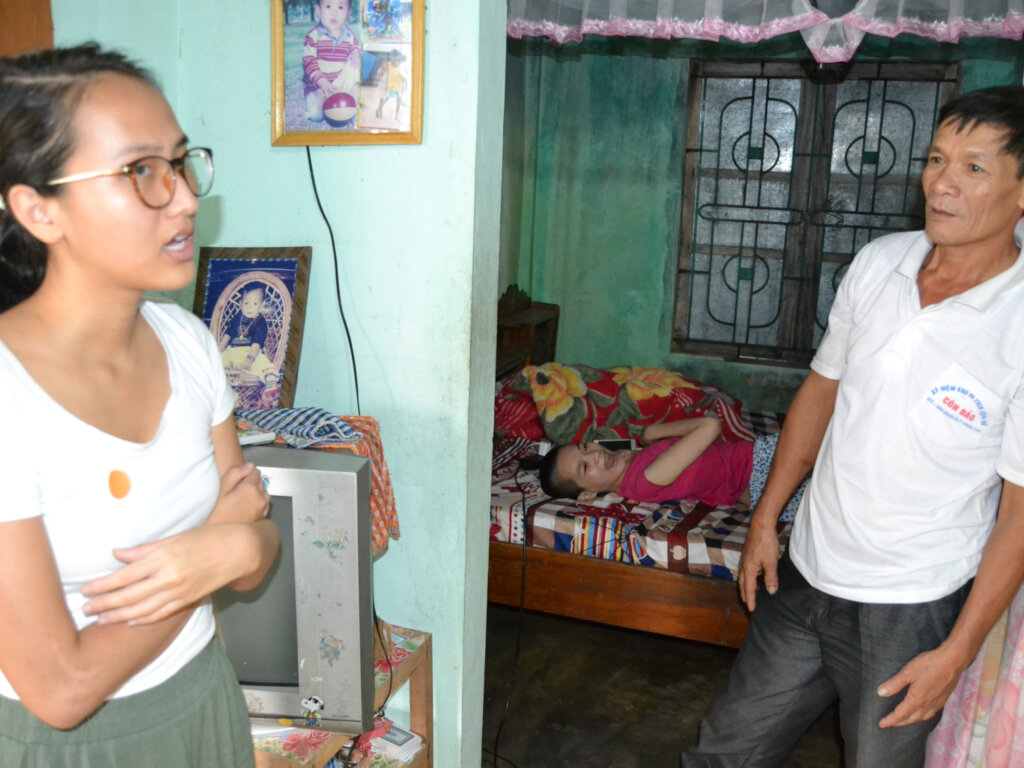
We have followed their fortunes through the blogs of our student volunteers (Peace Fellows) who worked at AEPD for ten weeks in the summer while studying for a Masters Degree. Our most recent Fellow, Angie, a student of conflict resolution at Georgetown University, visited nine families during her fellowship in Vietnam last summer.
Ten years of blogs have shown us how your donations have been used and allow us to assess the long-term sustainability of our support, which is (sensibly) one of the requirements for GlobalGiving appeals.
But this is not really about monitoring. Rather, it is a way for us to tell these families we still care, and also acknowledge that Agent Orange still causes death and destruction even though the war ended fifty years ago (April 30 1975).
The journey has not been easy because Agent Orange has caused terrible suffering, particularly among children. But we have also been inspired by the parents. Their courage has left an indelible mark on our Peace Fellows, several of whom have gone on to work in development and human rights.
*
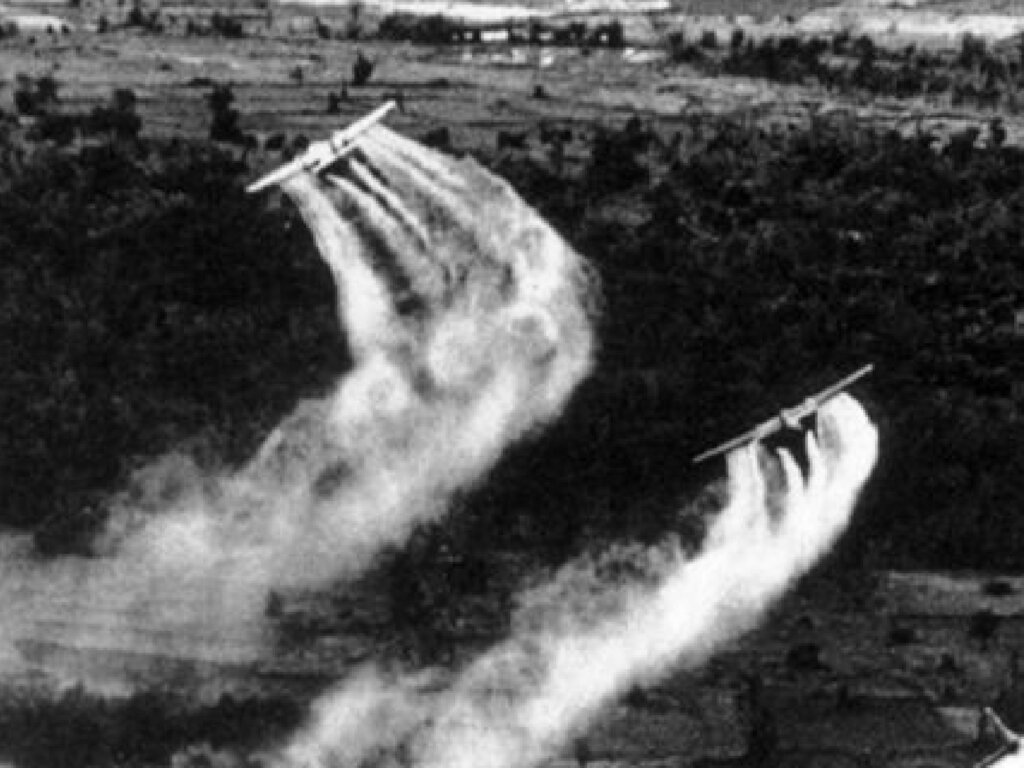
The tragedy of Agent Orange dates back to 1961 when the US began using herbicides to deny forest cover and crops to Viet Cong guerrillas in the South.
Between 1961 and 1971 US forces deposited 19.5 million gallons of herbicide over 10% of South Vietnam. Of this, 12.6 million gallons was a highly toxic mixture of two dioxin-laden chemicals. The product was known as Agent Orange because it was stored in containers with orange stripes.
The results are still being felt across Vietnam. Quang Binh province was barely sprayed because it was in North Vietnam, but thousands of soldiers from the province went south to fight and were exposed to the herbicide. They then returned home after the war and transmitted the dioxin to their children.
The precise method of transmission is still a medical mystery, but it is thought that the poison scrambled the DNA of the fetus during conception. One reason for the uncertainty is that most of the families with damaged children have also given birth to healthy children. In other words, there is no automatic cause and effect between Agent Orange and sickness.
In spite of this, the governments of Vietnam and the US assumed the worst. The US assumed that any service member who had served in Vietnam had been exposed and offered to treat any one of 20 medical conditions associated with dioxin poisoning. Vietnam has taken a similar approach.
In other words, both governments agree that Agent Orange is guilty beyond a reasonable doubt - even if the medical evidence is inconclusive.
*
The impact of Agent Orange has been particularly severe on children of the returning veterans.
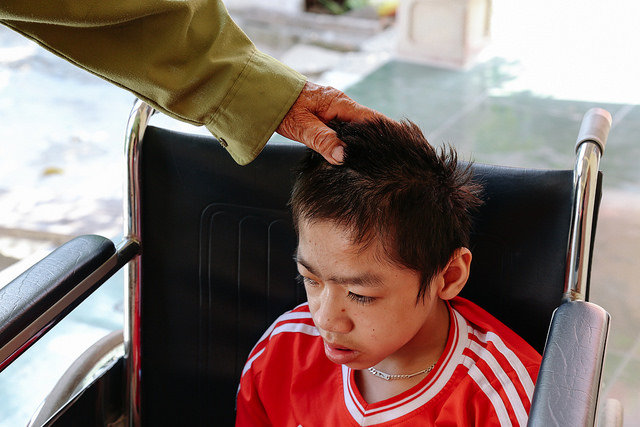
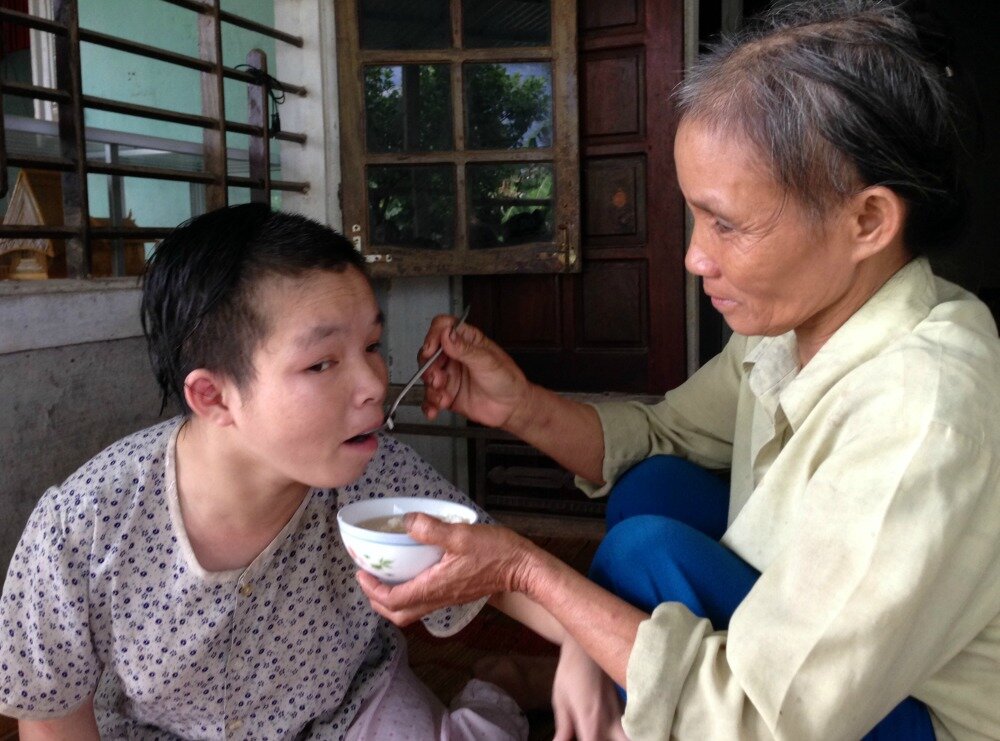
Mrs Loi, a widow, cares for three sons. One is so prone to violent rage that she has chained him to a wall since the age of 13. Another beneficiary, Mrs Miet, herself a veteran, suffered twelve miscarriages before giving birth to a child who barely survived. Mr Duc’s three daughters have been paralyzed since their early teens and are still using diapers. Mrs Do's son Tuan began to feel paralysis in his legs at the age of fifteen and died in 2018 from hemofilia. Her daughter Luyen has been bedridden since birth.
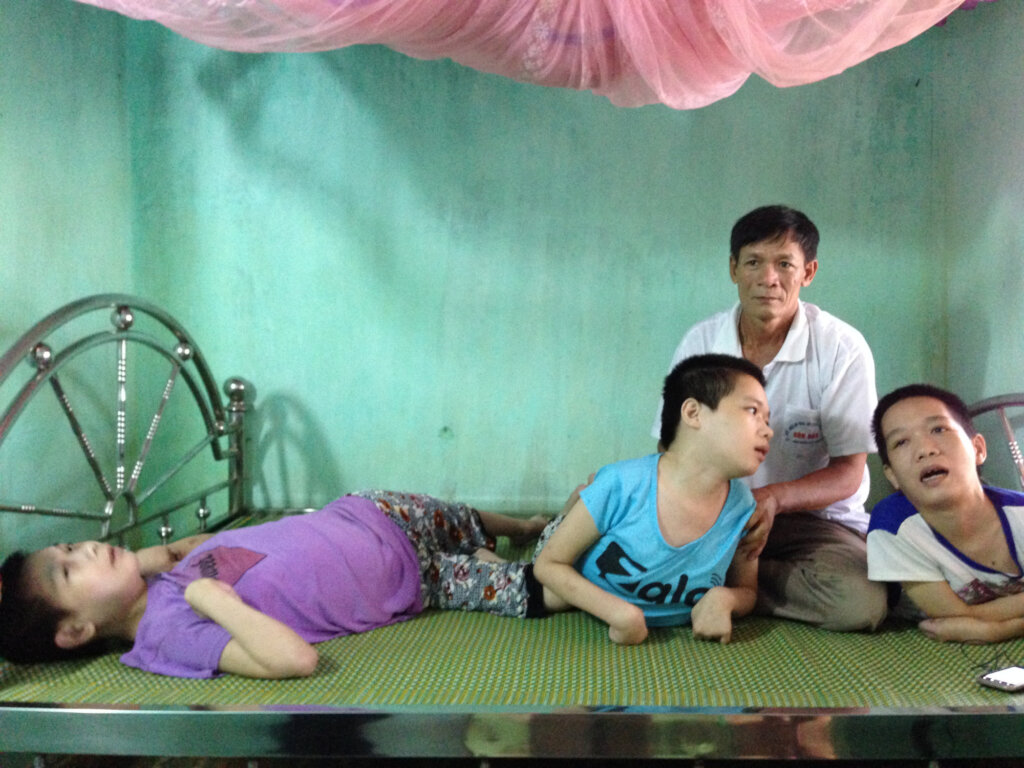
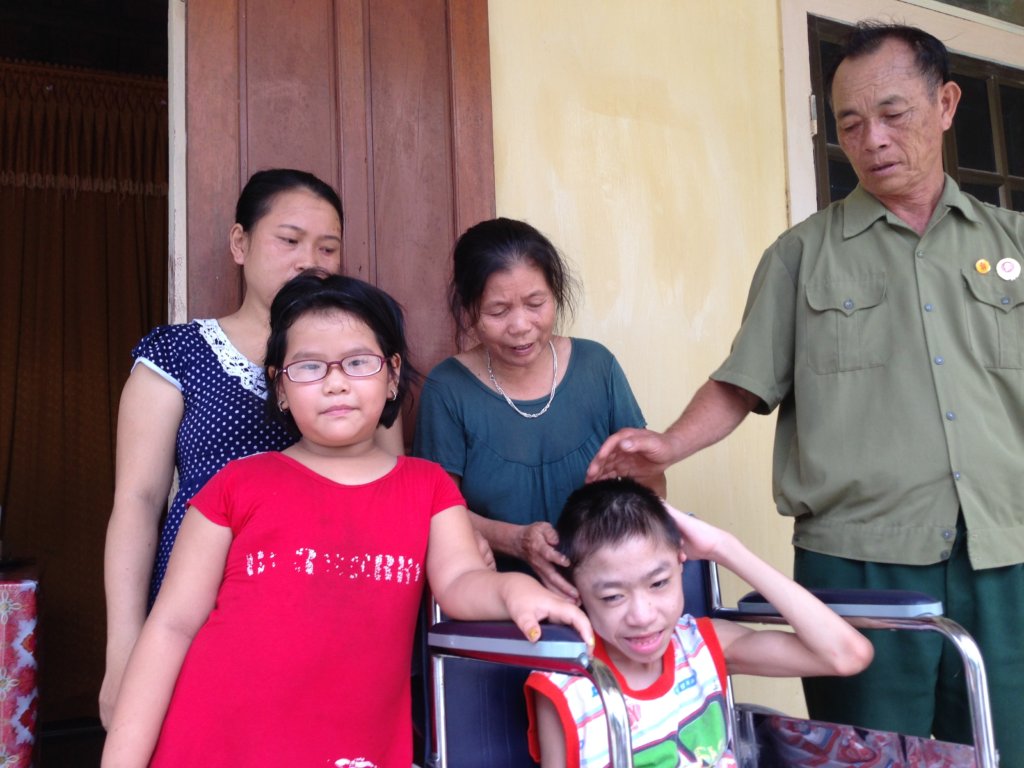
The four families to receive support in 2024 and 2025 have been less savagely affected than these earlier families. But this is not to downplay their suffering. One haunting family photo taken by our 2025 fellow Angie shows the family head, Mr Cu, with his wife and two children. Cu has problems with his eyesight, limited mobility in his left arm, spinal problems, and a speech impairment. His son weighs only 61 pounds at the age of fourteen.
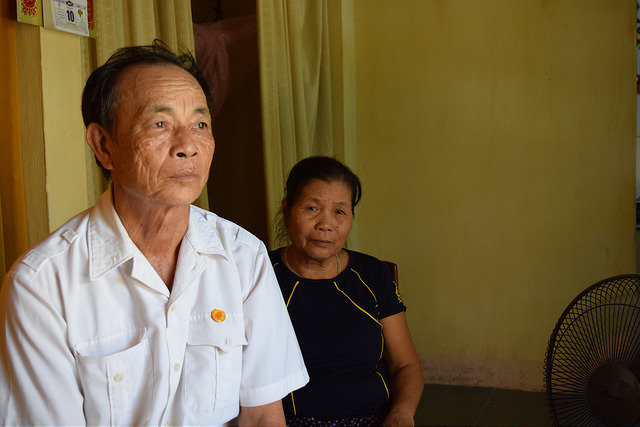
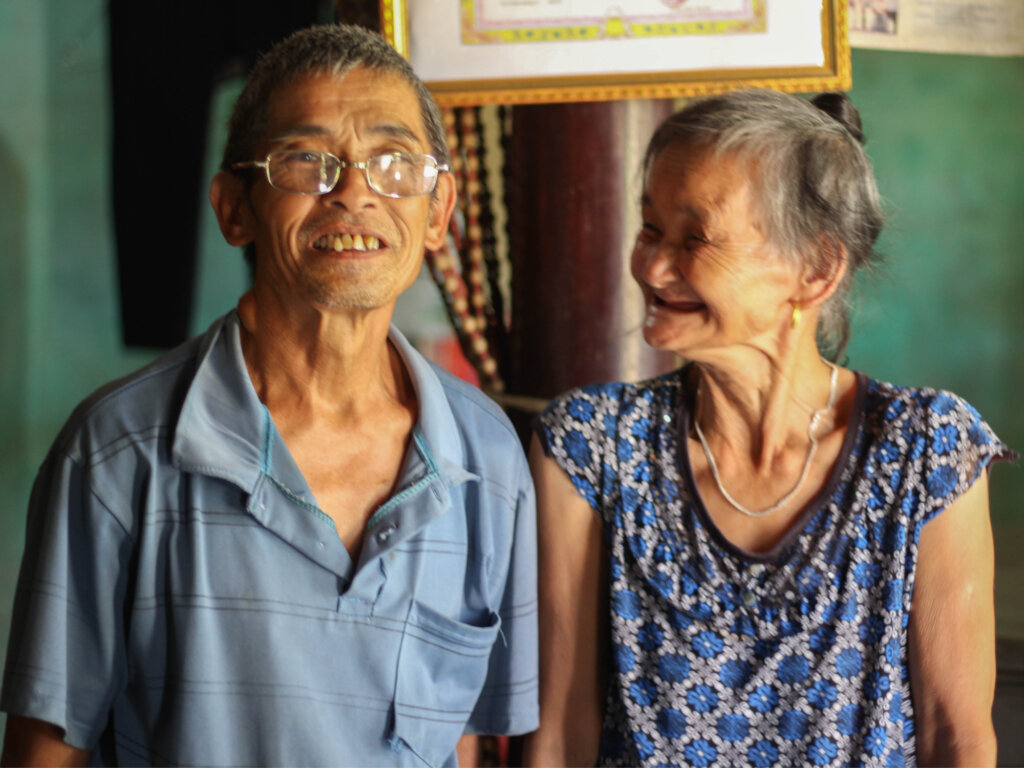
Another recent beneficiary, Mrs Thao, was infected with dioxin by her father and lives with an intellectual disability, epilepsy and chronic pain that makes concentration and physical labor difficult. After losing her husband, Thao married one of her father’s comrades from the army, Canh, who is forty years her senior. The two are devoted and dote over their two children. But life is getting more difficult for Canh as he grows older.
Meet all 15 Agent Orange families supported by AEPD and The Advocacy Project here.
*
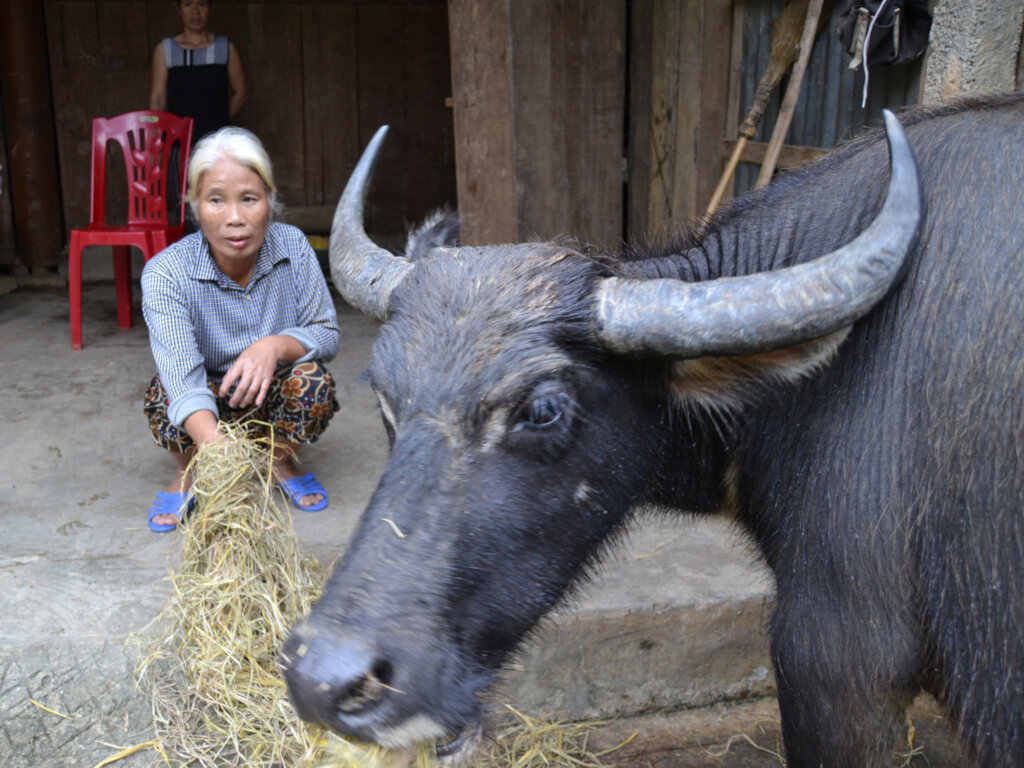
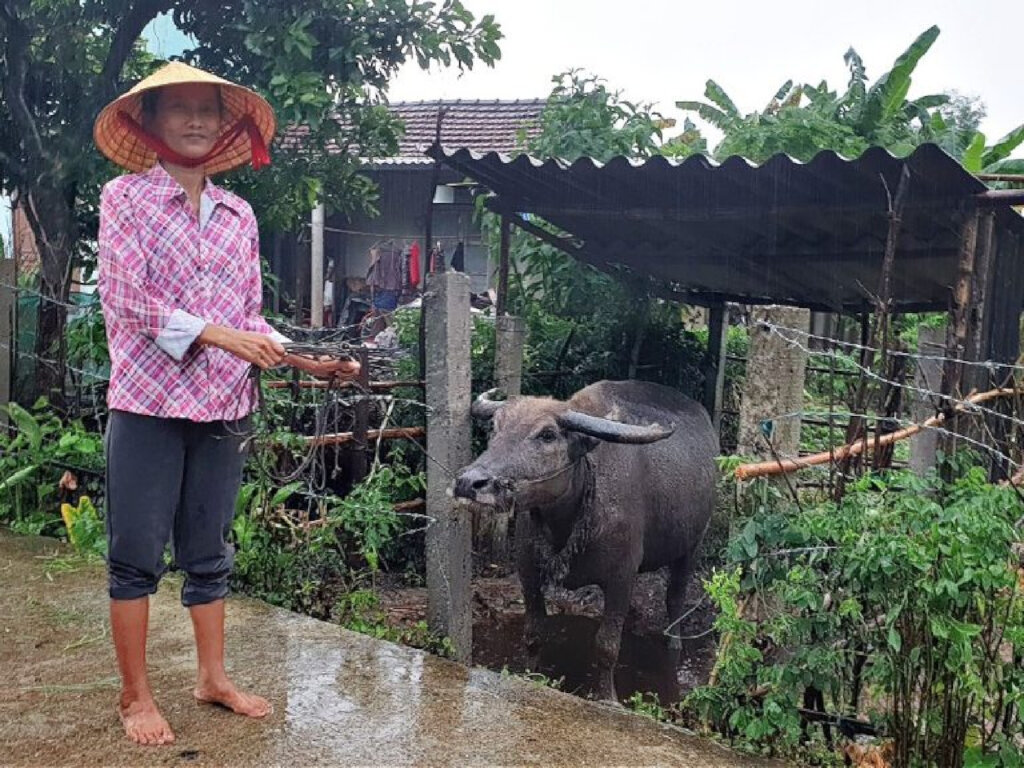
How have the families used your donations? All but one have - with AEPD's help - purchased a cow or bullock. The animals are a good investment because they are sturdy, can be rented out to neighbors, produce milk, and (perhaps most important) give birth to calves, which sell for up to 16 million Dong ($600).
The income has supplemented the monetary support given by the government to victims of Agent Orange and to veterans and their families. Much has gone to buy medicine, which is the first priority for many of these families. But AEPD is also receiving more requests for strengthen houses against storm surges and sea level rise, which are becoming more severe.
In advising families how to spend their grants AEPD puts great store on sustainability. Under the process, a local commune will present AEPD with a list of families in need. Once AEPD has chosen one or two families (depending on the amount we can raise through GlobalGiving) each family is entrusted to an AEPD outreach worker who helps them to develop a business plan and checks in regularly to see how things are going. Families make a small contribution to ensure their buy-in.
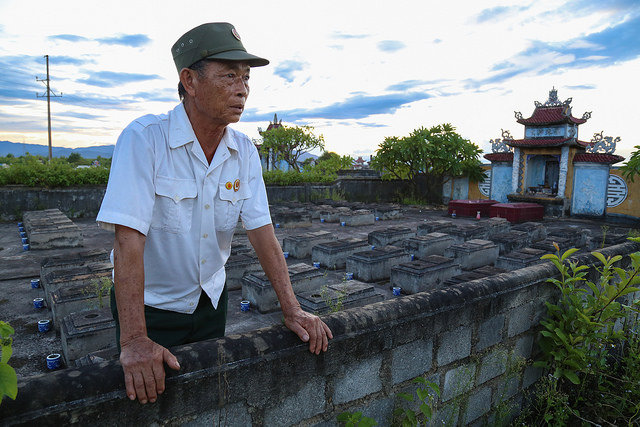
AEPD’s outreach workers are key to sustainability and we have worked with three over the years – Luu, Hoc and Thuan. All three were seriously injured in war. Mr Hoc was himself exposed to Agent Orange and almost lost a leg while serving in Laos.
This experience gave the three veterans an intimate knowledge of the challenge facing Agent Orange families as well as credibility among other villagers, who see them as war heroes. As a result, they have served as a bridge between the community and Agent Orange families, who keep to themselves. This is peer support at its best.
The three outreach workers have also developed fast friendships with our Fellows. Mr Hoc came out of retirement last year to accompany Angie on her visits to the families. As Angie noted in her blogs, he was greeted like a long-lost friend.
There are two risks with this approach. One is that it creates dependency on individuals. This is now being tested by AEPD. Mr Thuan passed away two years ago and Mr Hoc has retired because his leg still gives him a lot of pain. They have been replaced by two new workers who have themselves recovered from illness and accident and know all about disability. The third outreach worker, Mr Luu, has been at AEPD for over 15 years.
The second risk is that feeding the cows and bullocks becomes increasingly difficult for ageing parents like Mrs Loi, now 69, and weakened children like Mrs Thao, 42. Mrs Thao is unable to manage her cow on her own but her husband Canh, 81, also finds it a strain at his age. They depend on Mrs Thao’s brother to take their animal to high ground when the rains come.
*
Putting all of this together, it is hard to predict what the future holds for these families. But one thing seems clear: the crisis is not receding or "getting better" as the first generation of veterans pass.
Quite the reverse. According to one 2013 report from the provincial government of Quang Binh, 5,266 individuals received compensation for illness associated with Agent Orange in that year. The current estimate is that 6,300 are now affected, as new cases have been discovered.
While these statistics are guestimates, Dioxin remains in the human body for years and it is now affecting grandchildren of the veterans and even great grandchildren (who are classified as P3 by the Vietnamese authorities).
It seems safe to say that in Quang Binh province at least, the problem is getting worse. And for those affected the future looks more and more bleak. Some of the children and grandchildren have shown a slight improvement, but most have not. Age is taking a toll on their caregivers.
Given this it seems likely that the burden of caring for families will fall increasingly on the Vietnamese government and on civil society in Vietnam. How this will turn out is unclear. Agent Orange is a symbol of Vietnam’s resistance during the war and as long as there are veterans alive, and powerful advocates in their corner like the private Vietnam Association for Victims of Agent Orange/Dioxin (VAVA), this is unlikely to change. In addition, Vietnam has a thriving economy and is a middle-income country.
Yet, like any government, Vietnam must also balance the needs of vulnerable citizens against other spending priorities. Right now, grandchildren and great grandchildren do not receive government compensation.
The reduction in American aid will not help. Between 2006 and 2024 the US spent around $540 million on the remnants of war in Vietnam, including Agent Orange. This came to an abrupt end when USAID was closed in March 2025. Last September, the US Administration agreed to continue supporting war victims in Vietnam through 2030, but apparently at a much reduced level.
*
All of which raises the question – why should we continue to care?
There is no easy answer, even if the need remains great. The memory of the Vietnam war is fading, and there are many other urgent demands pressing in from more recent conflicts. Of the 28 projects currently seeking money for Vietnam on GlobalGiving, ours is the only one relating to Agent Orange.
So why should we care? Our answer would run as follows. Everyone has a moral duty to care about others in need, on our own doorstep or in far-off Vietnam. This personal connection is the essence of all humanitarian engagement, and it has never been needed more than today.
Our job at The Advocacy Project and AEPD is to make the case for these families in Vietnan. Agent Orange is one of the most devilish, indiscriminate, and persistent weapons of war ever devised by man. We feel this calls for a resolute response and we hope you agree.
With our thanks again and best wishes for the new year.
The AEPD team in Vietnam and AP in Washington
Project reports on GlobalGiving are posted directly to globalgiving.org by Project Leaders as they are completed, generally every 3-4 months. To protect the integrity of these documents, GlobalGiving does not alter them; therefore you may find some language or formatting issues.
If you donate to this project or have donated to this project, you can receive an email when this project posts a report. You can also subscribe for reports without donating.