Centuries-old traditions are guiding communities as they rebuild after disaster.
In September 2023, the Al Haouz earthquake became the strongest ever recorded in Morocco, with tremors felt as far away as Spain and Algeria. Entire villages in the Atlas Mountains were shaken, not only physically, but economically and culturally. Homes collapsed, agricultural terraces crumbled, and livelihoods rooted in centuries-old traditions were suddenly at risk.
In response, thousands of people have come together to reimplement traditional lifeways that have sustained their families for hundreds of years. Together, they are reconstructing the livelihoods and villages they call home and ensuring a future that protects the people and land for generations to come.
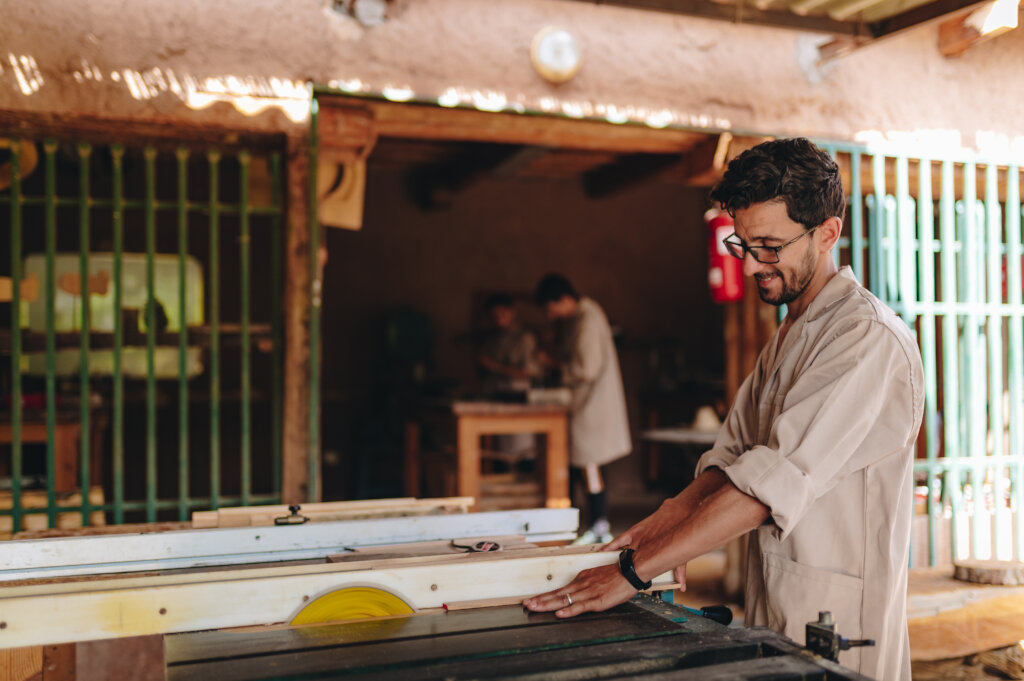
Woodworking trainee Abdellatif says, 'It can be difficult to find skills training and work in the High Atlas Mountains and I am thankful to the many champions who help this project. I feel satisfied here. Tansghart Woodwork Centre means I can live and work near my home village.'” Photo: Eve Branson Foundation
Their work is ongoing. Today, new economic opportunities are being carved out by Morocco’s own; traditional farming and lifeways are being restored. Women’s traditional craft collectives are bringing businesses to the mountains. Education remains accessible to thousands of rural students and sustainable housing is being reinforced and reconstructed with earthquake safety measures.
Together, Moroccan communities are finding new strength in a promising path forward.
Over the last two and a half years, generous support to the Morocco Earthquake Relief Fund has helped Morocco-based nonprofit partners accomplish this work: one field, one school, one home, and one craft at a time.
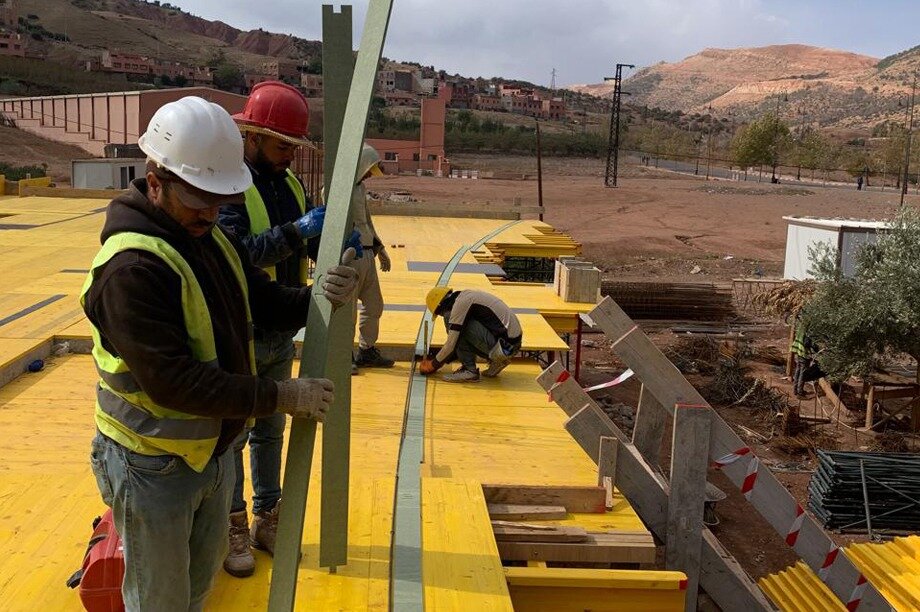
Crews rebuild two destroyed boarding houses, providing safe accommodations for students near their schools and families. Photo: Amis des Ecoles
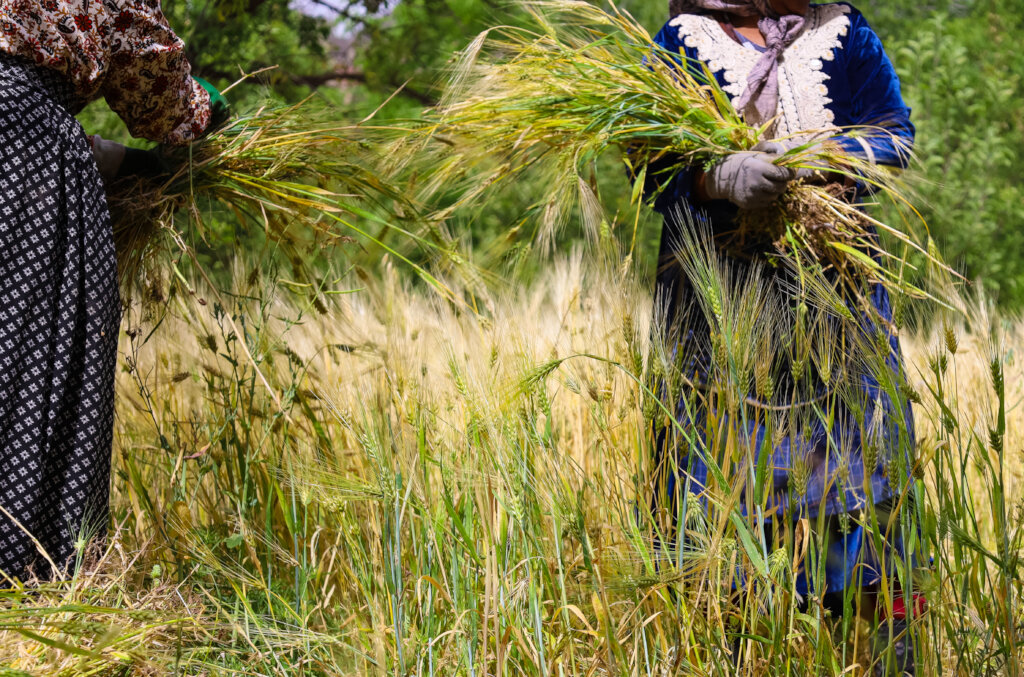
Collecting harvests in lush fields, the Global Diversity Foundation is restoring agrobiodiversity, repairing critical water systems, supporting animal health, and empowering local cooperatives and women leaders in earthquake-affected communities.
Though this fund is closing after making a final round of grants to nine deeply rooted nonprofits, its impact continues. One partner, Moroccan Biodiversity and Livelihoods Association (MBLA), shared the story of Lalla Yamna, a farmer whose experience reflects this broader recovery:
“I lost my husband years ago. I lost my provider, my support,” Lalla Yamna said, tears welling in her eyes. “Since then, I have carried the weight alone, managing the fields, trying to keep everything alive. After the earthquake, my terraces were destroyed, and I was left with nothing. No one to help me rebuild.”
“But then MBLA came. MBLA helped me restore the terraces, and now I can irrigate and plant once more. You gave me hope. Your help means everything to me.”
“Bit by bit, life returned. The terraces turned green again, water flowed through the reconstructed canals, and hope took root once more.”
“Working in partnership with MBLA, community members who still hold deep knowledge of traditional terrace building led the restoration efforts themselves. MBLA supported this work through coordination, farmer field schools, and resources—ensuring that recovery remained rooted in local expertise,” Lalla Yamna said.
“Thankfully, we are slowly returning to our lives. We will never forget the ones we lost, nor the destruction we witnessed, but we are grateful for the efforts that have helped us rebuild.” Lalla Yamna concluded.
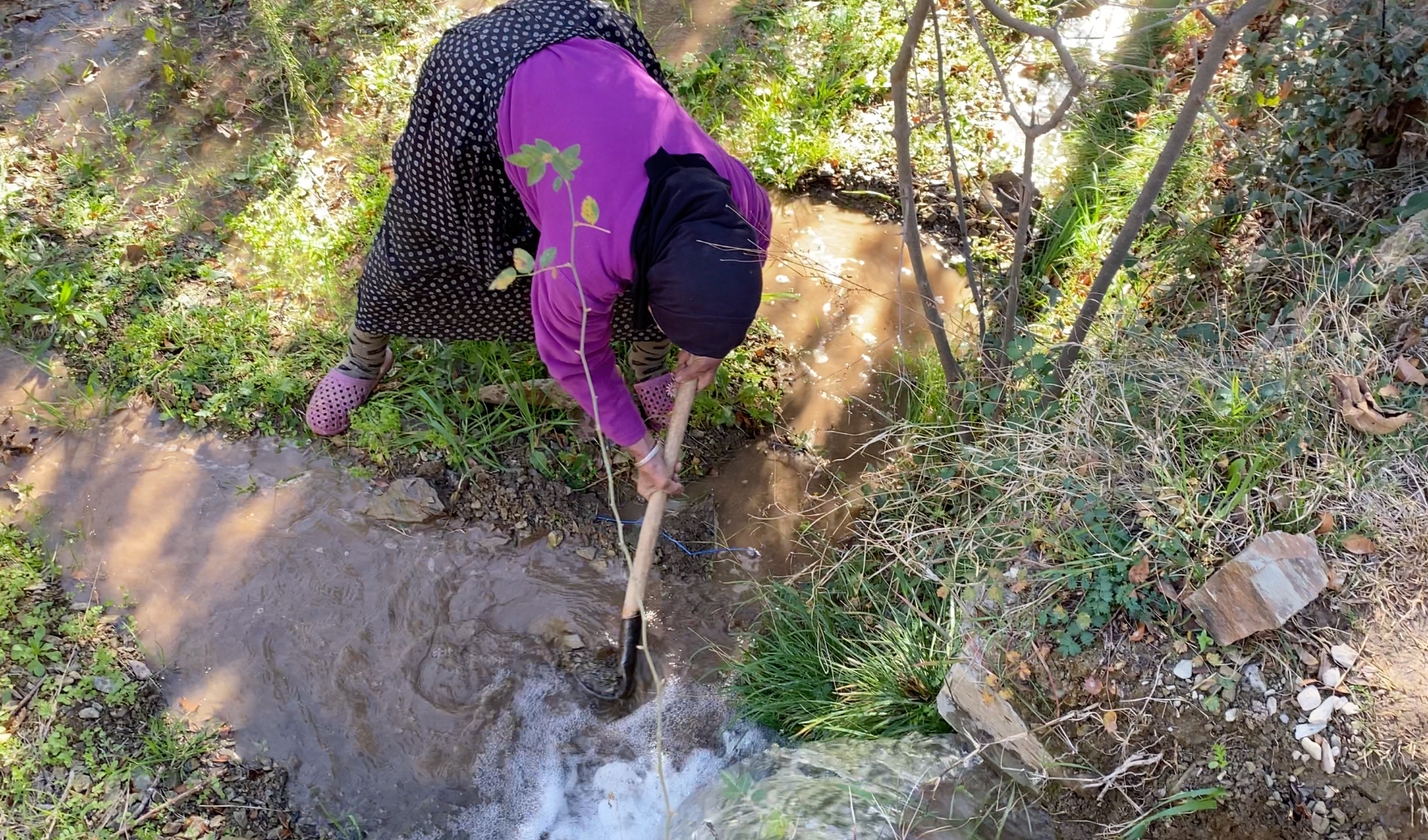
Lalla Yamna irrigating her newly reconstructed terraces in partnership with MBLA. Photo: MBLA
While the Morocco Earthquake Relief Fund is closing, each contribution helped seed a beginning—supporting recovery shaped by tradition, resilience, and care for the land and communities that call it home. In partnership with local organizations like the Moroccan Biodiversity and Livelihoods Association (MBLA), communities are rebuilding in ways that honor land, memory, and shared knowledge.
What has emerged is not just reconstruction, but continuity: proof that traditions rooted in place can carry people forward, even after profound loss.
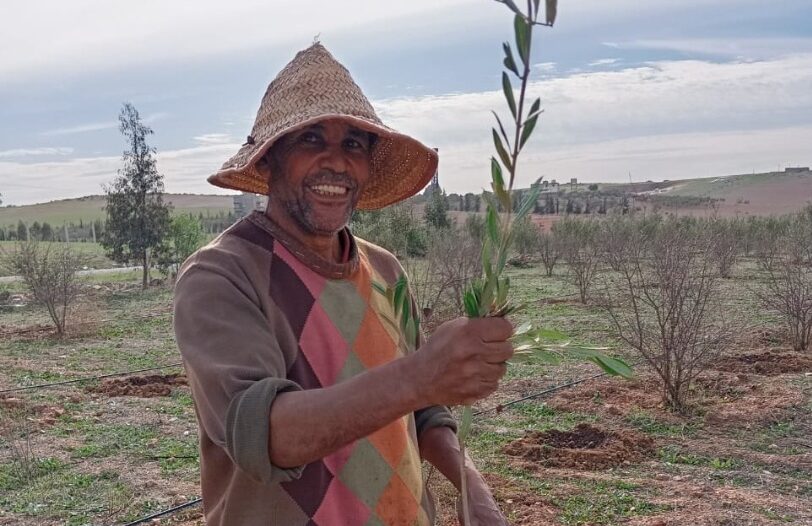
Holding a plant at a community-owned fruit tree nursery. Photo: High Atlas Foundation
Explore how local organizations have supported long-term recovery across Morocco.
Featured Photo: Building terraces using traditional knowledge in the High Atlas Mountains of Morocco by Moroccan Biodiversity & Livelihoods AssociationFind exactly what you're looking for in our Learn Library by searching for specific words or phrases related to the content you need.