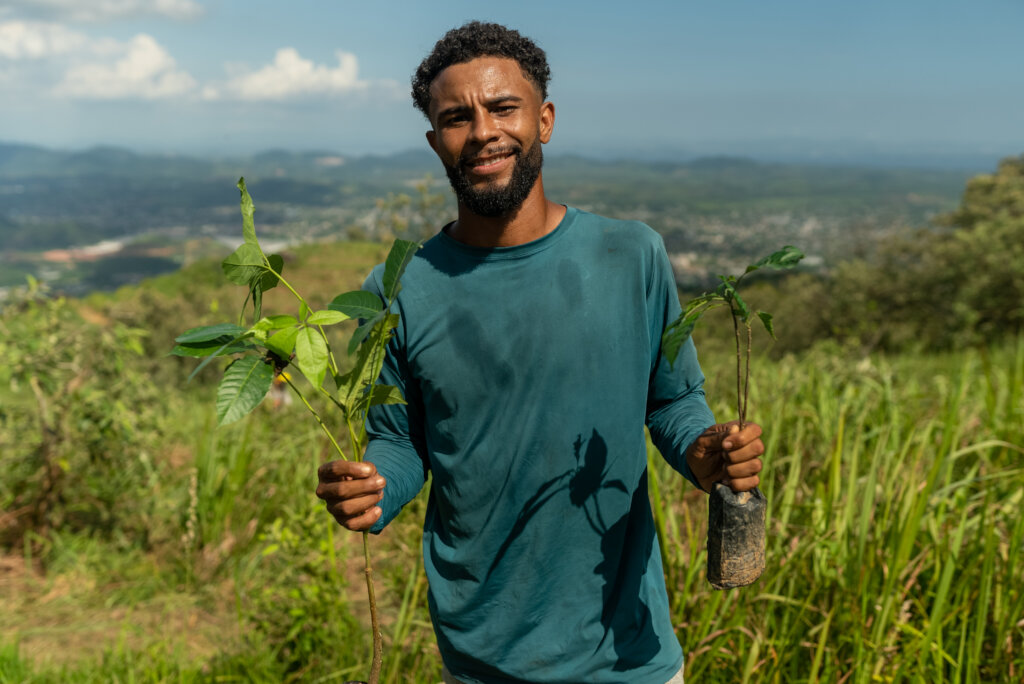
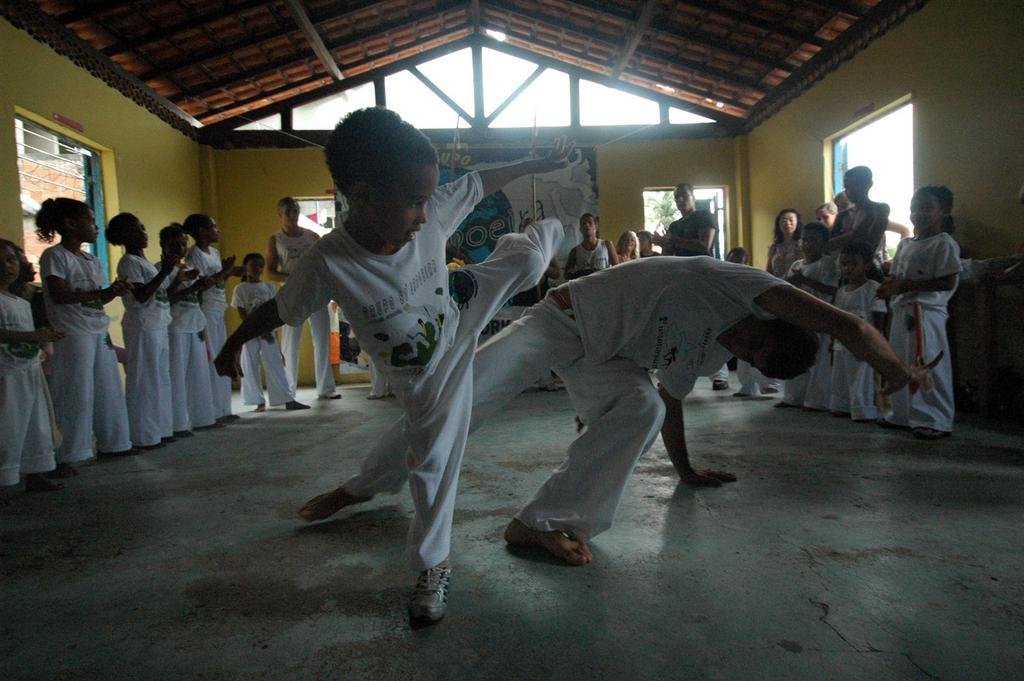
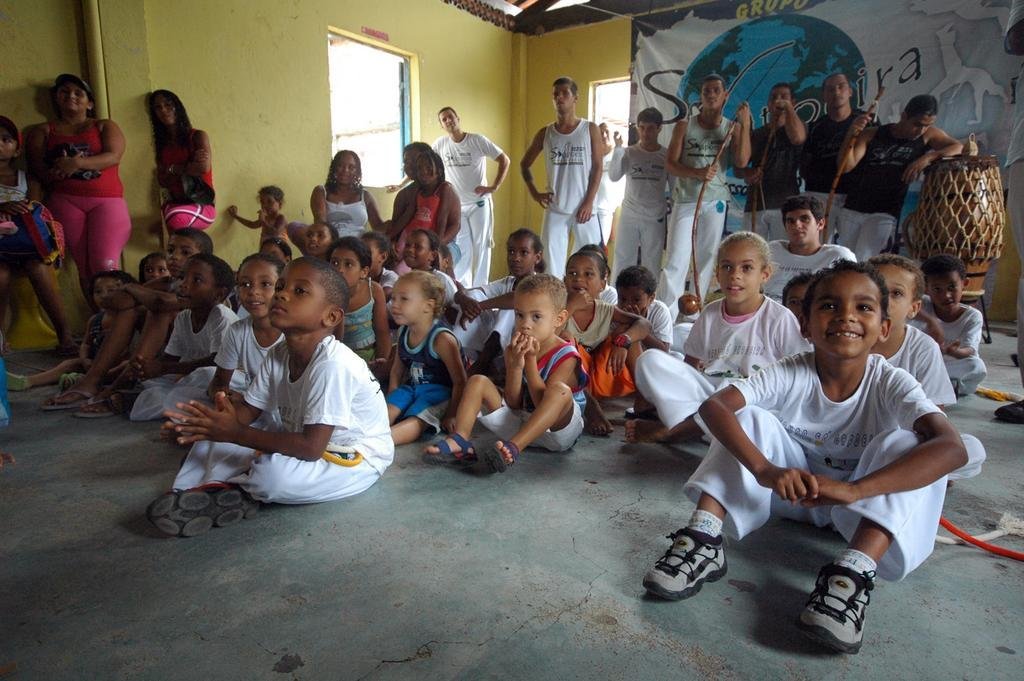
Our Mission Statement At Instituto Sinal do Vale, we believe that restoring nature and strengthening communities are inseparable. Our mission is to regenerate ecosystems, communities, and people by demonstrating practical solutions that reconnect humanity with nature. Through ecosystem restoration, regenerative bioeconomy, environmental education, scientific research, cultural renewal, and collaborative leadership, we cultivate living landscapes where both people and nature can flourish. From our Biohub in Brazil's Atlantic Forest, we work to inspire a future in which regeneration becomes the foundation for climate resilience, biodiversity conservation, social inclusion, and local prospe... read more Our Mission Statement At Instituto Sinal do Vale, we believe that restoring nature and strengthening communities are inseparable. Our mission is to regenerate ecosystems, communities, and people by demonstrating practical solutions that reconnect humanity with nature. Through ecosystem restoration, regenerative bioeconomy, environmental education, scientific research, cultural renewal, and collaborative leadership, we cultivate living landscapes where both people and nature can flourish. From our Biohub in Brazil's Atlantic Forest, we work to inspire a future in which regeneration becomes the foundation for climate resilience, biodiversity conservation, social inclusion, and local prosperity. Our Vision We envision a world of thriving bioregions-places where healthy forests, clean rivers, vibrant communities, resilient local economies, and rich biodiversity reinforce one another. We believe every territory possesses the ecological, cultural, and human potential to regenerate. By reconnecting people with the landscapes they inhabit, communities can become the principal stewards of their ecosystems while building healthier, more equitable, and more prosperous societies. Our aspiration is for Sinal do Vale to serve as an internationally recognized Biohub where innovative solutions are developed, tested, demonstrated, and shared with partners across Brazil and around the world. Our Founding Principles Regeneration is Possible Nature possesses an extraordinary capacity to heal when given the opportunity. Human societies possess that same capacity. Regeneration is not simply an environmental objective; it is a way of rebuilding ecological systems, economies, cultures, relationships, and hope. Nature and People Thrive Together Human well-being depends upon healthy ecosystems, just as healthy ecosystems depend upon engaged communities. We reject the false choice between conservation and development, believing instead that both must advance together. Living Laboratories Create Change Real transformation emerges through practice. Sinal do Vale functions as a living Biohub where restoration, education, research, entrepreneurship, culture, gastronomy, and community life come together in one landscape. Ideas are continuously tested, refined, and shared through experience. Every Bioregion Matters Solutions become lasting when they are rooted in place. Every watershed, landscape, and community possesses unique ecological processes, cultural identities, and economic opportunities. Working at the bioregional scale allows restoration to move beyond individual projects toward systemic transformation. Regenerative Economies Protect Nature Conservation alone cannot restore landscapes at scale. Healthy ecosystems must also create meaningful livelihoods. We promote regenerative enterprises based on biodiversity, agroforestry, ecological restoration, sustainable tourism, and responsible value chains that demonstrate forests are more valuable standing than destroyed. Learning is a Catalyst for Transformation Education extends far beyond classrooms. Every restoration site, forest trail, nursery, community kitchen, research project, and Learning Journey becomes an opportunity for people to experience regeneration directly and develop the knowledge, skills, and inspiration needed to create change. Women Lead Regeneration Across the world, women play essential roles in caring for ecosystems, families, food systems, cultures, and communities. Through initiatives such as Guardians of the Earth, we strengthen women's leadership, recognizing that regenerative futures depend upon their knowledge, collaboration, and vision. Young People Shape the Future Children and youth are not merely beneficiaries of change but active participants in creating it. By connecting young people with nature, education, creativity, and meaningful opportunities, we help cultivate the next generation of regenerative leaders. One Health The health of ecosystems, people, animals, and communities is deeply interconnected. Caring for forests also means protecting water, biodiversity, wildlife, domestic animals, food systems, and human well-being. Collaboration Creates Greater Impact Today's environmental and social challenges are too interconnected for any organization to solve alone. We believe meaningful transformation emerges through partnerships among communities, Indigenous and traditional peoples, governments, universities, businesses, civil society organizations, philanthropies, and international networks. Our Goals Our long-term goals are to: • Restore degraded Atlantic Forest landscapes while increasing biodiversity, ecological connectivity, and water security. • Demonstrate practical models for regenerative development that can inspire other territories in Brazil and internationally. • Train a new generation of ecosystem restoration practitioners through the School of Ecosystem Restoration. • Build regenerative value chains that create dignified livelihoods while protecting biodiversity. • Expand opportunities for women through leadership, entrepreneurship, and the Guardians of the Earth movement. • Inspire children and young people through education, environmental learning, creativity, and direct experiences in nature. • Strengthen regenerative agriculture and agroforestry while supporting responsible supply chains and partnerships with farmers and companies. • Promote regenerative tourism and Learning Journeys that connect visitors with ecosystems, communities, and local culture. • Advance scientific research and innovation by bringing together researchers, universities, entrepreneurs, and practitioners. • Protect and celebrate the cultural, historical, and ecological heritage of the Guanabara Bay watershed through initiatives such as the Recôncavo da Guanabara Trail. • Promote One Health by integrating ecosystem restoration, animal welfare, community well-being, and environmental education. • Build resilient communities capable of responding to climate change through nature-based solutions and collaborative governance. Our Theory of Change Sinal do Vale's work is organized through three interconnected dimensions. The Biohub is our living laboratory, where innovative ideas are transformed into practical experiences. Here, restoration, research, regenerative gastronomy, biodiversity conservation, environmental education, animal welfare, entrepreneurship, and community engagement become part of a single regenerative landscape. The Bioregion expands this work beyond the campus into the wider Guanabara Bay watershed. Through partnerships with communities, protected areas, municipalities, farmers, universities, businesses, and civil society organizations, we help regenerate entire landscapes while strengthening local identity and cooperation. The Bioeconomy creates the economic conditions that make restoration sustainable over time. Through biodiversity products, agroforestry, regenerative supply chains, Learning Journeys, sustainable tourism, and nature-based enterprises, we demonstrate that protecting ecosystems can generate meaningful livelihoods and long-term prosperity. Together, these three dimensions form an integrated model in which ecological restoration strengthens communities, communities strengthen local economies, and regenerative economies create lasting incentives to protect and restore nature. Looking Forward The challenges of climate change, biodiversity loss, and growing social inequality require more than isolated projects. They require living examples that demonstrate another way of inhabiting the Earth. Sinal do Vale exists to be one of those examples. Our ambition is not simply to restore forests, but to help regenerate the relationships between people and nature, inspire thriving bioregions, and contribute to a global movement where regeneration becomes the defining pathway toward a more just, resilient, and life-affirming future. Sim. Eu responderia às três perguntas de forma integrada, para evitar repetição e aproveitar melhor os 2.000 caracteres. Ficaria assim: Practical Solutions, Measuring Impact and Strategic Partnerships Instituto Sinal do Vale implements integrated, place-based solutions that connect ecosystem restoration, community development, and regenerative economies. Our practical actions include restoring degraded Atlantic Forest landscapes through native species planting and assisted natural regeneration; training restoration practitioners through the School of Ecosystem Restoration; promoting agroforestry and biodiversity-based value chains; supporting regenerative entrepreneurship; protecting watersheds and ecological corridors; engaging children and youth through environmental education; strengthening women's leadership through the Guardians of the Earth movement; and fostering Learning Journeys that inspire individuals and organizations to become active participants in regeneration. We measure success through a combination of ecological, social, economic, and institutional indicators. These include hectares restored, biodiversity recovery, carbon sequestration, improvements in water security, regenerative enterprises created, people trained, women and youth engaged, local livelihoods strengthened, and the expansion of collaborative governance across the Guanabara Bay bioregion. We also monitor the long-term resilience of restored ecosystems and evaluate our programs through continuous learning and adaptive management, recognizing that regeneration is a long-term process. Collaboration is fundamental to our approach. We work with local communities, farmers, universities, research institutions, schools, governments, businesses, philanthropic organizations, and international networks to co-create and scale regenerative solutions. These partnerships strengthen scientific research, responsible value chains, environmental education, public policy, and restoration

Each of GlobalGiving’s nonprofit partners is required to send quarterly donor reports detailing the impact of their work. Here are some of their recent updates:
By Thais Corral | Director
This month, activities at the Community Center Julio Otoni combined English language learning with painting and creative expression. Students were introduced to basic English words and phrases through... Read the full report ›By Thais Corral | director
At Sinal do Vale, we are fortunate to regularly encounter families of golden lion tamarins moving through the forest canopy. Native to Brazil’s Atlantic Forest and threatened with extinction,... Read the full report ›By Johanna Barba | Sinal do Vale team
WIth the school year well into its first quarter, we have been busy running our afterschool support with the children, giving English, IT and math and sciences and homework support as usual.... Read the full report ›


