By Libby Henrickson | Global Conservation Programs Coordinator
Dear Women for Conservation community,
Our 2026 Women in Science and Conservation grantees have successfully wrapped up their projects, and we are so proud to share their accomplishments with you. Each scientist led projects studying and protecting endangered amphibian and reptile species in rural areas of Colombia. They strengthened habitats, engaged local communities, and collected data on population size and species distribution that will inform local conservation policies.
Our Women in Science and Conservation program is close to our hearts for many reasons. At Women for Conservation, we believe that without women’s leadership in conservation, we can’t build solutions that are sustainable in the long-term. Women hold perspectives that strengthen conservation solutions by inspiring creativity and innovation. In order to create effective and resilient solutions, we need to incorporate diverse voices. However, many women face barriers to participating in science, whether because of financial constraints, social expectations, or access to opportunities. This program is our way of addressing these challenges. By providing opportunities, mentorship, and financial assistance, we help women get involved in conservation and protect endangered species that need our help.
Since 2023, we have granted scholarships to 20 young women scientists; their projects have impacted thousands of people through education and outreach, generated vital scientific data that has strengthened our understanding of several of Colombia’s endangered species, and protected habitats for creatures ranging from the giant Amazon river otter and the magnificent Amazonian Jaguar, to the tiny, jewel-bright Cauca poison frog.
Our 2026 Recipients:
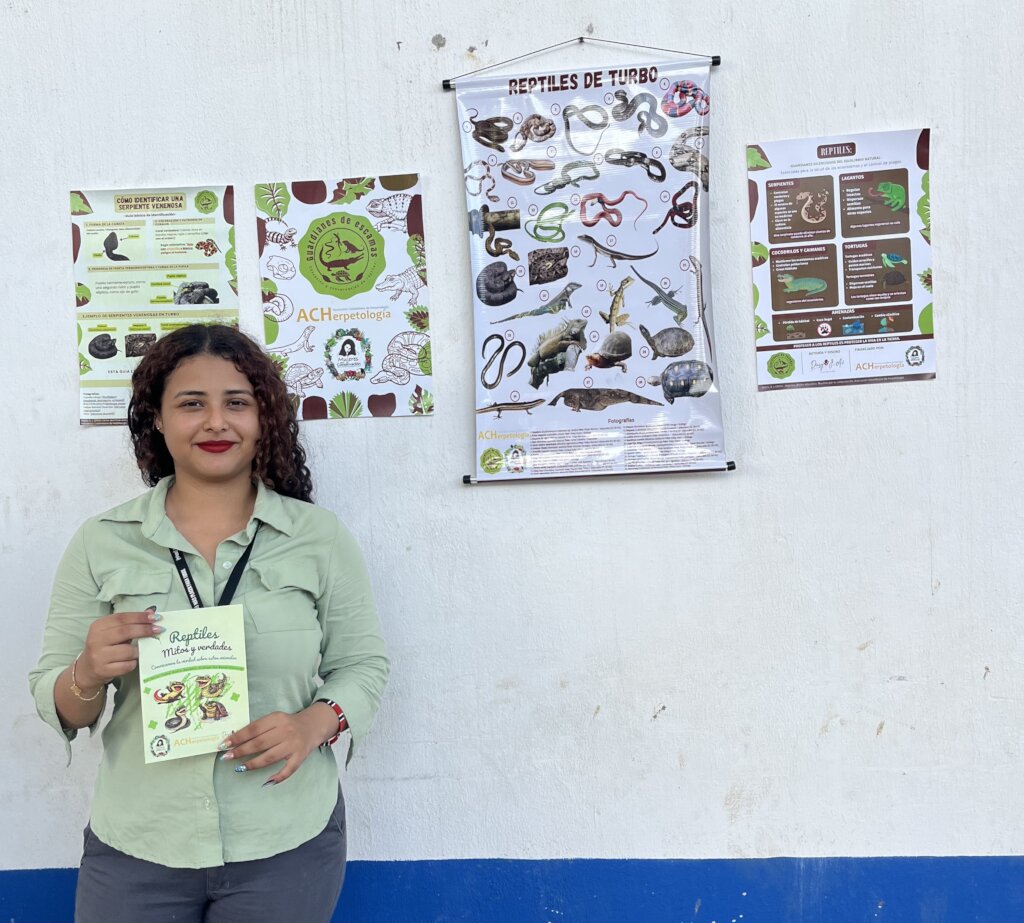
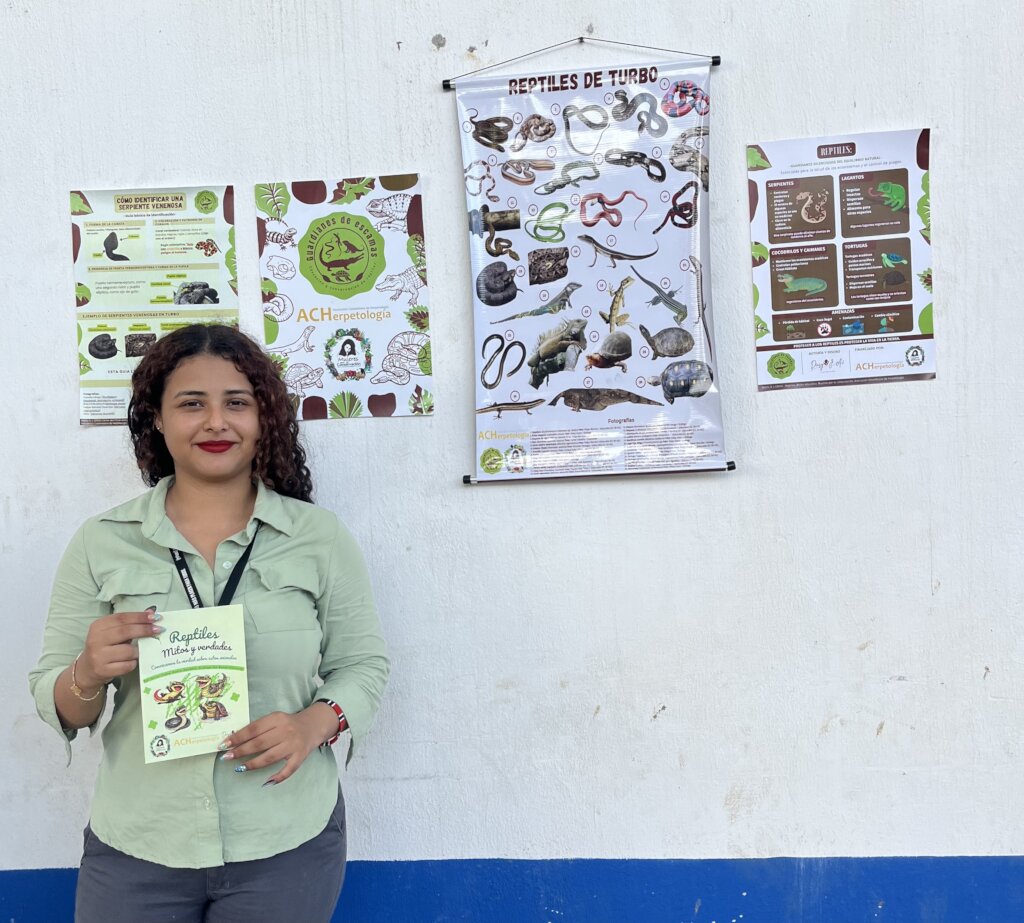
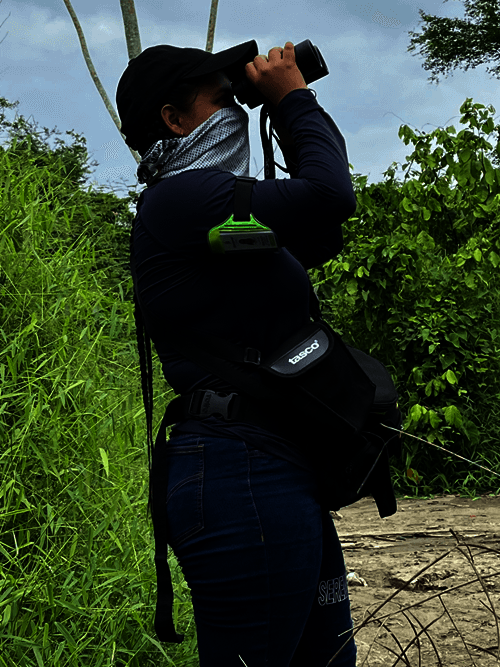
In the municipality of Turbo, in Urabá (Chocó), Deisy Joana Acero Agudelo, a coastal-zone ecologist, led an initiative that shifts paradigms about how we understand and coexist with reptiles. Her project, "Guardians of Scales: Reptile Education and Conservation" is an educational program that brings together scientific knowledge, local wisdom, and community action to transform the perception of these frequently misunderstood and feared species.
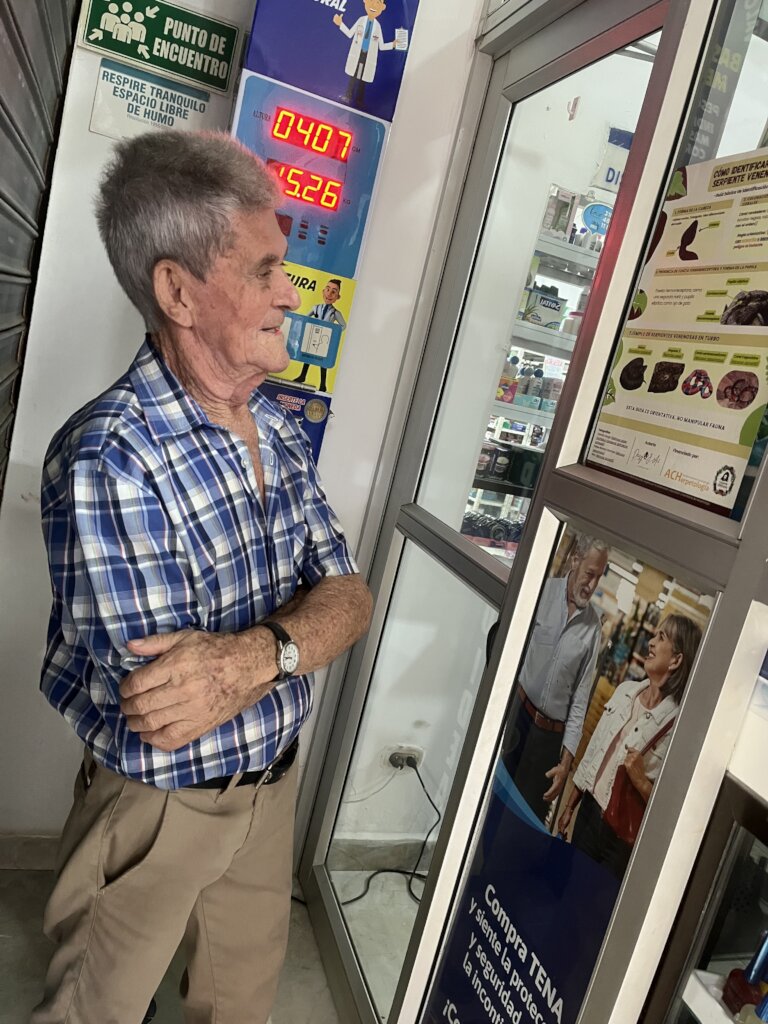
At the heart of the project are educational materials adapted to the local context: illustrated species cards, a booklet titled "Myths and Truths about Reptiles," and a mini field guide. Deisy placed the materials in key sites: pharmacies, health centers, schools, and community spaces. Why? Because she understands that environmental education does not happen in a laboratory—it happens where people live, work, and learn.
Deisy designed a series of workshops that turn local participants into "Guardians of Scales"—a group of people trained in reptile identification, responsible data recording using iNaturalist, capture-free monitoring techniques, and safety during encounters with wildlife. In a place where reptiles are frequently killed out of fear, these workshops taught coexistence.
Globally, millions of reptiles are killed by humans each year out of fear. Reptiles are widely seen as “scary” or “gross” creatures, even if they are in fact harmless to humans. By teaching the community how to safely identify venomous reptiles and sharing information about them in a positive light, Deisy is promoting human-reptile coexistence — and reducing the number of reptiles killed out of fear.
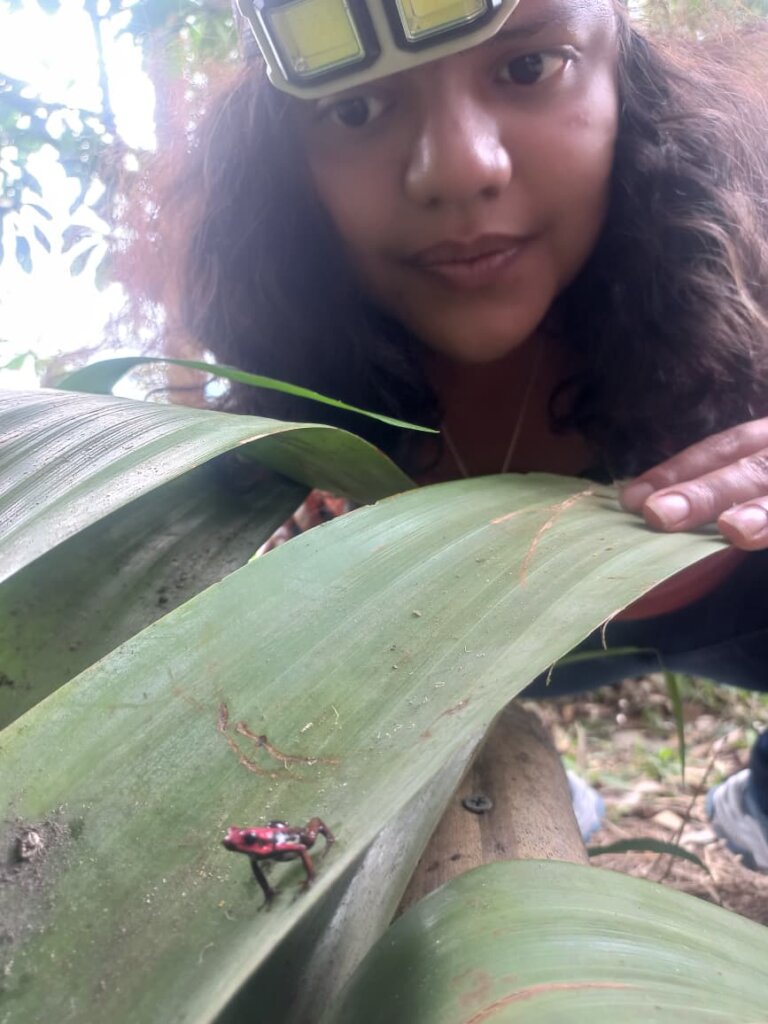
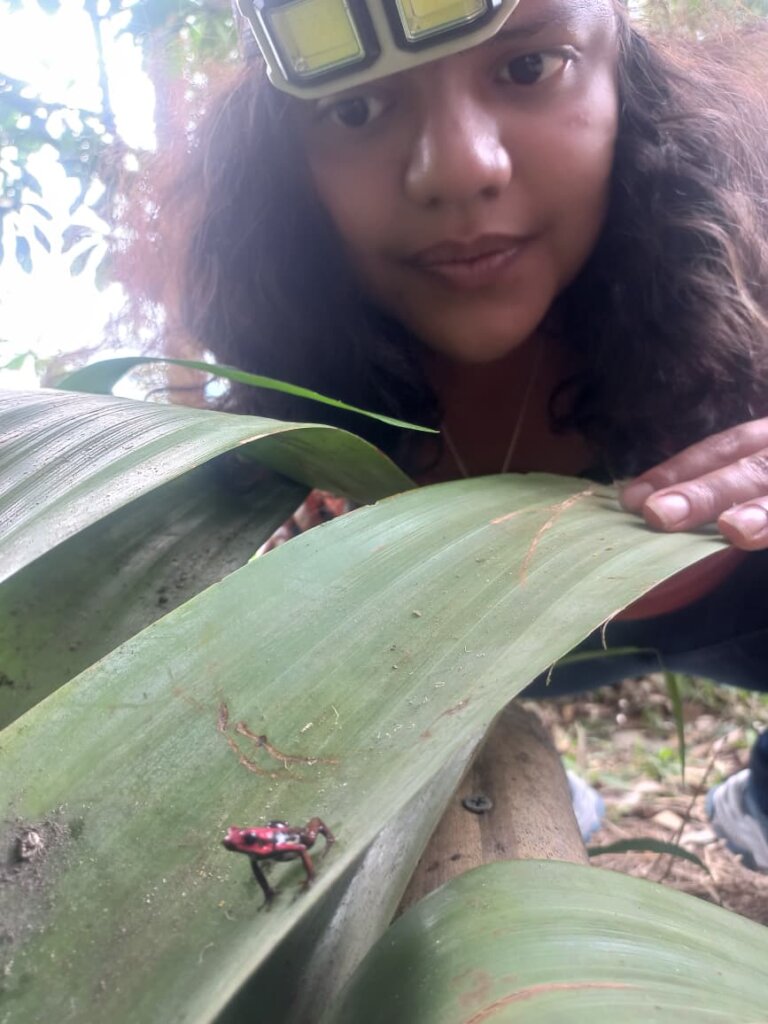
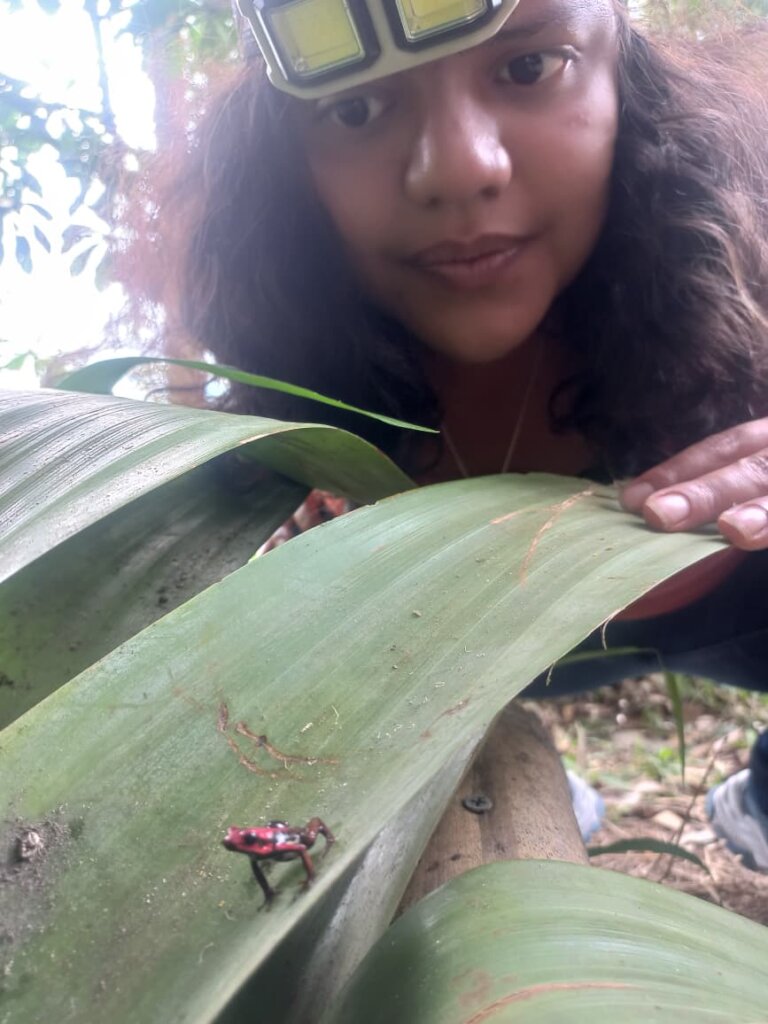
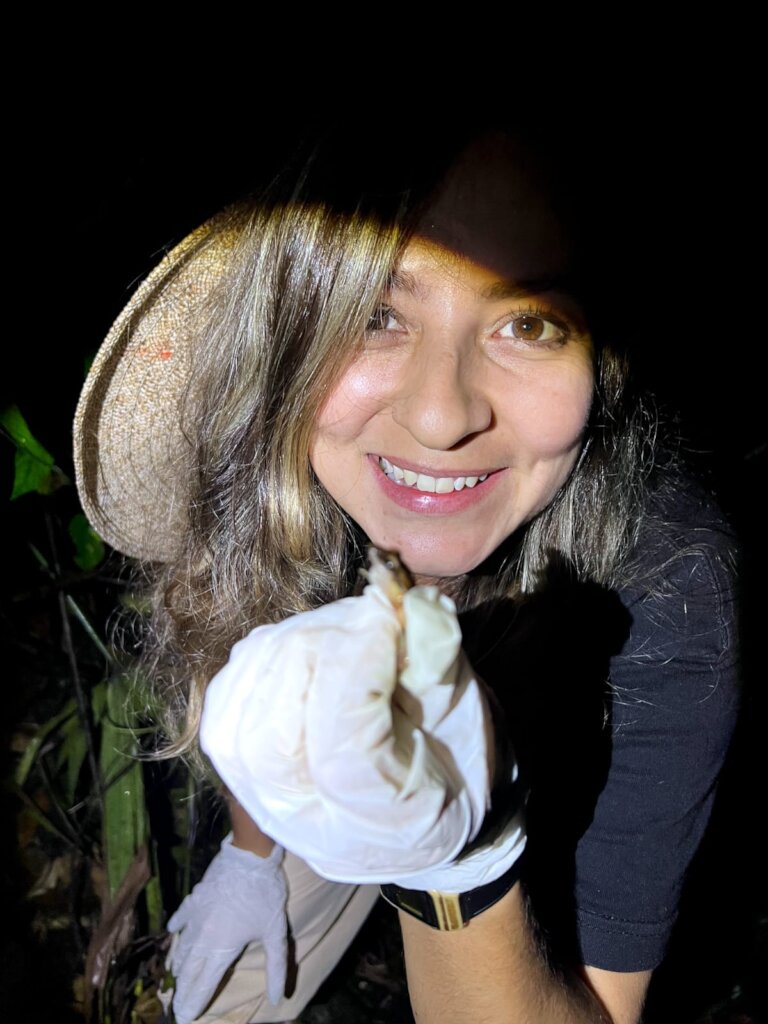
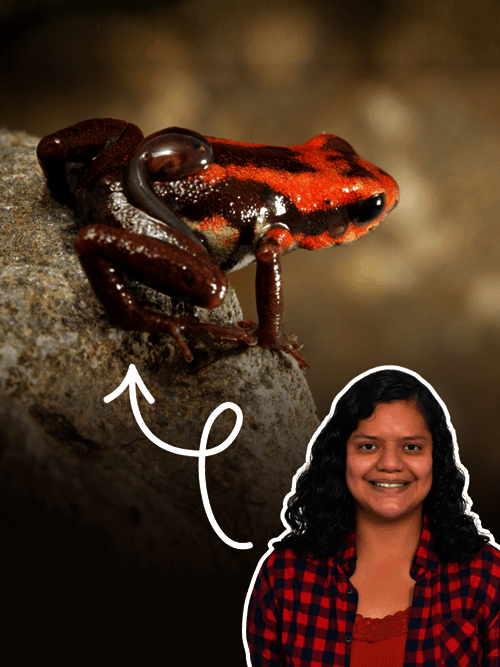
Angie Lozano is the co-founder of Suigeneris Association, a tourism enterprise made up of young people from Sevilla, Colombia committed to regenerative tourism, bio-tourism, environmental education, and biodiversity conservation. One day, while she was at work in Finca la Cascada, a friend showed her that he had found Cauca poison frogs (Andinobates bombetes) living on a nearby farm. These brilliant red, green, and black spotted frogs are not much larger than a quarter, and are highly endemic to western Colombia. They’re labeled as vulnerable by the IUCN Redlist because their habitat is being lost to agriculture and industrial logging. They make their homes inside bromeliads, tropical flowering plants with stiff, spear-shaped leaves that overlap in a rosette shape—the base of the bromeliad leaves form little pockets where water collects. Here, the poison frogs can safely hide from predators.
Inspired by finding this vulnerable frog so close to her place of work, she decided to launch a bromeliad restoration project to strengthen habitat for the species. Her project incorporated education and monitoring with the community to raise awareness about the biodiversity of the region and how to protect its precious wildlife.
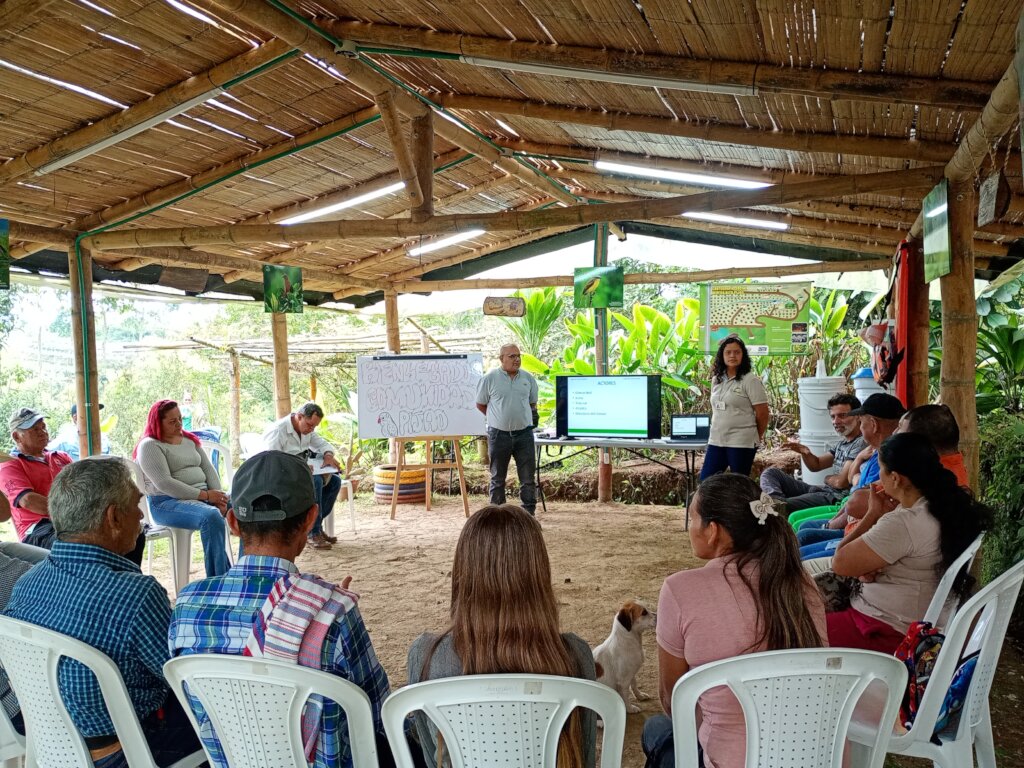
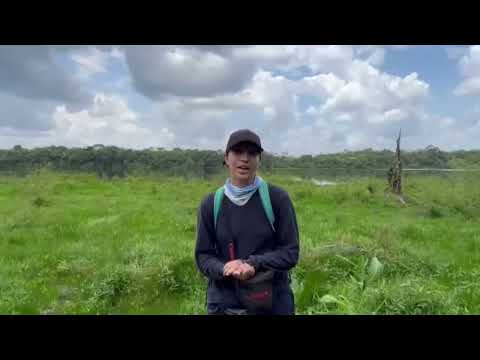
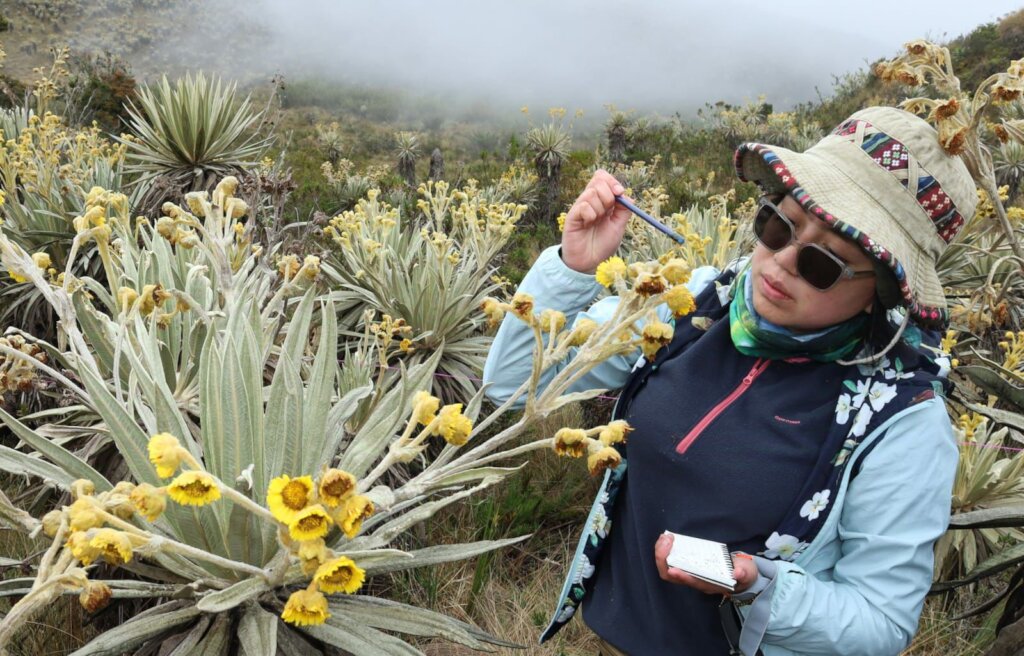
In the municipality of Córdoba, Nariño, within the Nudo de los Pastos, there is an ecosystem of rare beauty and fragility: the Andean highland forest. At an altitude between 2,750 and 3,300 meters above sea level, this dense, cloud-covered forest harbors a silent biodiversity that is often overlooked. It is home to amphibians and reptiles whose presence indicates ecological health; it is also the ancestral territory of the Males Indigenous Reservation, where Indigenous families have lived in harmony with nature for generations. At this crossroads of ecology, territory, and identity, Mara Mesías led a groundbreaking project: "Guardians of the Highland Andean Forest," which between March and June 2026 combined field outings, training workshops, a community booklet, and a public presentation of the project.
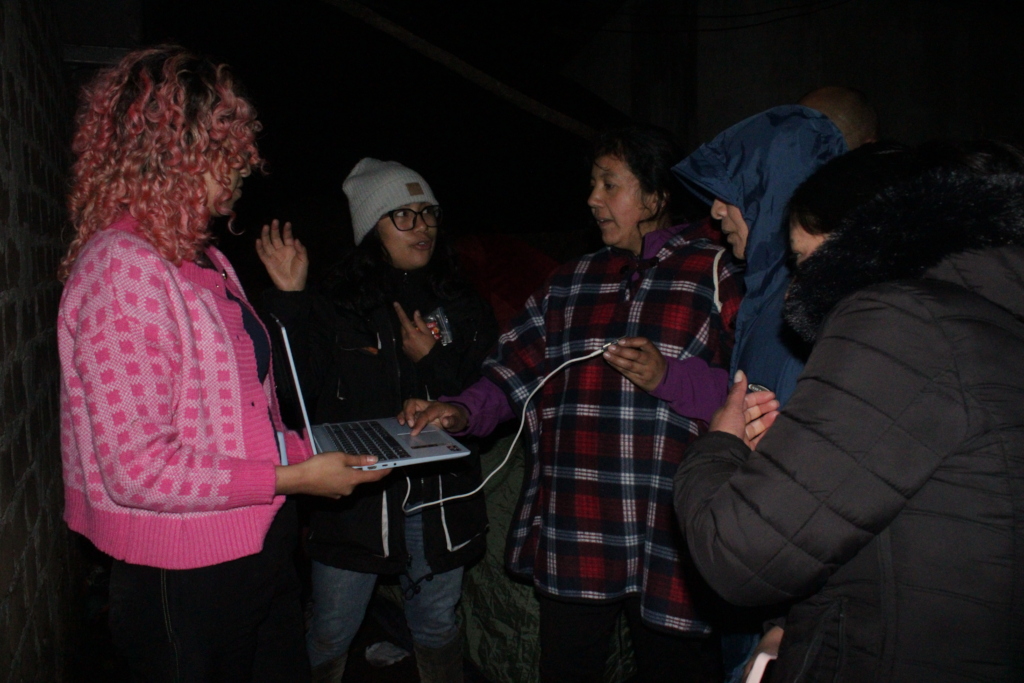
Unlike conventional projects where scientists arrive from outside and extract knowledge, Mara’s work placed women of the Males Reservation at the center of the research. The project sought to strengthen their leadership through training in participatory herpetological research, while simultaneously recognizing their ancestral knowledge and promoting their role as active agents in science and the region’s protection. The women used bioacoustic technology to gather data on species presence, and created a booklet sharing the story of the project and listing ways that the community could get involved.
"Guardians of the Highland Andean Forest" demonstrated that it is possible to carry out rigorous research while respecting territorial autonomy in spaces of horizontal learning where popular and scientific knowledge meet as equals. This model can be adapted to other Andean contexts, other Indigenous territories, and other vulnerable species of amphibians, reptiles, and wildlife that require urgent protection.
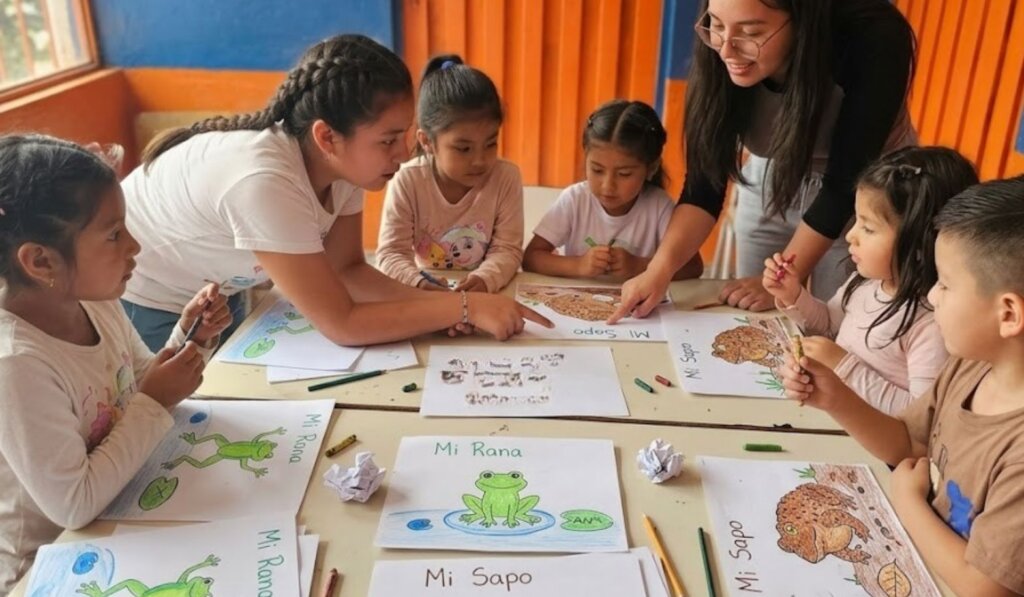
Stefanny Quintero, an environmental and music educator in Valle del Cauca, led a multifaceted project uniting environmental education, bioacoustics, and participatory GIS to identify areas for potential glass frog conservation in the western slopes of the Andean cloud forest. Glass frogs are a family of species of the Centrolenidae family, found in South and Central American rainforests. They get their name from their translucent skin which allows them to blend in with their surroundings (it also means that you can see their organs!). Several species of glass frogs are vulnerable, endangered, and critically endangered (IUCN Redlist) due to habitat destruction from industrial agriculture, logging,and human land development.
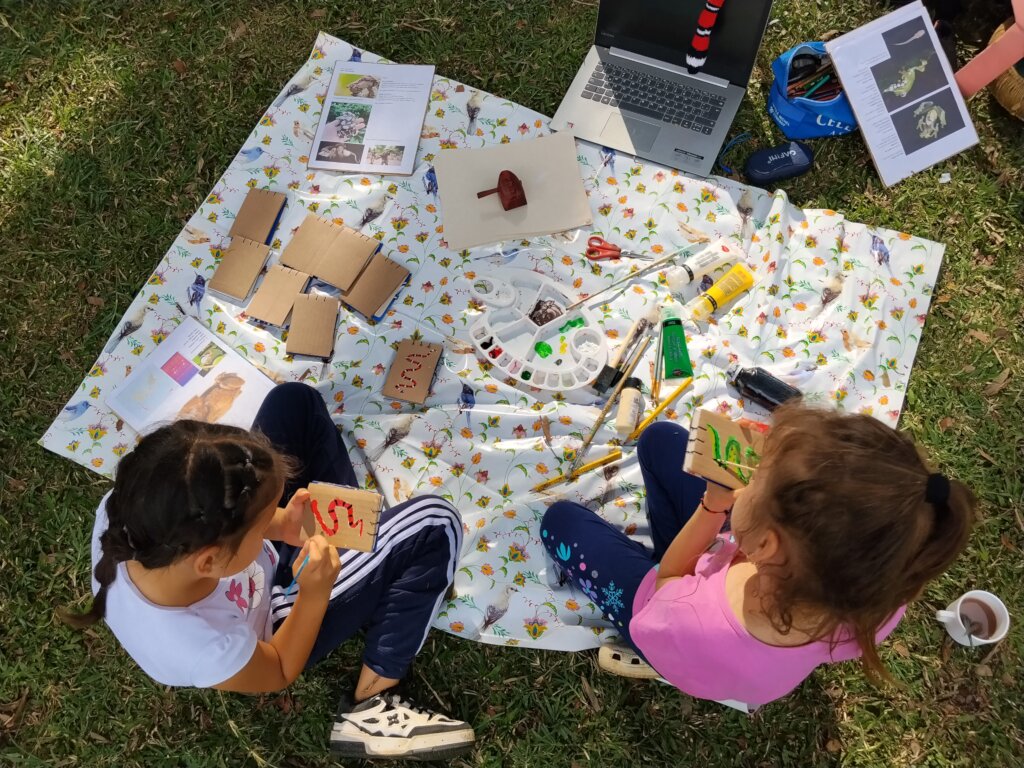
She hosted water cleanups, art sessions, and community engagements where community members discussed the importance of protecting and coexisting with amphibian species. She also led bioacoustic workshops, where participants learned how to use acoustic recording tools, including audiomoth recorders, to capture amphibian’s calls, which were later analyzed to identify which species were present in the area. This data will be used to prioritize future conservation areas for glass frogs. Her project engaged people of all ages, from kids in elementary schools to local women and men, allowing curiosity to guide the research and learning process.
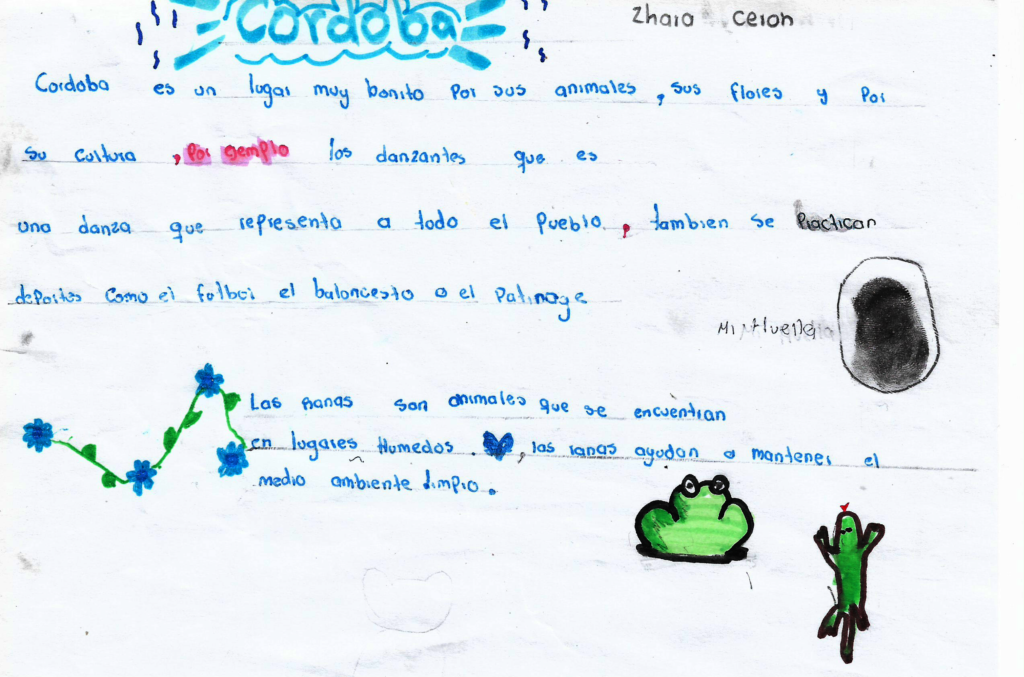
Valeria is a biologist and an Indigenous leader of the Pastos people, in southwest Colombia close to the border with Ecuador. Since March 2026, she has led an innovative project that transcends the boundaries between Western scientific knowledge and the ancestral knowledge of Indigenous communities. Her initiative, "Guardians of the Song and the Sun," seeks to promote the conservation of frogs through participatory activities in which the women, youth, and children of the Reservation are active protagonists in the identification, documentation, and protection of these species.
Her initiatives included:
Through these activities, the project has strengthened the leadership of Indigenous women in conservation work. The participants gain technical knowledge and position themselves as agents of change in their communities.
Thank you
We thank you for being a vital part of these women scientist’s projects. By contributing to this cause, you are breaking barriers preventing women from getting involved in conservation science. You directly supported education and research participation for hundreds of rural Colombian women and youths, generating data that will inform local policy and conservation decisions and providing opportunities that could change the lives of young students and women. We need more people like you in our community!
Looking forward, we are planning to award five more scholarships for young women scientists in the coming months. Stay tuned to learn more! If you would like to support more women scientists making waves for endangered species, donate to this project today.
With gratitude,
Libby Henrickson
Global Conservation Programs Coordinator
By Libby Henrickson | Global Conservation Programs Coordinator
By Libby Henrickson | Global Conservation Programs Coordinator
Project reports on GlobalGiving are posted directly to globalgiving.org by Project Leaders as they are completed, generally every 3-4 months. To protect the integrity of these documents, GlobalGiving does not alter them; therefore you may find some language or formatting issues.
If you donate to this project or have donated to this project, you can receive an email when this project posts a report. You can also subscribe for reports without donating.



Support this important cause by creating a personalized fundraising page.
Start a Fundraiser