By George Olah, PhD | Project Leader
We are thrilled to share a major milestone in our ongoing work to protect Indonesia’s endangered parrots and support the local communities that live alongside them. Our research investigating the intersection of Indigenous cultural continuity and biodiversity conservation on Seram Island was recently published and highlighted as the cover story for the prestigious Journal of Ethnobiology.
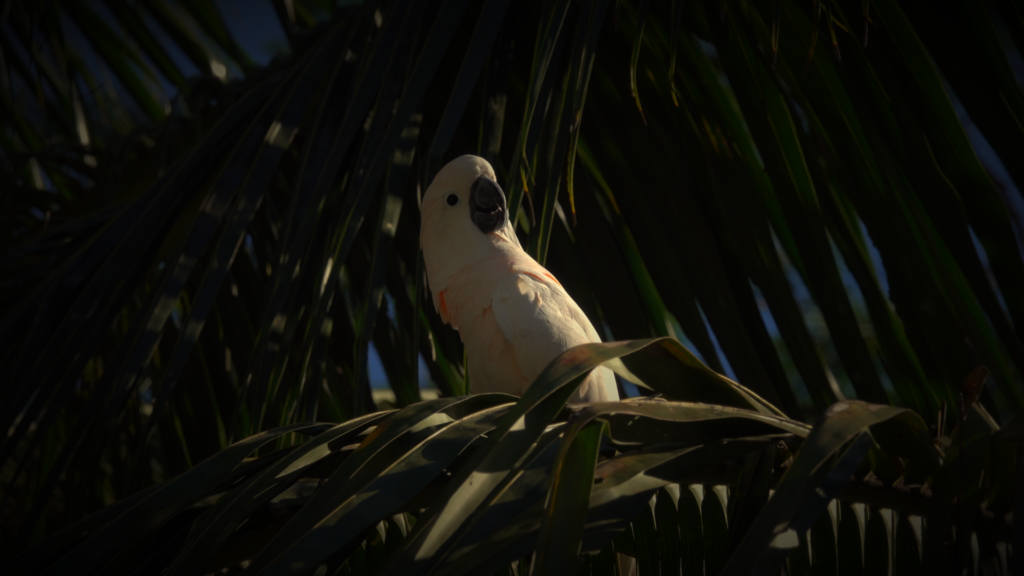
For generations, the Indigenous Huaulu community on Seram Island has practiced Cidaku, a vital coming-of-age ritual for young men transitioning to adulthood that traditionally requires the crest feathers of the endangered Salmon-crested Cockatoo (Cacatua moluccensis). While the Huaulu hunt birds strictly for customary purposes and never for commercial trade, the severe decline of wild populations driven by external poachers forced hunters to travel up to 40 kilometres into the forest, placing mounting pressure on both the species and the community's ancestral traditions.
Through extensive ethnoecological fieldwork, community interviews, and participatory dialogue led by our local researcher Dwi Agustina and Dudi Nandika alongside tribal elders and village leadership, our team explored how to bridge cultural preservation with modern conservation. The breakthrough came when tribal elders confirmed that the ritual’s spiritual efficacy relies on the authentic connection to the species itself, rather than the act of hunting. Working in partnership with the Huaulu community, Manusela National Park, and local forestry authorities, we established a landmark "feather bank" initiative. Today, the Cidaku ritual has successfully adapted to utilise ethically sourced, naturally moulted feathers from rescue centres and bird parks, completely decoupling the sacred ceremony from wild hunting.
This intervention provides a powerful global model showing that Indigenous communities are vital partners in biodiversity conservation when customary laws and cultural identity are respected. Our feature on the cover of the Journal of Ethnobiology brings well-deserved international recognition to this collaborative, community-led success.
Thank you for standing with us as we show how science, community, and tradition can work together to protect Indonesia's unique wildlife. Please watch our video report of this study and stay tuned for more updates soon.
Links:
Project reports on GlobalGiving are posted directly to globalgiving.org by Project Leaders as they are completed, generally every 3-4 months. To protect the integrity of these documents, GlobalGiving does not alter them; therefore you may find some language or formatting issues.
If you donate to this project or have donated to this project, you can receive an email when this project posts a report. You can also subscribe for reports without donating.


Support this important cause by creating a personalized fundraising page.
Start a Fundraiser