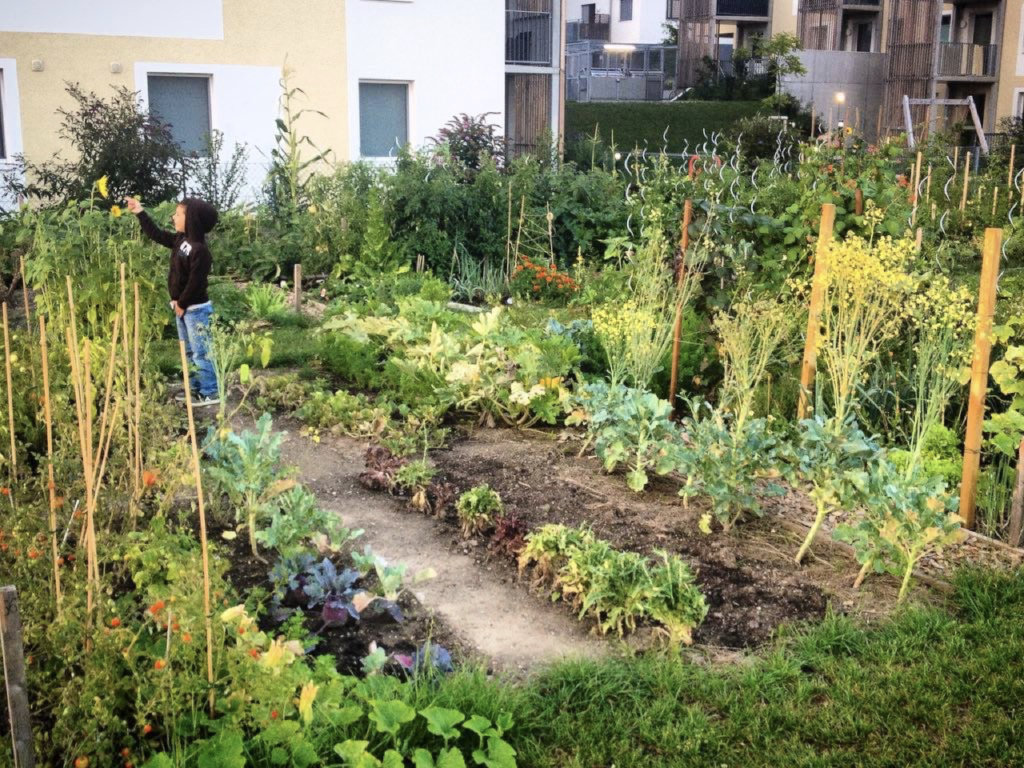
This project will help 50 low-income families start a WErto, an organized community that shares resources and knowledge to jointly grow organic produce. WErto uses an innovative model that, unlike a conventional community garden, requires no common space to cultivate.
Community gardens comprise only a small fraction of the potentially usable urban spaces for horticultural activities. The lack of access to these spaces and the insufficient technical knowledge of a large part of the population hinder the development of urban community gardens. In addition, the precarious social cohesion characteristic of modern urban settings makes it difficult for those interested to establish and maintain the necessary connection to launch community gardens.
Using shared resources and standardized cultivation modules a group of families can develop a community garden, with each family cultivating in the space available at home. WErto conveys successful community gardening experiences as well as simple and efficient horticultural models that facilitate the process of setting up a community garden and simplify the cultivation activities. WErto also offers guidelines to use IT platforms to connect stakeholders and to get and share relevant information.
50 families will gain experience together and learn from each other while creating an organized community. This community will have greater capacity to gain access to open spaces with potential to cultivate and to effectively incorporate new families, regardless of their gardening experience. This will result in wholesome food for people and the environment, greater connection between food and people, enhanced ecological awareness, improved social cohesion and stronger local communities.
This project has provided additional documentation in a PDF file (projdoc.pdf).