By Rachael Maddock-Hughes and Scott Beck | Program Manager, Program Coordinator
In the first six months of 2010, we have logged the following accomplishments:
Developed a Continuing Education Curriculum for Program Graduates: The Voices of Our Future Correspondents Network
In 2009, after the first year of Voices of Our Future ended, graduates of the program unanimously requested more. They did not want the experience to end. In response to their request and an analysis of key areas we identified for expansion and capacity building, we created the Voices of Our Future Correspondents Network and launched it in January 2010. This online network serves as a forum for Correspondents to continue learning, developing their leadership and networking with each other. Additionally, all materials developed for this network will be rolled into the 2010 training program. The program team developed the following curriculum:
A Security and Safety Module: Security is a major concern for all journalists, but particularly citizen journalists who are often unaffiliated with organizations that might be able to provide them with protection and security. While opportunities to relay breaking news through social media continue to expand, many countries have increased censorship and surveillance by monitoring internet cafes with hidden cameras, blocking website, and jailing bloggers. In 2009, VOF participants were writing from countries with some of the deadliest records of violence against the press, including Columbia and the Philippines. While World Pulse is not able to provide direct support in this area to citizen journalists, the safety of our program participants is a top priority. Our Safety and Security module was developed to give participants the tools and resources they need to keep themselves safe. This module covered:
• An overview of some of the risks faced by today citizen journalists; • A list of the top go-to organizations for press protection (Reporters Without Borders, International Committee to Protect Journalists); • An overview of strategies participants can put in place to increase their physical security; • Key online security issues • Tips on protecting their personal information.
Developing Leadership and Building Community Online While the 2009 program included an overview of basic web 2.0 and citizen journalism information and tools, participants unanimously asked for more in-depth information and further ways they could use these tools to connect online. The amount of information that exists online is time-consuming to sort through and often confusing. Our team chose to cover the most popular, and useful tools that are being used today. This module covered:
• RSS feeds, social bookmarking, microblogging, podcasting, blogrolls and mobile phone technology. • Tips for increasing web presence, engaging communities and growing networks. • Suggested activities to put knowledge into practice, such as setting up an RSS Reader; creating a podcast; adding multimedia content to blogs, and contacting other bloggers who are interested in the similar topics.
Train the Trainers In 2009, graduates of the program overwhelmingly asked for ways to take their learning beyond the VOF classroom and share their knowledge with women in their communities. The Training of Trainers module was created in response, as well as being used as a means for scaling up the impact of the program. This module focused on providing the tools and resources that women need to train others both online and offline, including:
• Guidelines for organizing events and trainings • Tips on mentoring • Online activism • One-page descriptions of trainings carried out by 2009 graduates • VOF curriculum in a quickly downloadable format • Worksheet templates for event pre-planning, participant tracking, and evaluation.
This module received the most enthusiastic response from participants. We also included a one-page document that participants can use (voluntary) to report out on the success of their trainings to World Pulse.
Completed In-Depth Planning and Preparation for Voices of Our Future 2010 Ensuring the most professional and impactful program in 2010, we: • Revised and improved curriculum. • Revised application learning materials in response to feedback from last year’s exit applicant survey. • Developed Project Plan for VOF 2010-2011 including consolidation and formalizing program tools and assets. • Developed marketing materials and outreach plan for application launch • Developed impact indicators. • Secured two-year agreements with program partners The Press Institute and the Op-Ed Project. • Secured agreement with the Empowerment Institute for partnership in 2010 • Launched call for applicants.
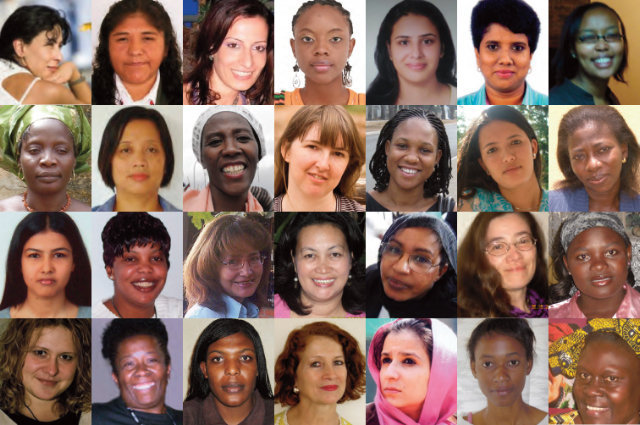
On August 10th, World Pulse sent out a call to apply for Voices of Our Future. That call was passed on to networks around the world, and in less than a week, we have attracted over 180 applicants from Pakistan, India, Malawi, Mexico, Romania, Belarus, Guam, Malaysia and many more.
Starting September 15th, these women will participate in our application phase. During this one-month period, they will receive learning materials covering such topics as: women and media; World Pulse’s history, mission and editorial voice; and how to create and engage in community building online. Each applicant will then complete four writing assignments. Based on these assignments, our evaluation panel will choose the 30 most impressive women to take part in our full five-month training program starting in November.
To view the current applicants or to sign up for the program, go to http://worldpulse.com/pulsewire/groups/21780.
Additionally, a group of high-voltage men and women from around the globe have volunteered to be part of our evaluation panel. If you are interested in volunteering, please visit our opportunities page, http://www.worldpulse.com/about/opportunities, and look for Voices of Our Future Listeners.
Looking Ahead We are still fundraising for this program. Your contribution is critical in enabling us to launch in November. Please donate today!
Links:
Project reports on GlobalGiving are posted directly to globalgiving.org by Project Leaders as they are completed, generally every 3-4 months. To protect the integrity of these documents, GlobalGiving does not alter them; therefore you may find some language or formatting issues.
If you donate to this project or have donated to this project, you can receive an email when this project posts a report. You can also subscribe for reports without donating.