By Erica Shockley and Linda Paulson | Development Associate and Vice President
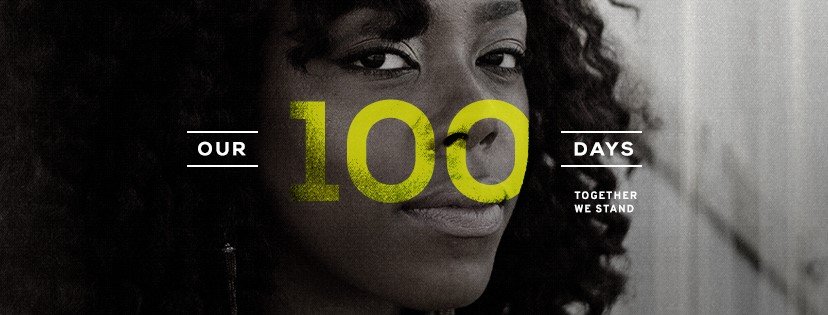
We write this update on the heels of a remarkable display of women activating for change. We ask you to keep this energy alive by signing up to receive an action you can do every day for the first 100 days of the new Administration. These are actions that add up to increasing opportunities for women and girls in the Washington, DC region and beyond. Go to http://our100days.thewomensfoundation.org/ to see today’s action item and to sign up to receive actions for us to do together, every day.
As we organize our communities to activate Our 100 Days, we hold steadfast to our mission to ensure that economically vulnerable women and girls in the Washington region have the resources they need to thrive. This year, this includes launching a health component in order increase opportunities for the economic security of women and girls.
Our focus on this work begins with the facilitating of The District of Columbia Family Planning Initiative (DC-FP Initiative), a coalition of health care providers, funders, nonprofit organizations, youth empowerment and government partners. Our collective mission is to reduce teen pregnancy rates and empower young women to take control of their reproductive health by improving the availability of quality contraceptive information, options and health services.
You may be surprised to learn that the nation’s capital ranks in the top 15 cities with the highest rates of teen pregnancy for young women ages 15-19. In addition to having among the nation's highest teen pregnancy rates, the percentage of young women using an effective method of contraception is low. Only 9% of high school girls report they or their partner used birth control before their last sexual experience. When it comes to the use of female contraceptive methods, only 23% of high school females report that they use any of the following methods: oral contraceptives, IUD or implant, Depo-Provera, shot, patch or ring. Despite having programs in place to reduce teen pregnancy, it is clear there is still room for growth especially when it comes to education and options counseling around the full range of contraceptive methods.
Although there are programs in place to reduce teen pregnancy in our region, there is still room for growth when it comes to education and options counseling around the full range of contraceptive methods. That’s why the DC-FP Initiative is important. Our efforts are designed to bring attention to ethnic and racial disparities to health care, address past cultural injustices within the healthcare system, and develop a program that is sensitive to the needs of the diverse population in DC.
We anticipate that the new Administration will pull back the recent gains made in access to birth control for all women, and that this will have the most serious implications on low-income women in our community – making this work even more important today.
Links:
Project reports on GlobalGiving are posted directly to globalgiving.org by Project Leaders as they are completed, generally every 3-4 months. To protect the integrity of these documents, GlobalGiving does not alter them; therefore you may find some language or formatting issues.
If you donate to this project or have donated to this project, you can receive an email when this project posts a report. You can also subscribe for reports without donating.