By Emmy Torruellas | Vice President of Development
Make Equitable Spaces For Youth to Lead
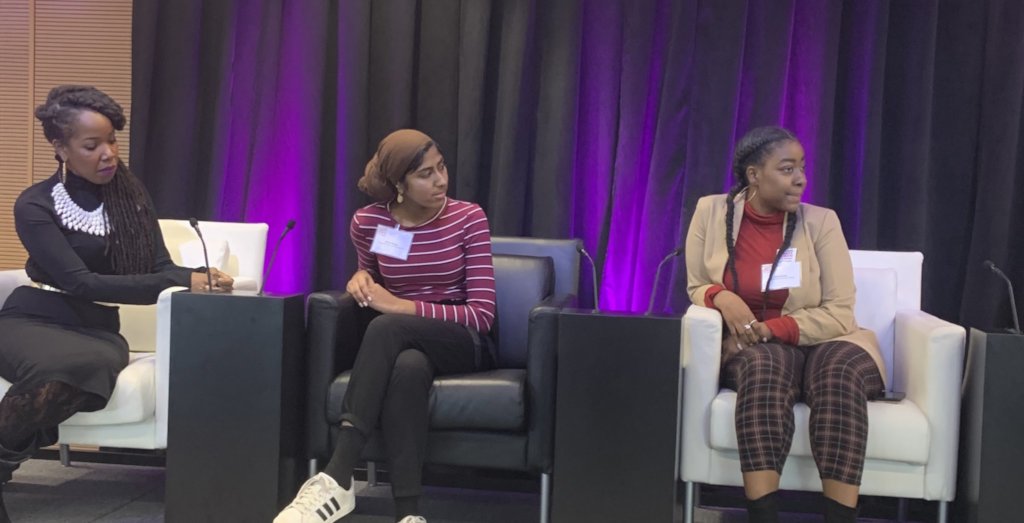
Last month I had the honor of speaking as a panelist at the “Declare Equity for Girls: Power & Policy Luncheon” by Crittenton Services of Greater Washington. As a poet, I am used to speaking on stages, navigating green rooms, and gauging audiences but something about this experience felt different. Not only was there a focus on amplifying the voices of the most marginalized, there was action behind the rhetoric.
From my experiences, the luncheon organizers and participants embodied the change needed. I felt this most clearly in the language used. Far too often, the same spaces focused on empowering youth, end up creating barriers to youth engagement. They hold events during the school day, don’t assist with transportation, and on top of all that, use jargon that most (without the expertise) don’t understand. This isn’t to say that young people aren’t intelligent or that they are incapable of participating in these discussions. On the contrary, youth often have the experience and input that adults need to create sustainable, long-term solutions.
Instead of using academic and industry-specific jargon, effective messages are rooted and phrased in youth’s lived experiences and expertise.
What I commend Crittenton Services for doing so well is mixing the two — bringing in academics, community leaders, and experts who use language you don’t need a PhD to understand. Incorporating slam poetry, an emcee who casually referenced “hot girl summer,” and a panel that ranged in age, I quickly realized that this event was unique. For once, I felt comfortable. I felt like I was in a space made for me, not one in which I was merely a guest. I didn’t feel the need to code-switch or censor myself. I knew I was in a place where I could talk about intersectionality and Muslim Twitter in the same breath; I knew I could be myself and still be heard.
Reflecting on my experience as a panelist with Crittenton Services of Greater Washington and my experiences with numerous other organizations, I am reminded again of the ways we show up in spaces. The ways we show up and the people we bring with us can either continue the status quo or make room for new, innovative, and necessary change.
As we engage with nonprofits, advocacy organizations, and organizers, we need to be mindful of what we are bringing to the table and what doors we are opening for others. Are we advancing ourselves and the communities we purport to serve? I think this is a question every good public servant needs to ask themselves constantly. For myself, I am reminded of the ways I can accidentally play into the “good Muslim” stereotype, furthering myself while simultaneously feeding into problematic vs. bad Muslim discourse. Even though my original intentions could have been innocent, the outcome is less so. To be an ethical changemaker, I must have both: the intention and the self-reflection required to secure the anticipated result.
Moving forward, I encourage all of us to take a critical look at ourselves and the organizations we engage in. It is far too easy to critique other organizations that you forget to take a look in the mirror. In what ways do we perpetuate the same forces, whether it be gate-keeping, white supremacy, or sexism, that we purport to be fighting against? How can we identify these gaps? And most importantly, what solutions can we take to be more equitable, and inclusive, and not just in theory but also in practice.
Project reports on GlobalGiving are posted directly to globalgiving.org by Project Leaders as they are completed, generally every 3-4 months. To protect the integrity of these documents, GlobalGiving does not alter them; therefore you may find some language or formatting issues.
If you donate to this project or have donated to this project, you can receive an email when this project posts a report. You can also subscribe for reports without donating.