By Damayanti Bhowmik | Key Project Personnel
Dear Friends,
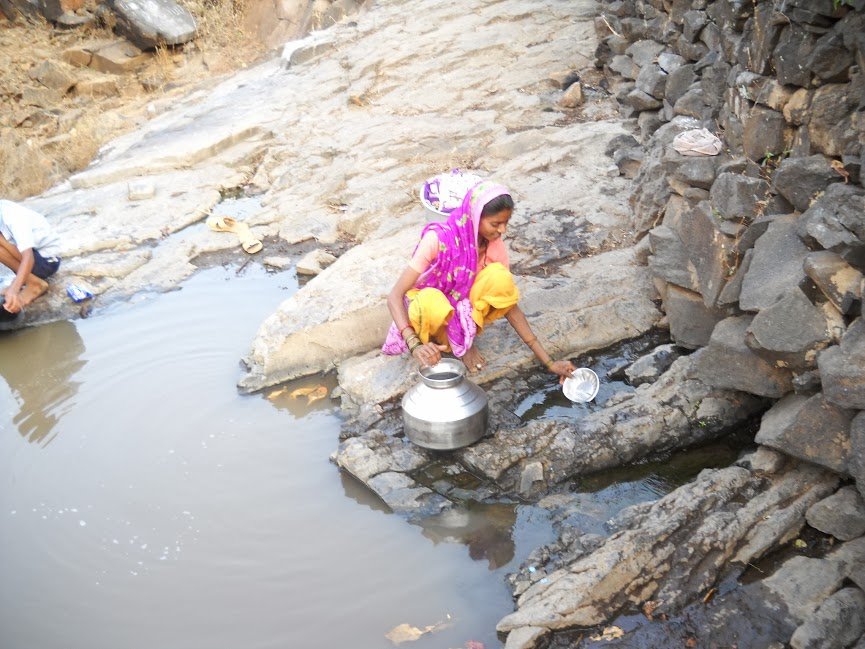
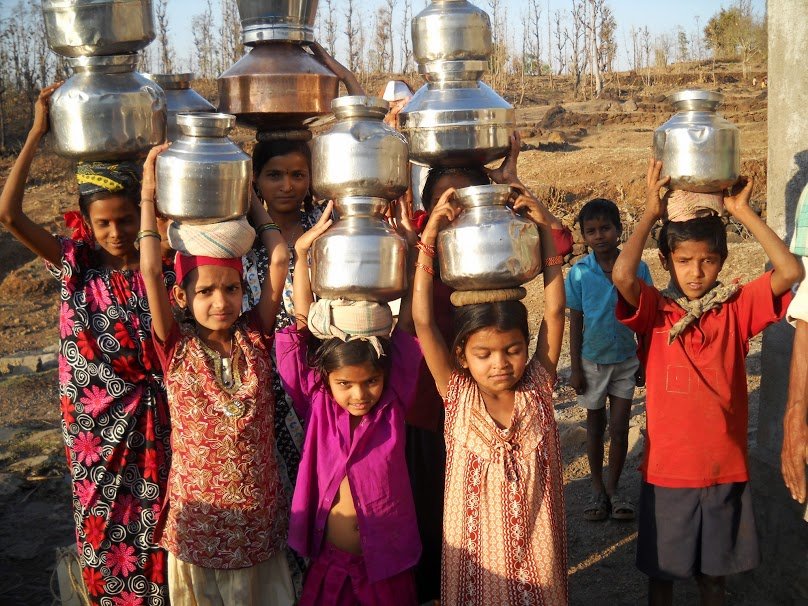
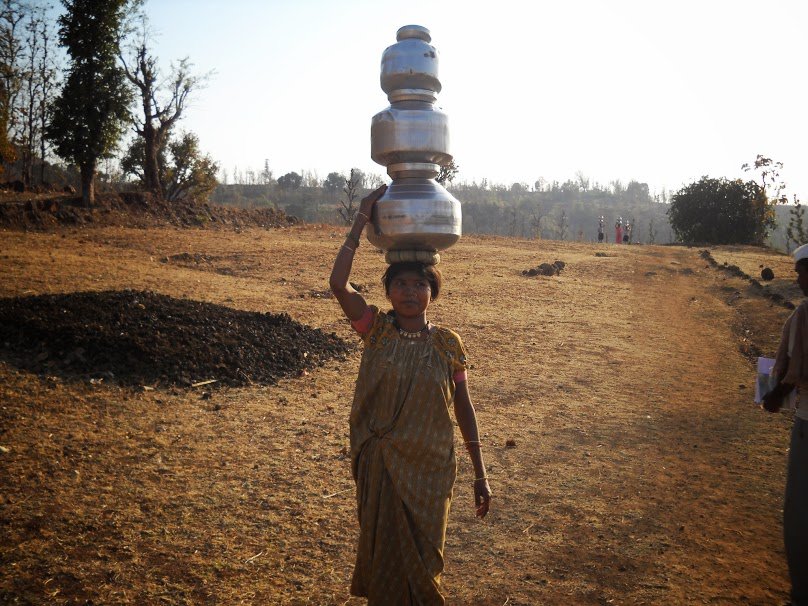
Sharing feedback of tribal women from the villages of Karanjpana, Kharset and Jhambulpada – beneficiaries of the works undertaken to enhance access to water.
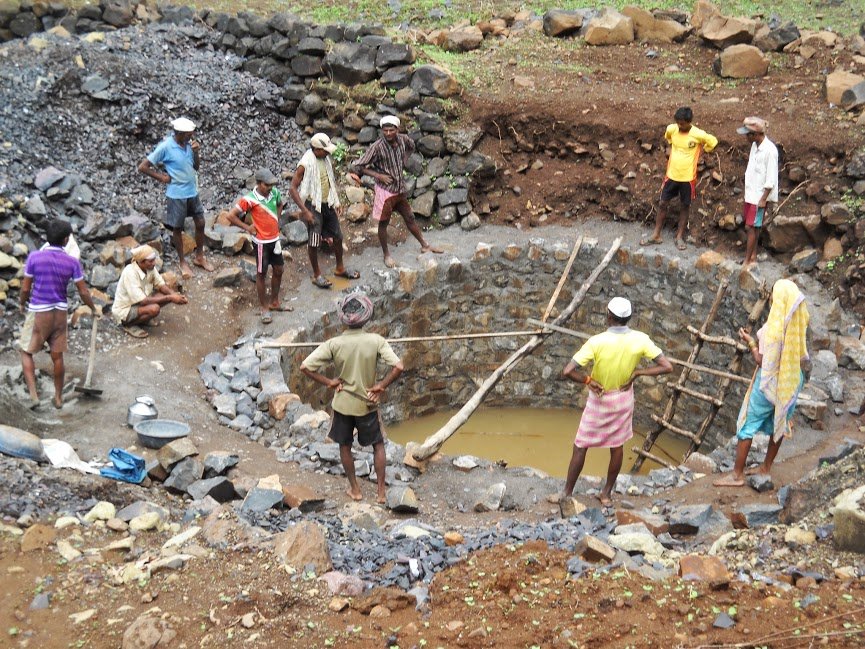
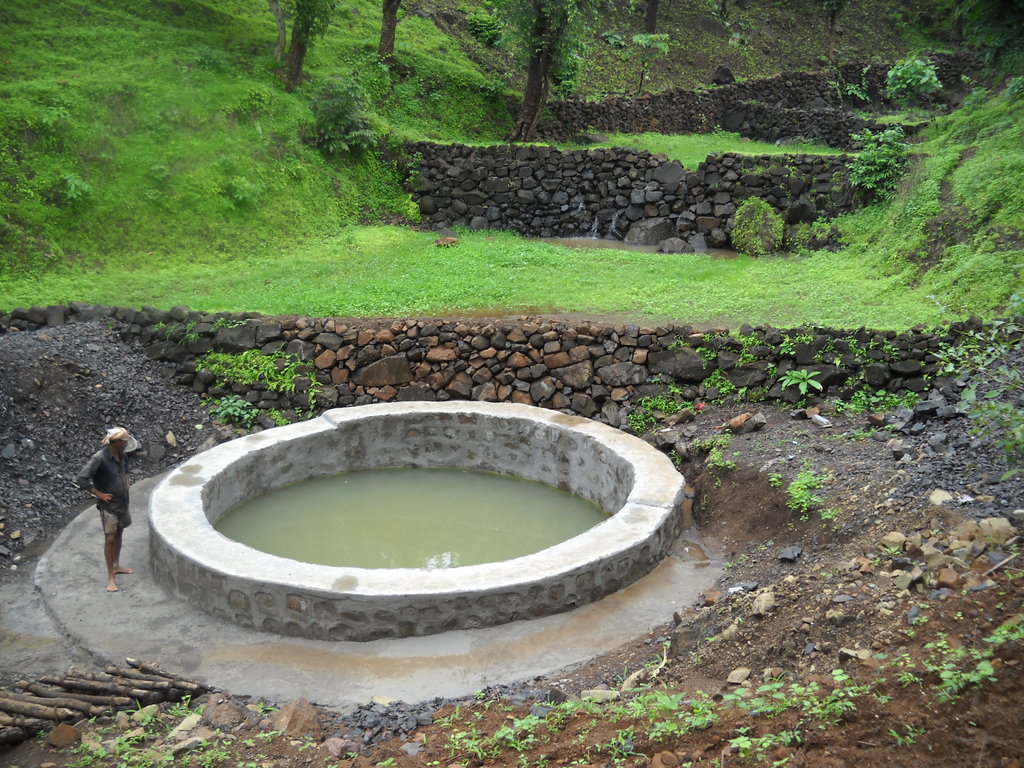
At Karanjpana : From having a 5 feet deep and less than 5 feet wide hole as their source of water, the village along with its hamlets (115 families) have a well which is 20 feet deep & 18 feet wide constructed by a Self Help Group consisting of members from the village (May 2013). Villagers feel this is most well constructed well so far where all materials used are of the best quality. With this intervention in terms of enhancing access to water, the before-after livelihood picture in the village looks the following:
a) Now the women spend no time at all in fetching water for their cattle. Cattle are taken by the well side and made to drink in buckets drawn out of the well. Earlier this task took them about 4 hours a day.
b) Fetching water to meet all household needs, women and also accompanied by their men during night time, spent a minimum of 6 hours / day. Many a times they slept and ate by the well so that they did not lose their turn
c) Women went to work in their fields around 10 / 11 am and returned at 4 PM. Now they spend about 12 hours in their fields roughly 6 AM to 6 PM. The waiting time to fetch water has reduced to almost nil and from a time when they ate and slept by the water source; on an average 2-3 hours go in fetching water to meet all household needs.
d) Being able to spend increased hours at their fields, allows them to perform weeding which gives them cattle feed. Earlier they did not have enough time to do this function; it is strongly believed that in years to come with weeding done, crop production would also improve.
e) Also, with women being able to spend less number of hours in the field, families employed laborers to work in their fields, a total expense of Rs 4 K – 5K which now is a saving.
f) Lastly, with time and energy focused on meeting water needs, certain families were not able to do sowing of Nagli, Paddy at the right time leading to land lying barren for the season.
At Jhambulpada –
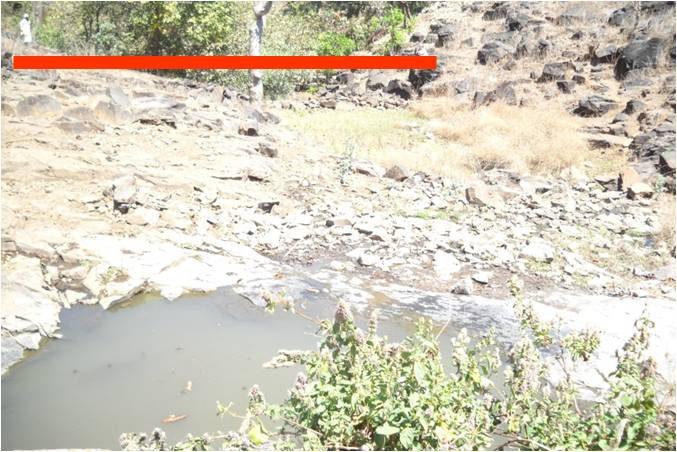
a) Residents of Jhambulpada had a well (remained dry for 6 months) and a small puddle into which water trickled throughout the year
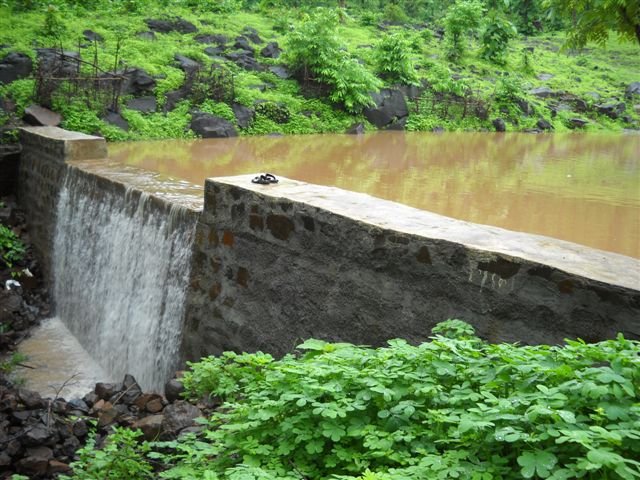
b) The check dam 12’ high and 9’ wide has now checked the flow of rain water to nearby river Damanganga
c) Here too, women now spend no time in fetching water for their cattle; the cattle visits the dam and drinks water directly from it. This was about 2 hours / day during July – December (water drawn from village well) and almost the entire day during January – June when cattle had to be taken to river Damanganga.
d) From having a near 10 –month dry period, today water is available to residents of Jhambulpada almost throughout the year. Even in the most dry period of January – June, the dam has 4 ‘ to 5’ of water
e) On an average, there has been a 50% reduction in the time women spent in fetching water for their household needs. For e.g. earlier 4 hours per day down to 2 hours. Consequently, women report to their fields at 8 AM from the earlier 12 Noon timing.
f) With increased support from women in farm work, the total farm work of a family gets completed in lesser duration allowing them time to explore other avenues of employment – migrate to Nasik for longer duration of time as construction workers or to work in grape orchards, work as farm labours in others’ fields
g) One family reported to be having an increased rice production by 3-4 quintals with enhanced access to water in the area
At Kharset:
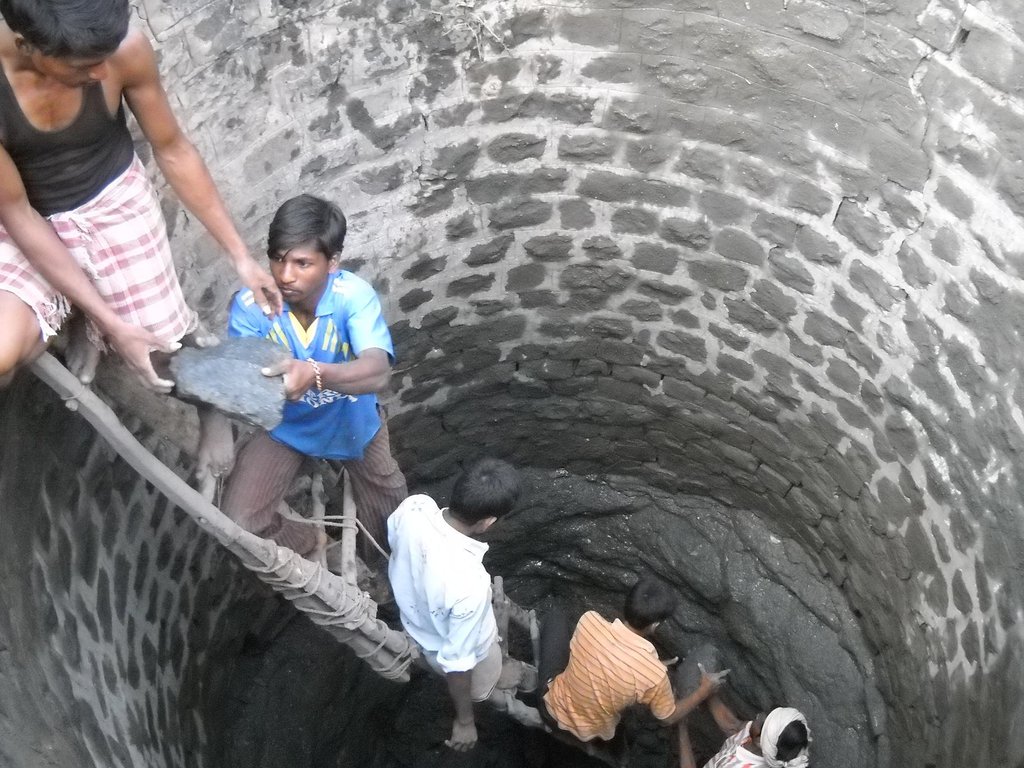
a) The village pond has been cleaned in between April – May 2012. This activity was carried out after almost 25 years. About 8-9 feet deep slush and mud were removed and the pond was deepened by an average of 4 feet.
b) With this cleaning and deepening activity, the foul smell emitted from the pond has ceased to exist. There is now better flow of underground water into the pond. There has also been creation of additional as well as enhancement of existing underground natural streams.
c) The net resultant effect of the cleaning and deepening of the Kharset pond is that water level in surrounding 7 wells have increased; earlier wells dried up in April but now they have water till June. Therefore one can say that actually there is actually no dry period with respect to these water sources, which earlier used to be 3-4 months. The water in these wells too gave out a foul smell which is no longer the case.
d) Earlier residents of Kharset and neighbouring village Pangulghar had no option but to visit the pond for bathing and washing needs. They often suffered from skin infections and also had their clothes emitting a foul smell. With cleaning of the pond, people no longer suffer in this fashion.
e) The cattle coming to this pond also contracted dysentery but now enjoy better health.
f) The pond is now being used for developing fish – adding to the livelihood of the villagers.
Project reports on GlobalGiving are posted directly to globalgiving.org by Project Leaders as they are completed, generally every 3-4 months. To protect the integrity of these documents, GlobalGiving does not alter them; therefore you may find some language or formatting issues.
If you donate to this project or have donated to this project, you can receive an email when this project posts a report. You can also subscribe for reports without donating.