By Florence Chepkoech | Project Leader
Hello, Greetings for the new Month!
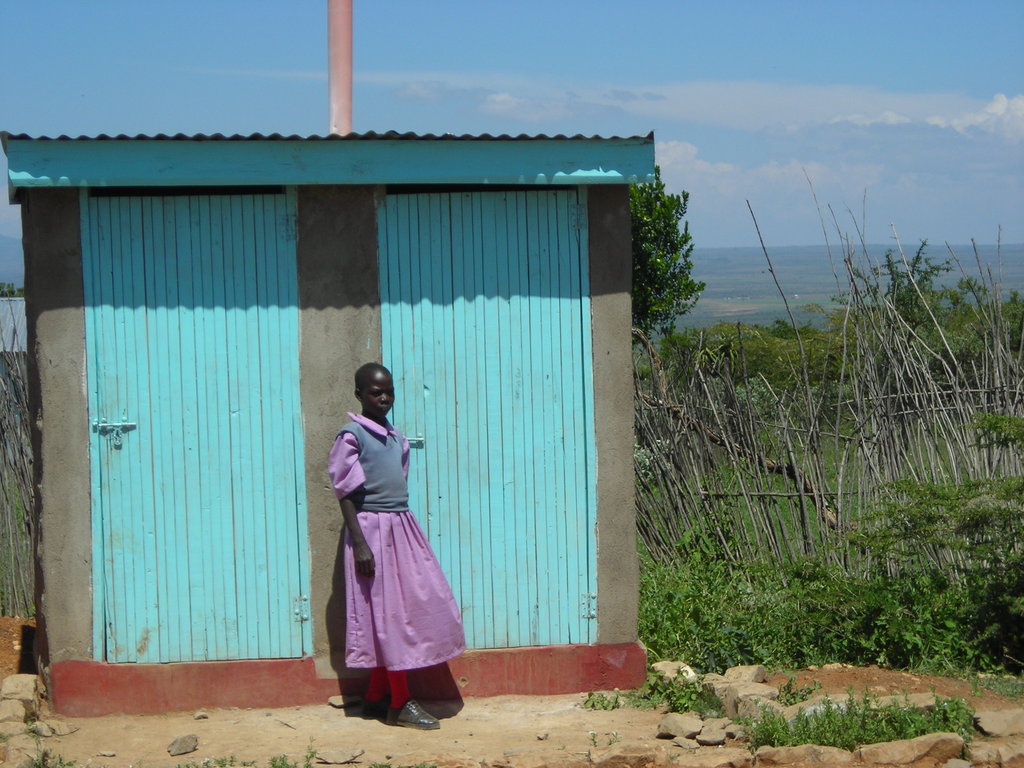
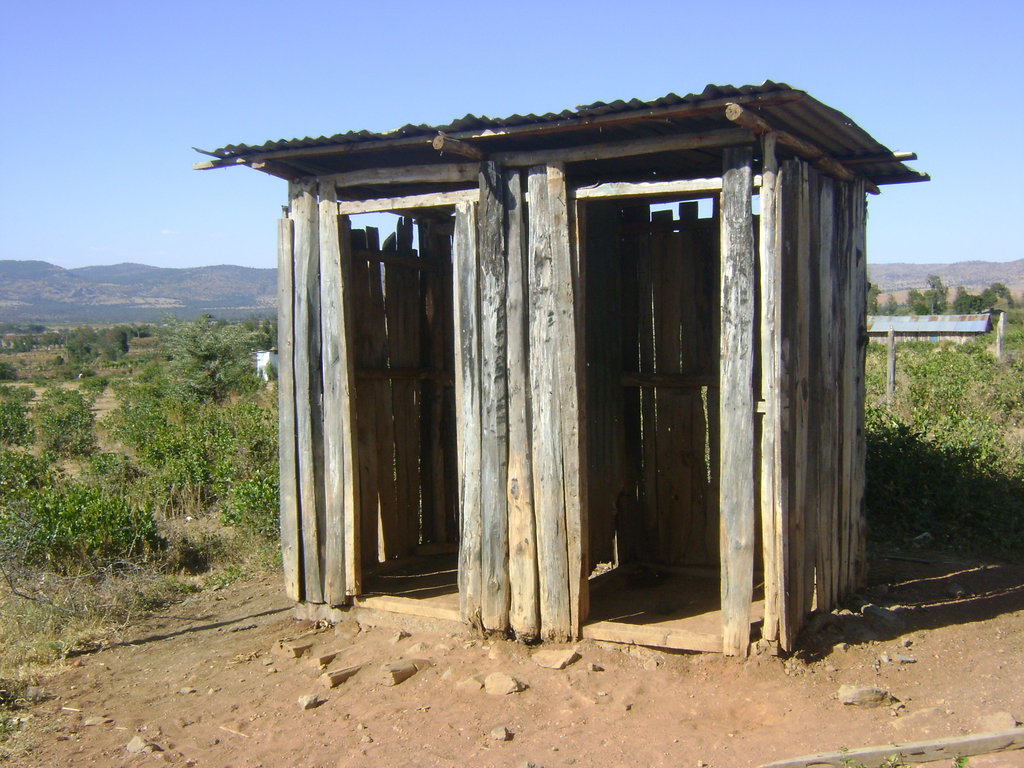
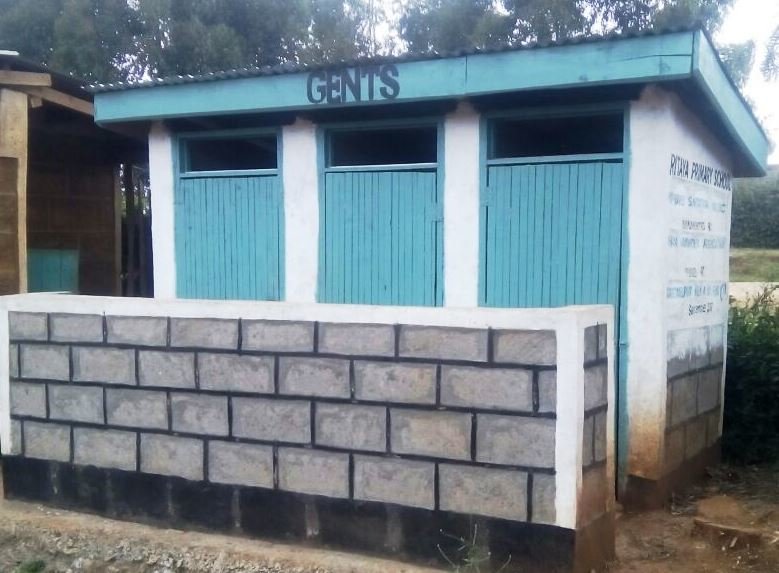
In my last update, I had reported that we had completed the construction of a masonry tank and the VIP latrines were to commence at Ritaya Primary School. The construction of the latrines is underway and some blocks are in use already. The school had several sub-standard pit latrines except for one block which was handed over to girls to use and the pupils did not have adequate water to wash their hands after using the latrines. The ratio of pupils: latrine was lower than the Ministry of Education requirements.
This project component includes construction of gender-segregated sanitary facilities (i.e. ventilated improved pit (VIP) latrines) – separate blocks for boys and girls, and teachers). The number of units for each gender depends on the pupils: latrine ratio (i.e. 30 boys per unit and 25 girls per unit) as per Kenya government policy. On unstable soils, lining is provided from the bottom of the pit, where on stable soils lining is not required and the latrine walls are supported by the concrete slab – which also include provisions for ventilation pipes and drop holes. The drop-holes also act as exhausting outlet – to dispose the waste when full, and hence they can serve for many years.
Anticipated Impacts
The following are some of the anticipated benefits/impacts:
1. Improved pupils enrolment, retention and performance in examinations – this can be monitored through class attendance registers, and examination results (variation in mean score
2. Improved health – there is a direct correlation between pupils’ academic performance and better health – reduced water borne diseases and improved nutrition.
3. Increased retention and sustainability of pupils (especially girls in upper primary levels), which will not be possible without water and improved sanitation.
4. Increased girls’ performance especially in higher grades (Classes 7 & 8) due to improved sanitary facilities – reduced absenteeism.
5. High attraction and retention of teachers, which enhance school reputation and performance.
6. Reduced cost for buying water – water trucking is common in most schools in the ASALs – and hence savings can be used for other school projects (e.g. construction of classes).
7. Promotion of primary schools as innovation centres for improved WASH, nutrition and environment
There is an ongoing campaign on all GG platforms dubbed! Little by Little Matching Campaign! And I would humbly ask you to go on and donate for our project; Clean Water and Sanitation for Kenyan Rural School.
Your participation and involvement during the inception and all through the project cycle played a great role towards the successful completion. We at Kenya Rainwater Water are especially thank full for your continued support.
Project reports on GlobalGiving are posted directly to globalgiving.org by Project Leaders as they are completed, generally every 3-4 months. To protect the integrity of these documents, GlobalGiving does not alter them; therefore you may find some language or formatting issues.
If you donate to this project or have donated to this project, you can receive an email when this project posts a report. You can also subscribe for reports without donating.